
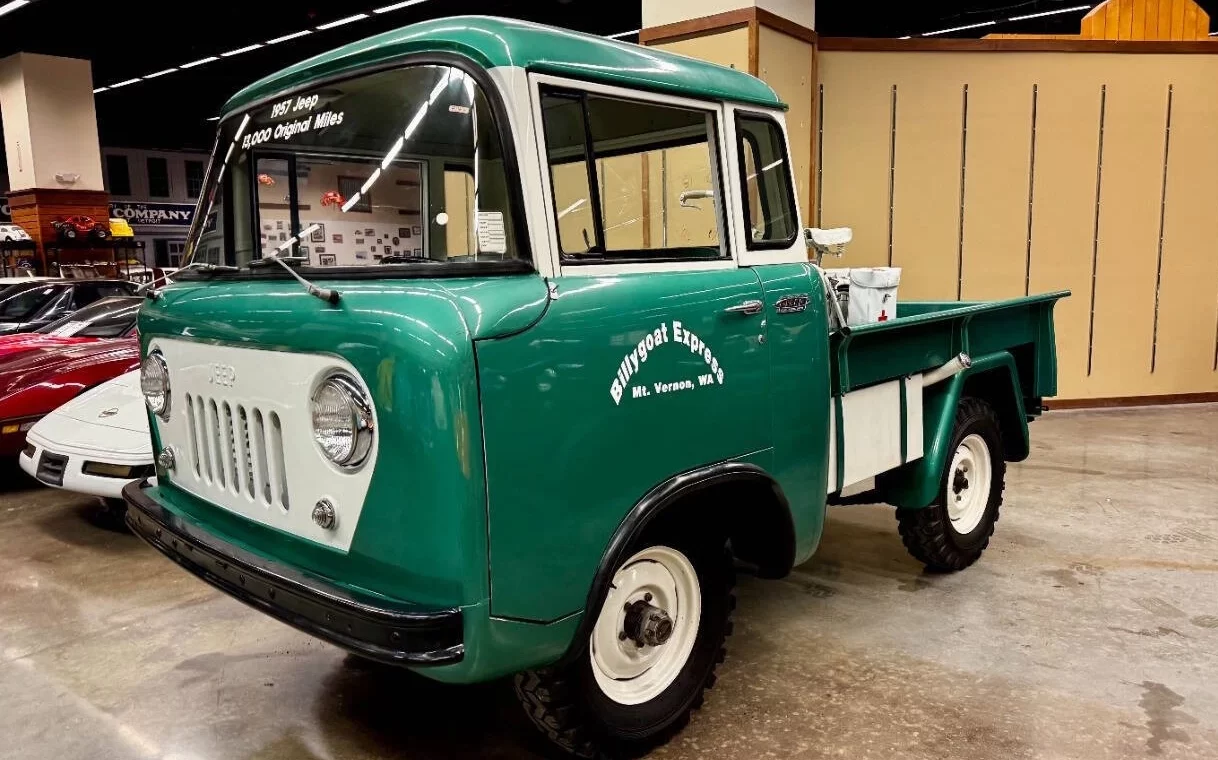
If you’re lucky enough to find a Jeep FC-150 for sale, it will more than likely resemble the really cool 1963 model I wrote up here last month, not this shiny, like-new 1957 Jeep that Barn Finds staffer Russell J. Glantz recently posted up on the tip line. This shiny green (Julep Green Metallic?) cabover stems from the FC’s inaugural model year, and Willys was rightfully proud of its new baby, saying that it was “a great new Jeep, newest addition to the time-tested performance proved Jeep line of four-wheel-drive vehicles.” Unfortunately, it wasn’t the hit that Willys hoped for, as it sold only about 30,000 FC-150s AND FC-170s over the course of their 1957-1965 production run, and many of those have rusted into oblivion. So how did this one end up with only 13,000 miles on it? The seller’s not telling, but whether or not the mileage claim is verifiable, this is a very nice Jeep. It’s for sale here on eBay in Orlando, Florida, and the high bid of only $1,700 clearly has not met the seller’s reserve.
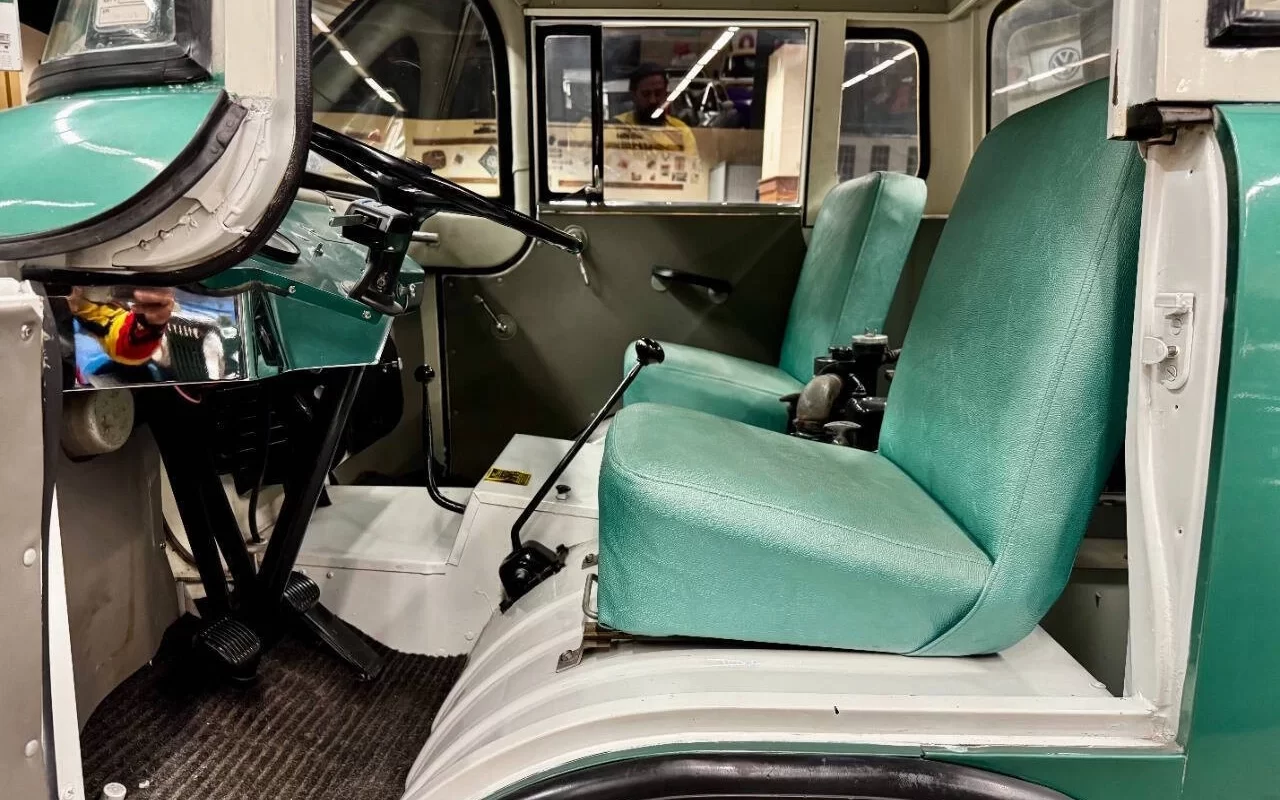
Whenever you’re talking about any Forward Control truck or van, there’s always a little uneasiness about the seating position, which is readily seen here. Anyone who isn’t familiar with old cars would probably think this was a cruel joke. A bucket seat mounted directly to the wheelwell? No seat belts? An engine reciprocating its heart out two inches from the driver’s right elbow? To many of us, however, it seems like a quaint adventure rather than imminent peril—it’s all about perspective, after all. Regardless of your viewpoint, the interior looks nice.
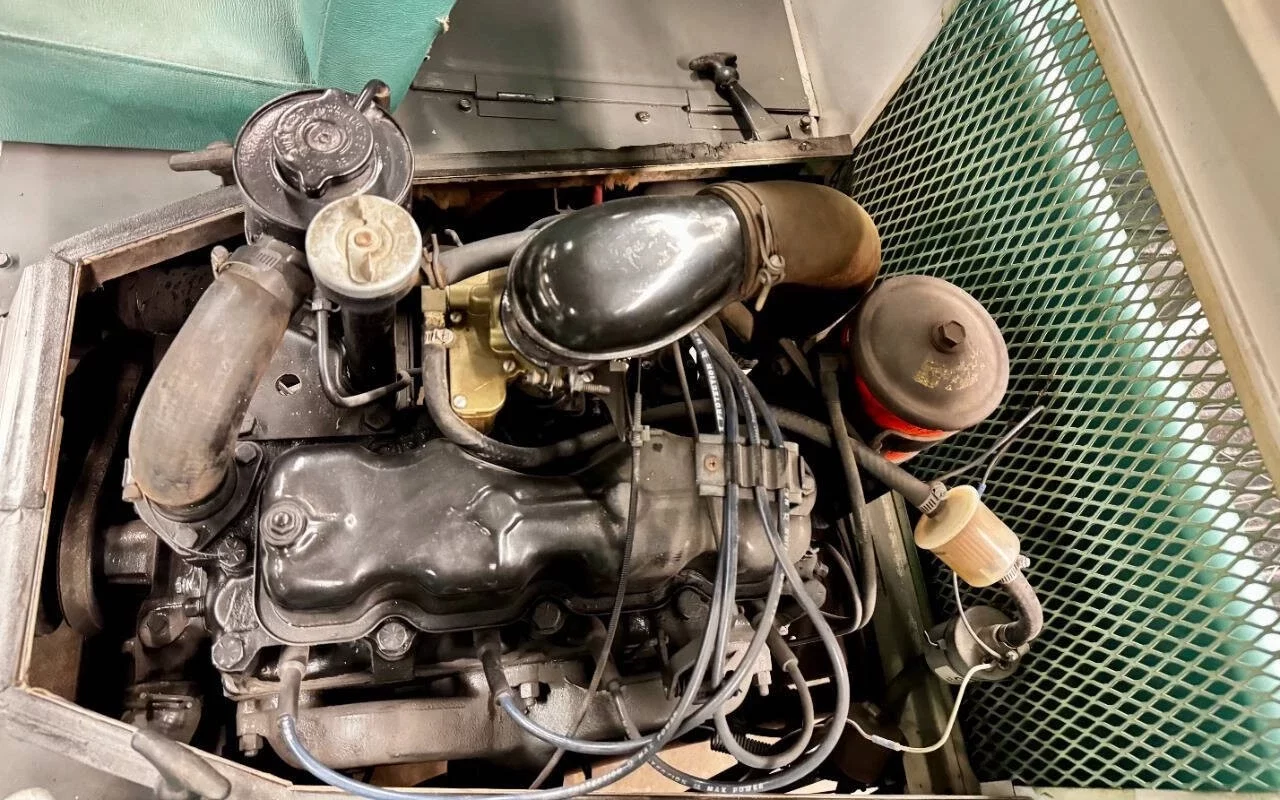
The engine is a 134-cubic-inch F-Head four cylinder, which stirred a standard three-speed manual and a two-speed transfer case. Axle ratios on the FC-150 were a steep 5.38:1, so even if you wanted to take the cute little truck out on the open road, it’s just not going to have the revs to do it safely. It’ll be best to stick to the surface streets and slow lanes.
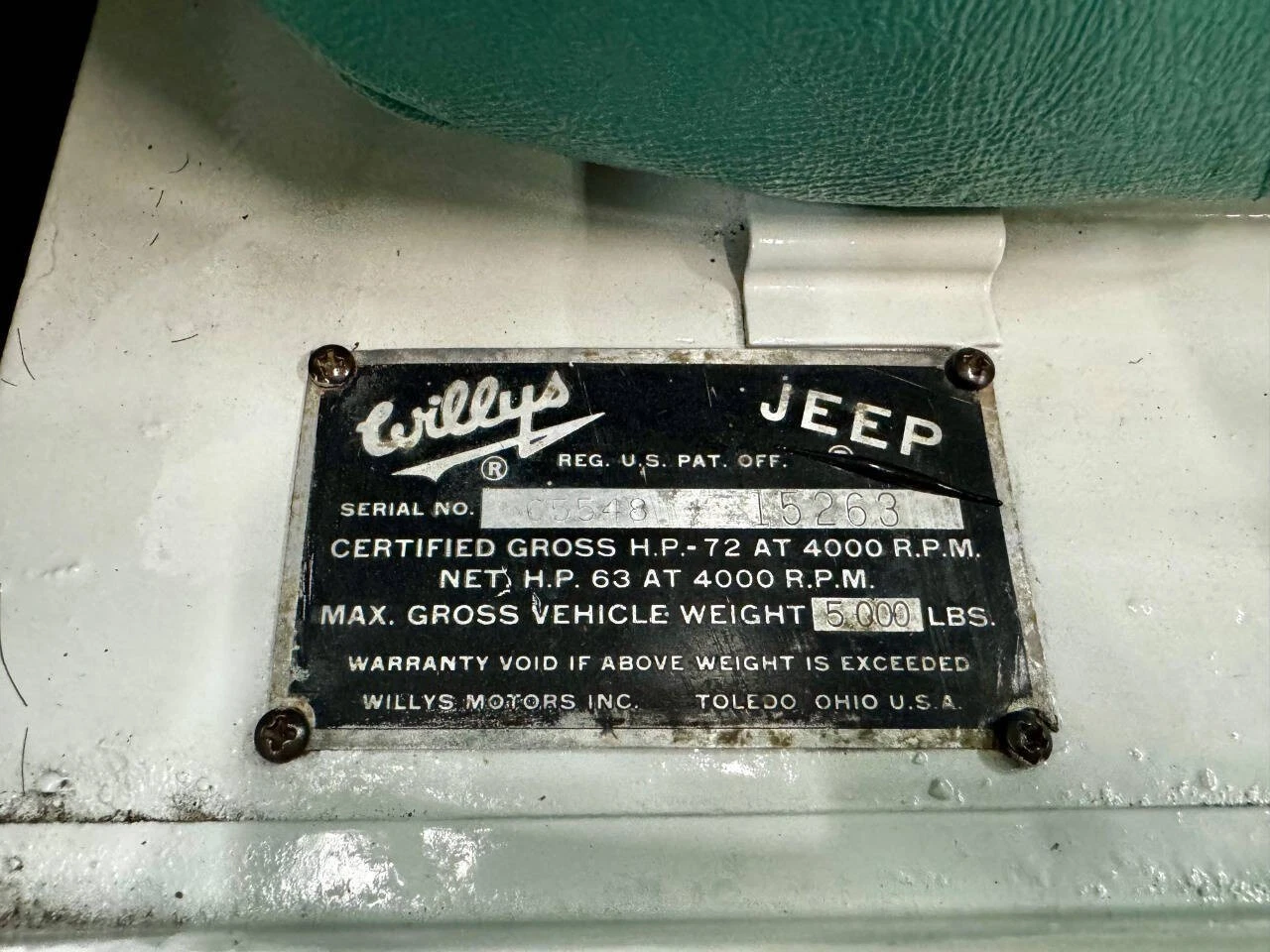
The nice thing about old trucks is that both the gross and net horsepower ratings were often available in factory literature, and in this case, you can find it right on the VIN tag: 72 horsepower gross, 63 net. That’s actually not bad for an archaic four-cylinder of just over two liters of capacity.
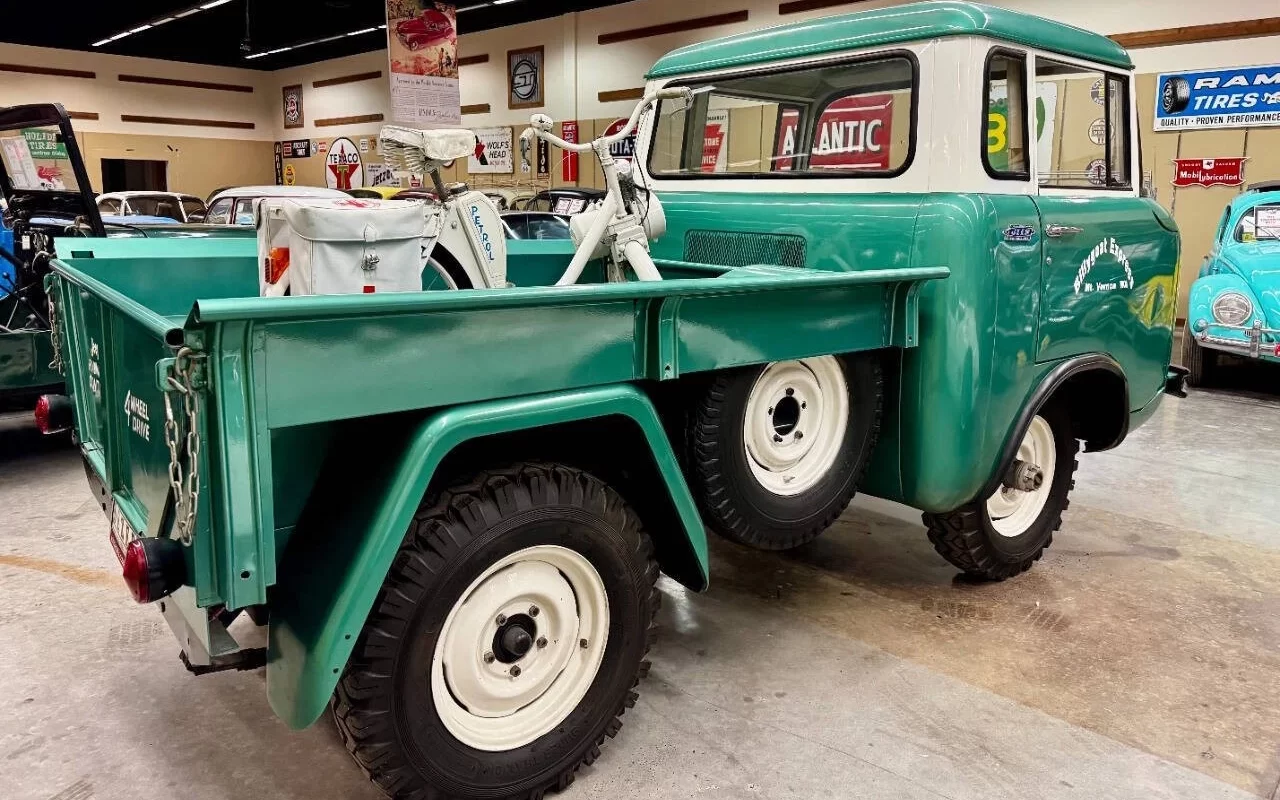
This truck couldn’t possibly get any cuter—it even has a little motorbike in the back. It’s clearly had some restoration work, but if it looks as good in person as it does in pictures, it’s been done well, and this might be one of the nicest FCs in the land. It’s one of those little trucks that made me wish I had unlimited storage and a bunch of land to putter around on, because even if it wasn’t a big hit when new, it looks like a heck of a lot of fun now.




Good write-up Aaron. This FC is very cool. Unique vehicle, then and especially now. It must be quite an experience driving one, rough and loud and slow and crude. But today, that would be part of its charm.
I have only minor “experience” with a FC. The ma-and-pa oil company my dad worked for had one, for a time. It was the only four-wheel-drive in the fleet, used to haul equipment to wells or the drilling rig. The company did not have the money to maintain lease roads in all-weather condition, so the poor FC was commonly abused in doing its job. Thus it was often found sitting in the company warehouse, broken down. Grade-school-age me would climb in and envision off-roading with it. Then one day it was gone.
Very nice restoration on a really clean FC to begin with. I guarantee it didn’t look like this when they “found” it. The mileage may or may not be original, you can see the things they obviously couldn’t find and some over spray, but they started with a clean truck to begin with. Inspired by cabover semi trucks of the day, Brooks Stevens had utility in mind, and this was probably one lucky Jeep, it wasn’t subjected to what most did. It more than likely sat in a corner, used sparingly. In Milwaukee, the county had a bunch of these to clear ice skating rinks, and service stations used them as plow trucks, so few survived. “FC” as mentioned, means Forward Control, but I never knew what that meant. Apparently, you sit on top of or in front of the front axle, so all cabovers are “FC”?. They must do excellent “stoppies”. Nice find, too bad no interest much to the dealers dismay.
I only remember these because as a kid, Tonka offered one in steel. It was a favorite of the Tonka toys I had! I have yet to ever see an actual one on the street but they do look cool!…There’s an idea..find old steel model and toy trucks and cars and feature them on BF!
Bid’s at $10K and reserve not met.
Grossman’s Lumber had one of these they used as a snow plow truck at their original HQ, store and yard on Granite Street in Quincy MA. My dad worked as a shipper there. Used to get to ride in it when I would come to work with him on Saturdays in the early 1960s. Very cool. Fond memories of those days. Grossman’s Lumber, their Granite St. Yard and my dad all gone for many years now.
We had one as a plow truck at the Pontiac/Honda store I worked at in college. It was handy for plowing snow as you had great vision to keep the blade away from the new cars and still get close to get as much snow moved away from the cars. With the plow (which we never took off or used the vehicle in the non-winter months) on driving on the street to go get gas was a scary drive. The plow would bounce off the pavement on the slightest bump. And you crawled over the rail road tracks if you knew what was good for you AND the vehicle. If you are going to plow with one of these. Best do it with 500-800 pounds strapped to the tail gate.
These, and the longer F170 are fun, and reasonably tough. Off road gets exciting when going into a wash ( blind ride ) but coming out is even more exciting because all you see is sky!! The F170 was more useful, with bigger bed and 6 cylinder. Also a bit more stable when hauling a load of hay.
This would be fun, useful and because it’s so short, pretty easy to store until you need a fun and useful vehicle.