

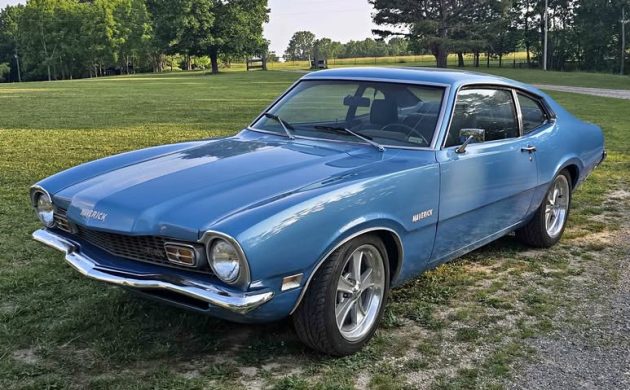
Some cars represent better candidates for a custom build than others. The 1970 Ford Maverick is a no-brainer because its design and engineering leave room to slot a V8 under the hood to improve performance. That is the path the seller has followed, ensuring that this Maverick has the power and torque its creators never envisaged. It presents quite well in its current form, though the buyer could tweak the interior to enhance its appearance. I must say a big thank you to Barn Finder Terry for spotting the Maverick listed here on Facebook Marketplace in Strafford, Missouri. You could fly in and drive it home after handing the seller $11,500.
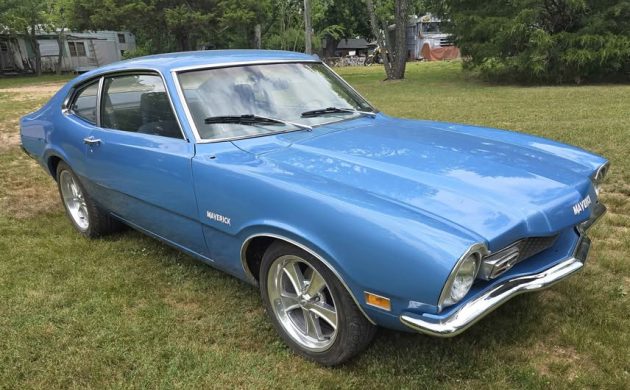
Ford introduced the Maverick for the 1970 model year. It featured crisp, contemporary styling, but beneath the surface lay underpinnings dating back to the 1960 Falcon. I have never considered that a negative attribute, because buyers were effectively handing over their cash for a proven product. This first-year Maverick looks striking in Hulla Blue. The seller added the hood and bumper from a Mercury Comet before applying a fresh coat of paint. The work is relatively recent, which helps explain why the car presents so well. There are no genuine cosmetic shortcomings, and no evidence of rust. The trim is in good condition, as is the glass. The aftermarket wheels and tires are another recent addition, and are the most obvious sign that this Maverick might be more than a pretty face.
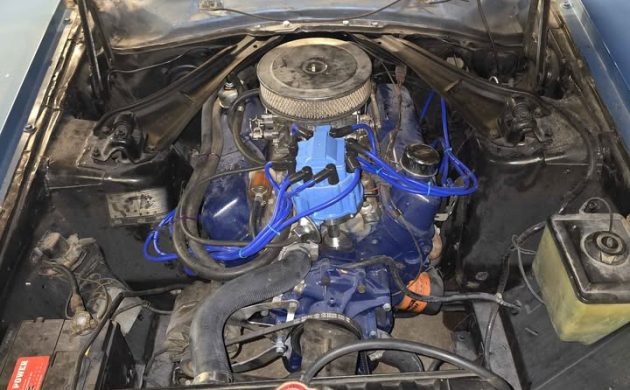
Ordering a first-year Maverick brought a selection of two six-cylinder engines. With the range-topping 200ci motor delivering 120hp and 190 ft/lbs of torque, it is fair to say that performance was acceptable. Hiding beneath this Maverick’s hood is a 302ci V8, teamed with a four-speed manual transmission. Ford introduced the 302 to the range in 1971, producing 210hp and 296 ft/lbs of torque. It would be fair to expect at least the same figures from this V8, although I wouldn’t be surprised if there were more ponies at the driver’s disposal, courtesy of the upgraded Edelbrock carburetor and HEI ignition. The seller states that not only is this motor freshly rebuilt, but so are the brakes. The impression conveyed is that this Maverick is a turnkey proposition.
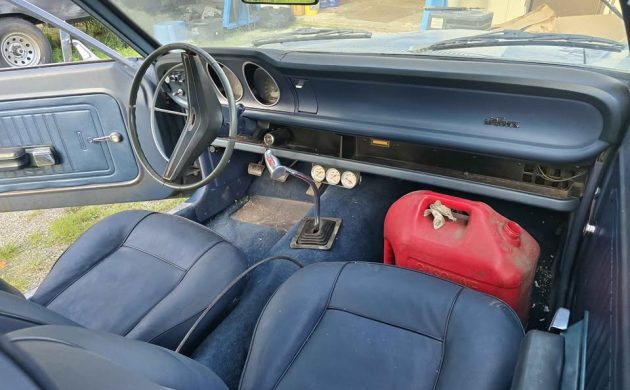
The interior is where the buyer could truly make their mark on this Maverick. Trimmed in Blue vinyl, the seatcovers seem to show slight wear, although that could also be an image imperfection, and the dashpad is cracked. The seller includes a new Black carpet set for the buyer to install. How far the buyer goes will depend on what they are willing to spend to lift the Maverick’s interior appearance. For example, a replacement pad retails for approximately $430, and a set of seatcovers, if required, will add a further $850 to the tally. Alternatively, the new owner could go the budget route by installing the carpet, along with a set of slipcovers for the seats and a cover for the dash. The interior would look okay without costing a fortune. The seller indicates there are functional flaws with the factory gauges, while Ford’s bare-bones approach means there is no radio or other creature comforts.
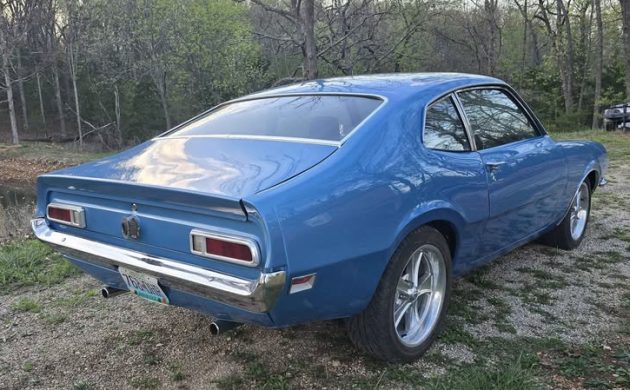
Classics like this 1970 Ford Maverick pose a challenge because they write their own rules when it comes to potential value. The seller’s price is on the high side of the affordable range, but it is above what buyers might expect to pay for a similar, unmolested example. However, the engine upgrades make it a tempting proposition, and with scope for interior improvements, the buyer could make their own mark on this classic. It has only been on the market for around one day, but how quickly do you think it will find a new home?

Que aftermarket wheel screeches.
One of the coolest street machines I’ve ever seen was a Maverick, back in the 70s. Since then, I’ve never seen one that compared.
It was the perfect combination of flawless apple green paint, wheels, engine hardware, and stance; although it also could have been an effect of the chemicals which commonly flowed through my gray matter during that ‘era’. Regardless, it was one stunning ride.
Why in the world would you put a Comet nose on a Maverick? SMH
Probably the same reason he put those horrendous wheels on it.
Bad taste?
I also found those wheels to be out of place. I’m OK with the rest of it though.
That too
That
Agree, looks funny with the Merc addon’s …..should have a ‘Grabber’ Hood with the V-8 in it………….
It has a Comet Front nose and hood.I used to own a 1970 Maverick back in the late 90s..i did the same thing and did a 302 swap with a C4 trans…im sure it’s not much of a problem now maybe but i had a difficult time tracking down a set of V8 frame mounts back then.the engine bay is the same as a 65-66 Mustang ,so it uses the same headers.you can get a 351W in there with a some hammer work around the shock towers
The Comet hood and bumper is a “bold” choice, LOL! The grille is from a ’73 or later Maverick, as the turn signals are located in the grille, not below the bumper above the lower valence panel, as they would have come from the factory. Those bucket seats don’t look like stock Maverick pieces, either. The Luxury Decor Option (LDO) was still a couple of years away in 1970, the first year of Maverick production, and they don’t look like LDO bucket seats in any case.
If I remember correctly, you could not get a V8 with a “70. You could with a ’71, though, so I suspect that this is a ’71 instead. The Comet hood and grille look out of place as well.
True, the top dog motor in 1970 was the 250 I6, but all of the parts to bolt in a V8 are readily available. Most of these were born with one of the six cylinder engines (170, 200, 250), but the V8 swap is a popular and relatively easy upgrade. Some have sourced 302/5.0L V8’s from late model wrecked Mustangs, with fuel injection, and dropped one of those into a Maverick. V8’s came with the optional front disk brakes, another popular upgrade for cars with front drum brakes.
Recently, there are Mavericks out there with Coyote 5.0’s in them. Anything is possible, these days.
True, but Maverick “Grabber” hods are available as aftermarket pieces on the Internets, LOL! See link below.
https://maverickman.com/collections/maverick-specific-parts/products/ford-maverick-oem-reproduction-grabber-hood
The steel version in the link is $489.00, plus tax and shipping, a carbon fiber version is lighter, but will lighten your wallet a great deal more as well, at $1050.00, more than double the price!
Sometimes using interchangeable parts from other models is the only available choice. Better than nothing, that’s for sure. That steering wheel has to go, and magnum 500’s make a nice touch on a maverick. Some years ago I recall seeing mavericks made in Mexico have 351 displacement callouts on the fenders.
Why would one place a gas can in the front at the time to take photos for a sale? Is the gas can hiding a big hole in the floor?
Why do people do this?
Beats me.
Otherwise it is a nice ride.
Evidently got a deal on some Comet parts. Stock nose with Grabber hood would be my choice. To be polite-it is “optimistically priced”. On the other hand, the gas can on the floorboard is just plain stupid. It should never have been there- and at the very least, should have been removed for the “photo shoot”
With that goofy Comet hood, plates should read OVRBITE.
Comet hood and bumper with Maverick grille say “thrown together from parts on hand”
Yes very optimistically priced. Some real shade tree hot rodding here.
Love the 302/4spd combo though. Add disc brakes up front and roll bars front & back with stock steelies and go have some fun.
Stock hood and bumper would be more appealing. Mount a tachometer over that dash pad crack.
Ford should have built a Boss 302 Maverick, they really missed the boat there. In 71 I went a drove a new 302 maverick and also drove a 71 duster 340, hands down the duster was the better buy and far more fun. If they would had built a Boss 302 I most likely would have went with the maverick. The car is a $7500 car the way it sits.
Interesting
Facebook marketplace says it is SOLD