

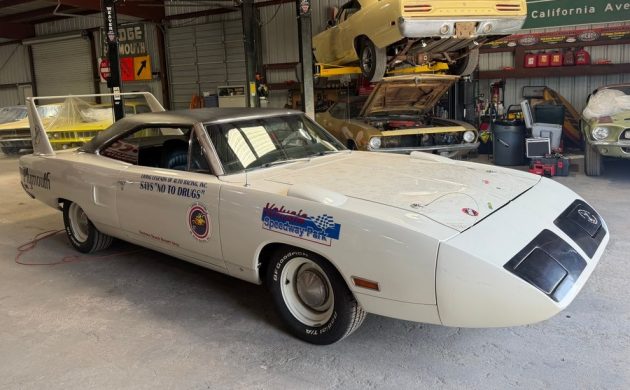
The vehicle manufacturing industry has changed dramatically in the last sixty years. In some ways, it is for the better because technology has allowed companies to develop engines with more power per cubic inch than seemed possible in the 1960s while producing fewer emissions. However, the days of walking into a showroom and slapping down the cash for a homologation special are a distant memory. One such vehicle was this 1970 Plymouth Superbird, a car designed specifically to provide success on NASCAR’s superspeedways. It retains its unique aerodynamic additions, and the engine bay houses a 440 Six-Barrel to provide mountains of power and torque. The buyer must choose between restoration and preservation once the Superbird is safely parked in their garage. The seller has listed it here on eBay in Celeste, Texas. They set their BIN at $185,000 with the option to make an offer.
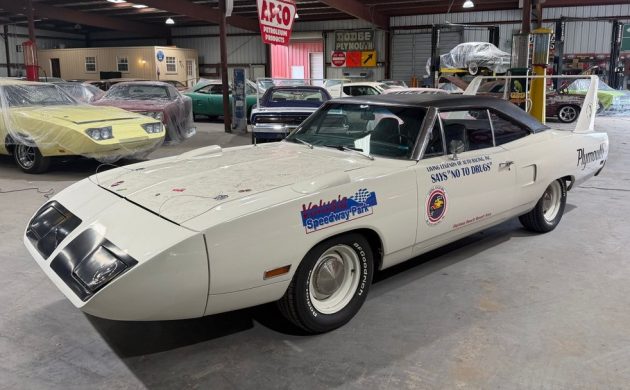
The list of words used to describe the 1970 Plymouth Superbird definitely wouldn’t include “subtle.” Dodge introduced the Charger Daytona in 1969, and with Ford and Mercury joining the aero war that year by releasing the Torino Talladega and the Cyclone Spoiler II respectively, Plymouth was caught on the back foot. However, the Superbird proved a force to be reckoned with in 1970, with Richard Petty scoring eighteen wins from the forty races he contested during that year’s NASCAR season. Finished in Alpine White with a Black vinyl top, this Plymouth makes a positive first impression. Its exterior carries some non-original stickers, but one interesting aspect is the selection of autographs on the hood and the trunk lid. The owner accumulated these over many years, and all are racing-related. If the buyer decides to restore this classic, preserving those panels might be worthwhile. The reality is that the car needs love because the original aero nose is cracked, and there is rust developing on some lower extremities. The issues aren’t severe, with the floors appearing rock-solid. The vinyl is lifting on the edges, and with obvious bubbles visible in some images, there may be hidden problems requiring urgent attention. One welcome bit of news is that, although the nose requires attention, every aero feature that defines the 1970 Superbird remains intact. There are no reproduction parts on this classic.
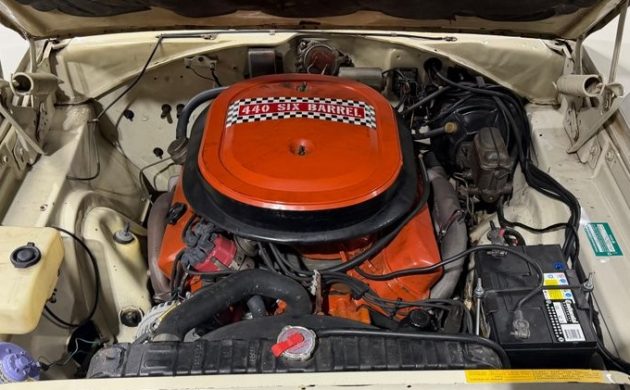
Powering this Superbird is the company’s fire-breathing 440ci Six-Barrel. The motor is a beast, and although it isn’t as potent as the significantly more expensive Hemi, its power and torque figures of 390hp and 490 ft/lbs are nothing to sneeze at. The power finds its way to a 3.54 Dana 60 rear end via a four-speed manual transmission, while the Dealer Brochure confirms that power steering and power front disc brakes were standard. To maximize the potential future return on investment, desirable classics typically need to be numbers-matching. Unfortunately, while this Plymouth’s rear end is original, the 440 is only date-correct, and the transmission is of 1968 vintage. The owner has been the car’s custodian since 1971, confirming that the car runs and drives. However, the brakes require attention before the Superbird can be considered roadworthy.
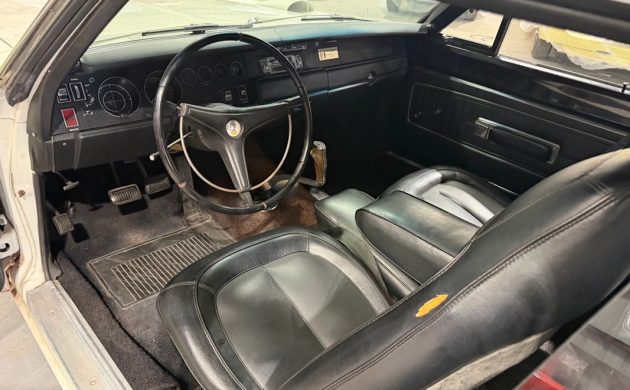
This Superbird’s interior is serviceable, but falls well short of what many would consider acceptable for a classic of this caliber. Trimmed in Black vinyl, it features a purposeful pistol grip shifter and an AM radio/8-track player. The list of faults includes a damaged driver’s seatcover, scuffed seat backs, cracked dashpad, faded carpet, cracked wheel, and split sunvisors. None of the issues is insurmountable, and I don’t think that a complete retrim is warranted if the new owner wishes to preserve as much of the car’s originality as possible. Since the issues aren’t urgent, they could consider their next move while tackling some of the car’s other shortcomings.
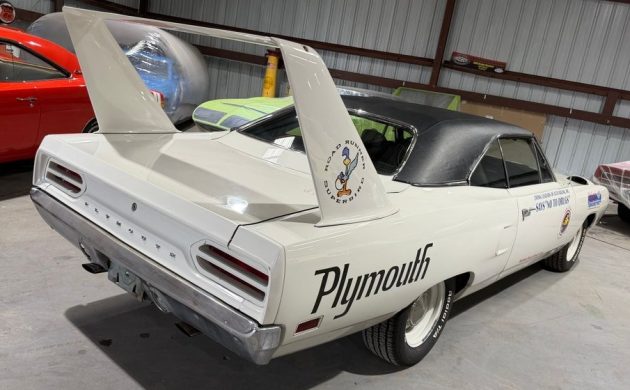
The 1970 Plymouth Superbird demonstrated that racing success doesn’t necessarily translate to the showroom. Many potential buyers couldn’t warm to the radical aerodynamic additions fitted by Plymouth, meaning that it was common for new examples to remain unsold as late as 1972. Some dealers removed the additions, offering a Superbird dressed as a “regular” Road Runner. This Superbird has avoided that fate, but it is begging for TLC. That raises the question of whether you would sacrifice the autographs to return the car to its factory form, or if a less invasive approach would be more appropriate. So, it’s over to you.

Someone has an affinity for muscle cars and classic iron, i.e., not just the abundance of good looking MoPar muscle but high dollar Mustangs/Shelbys scattered about and a MB 230SL up on a lift.
Wonder why this particular ‘Bird and not some of the others instead..
This would be left pretty much untouched in our garage after the necessary maintenance was completed in addressing safety needs. The autographs are a part of the history here and would be a focal point for those of us that remember those wall scraping, paint swapping, rule bending drivers of the era.
GLWTA
There is a video on youtube on this car mopar 5150
$180,000.00 or better?? For that much money i seen Birds for $150,000.00 you can eat off it!! The vinyl top needs to be removed to fix the rust under it. Also needs new carpet the seat need to be fixed…. and I think there is a crack in the dash. It a U code but they made it to a V code. Trans is a 68. Who knows if the headlamps work pop up? And the brakes needs attention. I know it had one owner since 71. I get it but not for 180. I been seeing lately Mopars being over price not matching the condition of the ride. Sure I would love it for a lot lot less. 😄 Well good luck to the seller. 🐻🇺🇸
Six Barrel with a 4 speed.
When I read ‘Celeste, TX’, I knew right away that the ask would be in the stratosphere. This seller is a dealer whose wares have been featured on here multiple times, & the prices are almost always outrageous. GLWTS.
So here we have a candidate for TOTAL restoration, not partial! It should be done right, and if necessary by professionals. This seller belongs in Bellevue a hospital in New York, because his or her price is crazy! Not even a true Six Bbl.car with a date engine, ‘68 transmission, bad brakes, bad rust issues, needing paint, new vinyl roof, and who knows the condition of the driveline! Way, way, overpriced, and sorry, the signatures don’t increase the value either. What a mess!
another overpriced car from this dealer.
Look at YouTube Mopar 5150 long video on this car just watched two nights ago. Original owners’ brother was selling it.
Take this out for a road trip and watch it overheat.
What about all the other cool cars I the pictures
Not a barn find ! For sale by wishful dealer.
This car is like an ugly dog people just love them
I think they are beautiful, The nose is so unique and I love the wing. Hate them if you want but you will never be able to afford one.
These cars are like an ugly dog people just love them
I’ve never understood Superbird owners/sellers putting poverty caps on their Superbird. Nothing screams “not original” like steelies and dog dishes, given that there were no wheel options on Superbirds — you could have any kind of wheel you wanted, as long as you wanted Rallye Wheels.