
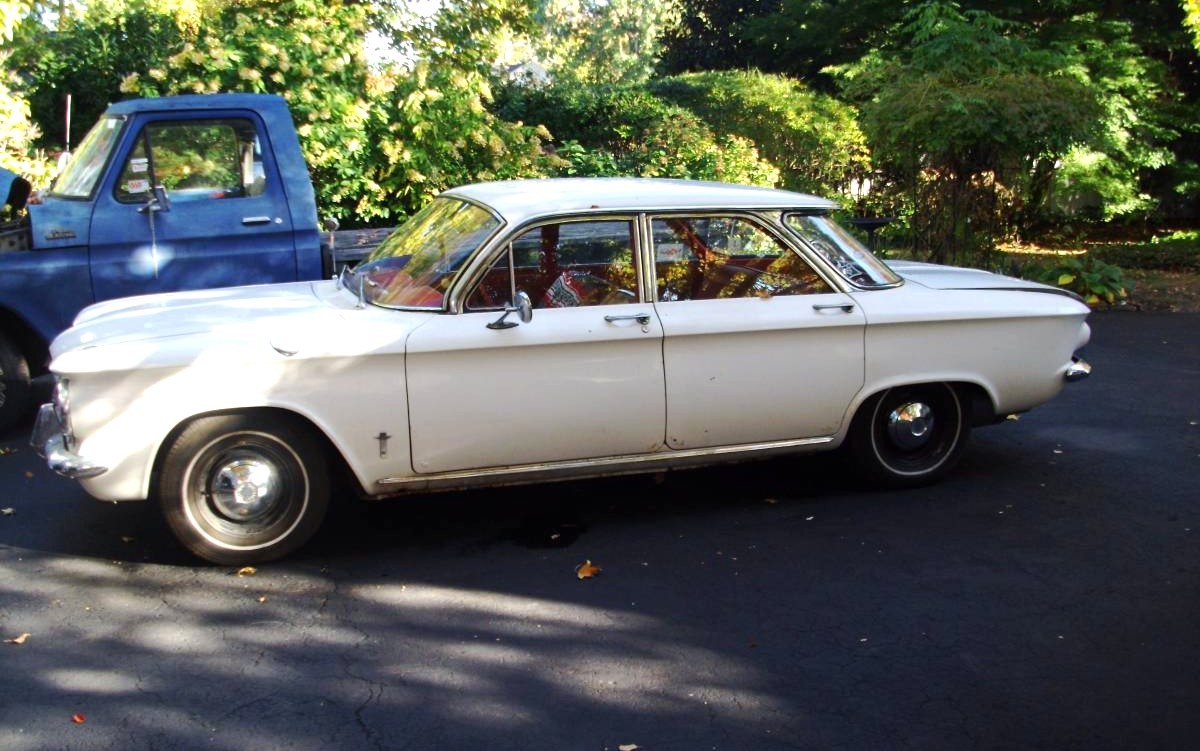
Chevrolet fielded two compact cars, the Corvair (1960-69) and the Chevy II/Nova (1962-79). The Corvair was akin to the VW Beetle in that it used a rear-mounted, air-cooled engine, a first for American automobiles. Chevy sold nearly 1.8 million Corvairs in 10 years, most of them before some negative PR came from safety czar Ralph Nader. The seller has a decent 1961 Monza 4-door sedan that runs but will eventually need some cosmetic attention. Located in Wanamassa, New Jersey, this survivor is available here on craigslist for $4,000 OBO.
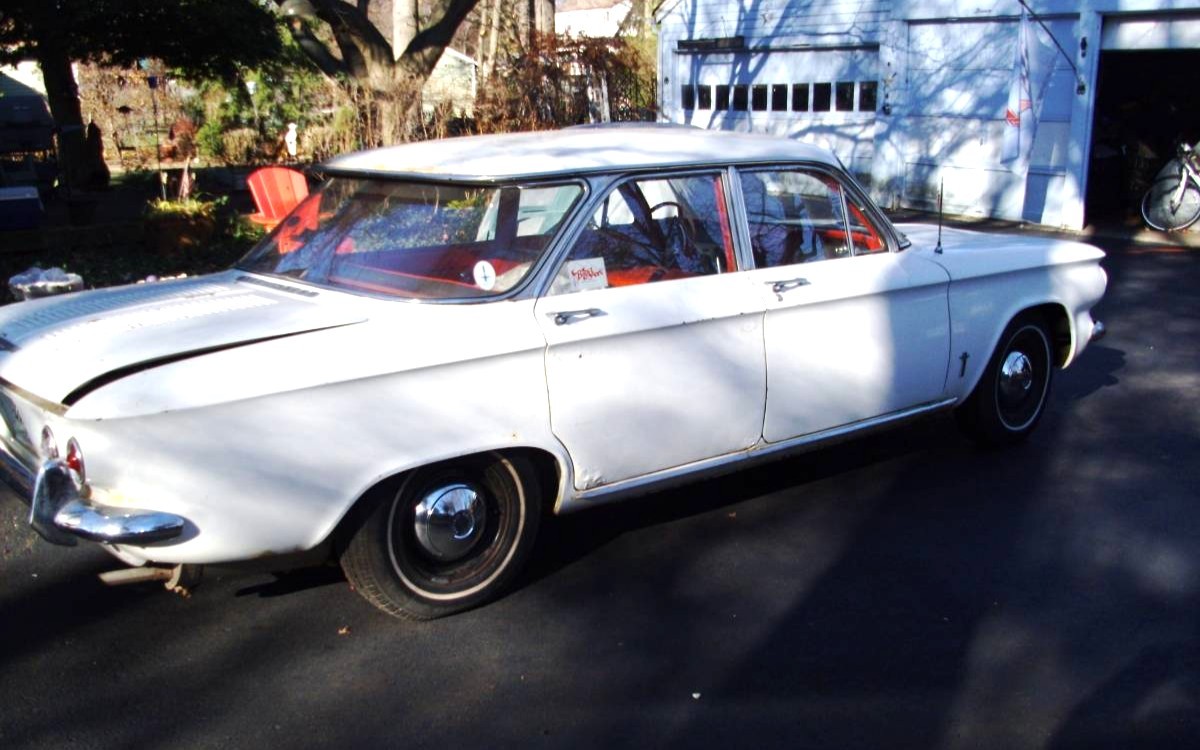
After a successful launch in 1960, the Corvair was minimally changed for 1961. Its 140 cubic inch “flat-six” was enlarged slightly to 145 CI, a displacement it would keep until 1964. The Monza was the top series, and several body styles were offered, including the 4-door sedan seen here. Including limited production in Canada, more than 262,000 Corvairs were built in 1961, of which 34,000 were like the seller’s survivor. The buying public wasn’t swayed by the Corvair’s unorthodox design by then-American standards.
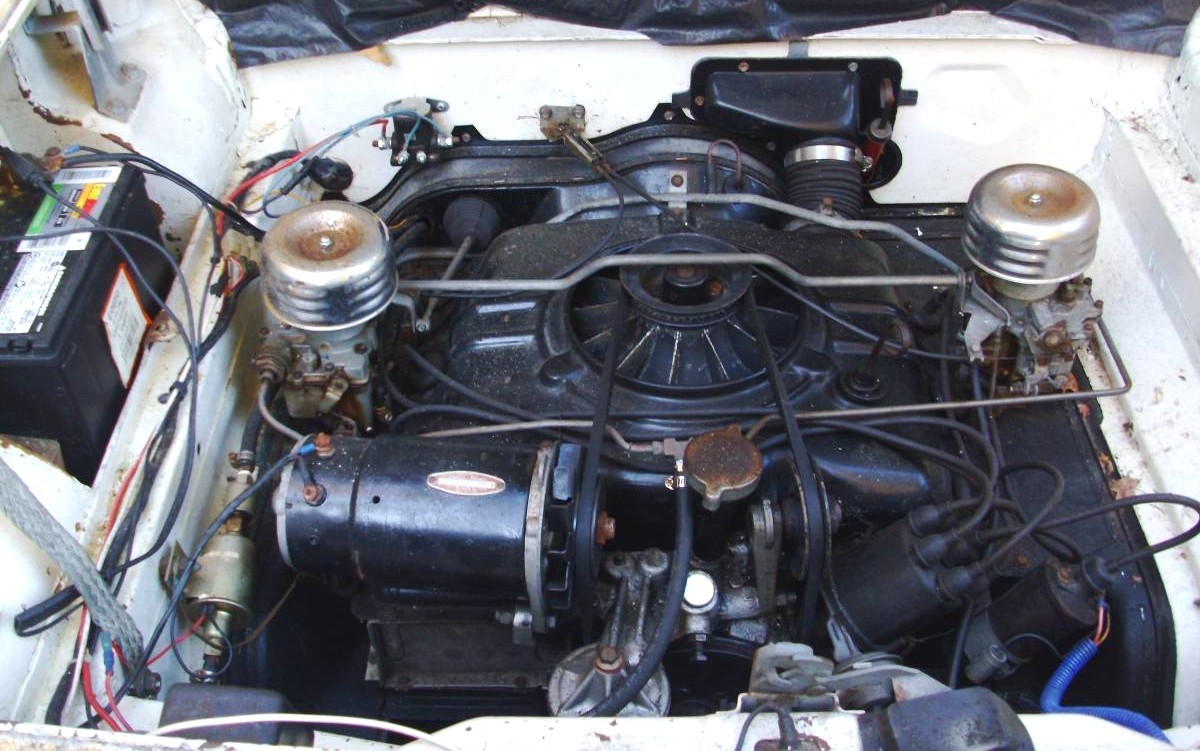
We don’t know the history of this Corvair (such as where it originated, how many owners it’s had, and so forth). The mileage is unknown because the odometer is broken. It does run, drive, and stop, though no adjectives are used to say how well. It does have a 2-speed Powerglide automatic transmission adapted by Chevy to work with the Corvair’s air-cooled source of power.
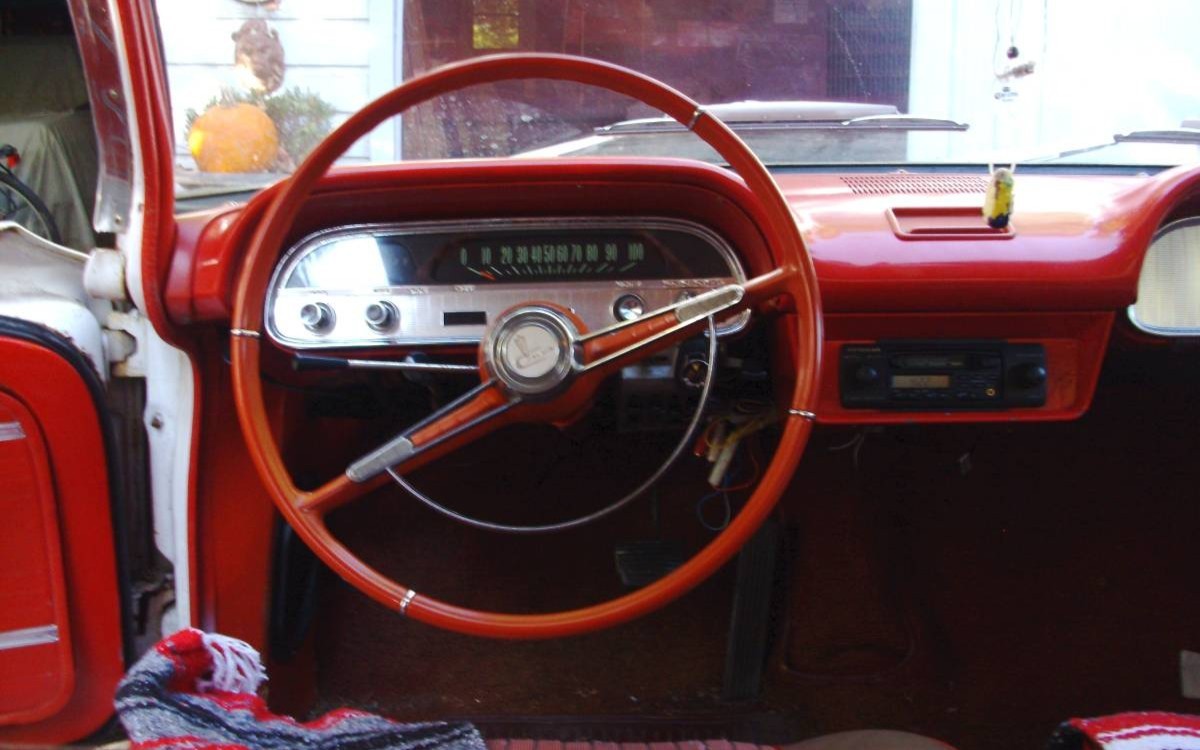
Since it runs and the interior seems okay, this Chevy’s problems lie with the body and paint. The seller says there is some rust, but the floors are good, and the trunk pan has been replaced. The paint only rates as being fair (if that’s what 4 out of 10 means). The seller has accumulated some spare parts, though we don’t know what they comprise or if any will be needed sooner rather than later. But the asking price seems fair, as not too many of these Chevies are still out and about. Thanks for another great tip, Mitchell G.!



I had a home-built trike that used a Turbo Spider motor, that thing flew but rode like a buckboard. Between backaches it was a fun ride and could do wheelies like nobody’s business. The engine was mounted “midships” too, with a 3-speed transaxle behind it. The guy whom I sold it to converted it into a sand rail.
Nice old ‘Vair! Clark’s Corvair in Shelburne, Ma. will have whatever you need for it-I would see about updating the swing axle since it’s an early year model. These looked pretty exotic by early ’60’s standards (even considering the variety of body designs then) but some people loved them enough to turn them into “poor man’s Porsches” (like legendary driver John Fitch and a dealer named Yenko, if I remember correctly). The post ’63’s are getting to be moderately pricey collectibles-especially in Corsa trim. Now for the elephant in the room-the much-reviled Nader was merely using the Corvair as a tangible example of corporate thinking (in general) at the time, which thought of built-in safety engineering as an expensive (i.e. not cost-effective) luxury which would threaten the bottom line, making the company less competitive-thank God THAT doesn’t happen any more! (Boeing) Shelburne Falls is a lovely place to visit-the Bridge of Flowers is not to be missed! GLWA
Nader didn’t kill the Corvair nearly as much as the Ford Mustang did. Largely Nadar’s suspension/handling concerns were addressed early. The newly introduced Mustang simply dominated the market in the segment starting in ‘64, with Corvair sales tanking. Chevrolet didn’t recover for 4 years, until the Camero was introduced in ‘68 (Chevrolet dropping what was left of limited Corvair production at the same time). Mustang simply offered a far better car that could be ordered in variations from economy, to muscle machine, in coupe to fastback body styles (and yep, it was a glorified Falcon!).
There was a big magazine article covering the new 1965 “Pony Cars”, can’t remember which one, however they were testing the Mustang, Corvair, Barracuda, maybe some others. I recall the statement regarding their test drivers, they kept going back to drive and enjoy the Corvair since it was so much more fun to drive than the other candidates. So I don’t believe in any way that the Mustang was a “far better car”. But the Mustang did offer a V-8 in a sporty design that the buying public went bonkers over. How many who bought a Mustang would have instead purchased a Corvair, if they’d had the chance to test drive one???
I’m not sure it would have changed much, Duane. I actually have a ’65 Mustang and a ’65 Corvair, and although the Corvair handles and steers better, the V8 Mustang just has so much more effortless torque (and a far better heater) that I don’t think the Corvair had a chance. It took the 140 and the Turbo to keep up with a two-barrel 289, and acceleration was what most (not all) people wanted.
Duaney, any one who bought a Mustang could have test drove a Corvair. I like Corvairs. Never owned one but I have owned many Mustangs and Camaros.
I thought the Camaro came out in 67? I see some Camarosisted as 67.
John
Parked next to a handicap space with a new Corvette yesterday, with handicap plates, and wondered aloud whether I would trade places – an 11 year old Audi which runs well today, and my 84 year old body can still run and jump. So, no trade, if offered.
The Corvair sat six adults with the standard bench seat in front. The Mustang sat two in front, and two very cramped in back. The Corvair could run circles around the Mustang on a twisty course, and, was solid handling (with the rear anti-sway bar, in the original design but omitted to “save cost” in the ’60 – ’63’s) much better than the Porsche of the day, much faster than the rear engine VW, Fiat, and Renault of the time. Great in snow.
But the early models with the gasoline heater under the hood were fume city, my mother drove hers with the windows open all winter. The tire inflation was key to not flipping around, 15 or so PSi in the front, and 32 or so PSI in the rear, but few, including many owners, realized this. Had one do the flip around, 360 degrees, ended up front bumper to mine in breakdown lane of two lane, concrete, dry, straight, 50 mph state highway with big gusty crosswind. Same thing happened with a Renault Dauphine in the day. No harm in either other than very shook up drivers and passengers.
These still are a joy to drive.
I have a ‘63 500 coupe, and I put 22 psi in the front tires and 34 in the rear. She drives as smooth as glass, and gets lots of thumbs up and stoplights. I’ve had her on the road since 2013, and the only problem I’ve had has been the alcohol in modern gas eating through the diaphragm in the fuel pump. Alcohol-free 90 octane gas solves that problem, though it’s a bit pricey. At car shows she gets a lot of attention, as she’s usually the only Corvair in attendance. Everyone seems to have a Corvair story from back in the day, and they are overwhelmingly positive. I enjoy the heck out of this car!
Drove my 62 Monza 300,000+ miles before trading it for a 1927 Ford. Nothing has ever compared to the way my corvair drove. Was like a go cart. Quick, light steering. The hum of the little 6 banger. Long, easy shifting 4 speed. One of GMs better ideas. From my own personal experience, I knew Nadar was making a name for himself at the expense of a great little car. My 51 studebaker is fun, but it’s no corvair. If you have never driven a corvair, you are in for a treat. Cheers
Identical to my first car except mine had a green interior. $110. Calling in favors it had a valve job, repaint in yellow, reupholstered in black by my Mom and me and new carpet and headliner all in black. The driver’s floor was rotted but not too much that a Top Value Stamp sign wouldn’t cover! I kept it two years and sold it for $400.
Gas heater was awesome but fumes would drive you to drop the windows. Don’t ever let someone convince you these will pull a tandem axle UHaul trailer. They’ll overheat in about 60 miles.
Those with the gas heater, there’s never any fumes at all, as long as the system works correctly. If you disassemble a gas heater, you can clearly see that there’s no way for combustion gas to enter the passenger compartment. Similar to home furnaces, the only way for combustion gas to enter the home would be a cracked heat exchanger. Corvairs with the hot air heater can’t have combustion gas enter the car since the exhaust is all on the outside of the heat plenum. But there can be fumes if engine oil leaks from the push rod tubes, you’ll smell burning oil, not pleasant, but not deadly either.
Lovely looking car. If only more pictures were posted.
Reply to Mr. Toth, you’re correct, most people only consider how much you’re pushed back in the seat and snapping your neck with acceleration, but as in those road tests, the professional drivers prefer better handling and steering. The era then was of course the big muscle car craze with Hemi Cuda’s and SS 396 Chevelle’s.
Reply to Cliff W, boils down to most Mustang buyers had little to no interest to test drive a Corvair, but had they had the pleasure, it might have changed their minds. Similar situation, in the early 50’s Buick was # 3 best seller. My dad wouldn’t consider any other car then. But had he test drove the new 51-53 Kaiser, for example, he would have found a much better driving car, better handling, steering, better visibility, and equal comfort, the dealer would have pointed out the better fuel economy. I know all this from owning both cars for a lifetime. The Buick is a ponderous tank to drive, the Kaiser is fleet and nimble. But 90% of Buick buyers in those years wouldn’t even begin to consider a test drive in a Kaiser, just like dad.