
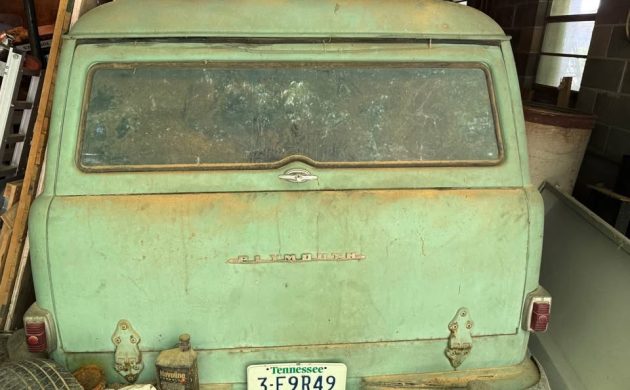
Post-war Plymouth station wagons were known as Suburbans for nearly 30 years. Coincidentally, Chevrolet would employ the name at the same time, which had to be more than a little confusing to buyers. The seller has a 2-door Plymouth Suburban from 1952 that has been buried inside his/her father’s basement garage since 1984. Buying the wagon is one thing, while extricating it may be another. Located in the dark in Knoxville, Tennessee, this rare project is available here on Facebook Marketplace for $7.200. Thanks, tip meister T.J.
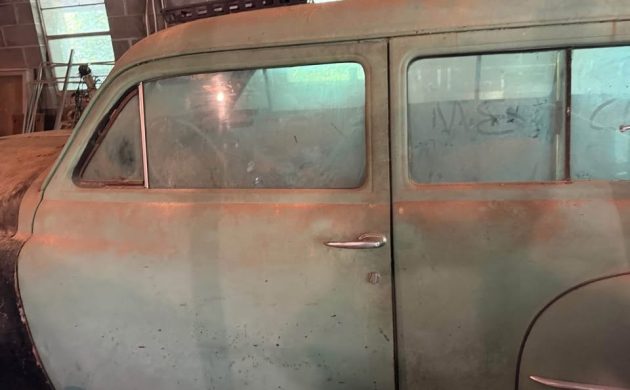
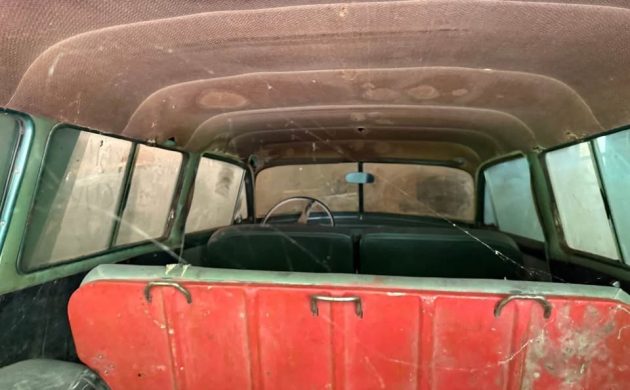
Like many U.S. auto manufacturers, Plymouth’s cars were all-new in 1949, the first redo’s since before WW2. “Woodie” wagons were on their way out, being replaced by all-steel designs that were cheaper to build and maintain. Plymouth was the second builder to go that route (Jeep was there first). Also, Plymouth helped pioneer the “turn-the-key” ignition-starter arrangement. The early Suburbans were two-door wagons with a folding rear seat that gave way to some generous space for hauling things.
Under the hood of the seller’s Plymouth should be a 218 cubic inch L-head six-banger that was once good for 97 hp. It may have been running when parked because Dad was heading off to a stint in the U.S Air Force in ’84. The odometer read 94,000 miles at the time, so it had certainly been well-used in its first 32 years.
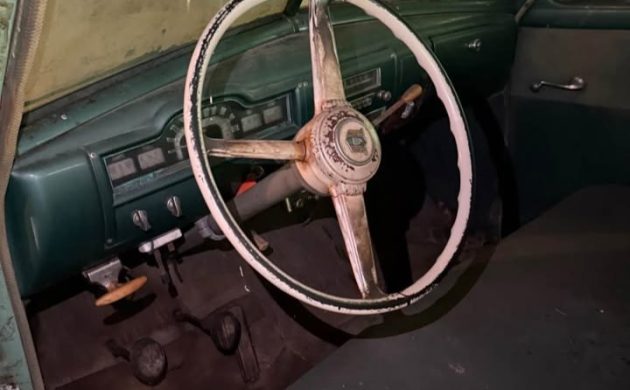
There are some dents and dings in the body without mention of any serious corrosion. Nor are we told if the engine is seized from sitting for so long. Surprisingly, the interior seems to be in fairly good shape. Bring a trailer and start digging!


Whatever the color is, I like it and would keep it. And the guy should give the car to whoever is brave enough to get it out of the “basement garage,” they have black widow, brown recluse, and brown widow spiders in Tennessee!
At first, I’d try to get the original 218 to turn over and fire up. If not, my backup plan would be either a 225 slant 6 or a 318 V-8. And the engine that would be more practical to use would be backed by a 727 Torque Flight auto tranny. The rear axle should
handle the engine torque just fine. The only thing I’d have to figure out would be just how to
re-install the driveshaft mounted
E brake that was standard Chrysler fare back then. And brakes? A modern setup with discs up front and drums out back– all working through a dual
circuit master cylinder. The front
suspension could be saved, but I’d add electric power steering to
make the car easier to drive and park. And all this would be done with 12 volt electrics. I’d save as much of the original interior as well with a period correct radio set up for AM/FM/ Syrius XM and
Bluetooth to keep the troops entertained while riding and Vintage heat and air to cool ’em off on hot summer days. And that, folks, was how we built ’em
50+ years ago and I don’t see a need to change it now. In fact, you’d be money ahead to build it
that way. All it has to do is work.
Just sayin…
If you want to install a slant six you will need to move the firewall about 6” . Been there ,
The floors were known to have some serious rust problems. If it’s been stored for all of those years, maybe no problem. Just saying…
I have always liked this body style. And would love to do an upgrade and drive it regularly. The previous one we saw here was on an S10 chassis. So there you go Ken, with the disc/drum brake and the parking brake issue solved. There are a,couple in my neighborhood just sitting. I need to goncheck them out.
ditto on body style. Even as locals call me “wagonman” it’s one of my fav.s
The PA license plates for wagons from the 50s used to have “Suburban”. I had a 52 Plymouth 2 door in the 70s and also a 46 Dodge pickup with the flathead 218 6 engine. They were fine but I remember adjusting the side valves with engine running at temp, always burnt hands on the manifold while using gauge.