
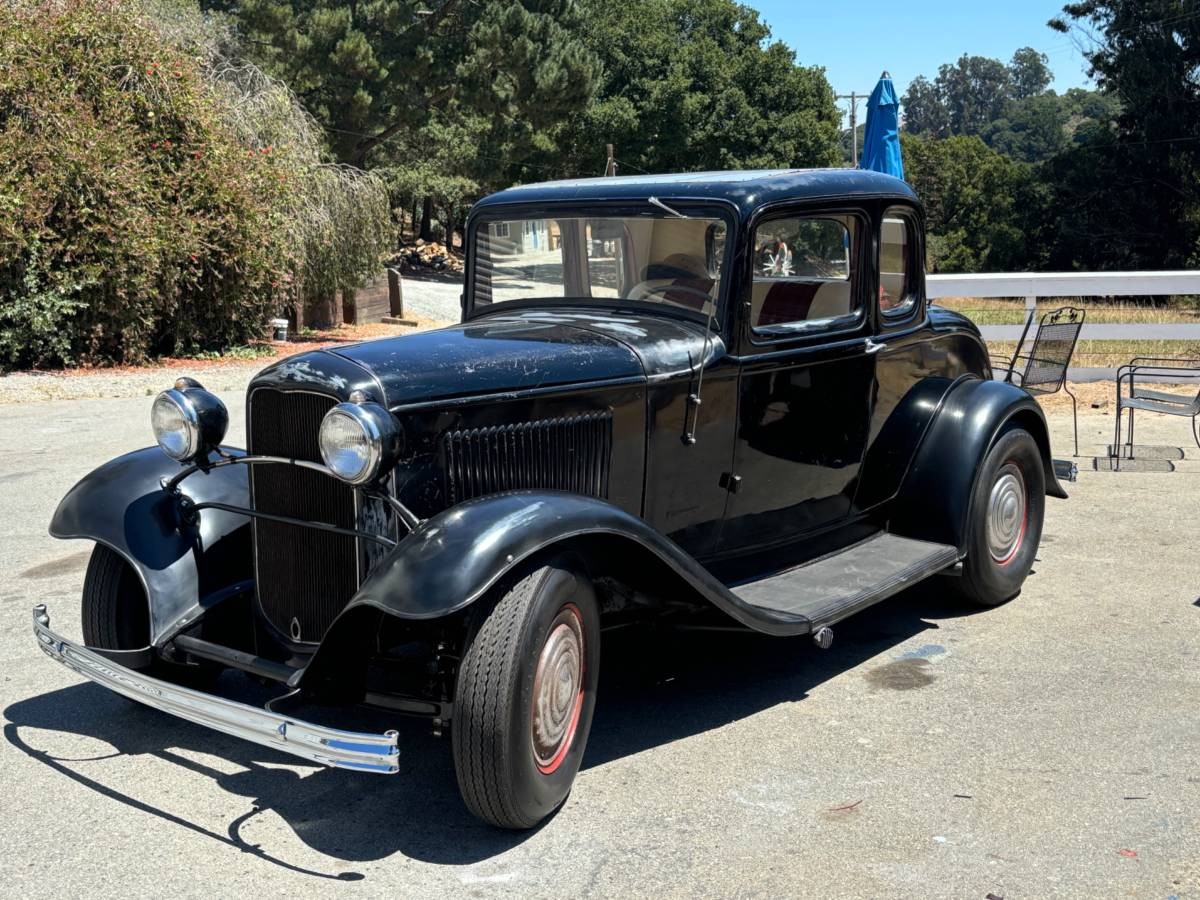
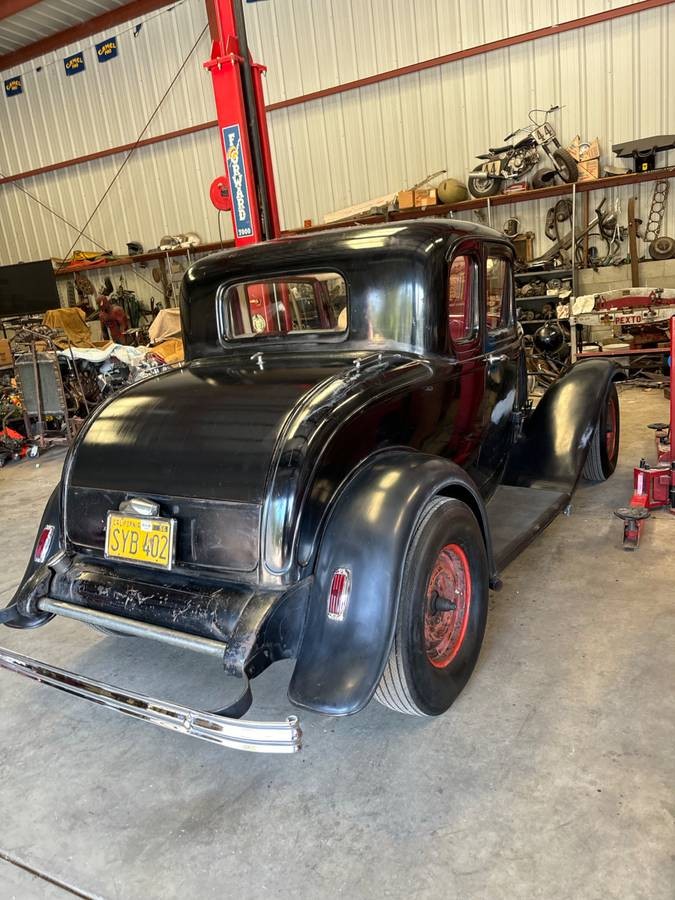
In the world of historians, an item that is a remnant of a particular place and time is called a primary source. These primary sources help us to understand the past by having a tangible item to study that existed in the time you are interested in. In the world of hot rods, there are few surviving primary source examples of how such cars were built by the average enthusiast when the hobby was in its early heyday. This 1932 Ford five-window coupe for sale on Craigslist in Monterey, California, is a window into a time when builders relied on ingenuity and junkyard parts to create their masterpieces. Chock full of old-school tricks, this interesting relic has a price that reflects its historical significance. Do you think a $65,000 asking price is realistic for its condition? What would you do with it if it were yours? Thanks to Colin for the SoCal hot rod tip!
Today, we live in a world where you can order almost any part you can imagine. Our society is entering an era where 3D printing and additive manufacturing will allow many of these parts to be made locally. Things weren’t always this easy for our predecessors. Building a hot rod was much more akin to what we call “repurposing” today. An old car was purchased, unnecessary parts were discarded, the engine was either replaced or “hopped up,” and custom touches were added to make the car reflect the builder’s tastes. Some focused on speed, others on style, while a large contingent of hot rod enthusiasts simply set out to build a reliable cruiser with some style. With few exceptions, most early cars show more ingenuity than financial extravagance.
Some companies catered to hot rod builders, like Honest Charley’s Speed Shop, Speedway Motors, and the SoCal Speed Shop, while others like Edelbrock, Offenhauser, and Ed Iskendarian handled the engine side of the equation. While these establishments helped to make hot rods more mainstream and gave builders a place to send their paychecks, most builds used proven combinations of parts procured from junkyards. This ingenuity and resourcefulness was taken very seriously in the American South. There are many stories of moonshine runners flocking to the local wrecking yard when word came that an ambulance had been brought in to be scrapped out. Ambulances often came equipped with heavy-duty engines with a few more cubic inches than standard versions. When Ford’s venerable Flathead V-8 was eclipsed by more modern engines in the postwar period, engine transplants into old Fords became the norm. The braking, suspensions, and drivetrains of newer cars also found their way into early hot rods with some persistence, adaptor kits, and the usual combination of torches and welders.
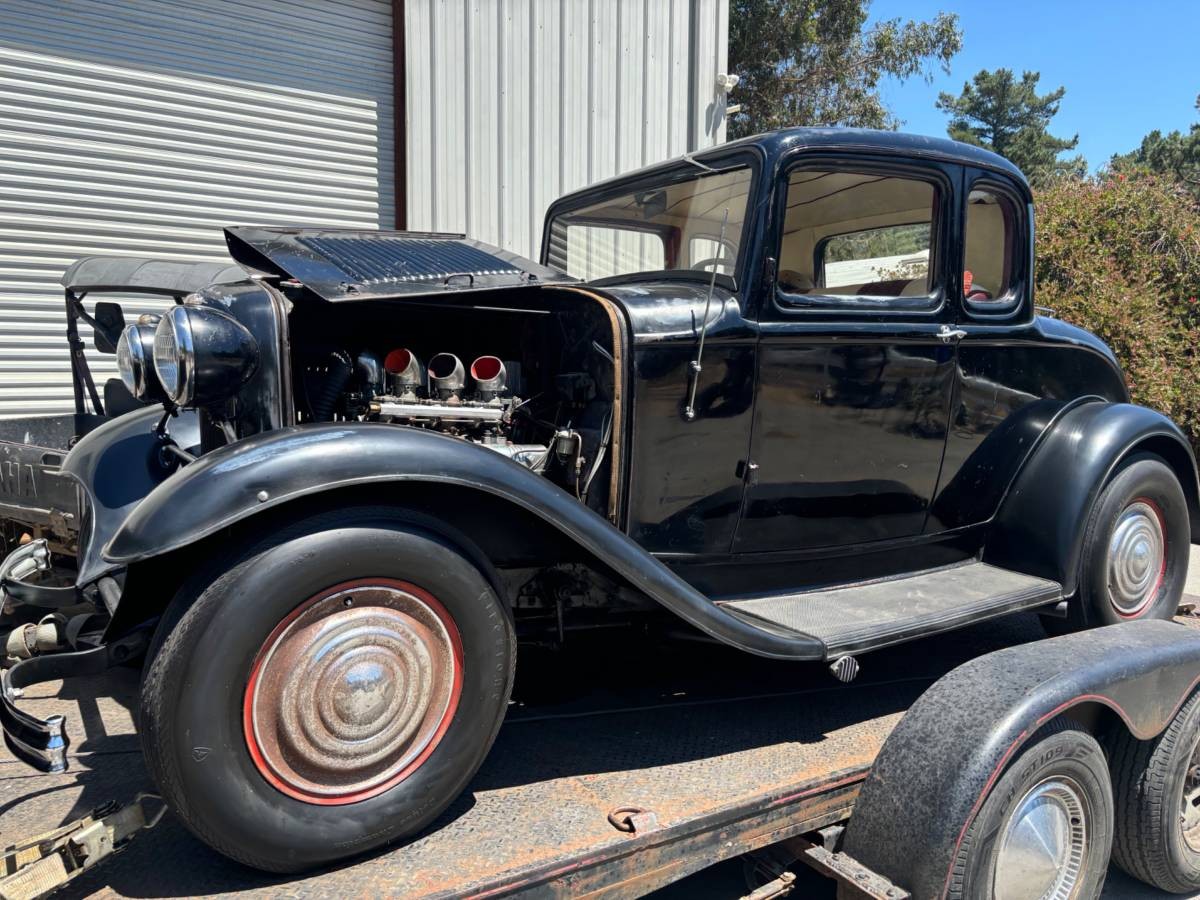
It still took a while for the rest of the drivetrain to catch up. This 1932 Ford five-window coupe is a perfect example of an old ht rod with a newer engine. The seller tells us that this car was constructed in 1953 and was parked in 1961 due to a broken first gear. That transmission, from a 1939 Ford, had been beefed up with gears from a Lincoln Zephyr. This was a commonly seen modification despite the Zephyr’s relatively low production numbers. The broken first gear was no doubt caused by the combination of heavy acceleration from a stop and the torque put out by the Buick “Nailhead” V-8 that had taken up residence under the old Ford’s hood. This was a common engine swap at the time and was made possible by adaptors that mated the Buick engine to the old Ford three-speed. The statement in the ad that the car has a 1939 Ford drivetrain is probably a good hint that the stock mechanical brakes were long ago tossed into the scrap pile and replaced by the new for 1939 hydraulic braking system that Ford finally installed that year.
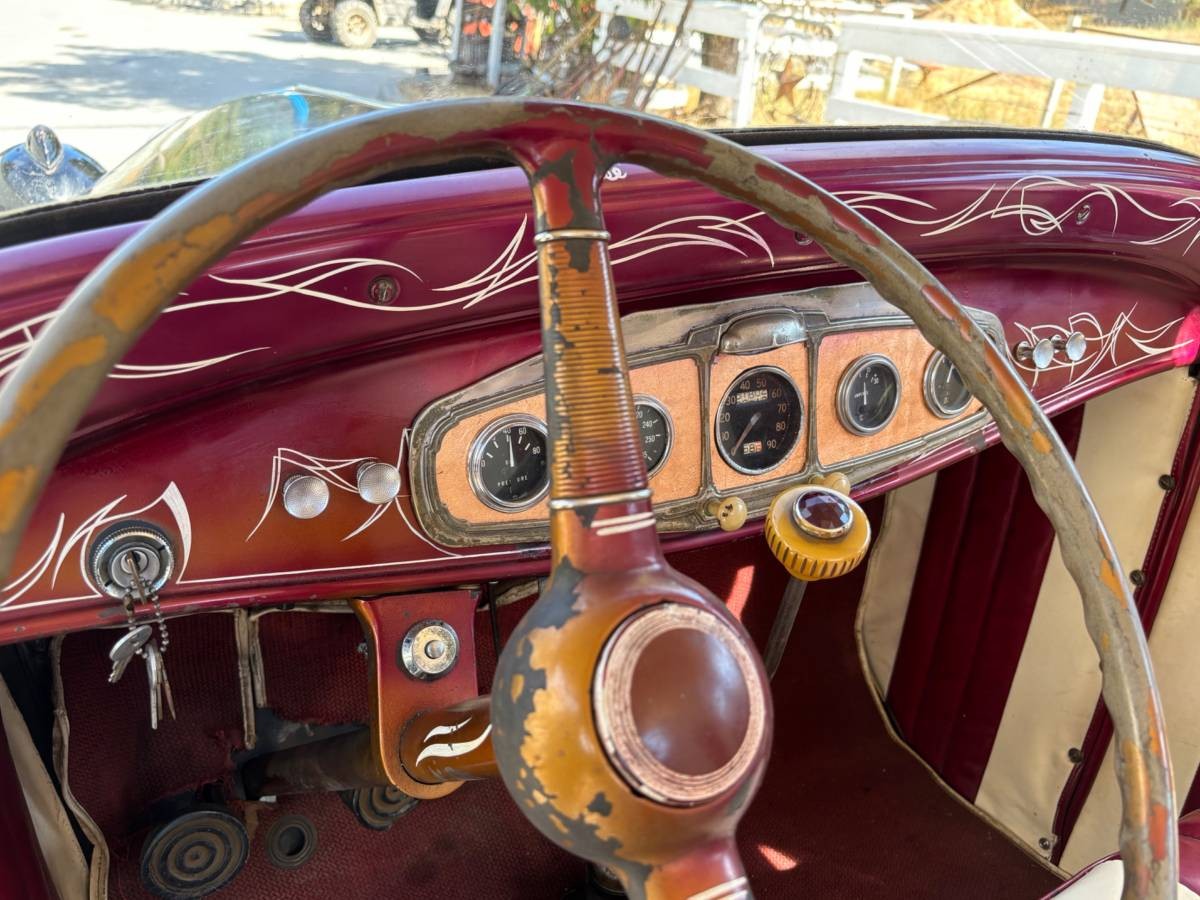
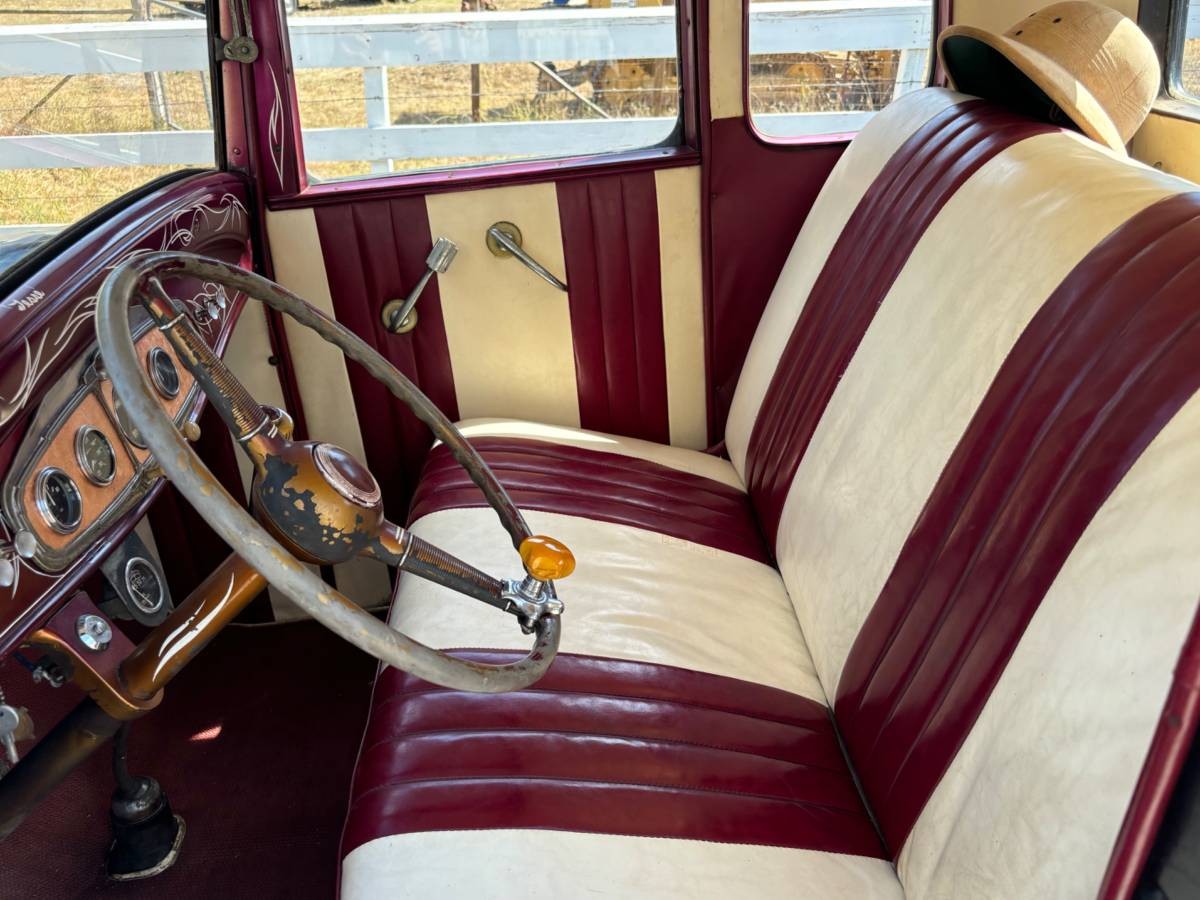
Looking through the pictures reveals many custom touches that were popular during the era in which this car was built. Perhaps the most interesting is the hand-painted striping seen in the picture above. Pinstriping is fast becoming a lost art, but it is fascinating to see the myriad of different stripes and just how many of them there were. The simple plastic steering wheel, the plastic bejeweled shift knob, and the tuck and roll vinyl upholstery are also a window into an era when the custom treatment could be both tasteful and outrageous. One other standout would be the dash of another old car, which has been inserted into the 1932 Ford sheet metal. Does anyone know which old car this was pulled from?
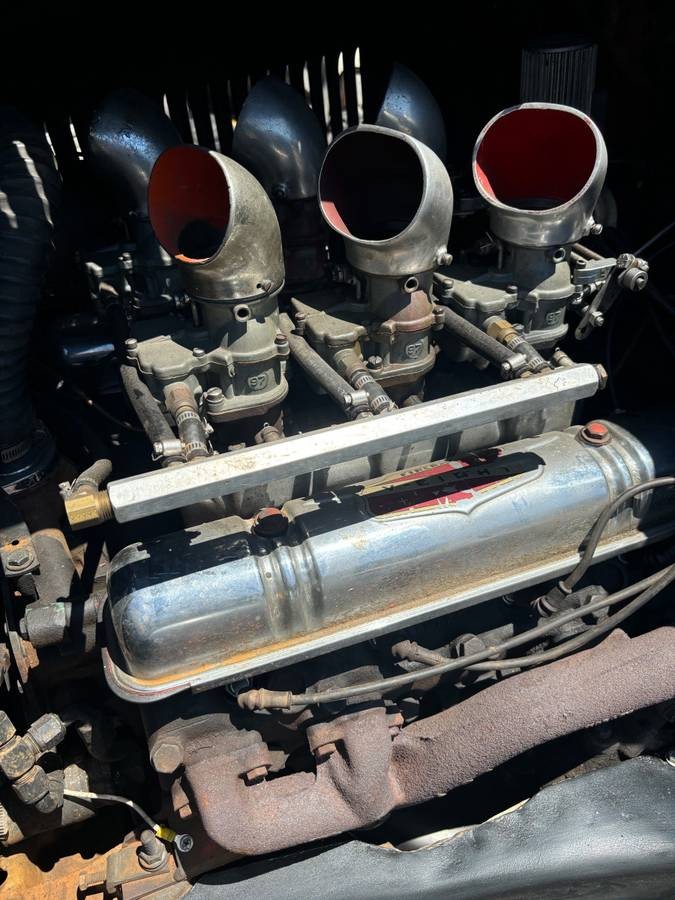
Under the hood is the previously mentioned Buick “Nailhead” V-8 decked out with a row of single-barrel carburetors. Before the arrival of larger carburetors like the famous Holley 750, you had to add single barrels on a special manifold to provide the amount of fuel necessary to feed a ravenous high-performance engine. The seller tells us that they have gone through the car. That includes tuning the engine, repairing the brakes, and installing a set of good tires. They also “gently massaged” the body to preserve the original look of the car. Unfortunately, what that means is not further elaborated on.
In all, this is a hot rod that will draw a crowd at any show. That crowd will mostly consist of serious students of the art of hot rod building, and they will go over a car like this carefully. It is rare to see a car so well preserved from this era, and it is a good look into how a car like this was built back then. Is that rarity and history worth the $65,000 asking price? Let us know your thoughts on that in the comments.




Wow, fascinating !
Love the authenticity. I’m surprised at no mention of the obligatory ” neckin’ knob ” on the steering wheel. In an era when young people had almost no chance for privacy except in the car, being able to drive a manual steering car with one hand in order to put your other arm around your date was a very big deal. Reminds me that before Armor all, we used Pledge furniture polish on the vinyl upholstery. Not only did it make your seats look good, it make them slippery, so that a well-timed hard right could get a hesitant date right beside you with no awkward teenage words.
I think that’s two rows of Stromberg two- barrel carbs. While you can’t clearly see the rest, these three are perched nearly over the LH valve cover. Nice looking period-correct deuce.
Past love with Steve Millers “Blinded by the Light” and Beach Boys “Lil Deuce coupe” songs definitely appreciated the 32 Coupe..
Personally. I think it’s a high ask for a deuce in today’s modern market on a car requiring restoration but wish the seller luck.
This car will not be restored. There is a very strong segment of the hot rod scene that favors early build in their “original” condition.
Steve R
I never knew Steve Miller covered “Blinded By The Light.” It was written and originally recorded by Bruce Springsteen, and the Manfred Mann version was a number one hit in 1977, but I can’t find anything on a Steve Miller version.
Manfred Mann’s Earth Band covered Blinded by the Light written by Bruce Springsteen, not Steve Miller
The term FULL HOUSE used to be a description of how modified a hot rod was. Seems to me if this is FULL HOUSE it would be worth more. To.find a Lincoln Zephyr transmission is not likely to happen. I don’t see $65,000 unless it is totally functional.
Dash is from a ’31 Buick with replacement gauges and speedometer.
So except for the issue with the transmission, this baby is ready to roll. I’d take the chance that I could do something about that. You try building a very nice period correct Hot Rod for 65k and let me know how that works out for you.
Seller says he fixed the transmission. Don’t you people read the ad?
A friend of mine just completed a period correct very nice chopped ’31 Ford sedan. Original ’57 283 with 3 Stromberg 97s, T-10 4 speed, Olds rearend, big and littles, S&W gauges, flat black paint, etc. for about $38,000, so that’s how it worked out for him. His is a really nice well-built car that could have been done for even less had he not been so picky about original parts, (true date coded 283 w/ true power pack heads. ’62 T-10, ’57 Olds rear etc.) You don’t need to break the bank to put together a car of this quality.
Didn’t follow anyone’s ideas building my ’32, just the idea I didn’t have a bucket full of cash and was going to spend a bunch of time in junk yards, which I did. the rectangle Olds taillights, ’48 Mercury V8, ’39 transmission (stockpiled a bunch of those), ’46 brakes, used dual carb manifold, ’49 Mecury instruments in the original oval, and the Merc radio on the rear package shelf that you set before getting into the car. BTW, did have a blue and white interior with pleated seats and door panels. Lots of memories, lots of miles, lots of fun.
Look at that kid in there – that’s cool!
Somebody found Bud Craynes car.
And I’ve got all my hair…..
Somebody found Bud Craynes car.
Door handles and window cranks are ’49-’54 Chrysler. The window knob is spring loaded to flip down & not protrude. Nice touch.
The engine pic in the Craigslist ad shows that there are 6 carbs, I’ve seen enough Buick engines with that set up over the decades to be inclined to think that it was fairly common “hop up”.
They didn’t have nailheads in 53, so it would be interesting to know when it was upgraded and to which nailhead. The seller says he fixed the tranny, very nice nostalgic car.
There were Nailheads in 53….
“In 1953, Buick brought out their new V8, with a very large 4″ bore and quite short 3.2″ stroke, the most oversquare engine on the market at that time. It displaced 322 cubic inches (5.3 L), and came in 164 to 188 hp variants.”
The straight 8 and the V8 were both used in 1953.
Correct–I believe the straight eight was retained in the Special and the new V8 was used in the Super and Roadmaster.
Old School Cool.
You can dis-agree with me on this if you want to but contrary to popular belief back then, those Zepher gears were not any stronger than the gears found in Ford transmissions. You could break them as easily as Ford gears. I also remember from experience that it was a real PITA to get the Transmission out of a 47 Ford coupe when working in the yard but that’s how we did it back then. I’ve never owned a 32 Ford but I would like to own this one. I’d fix the transmission and anything ese that needed fixing and drive it just like it is. I’m too old now to buy it and enjoy it, so I will leave that fun to someone else. Good luck to buyer and seller.
Well then, why did guys think they were stronger then regular Ford gear sets?
They might be thinking the Zephers were were stronger when the La Sal transmissions were the ones selected for big engine transplant. Room mate in college had a 450 hp Olds engine in his ’53 Studebaker coupe that we banged on for years and never broke it. My lack of throwout money left me with the ’39 boxes ’cause they sold for $25 each.
Jon, they had a little higher ratio if my memory is correct, but they were no stronger than a Ford transmission. You could compare a cluster gear from a Zepher transmission to the same from a Ford and the only difference was the tooth count on some of the gears. We put one in the 47 Ford coupe I mentioned in my first post, and it broke as quickly as the Ford gears did. We could buy parts at the local scrap metal yard for a nickel per pound, so expense was not a problem but what you had to go through to put them in was a lot of work. This was in the fifties.
Thanks Russ for your reply.
Now I have a better understanding.
Whoever gets it, it seems like a trip to TROG, is definitely in order!
1953 was the date for introduction of the “nail head” Buick as I remember. He must have obtained his engine from an early wreck.
Zephyr gears provided a more favorable gear ratio but were not any stronger than stock Ford gears.
I have seen this car listed before, I just can’t remember where or when? The car is certainly the real deal, as a period correct 50’s Hot Rod. I am Sorry to say I don’t think in this era and the changing market that this is a $65,000 dollar car. The comments about the car contain some truths and half truths. Full House only described engine modifications not the entire car. It is also a very vague term. The early Ford running gear was almost the standard for the day. Eventually late rear ends and 4-speed transmissions started showing up and then the race was on. However, to keep the early Ford components is not a big problem as many seem to think. The parts are available and if done right they are very driveable. How do I know that? EXPERIENCE.
If I bought this at somewhere near the asking price, shipped it, fixed whatever was needed to get it drivable (seller saying the car has been “gone through” doesn’t carry a lot of weight for me), I would have spent a lot of coin. Yeah, I might have one of the coolest rides in town, but what else can I buy for $65k+ ? Therein lies the rub.
65K??? Really3???IMO I can’t see it. Maybe $35. GLWTS………You’re gonna need it.
Beyond cool needs to be left alone.
Curious how this has been online for over 3 weeks. The price is steep, but I bet it could be had for a bit less.
Don’t redo it on your show.
Beautiful old period hot rod. I’d love to own it (especially with the Buick nailhead). But WAY too rich for my blood. You could find a nice C2 for that money.
You ask what would I do with this car. Put gas in it and drive it!
Central Cal, not SoCal, and it was Vic Hubbards Speed and Marine and Gottelli’s when I was a wee kid in the 60’s , plenty of time spent there at Vic Hubbards in Hayward when Dad built two ski boats…… in Santa Cruz it was Thrash Marina and Andy’s Auto , then Mid County Auto, of which Mid County is the only true Machine shop left I think……. Not sure what they had down in Monterey, but that’s definitely not SoCal……..
This thing is beyond cool, but I ain’t seein’ 65K, not with what you can get for that kind of money elsewhere. I wouldn’t presume to put what I would consider a “fair price” on it because “beauty is in the eye of the beholder” and somewhere out there in hot rod land someone is going to fall in love with this little cutie, that someone just isn’t me. Nonetheless, I wish the seller the best of luck, and I hope that he finds the perfect match.
yowsa…what a cool, period correct car.
yowsa…I had tripower 97’s on a 265 in my ’50 chebbie and I wore out hammers keeping the floats ‘floating’. Six 97’s? Whew, tired just thinkin bout every stop light tap tap tap…
Show car type carb setup, not a driver. Constant maintenance.
Just a quick observation, (or maybe a rumor) My sister ran with some hot rod guys in the early sixties and it was my understanding of a “full house” was either a motor built to the hilt or a motor with 6 2s. Just what I’ve always rememberd.
Johnny Cash’s deep bass voice almost speaking rather than singing, 1976: One piece @ a time:
But I figured I’d have it all by the time I retired
I’d have me a car worth at least a hundred grand
… I’d get it one piece at a time
And it wouldn’t cost me a dime
You’ll know it’s me when I come through your town
I’m gonna ride around in style
I’m gonna drive everybody wild
‘Cause I’ll have the only one there is around