

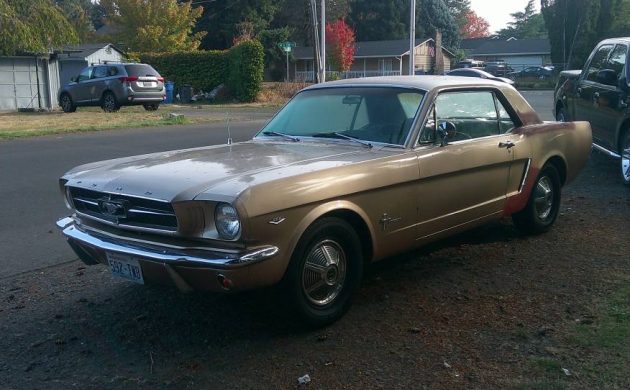
I’ve followed the Mustang market, particularly of 1965 and 1966 models, for years. For the longest time, you could get a coupe for fifteen grand, kind of a benchmark price for a restoration of decent quality. Fastbacks and convertibles were another matter. In fact, that’s still true. So when an A-code coupe comes along and is priced under $10,000, it makes you sit up and look. Curvette brought us this potential new member of the tribe, which is waiting for you here on craigslist and in Vancouver. It looks like a deal. Let’s think about the truth of that impression.
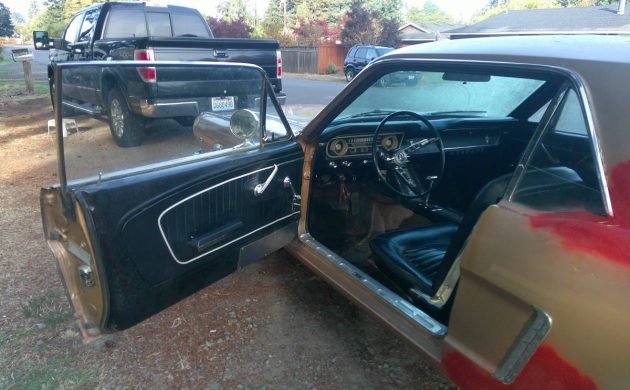
It is possible to import a car from Canada, but that’s not what we’re talking about. Vancouver, Washington, is. Apparently. Whew! That makes the price here a little hard to understand. It’s too cheap! Maybe the apparent need for body work is what is suppressing the value of this Pony Car. Check out the images of the apparent place that needs body repair—the driver’s side quarter panel. The thing is, why make such a mess of the rear driver’s side quarter by covering it in red paint? You’d better figure out, too, whether there’s rust hiding in there, and whether the integral frame rails are eaten up. A simple shot inside the trunk would go towards solving that mystery, too. While you’re at it, what’s going on with the passenger’s side? The floors? The leading edges of the doors? The trailing edges of the front fenders? Those are the spots that will empty your wallet.
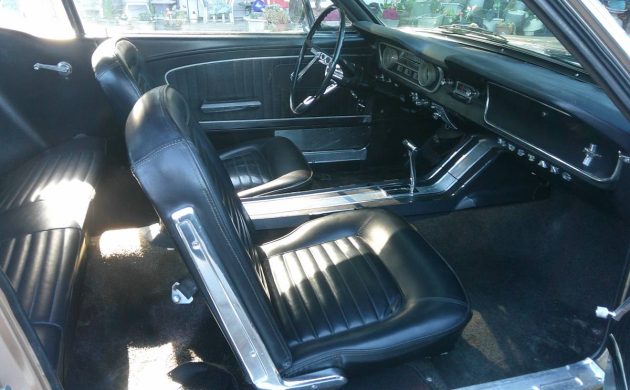
Everything else looks pretty good despite the photographs being of poor quality. The seat skins might be worn, but you can pick those up cheap from any number of parts catalogs. It’s nice to see that presence of the automatic shifter and the full-length console, whether it’s original or a later reproduction. This is no top-tier restoration, but it’s a darned good starting point, or a driver. Just ignore that red fender if you can. Interesting to note is that there’s a set of GT-style MUSTANG chrome letters mounted on the dash, someone’s clever idea. One easily correctable fault is the apparent use of 6-cylinder wheel covers. If that’s accurate, what does it say for other matters regarding authenticity?
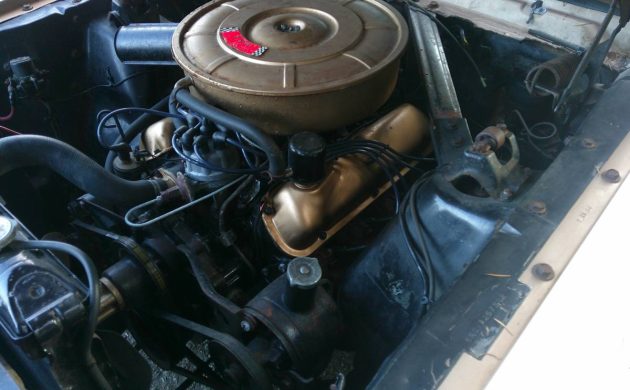
So what’s an A-code? The standard Mustang 289-CID V8 was a “C” code, with the next level up being the A-code. It offered a bit more horsepower and a tad of rarity. Up from there was the solid-lifter 271-hp “K-code,” which was quite uncommon and certainly would not be a four-figure car if it were otherwise arrayed like the car shown here. The A-code added a 25-hp bump over the standard 200. The 225-horsepower engine also has a 4-bbl carburetor. Note, as an aside, that no GT can be a C-code. They all had one of the other two engines. That’s immaterial to the car in Vancouver, of course. So what have you? Should you take a chance on this handsome if potentially problematic Mustang? That starting number is certainly tempting.

How many times do people have to suggest to most of the sellers of vehicles of any kind, on this or other platforms to (1) clean it up, and that means inside too. (2) and here’s the most important details to get the best results in selling or auctions, take your photos in the daytime out in the open. And most importantly, make sure the parts of the car i.e the engine, interior etc are fully visible in the photos, not just half. Just like this Mustang, they decided to take pictures of it in either in the morning or right when the suns going down, in the shadows. You leave potential buyers with more questions than answers.