

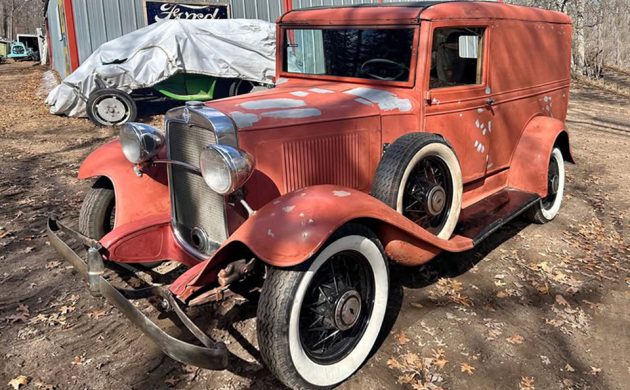
Chevy’s “Independence” series of cars and trucks was launched in 1931, as the Great Depression quenched economies around the world. Sales were down, but the major car makers persevered, upgrading technologies and designs. The Independence introduced rubber engine mounts, new lamps mounted on a chrome bar, wire wheels as standard equipment, and a longer wheelbase. The new chassis wore roadster, coupe, and sedan bodies, but it was also supplied to various coachbuilders for commercial clothing. This example is a panel truck, situated on a 109″ wheelbase, available in project condition here on facebook Marketplace for $6750. This truck is located in Brainerd, Minnesota. We have NW Iowa Kevin to thank for this tip – keep them coming, we like your style!
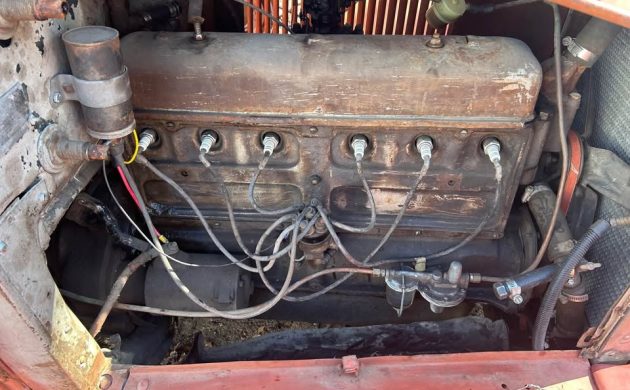
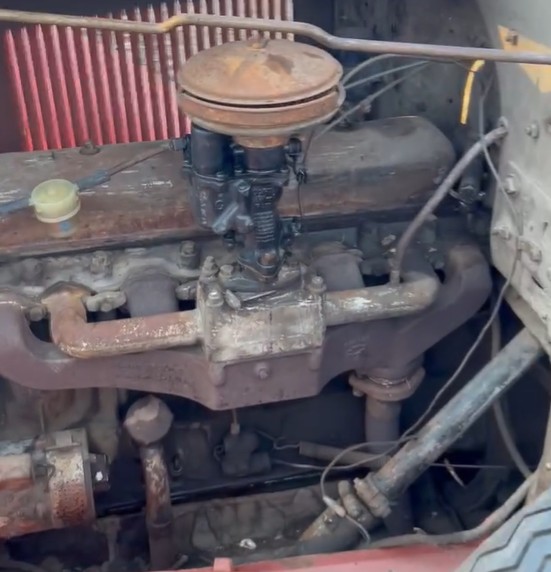
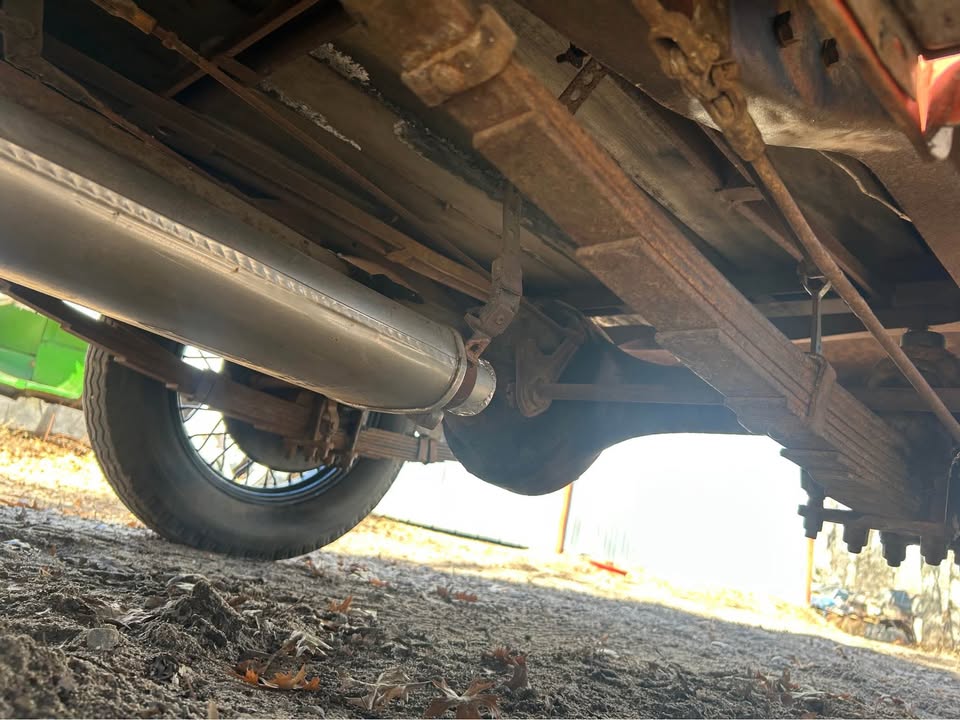
While the Independence saw a few cosmetic upgrades over its predecessor, its six-cylinder 194 cu. in. Stovebolt was similarly improved: the block was reinforced, the crankshaft was counterbalanced, and output rose to about 50 hp. The clutch diameter increased, and a worm-and-sector steering mechanism replaced the worm-and-gear. The frame itself was reinforced for light commercial use. Chevy offered the Independence on two longer wheelbases, with gross vehicle load ratings up to 8000 lbs. No change of engine, but the heavy-duty trucks were supplied with a four-speed manual, while the light trucks and Chevy’s cars received a three-speed. This truck runs, though nothing is said about whether it drives. The original updraft Carter carburetor has been replaced by a downdraft of some sort, and the muffler looks new.
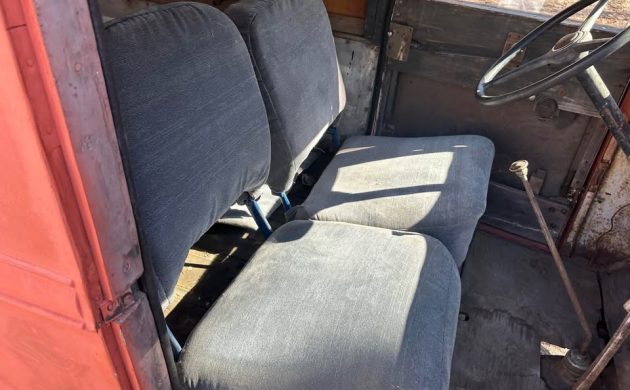
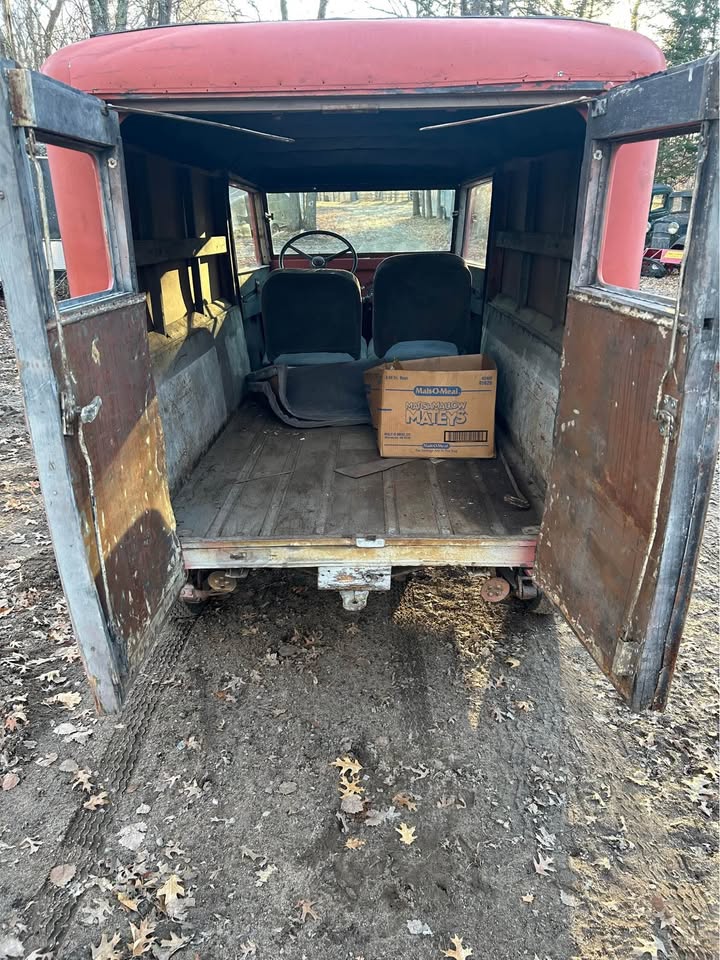
Chevy touted its “deep spring cushions,” long gear lever, and large-diameter steering wheel as comfort features. The painted metal dash features gauges measuring speed, fuel level, amps, water temperature, and oil pressure. No wiper blades are present, and around this era, sunvisors were either an option or not offered. The windshield rotates out for ventilation. A heater is mounted beneath the dash. The cargo area is accessed via dual “barn” doors from the rear.
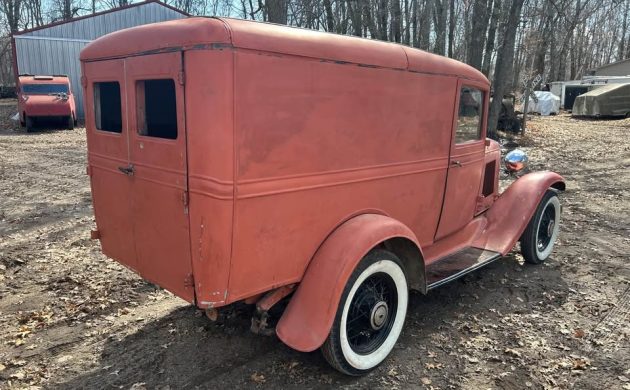
Bumpers were optional, and tail lights were still rare on most vehicles in the early 1930s. This body appears remarkably straight, though the truck was repainted at some point: original colors were in the green/blue/brown tonal range. Though the Independence series propelled Chevrolet’s sales past Ford, these trucks are very rare today. This near-perfect pickup sold two years ago for $15,250; other early trucks of various makes range around that same price, sometimes even lower. My hunch is that this seller might have to consider a discount to find this one a new home; what do you think?

This is really something else. I can picture it restored and possibly painted in some vintage bread company colors and logo or something along those lines. This old Panel truck looks very solid, and if it were mine, I’d keep the old ” Stovebolt” and 3 speed and enjoy puttering around town. Because of its rarity, I hope it stays as stock as possible.
Definitely worth restoring. There can’t be many of these left, as they were certain to get hard use, especially by second (and third, forth, and so on) owners.
This one looks pretty complete and in reasonable restorable condition. I’d clean off what appears to be “red lead” on the body, and coat it in one of the factory colors.
Don’t know if it has hydraulic or mechanical brakes, but the mechanicals are okay because the early Stovebolts, with their Babbitt-metal bearings and splash lubrication, weren’t known for being happy at higher speeds. My guess is that the intake manifold is from a later Chevy “six,” as it looks very much like the one in my ’50.
A really neat “find,” Michelle (and NW Iowa Kevin). Granted, the ask should be negotaited a little lower if possible (can’t they always?), but this appears to be the kind of project one could do mainly at home, substituting elbow grease for money, and end up with a nice — and rare — little truck
This is one of those finds that makes Barn Finds so great!
Thank you to the contributors that bring these vehicles to light. Thank you for the excellent write ups and thank you for the facts and stories offered by other readers.
I would do a in person inspection on the wood sub structure before buying. It is a ton of work to replace wood i
…@Abe Even though they out sold Ford back in the day, one of the reasons there are not as many of them still around is because of what you are saying is all the wood subframe. The early Chevrolets even had wood subframes in the doors. They would rot and fall off the vehicles. I have a 1932 Ford Panel Delivery that I have owned for over 54 years and fortunately the doors are all steel. The body has a lot of wood subframe and the floor is all wood. I had to replace some of it when I first got the truck. When I got it the odometer was 84,000 miles, it now has around 200,000
That intake is perplexing :) I would think the intake or the engine is from a later model, but that bend in the radiator support rod looks very much like it is original and that high intake has been there forever.
My folks had one of there when I was about 5 years old. We used it to immigrate from British Columbia to Southern California in 1949. My little brother sat on my Mom’s lap and I layed on top of a chest of drawers in the back. Tires were impossible to find so my Dad carried a stack of used tires on the roof of the truck. He had to change tires 7 times just in San Francisco. Trip took almost two weeks. Many good and some not so good memories.
I don’t think comparing this panel to a p/u is the way to go here. Panels were always rare, especially a 1931. I thought wood was over with in most cars.I also thought stovebolt (ohv) didn’t come along until about 1950.I,m in Fl.,so no chance of looking at it,but I sure love it from here
Chevy as far as I know never had a flat head engine. Caddilac, olds and pontiac had flat heads but as far as I know there never was a flathead Chevy. Even the 1918-19 Chevy V8 was over head valve.
Stovebolt 6 came out in 1929 with an updraft carb until 1932 when the Carter W1 downdraft came along in the Confederate 1932 model.
My Chevy Master Deluxe still had wooden door frames in 1936. I’ve read that later that year, they changed to metal frames. So it seems that 1936 was the transition year and mine was an early ‘36 production. They proudly advertised the all-metal “Turret Top” in 1936.
What a cool find and the price isn’t horrible for a running vehicle could probably drive it on or into the trailer and bring it home.
What a cool piece of history.
really cool. will not be seen at your local cruise
Thanks, Michelle for your always excellent and informative write-ups. Has anyone else noticed what lies in the background? This fellow has a lot of vintage vehicles, mostly Ford and even some snow-only vehicles from the distant past. Check his ‘seller details’ to see if other items are for sale.
When I send in tips, it’s at least three and sometimes a dozen or more. More often than not, none get picked. That’s understandable considering the large number of old and unique vehicles still lurking in sheds. However, in keeping with the literal theme ‘barn’ finds, there seems to be more shiny restored vehicles than old dusty outfits making it to this website. Whatever the case, I look forward to the email every day and appreciate the staff’s hard work in researching and presenting us with the history of the marque.
What about unadvertised vehicles up for sale? I run across them often and because I’m a relentless ‘picture taker’ have a lot saved in my…… Windows XP PC. Case in point, in the past 3 weeks I’ve purchased 8 old motorcycles from 3 separate unadvertised sellers. Would the staff, Scotty, be interested in seeing them? Would any of you be interested in seeing old bikes, etc.? Just throwing it out there and if declined, no issues.
Two on my latest load had my interest piqued. 1968-73 Benelli Supersport 250 and 1976 Bultaco Sherpa T 350 trials from a dusty storage barn. I had to have them! Peace.
Crew Chief says she’d like to have it for grocery getting but would want me to put AC in it. Nice old truck. Makes me miss my ’34 Pickup.