
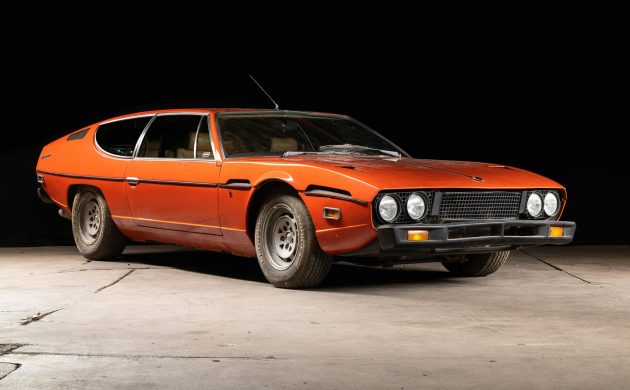
Marcello Gandini put his prints on many a supercar, from the Countach to the Stratos, the Miura to the Espada. Of this grouping, only the four-seat Espada is even the slightest bit practical. In fact, keep one in good tune, and it can be a daily driver/grocery getter/short road tripper, all while delivering stupendous performance. Today’s example is a 1974 Series III for sale here at LBI Limited. The asking price is $62,000; the new owner should plan to ship it from Philadelphia, Pennsylvania. This car is a non-running restoration project, which means the purchase price is the tip of the proverbial iceberg.
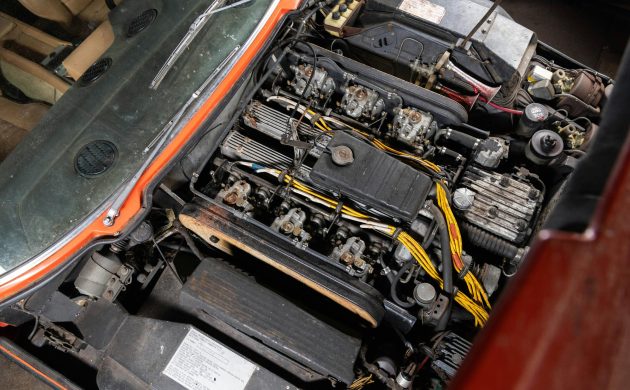
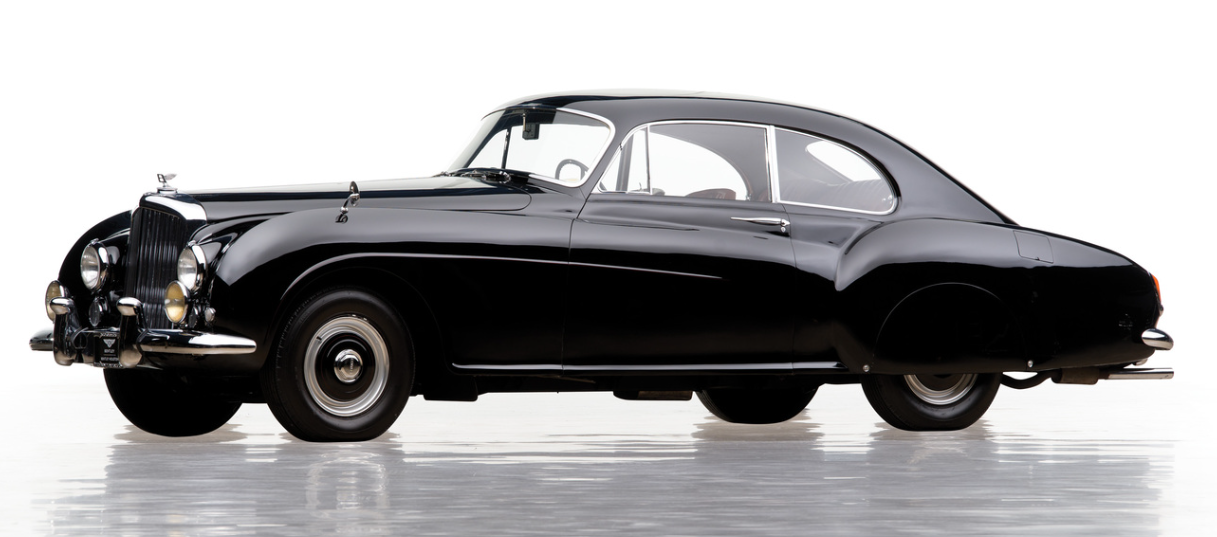
The four-seaters that inspired the Espada were all special in idiosyncratic ways. The Bentley R-Type Continental, launched in 1952, is considered one of the first high-performance grand touring cars. A long drought followed the extinction of this special Bentley – the last of which rolled out of the coachbuilder’s shop in 1955. But in 1960, Ferrari took up the slack, introducing the 250 GT/E. That car was succeeded by the 330 GT 2+2, then the huge 365 GT 2+2 – aka the “Queen Mother”. Meanwhile, the rivalry between Enzo Ferrari and Ferruccio Lamborghini was alive and well. The Espada was born of one-upsmanship – that underappreciated quality that begat so many cars we covet today. Bizzarrini designed the 3.9-liter V12, singing through six Webers; with a compression ratio of 10.7:1, output came to 350 hp. A five-speed manual brings power to the rear wheels. By the mid-’70s, braking was accomplished by vented Girling disks all around. LBI believes this is a one-owner vehicle, and that the odometer reading of 34,521 is original. I’d challenge that supposition, however – there’s substantial wear on the pedals, to the extent that the brake rubber has split. Original mileage or not, I’m going to hazard a guess that resurrecting this engine will cost in the neighborhood of $50k – and that might be light. One new cylinder head costs about $26k without shipping or tax….
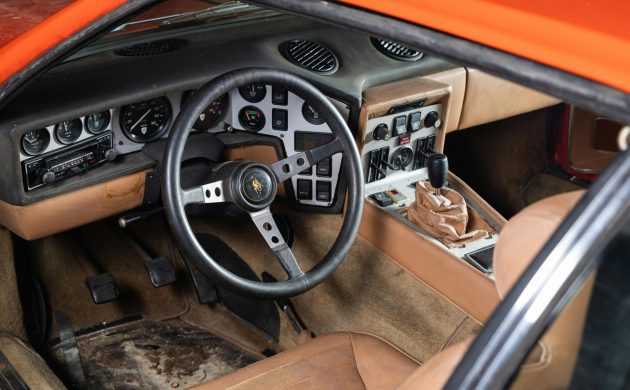
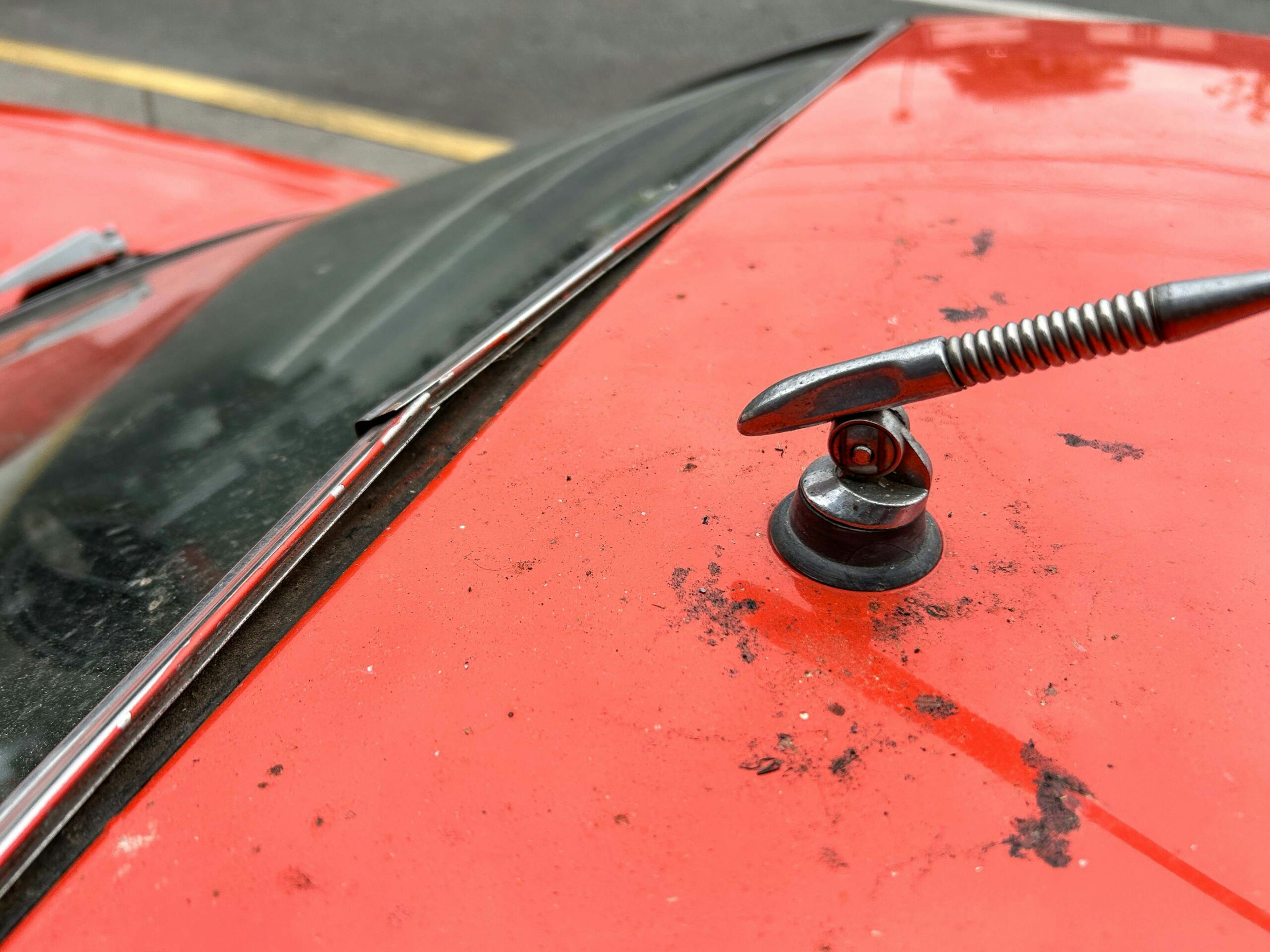
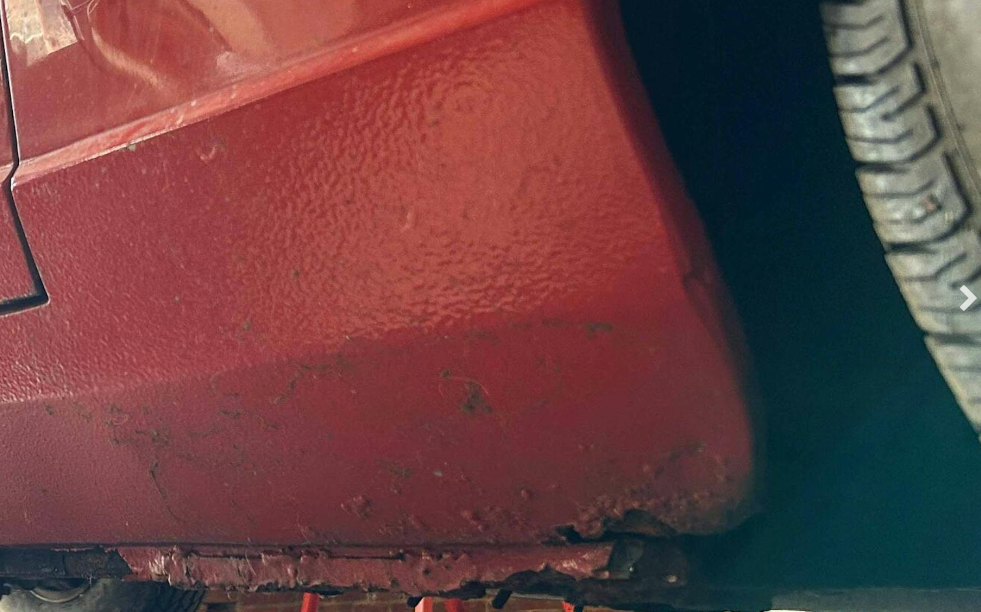
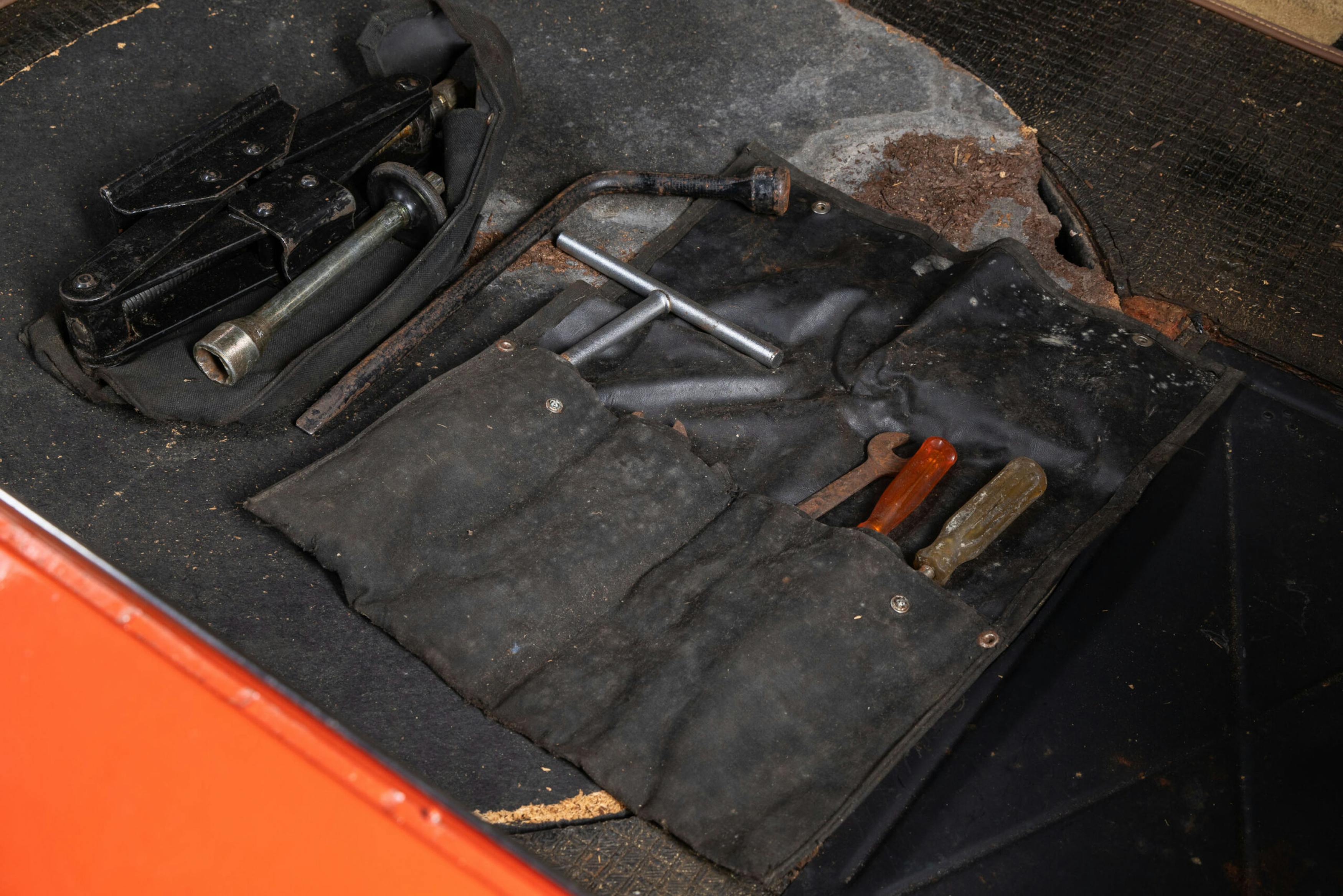
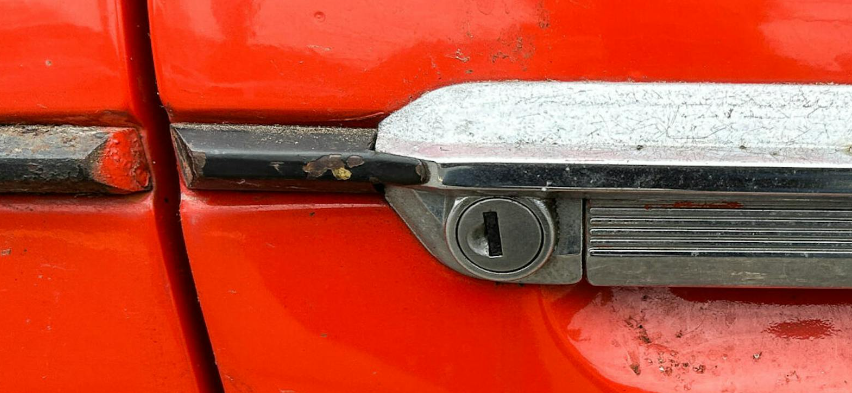
After swallowing the engine rebuild (ignoring all the other tricky mechanical components such as the six Webers, gearbox, etc), one’s attention shifts to the interior. Nearly every nook and cranny needs attention. That pile of leather around the gearshift is cracked; the seats are worn – also belying the mileage claim; the list goes on. Then there’s the rust. The car’s underside is decent, but topside, there’s rust around the antenna (and see that split trim piece? that’s the window surround, so mark down glass removal); below one sill; and in the trunk where a tool kit still sits.
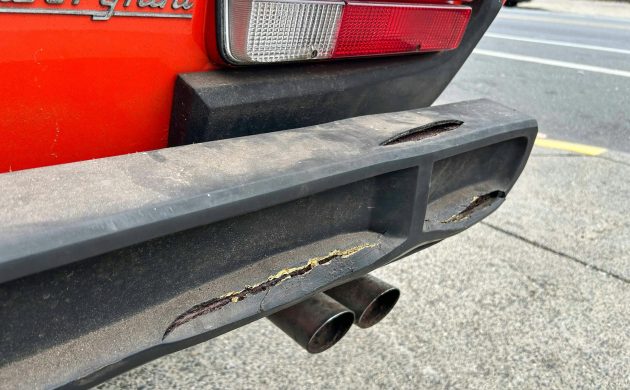
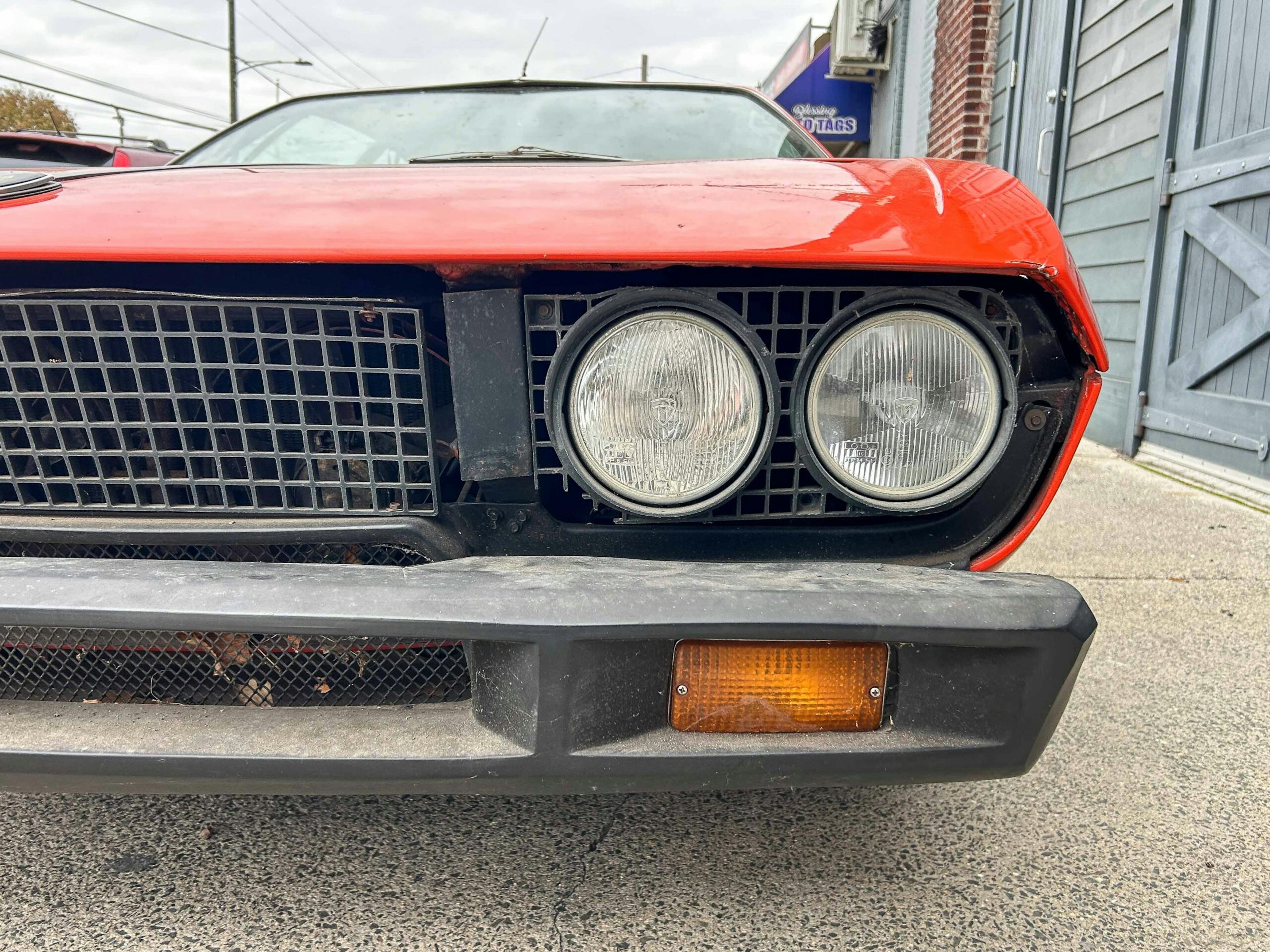
The bumper is split (maybe look into backdating this feature to the pre-safety style; they’re so much more elegant), the chrome is … shot! Better put MIE and Eurospares on speed dial. These are the later Alfa-sourced tail lights, so at least Series III owners get a break there.
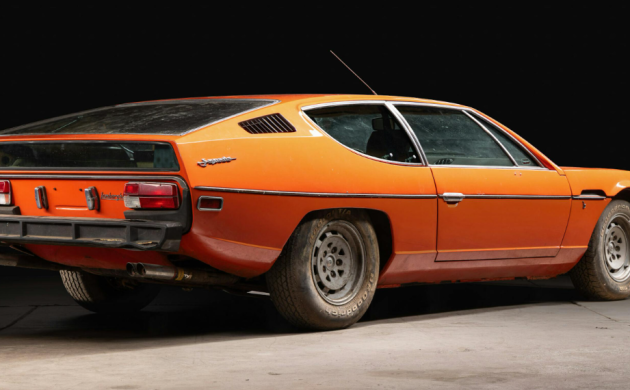
The characteristic glass panel in the tail is profoundly cool. The Espada has twin fuel tanks, with fillers on both sides, hidden behind black slats in the C-pillar. These wheels are the awkward five-bolt version installed after about 1972. While the color is punchy, I’m 98% certain this car has been repainted, and not perfectly either. Overspray is evident, and the sills are rocker shutz’d – not the factory glassy finish. So what’s it worth? This solid driver with 10,000 documented miles sold for $92k this summer; here’s a lovely example that brought $114k a month earlier. These prices do not support the notion of restoring this Espada. On the other hand, our subject car could probably be profitably parted out. How would you handle this exotic project car?



Wild machine. Imagine banging thru the gears and having this baby singing. 🎶
Shifter boot looks like a blanket on there lol.
Had a customer with a ’72 and testing the new paint with that big engine singing up front did put goose bumps on us.
“Daily driver beater Lambo” are words not put together often. But are intriguing!
Was the Espada the first design to use the hatchback with the rear facing glass?
Leno how about another one?
That front bumper, oof. It’s a known thing with lights and switches on old Italian exotics but the whole bumper makes me wonder what million-seller Fiat sedan it was taken from, whole.
Having driven a perfect one with redesigned HVAC and other factory problems I would never own a needy one. It’s a fantastic driving experience but you would need some serious resources to keep enjoying it.
No complaints about the driving experience, I had a silver over parchment (with light blue carpets) Series III. It will swallow your bank balance faster than you can say STOP! Great driving machine, but just fixing the hatch struts was over $1800 and that was a few years ago.
Michelle why is the shifter boot so massive and bulky ? Can’t imagine it’s excessively long-throws to change gears..
I dunno Stan, the one on my car was neat and tidy. Maybe it’s Italian production weirdisms?
Michelle a great article and you were a lucky owner of such a car even for a short period of time. I’ll bet my money that the shifter boot is a cheap replacement from a shop that does leather items. I’ve done the same replacement in Greece with some dark red ox leather seats, door panels etc in my X1/9 but the job was of high quality in 1985 and they still look like new after 300,000km.
Anddd ship it straight to Tyrrell’s Garage. Would be worth it, I think. At least it’s not another 308.
It would take a brave, (and optimistic) soul to roll the dice on this one. For me, this would be a very hard and loud “pass”!
A rather intriguing flaming hole to shovel money into. Not my money however…
Beautiful looking car. I’ve heard of the Lamborghini Espada. I’ve never seen one in person. I hope there’s a way to service the car and keep it running and driving safely. That’s the whole point of maintenance.
The unusual shifter boot themes along with ‘the softer side of sears’, o.k.?
This is going to cost well more than its potential value to bring it back to prominence. I hope someone does, as I love a good Espada, but unless you are very wealthy or a master mechanic…..