
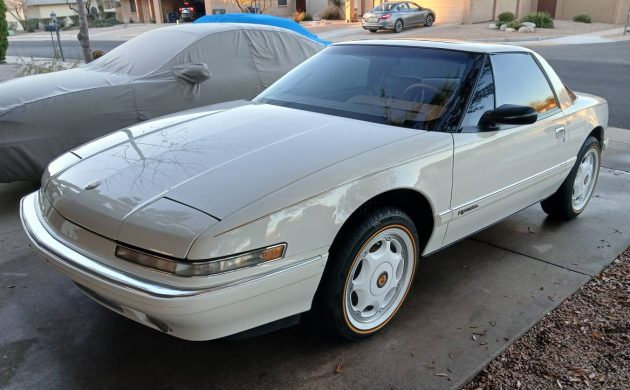
Some people walk into a dealership and adhere to a strict budget when purchasing a new car. Others will reason that if they’re going to spend their hard-earned cash, they should drive away in a vehicle that precisely fits their needs. The first owner of this 1991 Buick Reatta followed the second philosophy, loading the car with almost every conceivable factory option. It remains in excellent condition and is a turnkey classic needing nothing but a new home. I must say a big thank you to Barn Finder Tony P. for spotting this beautiful Buick listed here on Craigslist in Tucson, Arizona. The seller set their price at $12,500, suggesting that the new owner could fly in and drive this classic home.
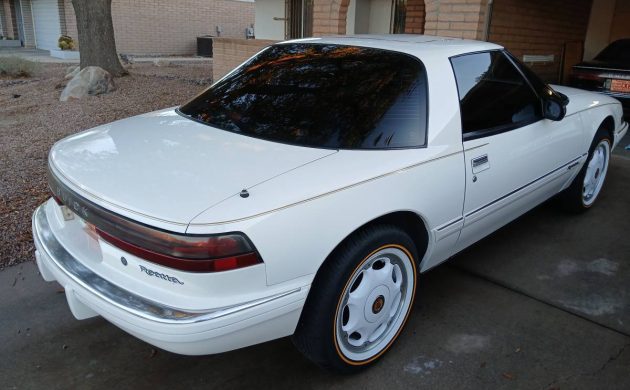
Although a common practice among prestige brands, mainstream vehicle manufacturers typically avoid producing hand-built models. It is usually a matter of pure economics because that approach is labor-intensive, resulting in a high sticker price if the vehicle is to turn a profit. However, it was the approach Buick chose when developing the Reatta, with cars assembled by teams of workers in a specialized facility. Launched in 1988, Buick envisaged the Reatta as a “Halo” model, projecting sales of around 20,000 vehicles per year. Sadly, the reality fell far short of expectations, with the company ending production in 1991. This final-year example looks impressive in Code 40 White. The first owner added the color-coded wheel option, a sunroof, and body-colored rub strips, creating a stunning visual effect. The condition is extremely good, with no visible cosmetic shortcomings. The car has spent its time in dry locations, and the seller’s image gallery confirms this Reatta is rust-free. The wheels aren’t stained or discolored, and the seller added aftermarket window tint to improve occupant comfort.
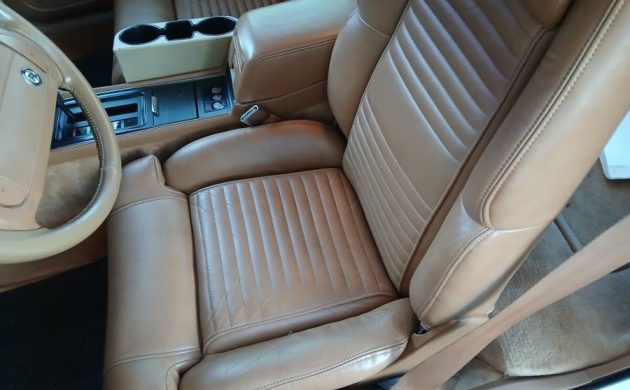
As a “Halo” model, it is fair to expect plenty of luxury features inside a Reatta, and this car delivers in spades. The buyer receives climate-control air conditioning, power windows, power locks, power mirrors, a sixteen-way power driver’s seat, cruise control, a leather-wrapped tilt wheel, and a premium stereo with an AM/FM radio, an auto-reverse cassette player with Dolby Noise Reduction, and a CD player. The car’s Tan leather trim is in excellent condition, with no wear or other issues. The carpet is clean, and the dash is spotless. The seller has gone through the interior with a fine-tooth comb, eliminating any niggling problems that might spoil the ownership experience. They converted the A/C to R134a refrigerant, confirming that it blows ice-cold. The entire stereo was rebuilt, producing music you can feel. Everything works as it would have the day this Reatta rolled off the showroom floor.
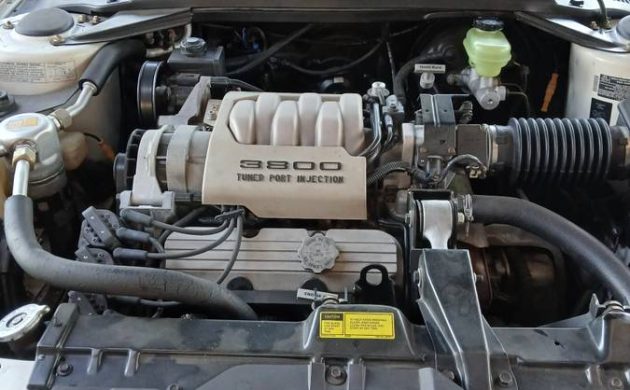
Buick chose to power the Reatta with its transverse 3.8-liter V6. By the time production ended in 1991, this motor sent 170hp and 220 ft/lbs of torque to the front wheels via a four-speed 4T60-E automatic transmission. Unsurprisingly for a car of this caliber, power steering and anti-lock four-wheel disc brakes were standard fare. The seller didn’t restrict their TLC to this Reatta’s interior; they worked through a long list of tasks to guarantee its mechanical health. The car received a new oil pan gasket, a new water pump, new suspension struts, a PCV valve, a new radiator and hoses, and a new master cylinder, along with a brake flush. The list continues beyond the items mentioned, and almost deserves its own hardback book. The results justified the effort, because this Buick is a turnkey proposition that runs and drives perfectly.
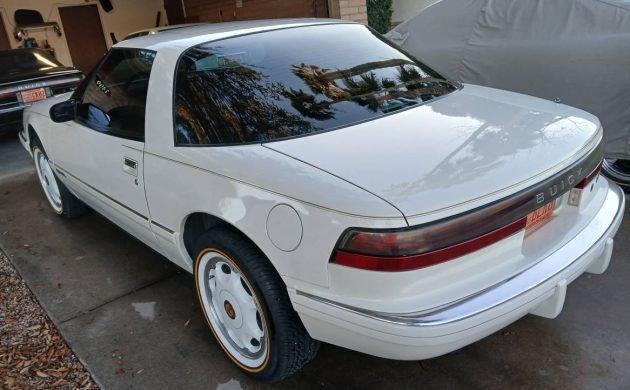
Releasing any new model is a calculated risk, but “Halo” cars are always a gamble. They typically cost companies a significant amount to develop and build, and sales volumes are often low. The Buick Reatta was a risk that never paid dividends. The company envisaged sales of around 20,000 vehicles per year, but a high sticker price and worthy competition from the Cadillac Allanté and the Pontiac Fiero meant that Buick never achieved that lofty goal. During its four production years, only 21,751 cars left the Reatta Craft Center in Lansing, Michigan. The jig was up: Buick discontinued its great experiment in 1991, when only 1,519 buyers handed over the cash for a Reatta. This car is one of the last produced and is a gem with no apparent needs. If you dreamed of owning a Reatta when they graced showroom floors but found it was beyond your financial means, could this immaculate 1991 example allow you to right that wrong?



Great looking car and love the wheels here on this Buick Clarkey. 👌 👍
Thanks for that, Stan. I’m quite taken by this Reatta, and wouldn’t mind parking it in my garage.
I agree with Stan. Its the first thing that caught my eyes when I saw the opening photo. Nice one here Adam, I’m with you, I wouldn’t mind owning this one, one bit.
This one is so close to me. I’m in Tucson every week. I’ve never seen these wheels and am not a fan. Other than the wheels and the lack of space to store it, this is an amazing automobile!
I have to agree with you on those wheels. Yet another example of cringe-worthy aftermarket donuts IMHO. They look like they belong on a Kia SUV. There’s a reason car manufacturers pay people handsomely to style their cars. Give me the stock wheels and tires any day on the Riatta.
The wheels are from Buick. The tires are aftermarket.
They ordered everything but the convertible top, which, if I were so inclined to purchase a Reatta, it would have to be the convertible.
Only I never cared for these. The only two seaters I like are the Cadillac Allanté, Cadillac XLR, MG and Chevrolet Corvette. Im not even a fan of the Ford Thunderbird 2 seaters.
If you read the sellers ad, “no pets have ever farted in this car”. That has to be a major selling feature 😆😂😆.
Time and time again, through the years car manufacturers have built two-seaters (and many of them great cars) expecting great sales, and it never happened. The latest two examples were the last Thunderbird and this car. Here we have an attractive vehicle with an excellent drive train and proven components, that barely moved the needle on the sales meter, simply because most people want a car that can seat four (even if poorly) whether it’s sporty or not .The original Mustang and GM F-cars would have flopped too if they couldn’t seat more than a couple, or at least wouldn’t have approached the sales figures they did. Two-seaters have their niche but manufacturers can’t expect them to be sales leaders.