

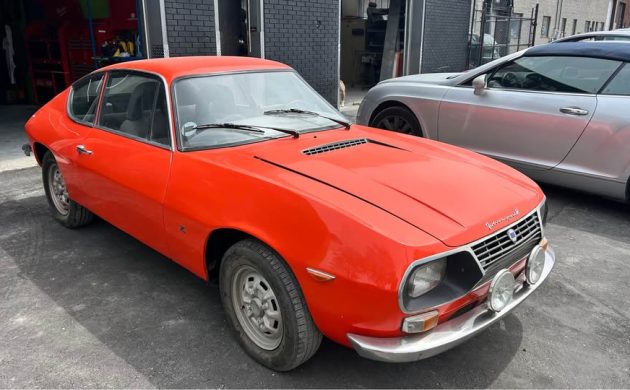
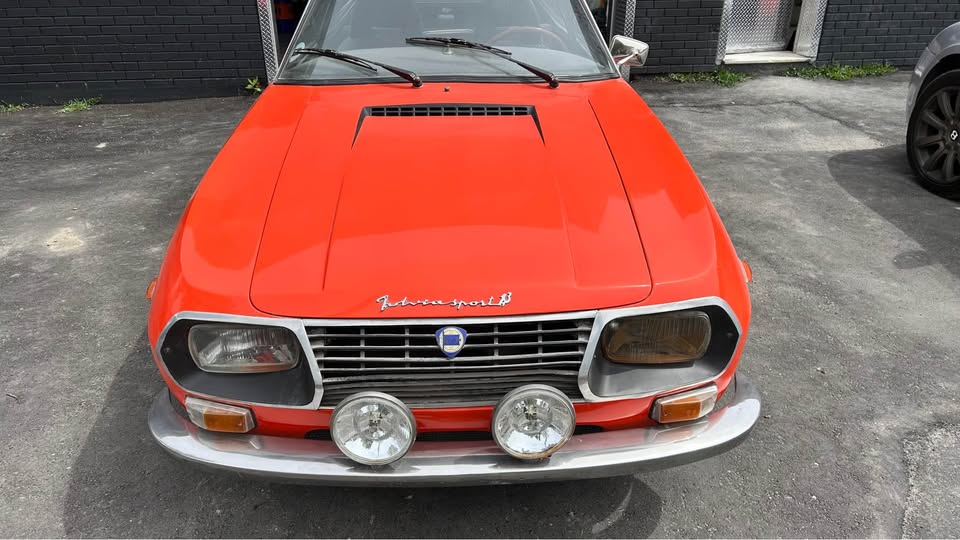
Lancia’s long relationship with Zagato began in the 1920s, documented by the coachbuilder’s work on the Lambda. But it was the postwar period that brought the most abundant set of models to market, built around the Appia, the Flaminia, the Flavia, and here on facebook Marketplace, the Fulvia. The Sport Zagato was a variant of the Fulvia coupe, designed in-house at Centro Stile Lancia. Given over to Ercole Spada at Zagato, the coupe’s original lines were transformed into a slippery fastback shape, suitable for road or track. This example, made in the last year of production, is located in Montréal, Quebec. It is priced at CA$25,000, or about US$18,000. Thanks once again to JDC for the great tip!
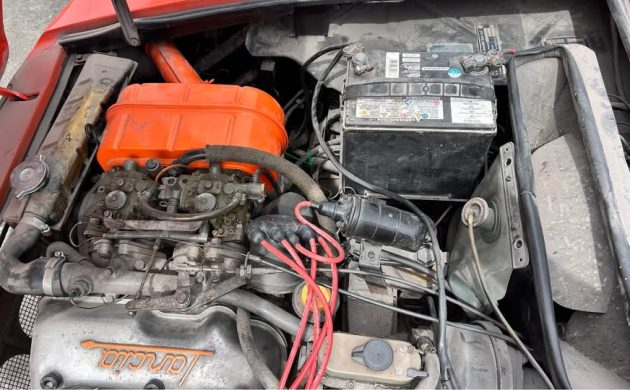
Early Sport Zagatos were made with aluminum panels and a side-opening hood. These Series I cars are quite rare. The cost of production and an interest in robust construction for racing provoked a switch to steel over time, and then regulations prevented the idiosyncratic hood. The cars became more conventional but retained Lancia’s differentiated mechanicals – the narrow-angle V4 and Dunlop discs at all four corners. The Series II cars offered buyers a choice of 1.3 or 1.6-liter engines; this one is a 1.3. Both engines were mated to a five-speed transaxle driving the front wheels. This car is said to run and drive, but the condition of the engine bay implies some neglect.
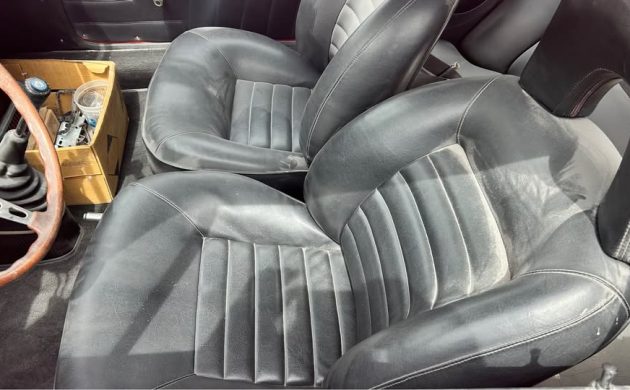
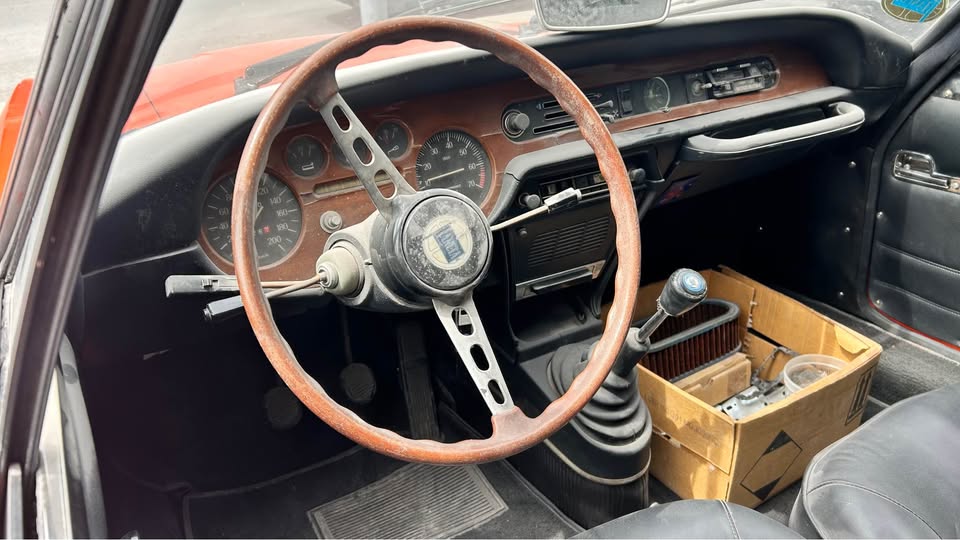
Spacious, well-padded seats front and rear, carpet, a wood-trimmed dash, and a wood steering wheel are hallmarks of this upper-crust Fulvia. Design quirks included an electrically operated rear hatch, activated via a switch on the dash, that allowed for a slight lift for ventilation; and hexagonal lamp housings. This car’s new owner will be looking at a cabin refresh, unless he can live with the damage evident on the instrument panel.
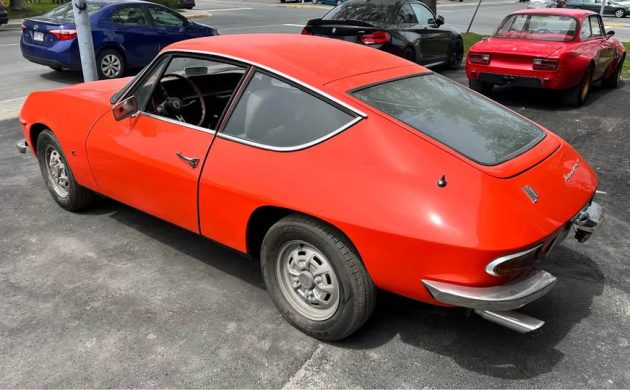
Panel gaps here are not the best. The hood doesn’t appear to close tightly, the door gap at the rear is wide, and the notoriously finicky hatchback isn’t flush. But the expensive and rare trim around the windows, lamps, and inside is present – a big plus. Driving a Sport Zagato requires a workout to achieve the kind of performance that the sleek exterior implies. While the 1.6-liter will generate 115 hp, the 1.3 comes in at about 90. The five-speed helps, and the car handles well. A nice 1.3-liter Series II Fulvia Sport is worth about $23k in today’s market; a car with needs should sell for less, though whether a price of $18k is enough of a discount to entice a buyer remains to be seen.


You need parts for a what?
Inboard rear brakes, De Dion rear suspension? Those features were on the Aurelia, but not the FWD Fulvia.
Also on the Flaminia.
You are correct, of course no inboards or De Dion. That was the Flaminia and Aurelia. Sorry about that.
Nice write-up Michelle. Again, lots of info on a car I wasn’t very familiar with when I submitted it. Thanks for the education.
Lancia had a wery high standart, both to finish ans ungeniert. They compared to Maserati and Ferrari, less power but more economic.
From what i can see, 90hp from a 1,300 cc engine is better than my X1/9 Bertone-Fiat 85 hp on a 1,500cc (Abarth) engine of the same era. Beating Abarth in his own game is impresive and shows the all around quality of this car. Of course the Abarth engine could easily be upgraded to almost double that (135 hp) with a different setting (as my mechanic discovered in a publication about the potential of this engine). I asked a vintage auto club friend of mine for a quick ride in his Fulvia and i was impresed for its high quality materials, locks, its jack etc.
Well informed and a nice write-up Michelle as always.
Late 1990’s I jumped on a train from Stockholm to Malmö Sweden to buy a Fulvia Zagato. It looked like this but had the 1.6. I think I had the equivalent of $6k in my pocket and I intended to drive it back home. Now, stepping out from the railway station in Malmö it seemed instantly clear that the car wasn’t quite as nice as the seller had claimed and a closer inspection verified that. A rare case where I made the right decision and just bought a train ticket back home again.
On a very different note it was just a couple of weeks ago that I passed an Alfa Junior Zagato on the highway between Modena and Parma and it had the rear glass open for the ventilation!
Nice write-up as usual Michelle.
“Zagato”, that rolls off the tongue nicely!
Does Zagato exist to uglify every car it touches? Can’t think of one example where the looks were improved over stock, especially in the case of the Fulvia.
Maybe especially in the case of the Flavia? But if you want the cars to be more conventionally styled, the Appia Zagato and the Alfa Junior Zagato may be more to your liking?
It looks like the offspring of a Chevy Monza and a Wartburg 353.
Are you kidding?
Appears complete, just dirty. This is a rare car and deserves to preservation. If I didn’t already have a Fulvia 1600HF, I’d be on an airplane right now.
Oooo…a “junior Z”. Rare car. Love these with the clear headlight covers, which only rarely made it to North America.
California plates ? Long drive from Montreal.
Sad that the seller didn’t see fit to just wipe the dust/schmutz off the seats and dash before shooting the interior pix. Sigh. Not necessarily abused, but pointing towards “neglect”.
Prior comment re: Zagato – Consider cars like the Aston Martin DB4GT Zagato – a beautiful re-body of that series of AM cars. The Italian coach builder could occasionally have a miss, but generally did good work. “Bert & Tony” – aka “Bertone” did beautiful work for Alfa etc, like the ex-mine Alfa GTV coupe.
Oh…and look what’s in the parking lot with the Lancia !
When new, these cars were appreciated by Lancia cognoscenti (drive to the track, race, drive home). Plus they’re great little GT’s or fast commuters. They still are highly valued by Lancisti. Someone will fix this old girl up-it’s only a question of how much will be sunk into it.
Ooh ooh ooh. I had a Fulvia coupe long ago. I love Lancias!
This Listing Isn’t Available Anymore
It may have been sold or expired.