
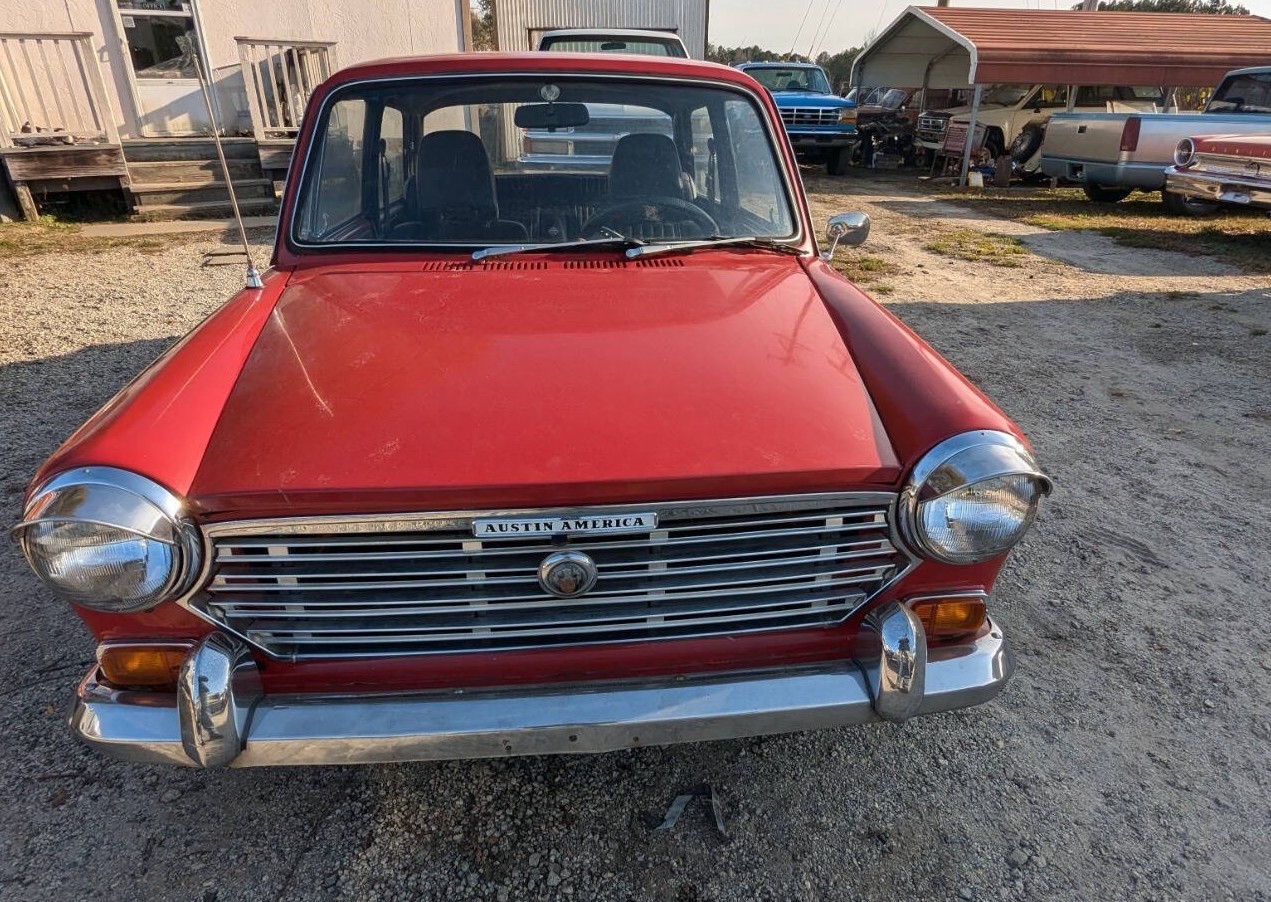
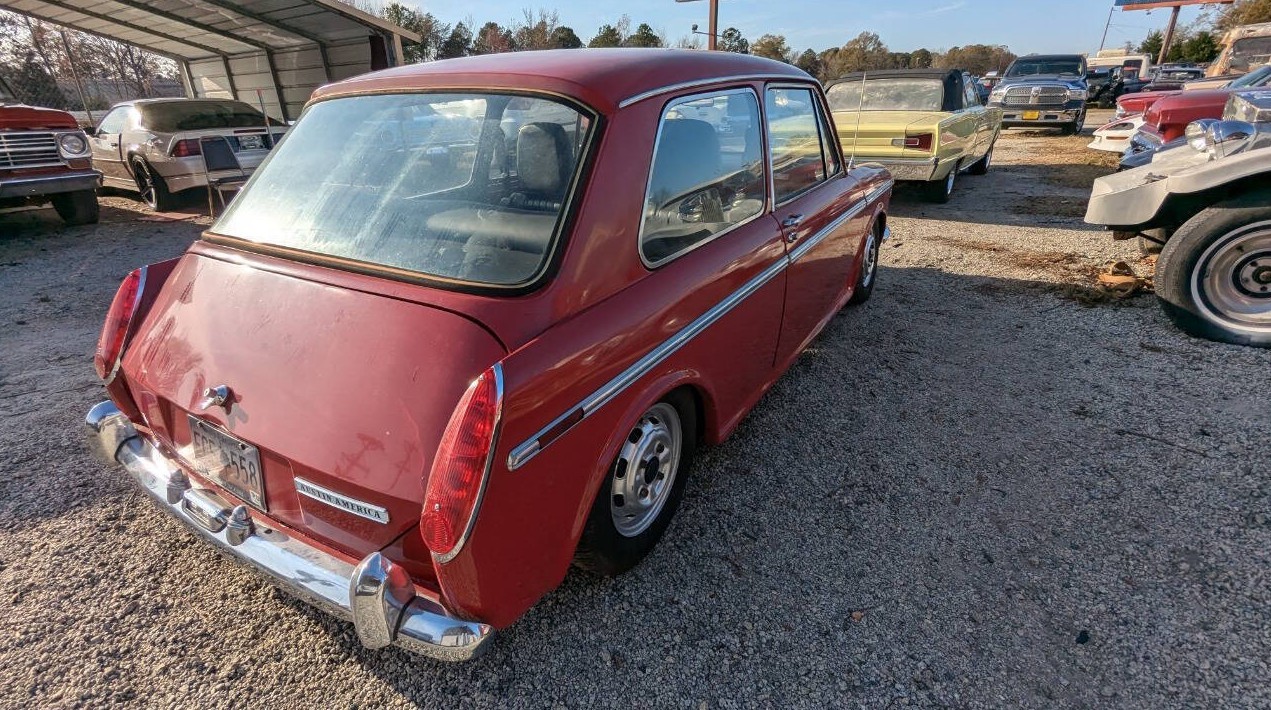
The seller has a large collection of classic cars they wish to send to new homes as they head towards retirement. One of the more unusual is this 1969 Austin America. We don’t see many of these relatively rare classics at Barn Finds, but my colleague Russell Glantz spotted this one listed here on eBay in Gray Court, South Carolina. The listing quotes a price of $8,500, although the seller mentions a price drop to $7,500. However, they also indicate that they could be open to reasonable offers. It will be interesting to gauge your feedback to discover two things. The first will be what most of you would be willing to pay, while the second will be whether any of our readers would consider making an offer.
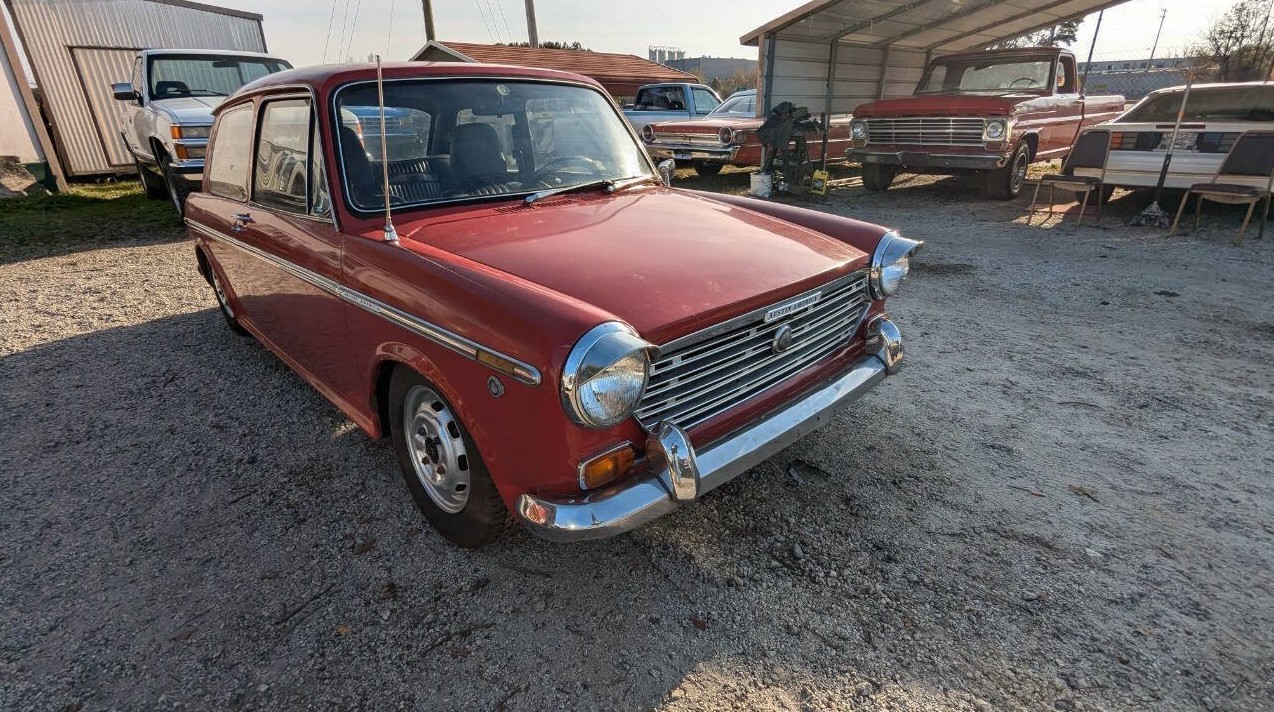
The car that became known as the Austin America was marketed globally wearing a range of different badges. It was popular in its home country but was also assembled for local sales in a wide selection of nations including Australia, South Africa, Portugal, and Yugoslavia, to name a few. This 1969 example is an unmolested vehicle that was ordered by its first owner in Damask Red. Its history is unclear, but we know it has hibernated for a few years due to a mechanical malady. The paint looks surprisingly respectable and may respond positively to polish if the new owner wishes to protect its survivor credentials. The great unknown lurks below the surface, because there is no indication whether there could be rust issues for the buyer to address. However, the company was very particular about its rust-prevention strategies, and with the car recently emerging from dry storage, the visible surface corrosion in areas like the engine bay might be the worst of its problems. The trim is in good condition, and the glass is clear.
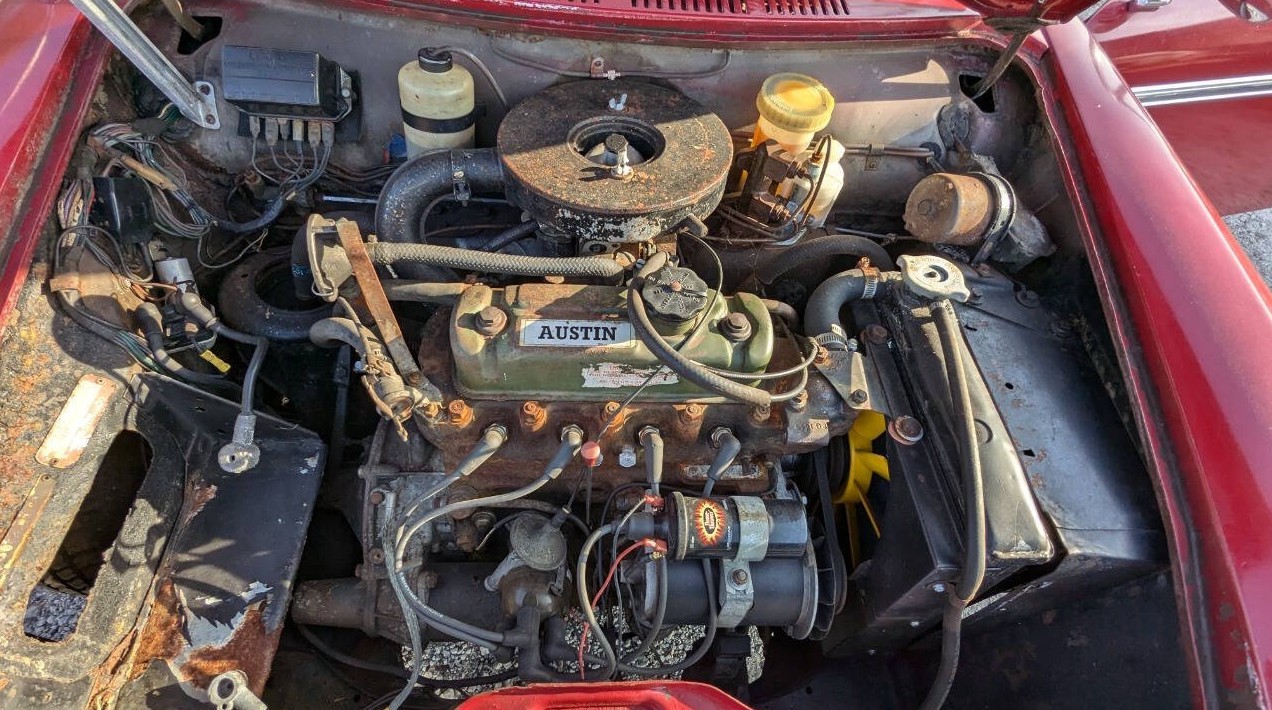
The drivetrain configuration of the 1969 America followed the company’s typical practice of the day. Its 1,275cc engine is transversely mounted, feeding its power to the road via a four-speed manual transaxle. The engine generates a very respectable 58hp and 69 ft/lbs of torque, allowing the 1,850 lb America to perform quite impressively for its size. The braking system features front discs, but it is the suspension that sets the America apart from the competition. Austin adopted a system called “Hydrolastic,” utilizing interconnected fluid-filled displacer units in place of traditional springs. The Hydrolastic system provides exceptional ride comfort and handling, especially over rough or uneven surfaces. It is a pretty robust system that will cope with a fair level of abuse. However, it can also suffer from the occasional fluid leak, which might be the case with our feature car. The seller mentions a suspension issue that caused the Austin to hibernate, and it does appear to have a sideways lean that is a hallmark of a Hydrolastic leak. Parts are available to address the issue, although the new owner may need to source these from one of the UK suppliers that is willing to ship internationally. Beyond that, we are flying blind on the subject of this classic’s mechanical health.
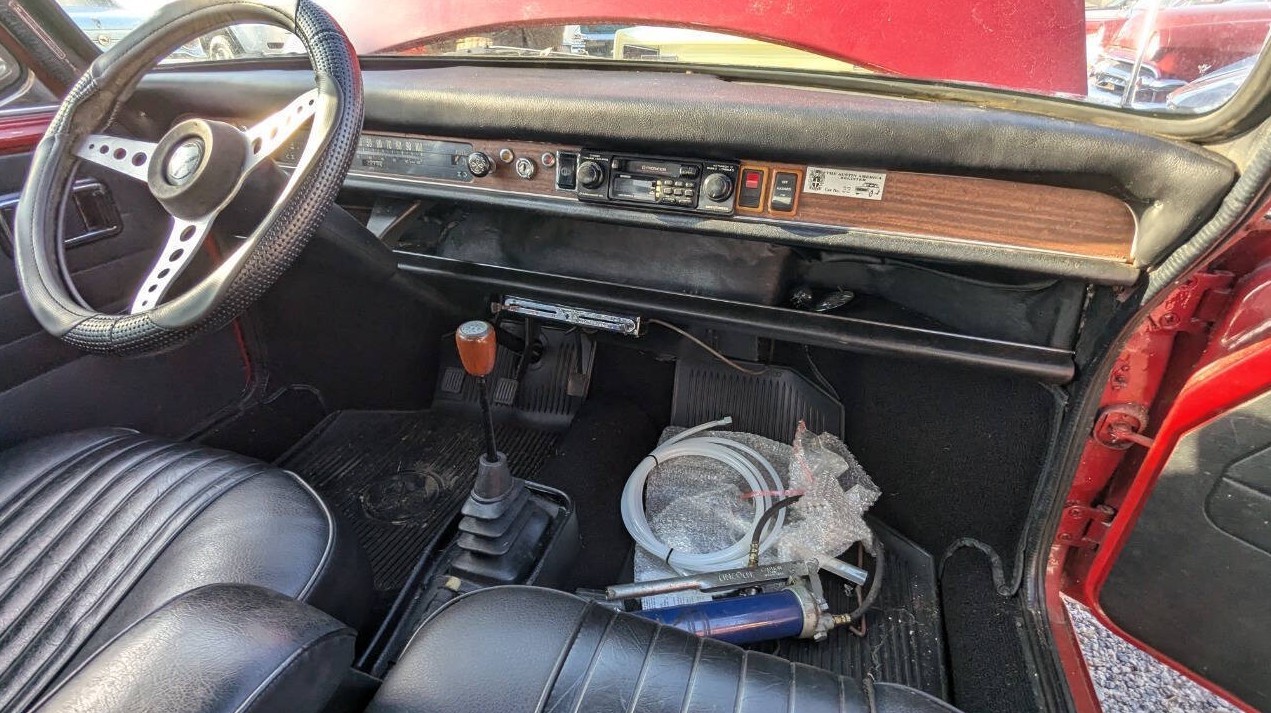
The surprise packet with this Austin is its interior. The Black vinyl has survived exceptionally well, with no evidence of significant wear, physical damage, or UV deterioration. The carpet and dash are equally impressive, as are the sports wheel and faux woodgrain. The vinyl in the dash recesses has come loose, but it appears to be nothing that a spot or two of glue won’t fix. The factory radio has made way for a radio/cassette player, which appears to be the only aftermarket addition.
Nailing down specific model year production figures for the Austin America is challenging, and even the official website grapples with that question. It indicates a tally of 37,735 vehicles across the combined 1968 and 1969 model years, with the totals falling in 1970 and 1971. That makes this 1969 example a relatively rare beast that deserves a second chance at life. The greatest challenge could be locating the suspension components because the rest of the car shares many parts with the more common Mini. What would you pay for this classic, and are you tempted to take it home? One thing is virtually guaranteed; There is little chance that you will park beside an identical one at a Cars & Coffee. That makes it worth a closer look.




No underside shots, leaky non-performing Hydrospastic suspension, presumably a non-runner. Gosh I bet there will be bidders lining up for this one! But in my view its maybe worth a couple of grand at best, and you’ve really got to be in love with the model for the spend/work that may be coming your way. The suspension bits aren’t cheap but a quick Goog seems to indicate most parts are available from specialists.
There was a restored one (including a nicely uprated fresh motor) for sale a year ago for $11k obo on the MG Experience. You’d be well over that with the advertised car by the time you were done to a decent standard.
Seller is a dealer with good feedback. Am guessing he has access to a lift and chose not to put this car on it.
best
bt
There’s Hydrolastic Minis, too, so spares should be available. It carried on into the 80s on Metros, too.
My aunt had an 1100 Morris version, as I remember.
Never had a Hydrolastic car. There’s a front-to-rear pipe that might be the source of the leak; otherwise, they need periodic recharging (pumping up). It used to be quite common to see a Metro trundling along at a jaunty angle en route to the garage.
I love the old Minis but no matter how hard I try to like its big brother, I just can’t. My friend in high school had one with an automatic and it was a real p**** ** ***t! It just never made the grade in looks or performance. I love my old British cars but not this one!!
I used to see these on used car lots in droves in my hometown after the Austin dealer skipped town in the middle of th night leaving a lot of owners stranded as far as parts and service went. Things got so bad that used car dealers all over town were selling these for as little as $15-$25 just to move them out.
Some of them were brand new cars that were still in their plastic
wrap with the window stickers still in place. Saw someone buy one for a dollar at the auto auction in Tremont Illinois in ’72 Reminds me of the time Studebaker shut down and folks started
to dump brand new Larks at auction rather than have a car you
couldn’t get parts for. Add to that, the British and the French just can’t seem to build a reliable car if their lives depended on it.
Only the Suedes, Germans, and the Japanes got things right
enough to make imported cars safe and reliable. Before that, the most reliable cars were built right here in America. And woe be unto you if you lived in the South and had one of these Austin’s, you’d be having trouble finding a mechanic to service it.
If it didn’t say Ford, Chevy or Chrysler on it, old Billy Joe Jim Bob wouldn’t even try to fix it. In fact, he’ll try and sell you a real car like that 10 year old Chevy he’s got parked out front
of his garage. Having said all that, I’ll pass.
Back in 69 or so, I test drove one in San Francisco. It was a blast to drive, handled like a real sports car, stopped on a dime, but even new, it felt tinny, it screamed poor quality; the transmission shifter felt mushy and uncertain, making the shifter of even a VW Beetle seem rock positive Alfa-like. Those things failed spectacularly on the american market and for good reason. To top it all off, they featured Lucas electronics. Good luck with that.
This was BMC’s and, later, British Leyland’s, attempt to eat some of Volkswagen’s lunch in the United States. After all, it was a best seller in its home market – what could possibly go wrong?
On paper perhaps it should have worked – at the time it was an ultra-modern front-drive car with advanced engineering rather than a warmed-over 1930s design risen from the ashes of a terrible war still very much in living memory. However the Austin America failed miserably due to horrendous reliability problems, poor build quality, lousy dealer and parts support, and a total lack of rustproofing. (Rust? Standard factory equipment.)
At least this one has a fighting chance with the manual transmission. The most-advertised selling point of this car in the U.S. was its optional fully automatic 4-speed automatic transmission, something unheard of in other small cars at the time. However living in the engine sump and sharing the engine’s oil those automatic transmissions would typically grenade at low mileage, quickly sending the car to the junkyard.
Still, they are interesting cars nonetheless. You can find out more than you probably ever wanted to know about them here:
http://www.austinamericausa.com/
Worked briefly for a BMC dealership in 1968 when these first came out- the ones with auto trans were a disaster- they went from showroom to owner to the service department within a week.
Wasn’t lubrication of the trans by the engine oil on these?
Given the stance, it appears to be lowered or worse, the hydrolastic fluid suspension has collapsed. I hope this is disclosed to potential buyers. But yes, a rare car on this side of the pond. They did not do well in the US market.
I had many of these. My ‘70 was a 4 speed, but the exhaust manifold cracked at the header. It was a cast piece with the intake. I replaced it with a custom intake with twin carbs, a custom exhaust and larger pipes all the way to the back with a bullet muffler. It was lots of fun. It did rust at the A & B pillars down to the rockers but floors were good.
Interesting car the fact it was parked and not repaired for suspension problems tells me the parts are super expensive or just not available so you would have to build your own air ride comes to mind for this little wind up toy
Worked for many years as a technician at various BMC / BL dealers in a number of countries so have had lots of experience(s) with these — and even owned a few along the way.
A few pointers:
The Austin America — with a few drivetrain variances over the years — was essentially identical to the Morris, MG and Austin 1100 / 1300 models (there were Wolseley and Riley versions as well), however, the America only had 2 doors as opposed to the 4 doors on the other models and was not widely sold in markets outside of the US.
Adam states that, “However, the company was very particular about its rust-prevention strategies.”
Surely he was not referring to BMC / BL’s rust prevention strategies because there weren’t any!
It was not uncommon to have the rear subframe actually come adrift from a 3 or 4 year-old car because of rust.
Look closely at the picture of the engine compartment and notice the discoloration of the (aluminum) transmission housing just beneath the starter motor. A strong indication of what one might expect underneath the car as the result of salt etc.
While it’s possible that the Hydrolastic interconnecting pipes have rusted through and leaked fluid, it is more likely that the Hydrolastic “bag” hose(s) have failed — these are part of the “bag” unit and are not replaceable without a lot of “re-engineering.”
Probably more of a parts car and the price is way “over the top.”
Some of the MG 1100s were 2 doors. I had one and worked on a few that needed clutches. I forgot there 4 doors.
Had one of these in the 70s after trading it in was told if I pulled away from a stop in a hurry it would have broken in half. Remote gear shift held it together
why so down Austin?
My family bought one of these new in ’71. Butterscotch color, automatic trans. Loved it. First front-drive car I ever saw. At 11 years of age, I drove it in the neighborhood. Got T-boned by a Pinto a few months later and drove it home. Inspired my mom to buy a new VW Rabbit a few years later.
I had a 1969 Austin America, and I recall that the transmission and engine shared oil.
There is an extra gas tank in the trunk. I think, that does not bode well for what is happening underneath!
But, hey… in the plus column, you get a brand new grease gun and some plastic tubing! We’ve seen worse deals on this feed.
I bought several very rusted Americas back in the day, just for the 1275 engines. This would need to be a labour of love, by someone with very deep pockets and the patience of Job to accomplish. Mini parts are pretty easy to come by, but that’s not the case for this model.
No that’s the only gas tank.
The suspension units on this are unobtainium here in thr UK have been since the 80’s only shared with 60’s minis.
They would rust for fun
Paging Basil Fawlty…
Like Nick, I bought these for $25 – $100 to harvest the engine and transmission for replacement in 850 Minis that I also gave $25 – $100 for. Same as MG1100’s. I was racing a Mini at the time, and this little scheme played out 6 – 8 times over the years I was racing. I was getting $1000 – $1500 for the re-powered Minis and everyone was happy. Literally scrapping the entire leftover Austins. They would bring about $20 at Ram automotive. I can’t remember ever driving one of these anywhere other than onto the trailer.
Bought one of these new so my wife could drive it to nursing school.Drove it once or twice, was fun to drive, but wasn’t as good as my Audi 100 ls was.
She drove it for 6 months, then it just started to fall apart, first it was charging system, then ignition, last straw was suspension. Traded it for year old Audi Fox, she loved that car, and kept it till it started to rust away, so back to American cars, new baby so 72 Chevelle wagon, kept it for 10 years, got more for it when I sold it, than what I paid for it.
If I was interested in Austin wouldn’t pay much more than scrap value for it.