

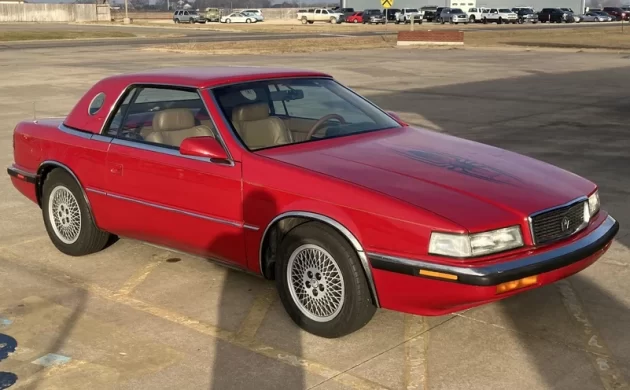
If the Chrysler TC by Maserati was made today, can you imagine how quickly its reputation would be tarnished simply by online chatter on Google? It’s rather incredible to think about how many automotive “failures” occurred before the days of the internet and while we know them by name today, it was far less likely that consumers would adopt a scorched Earth policy like they do today when airing grievances. The TC today actually represents great value for a top-down cruiser, and cars like this 1989 example listed here on eBay for $7,900 benefits from lots of recent maintenance.
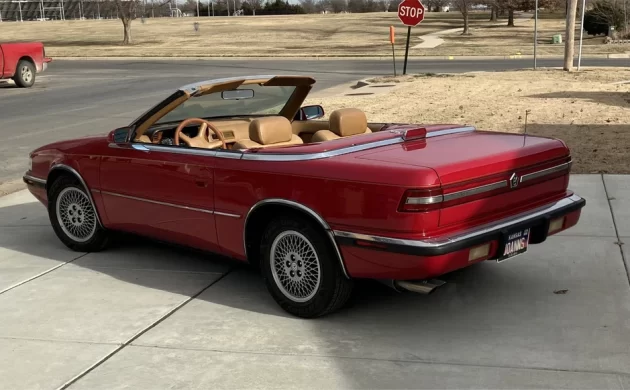
Now, I understand the complaints against the TC, and they are justified. Underpowered and expensive, and certainly not worth the price of admission. When you introduce a car with as much hoopla as they did the TC, you’re practically asking to be put under the microscope when the finished product finally arrives. Sadly, the launch of the TC was almost immediately undermined by the availability of the Chrysler LeBaron, which looked awfully similar and was available at a far lower price point with generous standard equipment levels. With underwhelming performance, the fate of the TC was almost immediately sealed.
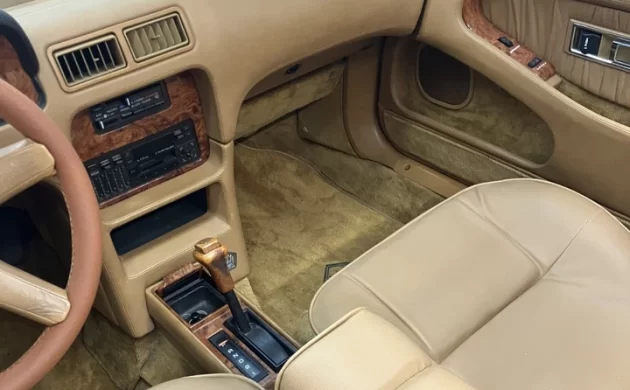
In many ways, the TC was being marketed on the virtues of its luxurious appointments. The interior was loaded up with leather seating and door panels, thick carpeting, woodgrain trim, and other signs of opulence. However, comfortable seats and fancy door panels only go so far when it comes to convincing consumers to part with their hard-earned dollars. The TC by Maserati was listed for $35,000 when new, and that works out to about $65,000 in 2026 terms. Truthfully, with the rapid price in cost of new vehicles, that number doesn’t seem all that shocking. But when a new Chrysler LeBaron convertible in 1990 cost around $16,000, the difference in MSRP seems far more dramatic.
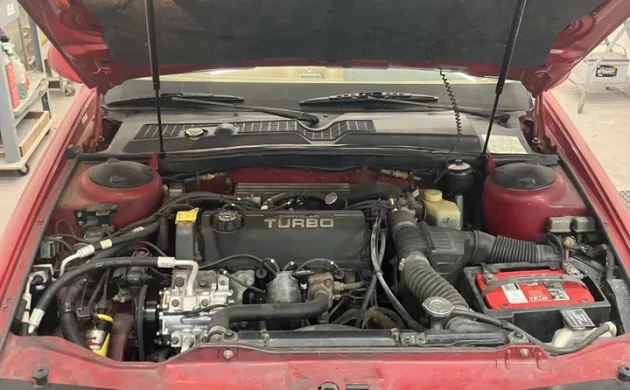
The 2.2L “Turbo II” engine produced 160 horsepower and 171 lb-ft of torque. The hot ticket in TC land is to find one of the elusive examples with the 5-speed manual and the 16V cylinder head, which is what the car always should have been. The seller of this example has made multiple repairs and other updates, including new ignition components, brakes, shocks, trailing arms, tie rods, and more. He’s also had the leather seats refinished, which could not have been cheap. And, of course, the factory hard top is included as well. Do you think $8K is a fair ask for a TC like this one?

I think that’s a good price. I don’t understand the continued disdain for these cars. Were they overpriced in 1989? Sure. But it’s 37 years later, and these are a bargain now. Where else can you get a tastefully designed drop top with so many luxuries for under 8 grand????
That said, I’d get rid of that hideous decal on the hood. What WERE they thinking?
The Mitsu V6 is a more reliable engine in these. The Turbo 2.2s had an awful reputation for head gaskets.
Totally disagree, at least from my own experience. I’ve had multiple vehicles with the 2.2 engine over the decades and never had any head gasket issues. The only one I finally did on, was my 87′ Daytona Shelby z which I had had 9 years and had over 250k miles on it. They were great engines.
Maybe you’re thinking about the original 2.2’s that were carbureted in 1981. Yes they had head gasket issues. 2.2 turbos not so much.
This car explains a lot about what’s wrong with big business these days.
This car is what fancy-school MBAs (who have more education than actual brain cells) come up with when some bureaucratic corporation buys a boutique brand.
Then they get to play “brand manager” until the whole thing collapses under it’s own ridiculousness.
The MBAs get huge salaries along the way, and they get promoted before the whole thing dissolves, absolving them of blame. Then they are off screwing up something else.
You sound too bitter. Life´s been a little tough? Poor dear.
True. I shouldn’t stereotype. Some of my best friends have MBAs.
Lee Iacocca himself cooked up the idea for these, along with his pal Alejandro de Tomaso (owner of Maserati at the time) going back to the Pantera when Lido was running Ford.
The original plan was for the TC to launch first as a “halo car”, then a couple-few years later the J-body LeBaron would launch with similar styling to inherit a bit of cachet from the TC (despite appearances, they don’t share any body panels in common).
Instead, development delays stalled the TC until it launched a couple years after the LeBaron, making the TC seem like a tarted-up LeBaron instead of the LeBaron seeming like a more affordable TC.
And even Babe Ruth struck out more than he hit home runs.
Right? Lee Iacocca had no brain cells. I don’t think he had an MBA either. The car was 18 months late to market due to the logistics of shipping parts to Europe.
They asked the old man who owned Maserati (now deceased) why their name wasn’t on these cars. He bluntly stated they didn’t want to f— up the name. Even Maserati didn’t like these cars.
Maserati has always been the last guy in the race; their reputation was never stellar. Quite frankly they srewed up everything they ever touched. Miraculously they didn´t disappear, always finding someone to invest tons of money, only to lose their shirt – again. Sadly the association with Chrysler helped neither them nor Chrysler, another screw-up who couldn´t get it right even after Mercedes spent zillions , only to walk away; which begs the question, what the hell were THEY thinking? Quite frankly, IMO the TC was the only one either one ever made that was nice.
Maybe so. As a race fan, I was always rooting for the team with less financing but more resolve against the odds. In dirt track racing, you saw it all the time.
You can park a birdcage in my paddock anytime.
“the Maserati Birdcage (Tipo 60/61) was a successful race car, most notably winning the prestigious Nürburgring 1000km back-to-back in 1960 and 1961.”
Daimler-Benz has no one to blame for their mismanagement of the “partnership.” The Germans were calling the shots and they certainly didn’t want Chrysler to outshine Mercedes. No doubt the money they “lost” on Chrysler was more like money they spent to prove German engineering is better than American.
I remember all the issues and buy backs with these cars. I would doubt that anyone kept these cars once the little devils started showing up.
I always thought the TC was a good and very nice looking car but arrived at a late date post LeBaron, and with it’s sticker price just didn’t make much sense to many people considering how similar they were. At least this has the Chrysler 2.2 which was a lot better than the Mitsu 6. Plus it’s a turbo which makes it even better. If it was a 5spd it would have had the best combo.
Dear Carbuzzard,what Daimler actually found out from their “partnership” which they mismanaged was Daimler engineering was not better than Chrysler’s. Chrysler mass-produced vehicles at a considerably lower cost than MB with better quality than MB. MB hid behind their 3 point emblem’s quality reputation to charge premium prices for their vehicles. They could afford the high warranty costs because they built it into their high costs for the vehicles.
Also, Daimler sucked all the cash out of Chrysler, killed small car engineering and never wanted to integrate anything MB with anything MOPAR.
Chrysler paid Daimler(the mother ship) $750 million per year off the top for the privilege of being part of the Daimler family. That money should have been used in North America for future product development.
Daimler failed because they did not understand the North American market and did not want to learn it. North America isn’t Europe. Stellantis did the same thing. Thankfully the US dealers forced Stellantis to fire the CEO last year before things got any worse.
Also the TC coupe happened long before Daimler came along.
Geez – Daimler-Benz´ quality was poor and Chrysler, were the heroes who suffered under poor Daimler leadership, which sucked hind-tit (as it is evident from their past and present performance?) Chrysler quality is far better than Merdecedes ( as everyone knows) and Mercedes dropped zillions just for the fun of it! Sure, buddy. if you say so. Also, they didn´´t know the market in the US, sure thing genius historian; you are a good comedian, Las Negas is awaiting you.
Gerard, as you may have figured out, I am a retired Chrysler employee who was privy to all kinds of quality and warranty data during the “Merger of Equals” time period. In the late 90’s Chrysler was selling about 2.5 million vehicles a year in North America and MB was selling a little over 100,000 vehicles. The Big 3 had been using rebates as a selling tool for 20+ years at that time. The first thing Daimler management did was kill rebates. What do you think happened? Correct, sales tanked.
Because they were smaller and had the magic 3 point emblem, they didn’t use rebates as a selling tool. MB was a low volume company back then. But as we all know, that’s not how it works in North America.
The biggest question we all had was what happened to the $15 Billion dollars in cash that Chrysler had at the time of the merger? It didn’t stay on this side of the pond.
Quality metrics were always being compared. Maybe you remember the 5 speed automatic that went in the RWD Chryslers. It was produced in Kokomo, IN by American workers. It was an MB transmission that Chrysler paid a royalty back to Daimler even though it was built here. The Kokomo quality ( c’s per 100 and cost) was notably better than the German numbers.
The 2 sides were surprised at every quality comparison on all vehicles. We expected they had really great quality and they thought our quality was terrible. We were both wrong.
Our warranty system and quality analytics were far better than theirs and their people admitted as much.
The Sprinter group in Düsseldorf was far more interested in our quality analytics than their own when going after items for improvement. We sold 20,000 Sprinters a year and they sold 100,000 units around the rest of the world, but our data was what they used.
I lived with their mismanagement every day for almost 9 years.
One final thought, in the years leading up to the “merger”, Chrysler was consistently earning around $5 billion a year. After the merger that never happened again.