
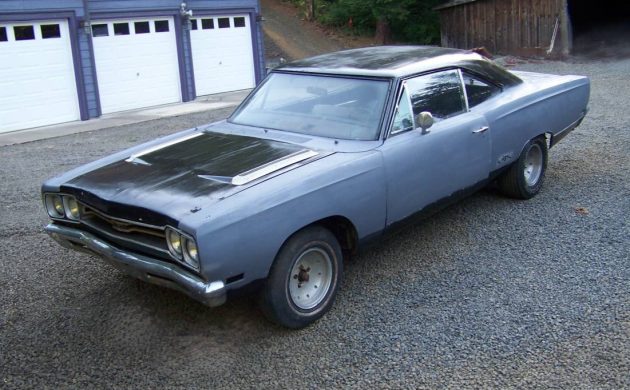
Introduced in 1967, the GTX was Plymouth’s upscale muscle car. It was joined the following year by the Road Runner, a budget-oriented model. Both were based on the mid-size Satellite/ Belvedere. The seller has a rusty and non-running GTX from 1969, but it has a 440 V8, which would have been standard fare during the car’s five-year run. In the same family for many moons, this needy project can be found in North Plains, Oregon, and is available here on craigslist for $14,995. Another tip scored for our readers by “Curvette.”
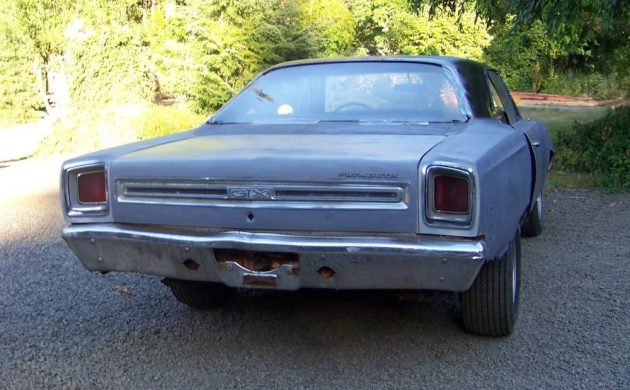
Interest in the GTX improved by 50% in 1968 when Chrysler redesigned the B-bodied intermediates. They proved to be hits, and the Dodge Charger benefited the most. GTX sales cooled a bit in 1969 to 15,600 units, of which 96% were 2-door hardtops like this one. The GTX was discontinued as a separate series after 1971, though it would be a trim option on the Road Runner in that model’s declining years.
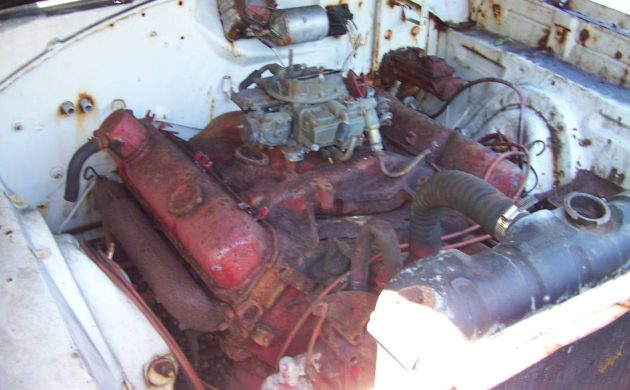
The seller’s GTX has the requisite 440 cubic inch V8 and automatic transmission, though there is no discussion of numbers matching. The muscle car traveled 34,000 (or 134,000) miles before the odometer stopped working. The vehicle doesn’t run and may not have for some time. The 440 is stuck and will need to be redone. Stored for a long period, Mother Nature has been busy with rusty quarter panels and an ugly trunk floor.
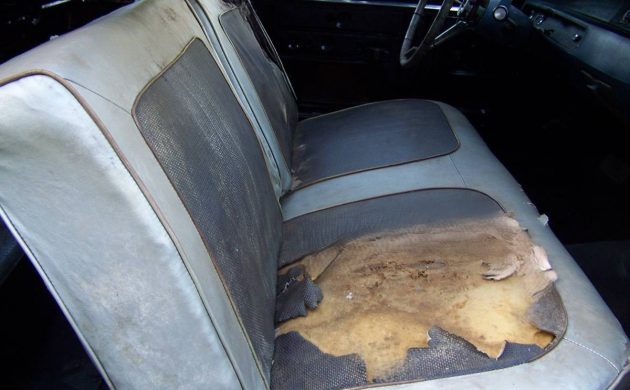
Blue-ish primer and gloss black paint are everywhere (covering what may have been white or light blue eons ago). The passenger floorboards look okay, but may have been repaired. You can barely see out of the windshield, so that’s gotta go. The back glass got busted out, but the sale includes a replacement. The bucket seats seem to have been swapped for a non-matching bench that needs help. Don’t get your heart set on the aftermarket wheels, as they aren’t part of the deal. If you happen to own an excavator, the seller might entertain a trade.



So, what was the difference between a Roadrunner( $2945) and a GTX( $3420) By looking at this hulk, not much, but in ’69, I suppose you could say an upscale Roadrunner, but more like a fancy Belvedere came with a 440 standard,( a hemi was a whopping $813 more, and why so rare) HD rear axle and suspension,, woodgrain trim, seemingly well worth the extra $500 bucks, and probably why 89,000 ’69 Roadrunners were sold, compared to only 15,000 GTX. Labeled as the “Gentlemans Hot Rod”, I think Chrysler vastly misunderstood who their sales buyers were, and $500 bucks was indeed a lot of extra cash for the paperboy/gas station attendant, for basically the same car. They all were ,,,um,,,well used.
Beyond the standard engine in each, there was a vast difference in both exterior and interior trim, as the Road Runner and GTX were targeted at entirely different buyers, and 1969 muscle car buyers were no more likely to walk through the door of the local Plymouth dealer thinking “Am I wanting a Road Runner or a GTX?” than the typical buyer was to be considering either a Belvedere or a Sport Satellite.
The Road Runner shared interiors with the Belvedere (unless the upgraded interior trim was selected, which got the Road Runner buyer the Satellite interior), while the GTX shared the interior trim and most of the exterior trim of the Sport Satellite.
Makes my head hurt to think how much work is required on this hulk but it does have an engine even if it’s frozen solid.
way to much rust for that kind of money.
Standing still it looks like it is going downhill.
I still remember that rumbling sound.
My early 67 GTX says Belvedere GTX on the front fenders
https://i.postimg.cc/CM2NDbpx/P1000929.jpg