
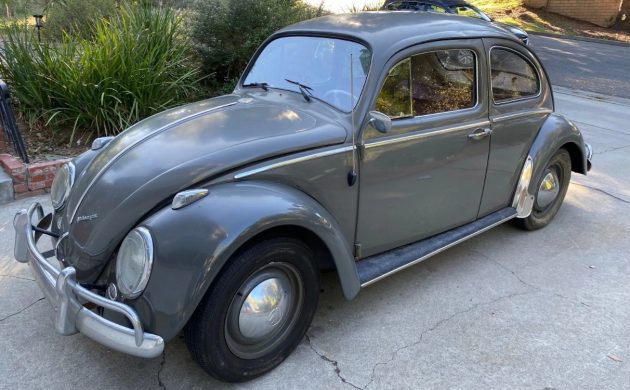
If you compiled a list of the ten most influential cars of the 20th Century, the Ford Model T and the original Volkswagen Beetle would make the grade. They may have emerged from opposite sides of the globe and in entirely different eras in automotive history, but the project philosophy remained the same: Their creators envisaged them as affordable transport for the masses. This 1963 Beetle needs love to return to its former glory. However, it is a solid foundation for a project build that could allow its new owner to be truly hands-on. The seller has listed it here on eBay in Riverside, California. They set their auction to open at $6,300 with No Reserve to muddy the water.
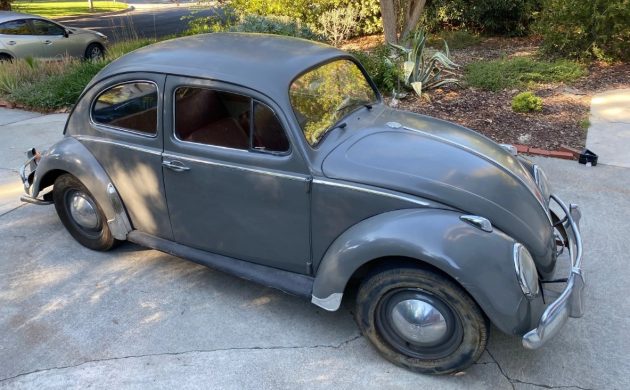
The Volkswagen Beetle is one of the most recognized vehicles ever produced. Aerodynamic efficiency played an enormous part in its styling, designed to counter the car’s lack of engine power. Volkswagen hit upon a winning formula, and the shape evolved only relatively slightly between the post-war years and the moment when the final car left the factory in 2003. The first owner ordered this Beetle in 1963, choosing to have its interior finished in subtle Anthracite. The seller believes the paint may be original, and its overall appearance supports that belief. It isn’t perfect, but it holds a warm glow. The panels have a few minor dings, none of which warrant steel replacement. Perhaps the best news hides beneath the surface. Life in a favorable climate has protected the floor pans from typical rust, and the car’s underside shows only dry surface corrosion. The exception is the area beneath the battery, which has rotted. A patch would be the most straightforward and affordable solution, and one that many potential buyers would probably consider. The trim generally looks acceptable for a driver-grade vehicle, and the glass is clear.
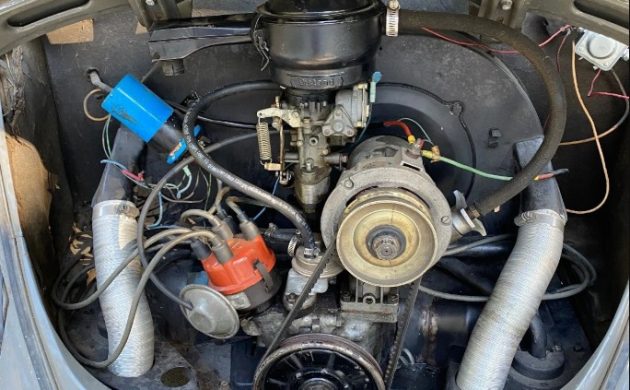
The engineering principles Volkswagen used to design the Beetle were quite advanced by the standards of the day. Placing the engine at the back moved most of the noise, smell, and heat as far as possible from the car’s occupants. This is one area that remained almost entirely unchanged during the Beetle’s production life, as the company saw no reason to reinvent the wheel. This car’s 1,192cc air-cooled flat-four once sent 40hp to the road via a four-speed manual transaxle. I use the past tense because the seller states that the motor hasn’t run for six months. They installed a new starter, but the four refuses to play ball. They believe the culprit may be the fuel or the spark, though they haven’t delved deeply into the problem. However, the motor turns freely, which is an encouraging sign.
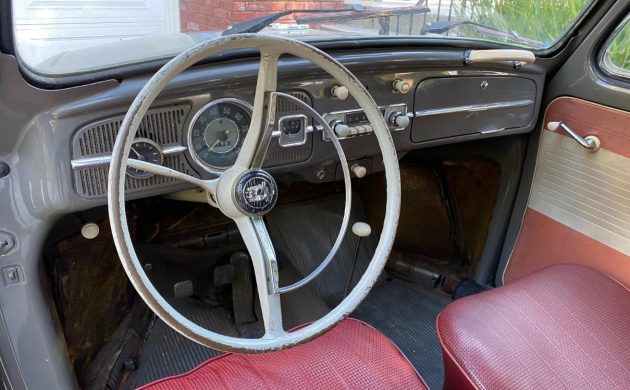
With affordability the primary concern, life inside a Beetle wasn’t what many would term lavish. A minimal gauge cluster and a heater were as good as it got for most buyers. However, this classic scores points with its factory radio, and somebody has added a dash-mounted clock. I would classify this interior as serviceable, since the seats are free from major flaws or imperfections. However, the door trims look tired, the headliner is failing, and the kick panels are missing. Therefore, a complete retrim would be the best solution to achieve a high-end result. This is a surprisingly affordable process, because appropriate kits typically retail for under $1,500.
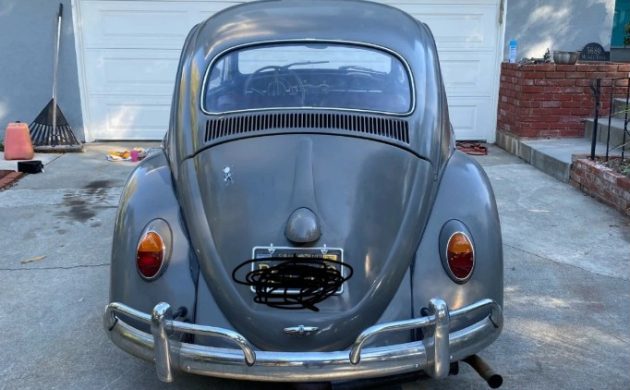
There was a time during the 1980s when buyers could purchase a 1963 Beetle for only a few hundred dollars. Those days are a distant memory, as the Beetle has become another automotive must-have. Pristine examples typically command impressive prices, and the foundations are in place for this one to meet that standard. The auction opening figure is realistic, and it is worth noting that while the listing statistics are healthy, they haven’t translated into genuine action. Therefore, it is possible that someone could become its new owner with a single bid. That must make this listing worth monitoring.




Rotten battery box? Say it’s not so!!
Haven’t seen many that DIDN’T have some corrosion in the battery box. This clean old Bug is great nod to the simplicity of the era and getting it running again is child’s play.
What’d be fun would be to see the expression on someone’s face when you tell them “uh oh I need to switch over to reserve!” and reach up under the dash to the fuel lever..
Clean lil Bug. Hope it goes to an appreciative home.
The ’60 Bug was the first year with a fuel gauge, as a replacement for the reserve valve. So no fuel lever on these either (I had both a ’62 and ’63, back in the late 70s.),,and yes the battery area was corroded on both. Fun fact..to tighten the fan belt on these you removed shims from the middle of the two-piece generator pulley!
I had a 1961, and it had a reserve tank and no fuel guage.
The running joke in the late 60s was they went for about a dollar a pound.
As a freshman in college, I did a rideshare with a junior who owned a 63 Bug in white, from Chicago to New York. It was for Xmas break. The heater was barely adequate. It was fine at 65-70 on the Indiana and Ohio flatland interstate. In Pennsylvania’s hill country, it would only do 55 up the hills (if we got a running start). Gas mileage was only so-so, but in comparison to the other American behemoths was at least 10 mpg better. It was also relatively comfortable for the most part. However, you had to watch yourself when passing or being passed by a 53 foot semi. The blow just behind the semi’s cab could push you 2-3 feet to the side if you weren’t on top of it.
Pretty sure that is a repaint as they painted over a few bits should not have paint on them. The wheels should be 2-tone with a white outer rim and not all anthracite. The door panels look original, but the seats and carpet are not. Rear bumper is a repro. Headliner is a strange combination of perforated and non-perforated material.
It’s nice to visit an eBay ad where the seller mentions as many negative issues, as small as some are, as they do positives. This car ran 6 months ago, so likely not difficult. I like the conservative color. It reminds me of a black 59 VW that I had in the early 70’s, similar condition body wise. I rebuilt and upgraded the engine using many JC Whitney mail order parts. This engine looks very clean and just as simple.
No one commented on the crumpled inner fender on the left front?
They have just thrown a new left fender on and did not fix the mangled inside, just poor. Not for me. regards from Tyrol
The seller does mention the area that was not fixed and that it was there before he bought the car. This is included in the list of things that may (or may not) need attention. As usual, there is often more to see if we go back to the original ad. I did go back and view the inner area below the spare tire that was damaged. If the car is to be restored and a lot of money and time invested, then this should be addressed. Or this could be a #3 driver and just some of the things might be fixed on a budget. So, this car may not be for a purist.
Nice Bug. I’d drive it. And I’d bet that it doesn’t run cause the carb is gummed up with old gas. Seller says he’s put about 1k miles on it since buying it in 2011, not even 100 miles a year.
Should be an easy fix if you know what a carburator is.
The thing about these; don’t drive them at night.
20 some years ago, some A-hole tailgated me with their high beams.
With the glare from the flat glass, I couldn’t see where I was going.
Luckily I had just installed a double halogen fog lamp on the left rear over-rider hole.
Pulled the switch on that and blinded him right back, he disappeared.
If you are serious about getting an old VW?
Get a first edition John Muir Idiot book and study it.
Get spare parts for everything consumable store it opposite the battery box under the rear seat.
Get a Pyrex cassarole dish to put under the battery.
Then a good quality Metric tool kit; 10, 11, 13 MM are the most common on these, so double up on sockets and wrenches.
To get the most out of the engine: Valvoline VR1 racing oil 30 or 40 W, change it every 1,000 miles.
Fuel: 92 octane minimum, stay away from alcoholic gas; it will burn a hole in #3. MMO will stabalize the gas and K2 Kerosene will up the octane to slow the burn.
The factory wear cycle on these engines is 60,000 miles.
I have over 250,000 miles on both my V Duds engines. Air cooled motors destroy oil quick, hence the thousand mile interval on oil changes.
Owning an old V Dub is fun.
Keeping it reliably on the road is work.
PS! If the steering wheel pulls to one side or the other when you press the brakes? You got a leaky wheel cylinder; replace the whole system.
Use only German parts! Cheap Brazilian, etc, means you are replacing them again in 3 to 6 months.
Young people that offer me tons of money for mine? I ask them; Do you know how to work on it?
No.
Then you have no business owning it.
Spot on, Dave. A 3 quart oil sump and no filter. I’d go 1500-2000 on the oil changes if you’re paying attention to the oil level at every fill-up. On my own cars (not VWs) I am religious about oil changes every 2000 miles, or at least I used to be before synthetics. At 2000, the old oils were pretty black and the lubricating properties were reduced. The old recommended changes at 5K or worse were an obsolescence effort by the manufacturers. Then 3K became the layperson’s norm with the old oils, often recommended by mechanics (who also stood to profit from the more frequent changes, but were correct technically).
In my professional wrenching days back in the early 80s, a tune-up always included valve adjustments. Doing a VW’s valves were a nuisance because of their physical location (no lift when I was shade-treeing). No fun in January on a gravel driveway, but necessary. And I can’t tell you how many frozen and rusted brake adjusters I had to deal with on the VWs I treated.
I was a line mechanic on V Dubs for 20 years.
I started out doing roadside rescues; long before cell phones and pagers, it was a network of: Friends, Buddies, and Surfers. The conversation always started; Dude! and I would find them on the side of the Freeway.
Fixing a car when traffic is doing 70, when they could do 70, not fun.
My last job wrenching, I got fired for treating the customers car like I owned it.
Anti sieze on dang near everything, and bearing grease on body bolts.
The salt air of So Cal eats at everything. A 2 year old BMW at the beach will start developing rust around the windows.
Wow, Dave, I haven’t thought of this in many years. One of my fantasies was to do as you did do and install “blinding” lights on the rear of any car, not just VWs, for the mentioned purpose. Also, the Pyrex dish under a battery would work for any vehicle that has a corrosion to battery box issue. I think there are specially treated pads to counter the acid, but containment is a good idea.
In lieu of the Pyrex dish how about a modern sealed battery?
In the south west; those things dry out in 2 years and cost twice as much as serviceable battery.
As long as you check them every 6 months, top them off with distilled water, put them on a 2 amp trickle for a week every couple of months they should last a decade, at least.
With 23 vehicles; you know I have a battery station in the shop for maintinance and storage. I always go with marine grade; especially with the 6 volts.
Everywhere I have lived I always hunt down the guy that makes the best boat batteries, and buy directly from him.
Without being hired, I become his best salesman; the old man group and the many car shows.
My 42 sat for 3 years during Covid, she fired right up.
Another free thing to do, or almost free if you need to buy new gaskets, and something I would do maybe even before checking the carb, is adjust the valves. That’s fun if you don’t mind lying on your side. I bet some are tight, usually the exhaust valves. Also, if the area around you and the car is fairly quiet, you can statically set the timing by listening to the spark. I haven’t done either of these in over 50 years. Do they still have the VW “Idiot Book” in print by Muir?
Simple cars these were. Get it for about 1000 less asking price and get it running.