

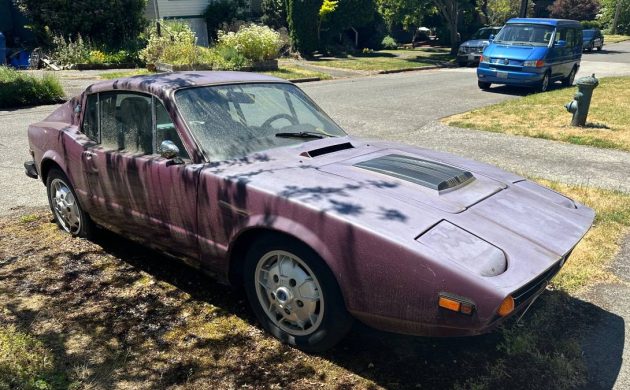
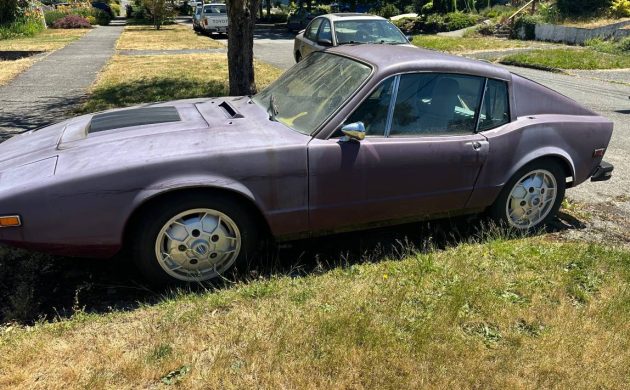
If you seek an interesting project candidate that is undeniably affordable, this 1973 Saab Sonett III deserves a close look. It has sat for years, and the buyer will probably opt for a nut-and-bolt approach to bring it back from the brink. However, the seller’s decision to include a parts car is a genuine bonus, allowing the new owner to squirrel away any surplus items as insurance against future problems. I must say a big thank you to Barn Finder Curvette for spotting the Saab listed here on Craigslist in Ballard, Seattle, Washington. The seller set their price at $2,000, and even that modest sum is negotiable.
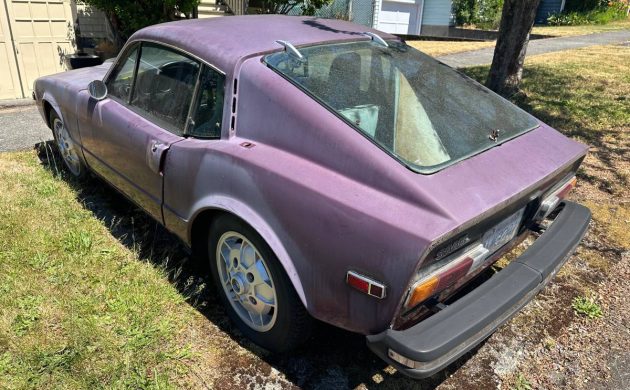
Saab released the original Sonett in 1955, but the unveiling of the Sonett II in 1966 is when the badge hit its stride. The styling was crisp and clean, and the performance was surprisingly good for a car with a relatively modest motor. Saab updated the vehicle in 1970, releasing the Sonett III that remained on sale until 1974. The seller indicates that this gem has occupied its current spot for years, meaning it has been exposed to the weather. That explains the tired state of its paint, although Saab’s decision to utilize a fiberglass body means that panel rust isn’t an issue. However, we’re not out of the woods because that body sits on a box steel frame, and rust, particularly at the body mounting points, could be an issue. As usual, an in-person inspection is warranted, though some enthusiasts might roll the dice given the low asking price. Most of the trim is in acceptable condition, and the glass is clear.
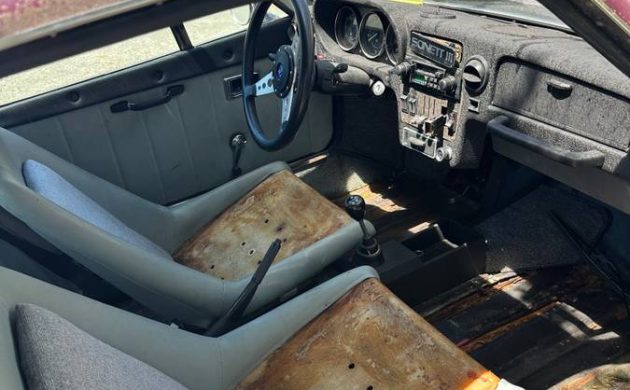
Keeping it short and sweet, this Saab’s interior retains most of its critical hardware, like the seats and dash assembly. The door trims might be serviceable once cleaned, but the new owner’s shopping list will include new seatcovers and carpet as a starting point. The dash looks surprisingly good, and the gauges feature clear lenses and crisp markings. A close inspection may reveal a few things requiring replacement, which is where the parts car may come into its own.
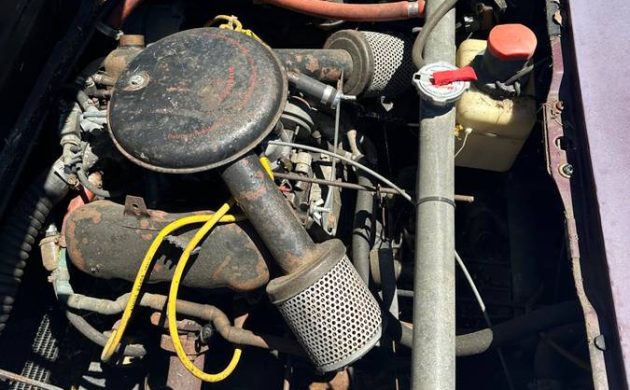
Saab initially used its 843cc two-stroke engine in the Sonett II, but switched to the 1.5-liter Ford V4 in 1957. That motor remained the backbone of the Sonett III, although cars produced between 1972 and 1974 featured the larger 1,699cc version. The motor sent 65hp and 85 ft/lbs of torque to the front wheels via a four-speed manual transmission. The secret to the Saab’s surprising performance was its low curb weight, with the Sonett III tipping the scales at 1,870 lbs. The factory quoted a top speed of 106mph, which is quite impressive considering the modest power and torque figures. This Saab is a classic case of “ran when parked.” I’m unsure when it last fired a shot in anger, but the seller confirms it would require a new clutch and other work as the starting point for its revival.
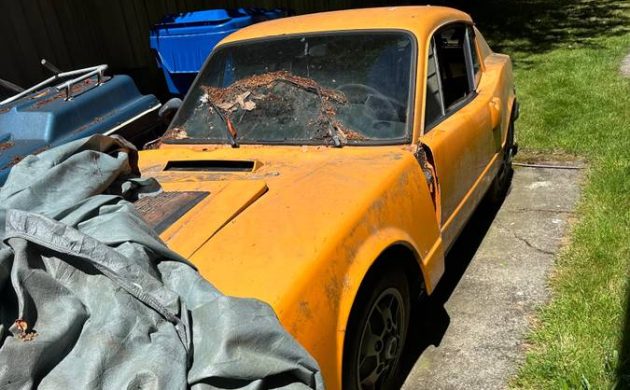
The included Orange parts car is a sad and sorry sight, but it is also a veritable treasure trove. The seller confirms that it doesn’t have an engine, but that isn’t the end of the world. Even if the buyer elects to use nothing from this car in their build, storing its panels and glass would be worthwhile. Locating a replacement back window can be challenging, so having one sitting in the workshop is a genuine bonus. There are also interior components and other items that could prove useful one day or be sold to generate extra cash for the buyer’s build.
I have always considered it sad that Saab no longer exists. It produced some genuinely interesting cars, and its decision to embrace forced-induction technology for some of its offerings provided class-leading performance. Some enthusiasts avoid classics like this 1973 Sonett III, worried that sourcing parts might be difficult. However, the extra vehicle included in the deal is a welcome bonus, and the seller’s willingness to negotiate is a positive sign. When you consider those factors, are you tempted by this quirky Swedish classic?

Great write Adam. Its so funny, when I saw this, I had litterally just seen a fully restored red one on the road driving yesterday. ( The owner had a smile on his face, you could tell he was having fun). And it looked great. This one here, especially if it’s solid underneath definitely deserves a full restoration. All fixed up they look great and I’d be willing bet a lot of fun to drive. I’m with Adam, its really a shame Saab is gone, they truly had some unique engineering.
Once again tip of the hat to Curvette for the find, and Adam for the great write up.
Many years ago I found a Saab Sonnet in a swampy area of a junkyard. It was way beyond salvage but I thought the bucket seats were just too cool to get scrapped. A few thousand mosquito bites later I got them out. I’ve never had the right project to put them in so they’ve been in dry storage in the barn for a couple decades (wow, that long). They’d be very easy to upholster and I should figure out where to put them – I have vehicles where they’d be an upgrade. I need to get busy!
Nice vehicle example and description of these classic vehicles.
One little typo error… it was 1967 that the engine changed to the V-4.
Now listed at $1000!!!
I understand these can be very difficult to fix up due to complex sheet metal unibody.
Always liked these and wanted one. Looked at one in the late 80s and dated the owner for a while but neither took. Also again in the 2000s I looked at one but there was considerable rust in battery area and it wound up going to a father/son project ($1500). The only thing I didn’t like about them was similar to the Pontiac Fiero and Porsche 914…the flat floor was uncomfortable. I love the plum (crazy) color too. Sorry that it’s on the other side of the country.
Looks like alot of fun for the price !!!
I’ve never heard anyone describe the Sonnett II as “crisp and clean.”
“Mutant amphibian” is closer
Now down to $1000 OBO.
What a great cheap project for anyone who knows how to turn a wrench. If I were in the US, I’d buy it today.
Been sitting for a decade IN THEIR DRIVEWAY. Im guessing the neighbors love that.