

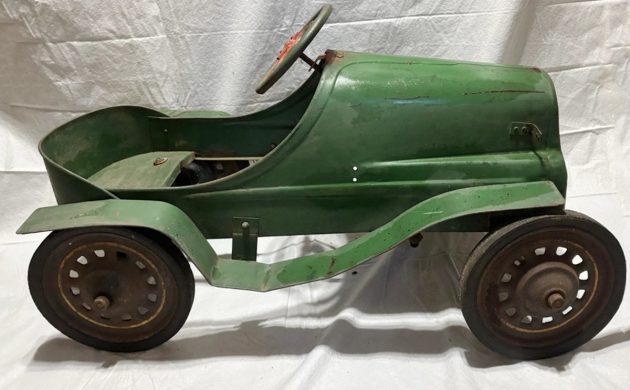
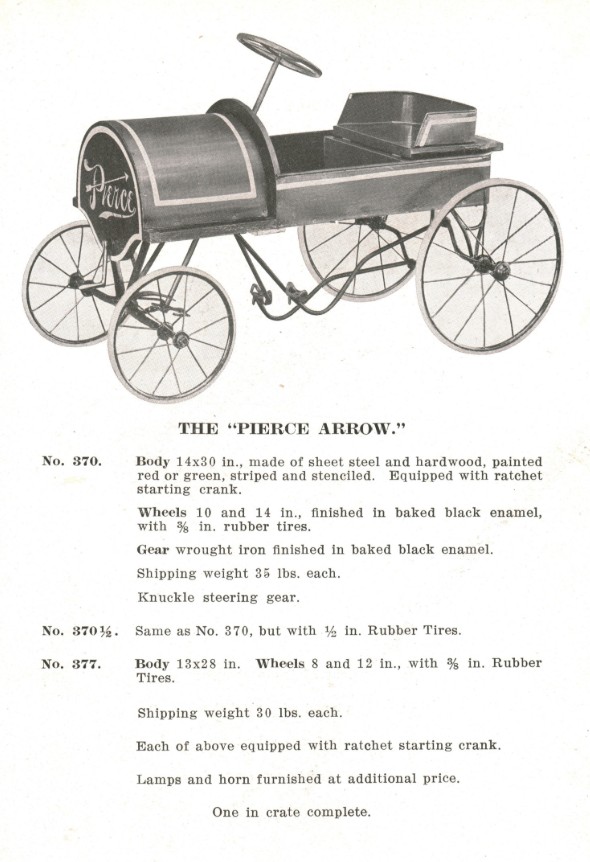
Pedal cars date back to about the time cars were first invented, sometime in the 1890s. The first of their ilk were built with wood bodies and steel underpinnings, often by bicycle manufacturers. Most were chain drive, and like their larger brethren, pedal cars were sold to wealthy families. By about 1910, fabrication shifted to stamped metal, and the drive system relied on a simple crank axle; these two factors caused a vast expansion of production, as well as body styles and price points. Still, producers aimed to offer toys featuring realistic accessories – windshields, horns, shift levers, headlamps. Garton was a purveyor of “children’s vehicles” from its founding in 1879. Today’s offering is a Garton “Tin Lizzie” styled after a Model T. It’s in project condition, missing its headlamps, windshield, badging, and other items. But it’s operable, and it wouldn’t take much to doll it up! If you’re inspired, check out the listing here on eBay, where the seller wants $425 or best offer. This toy is appropriately located in Eclectic, Alabama, and it can be shipped (for a pretty penny).
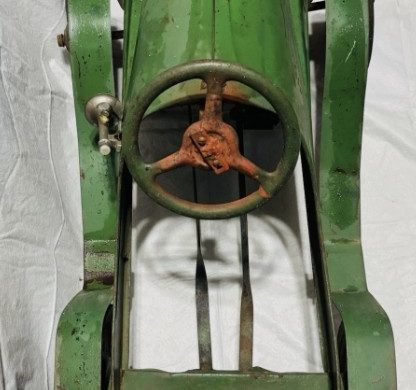
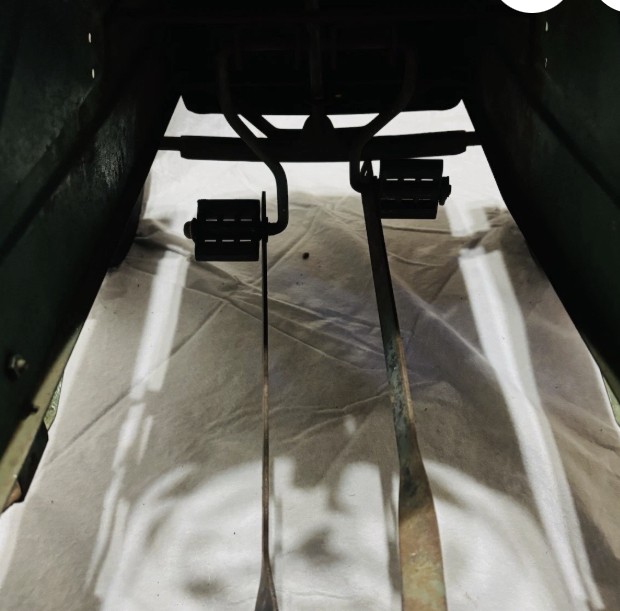
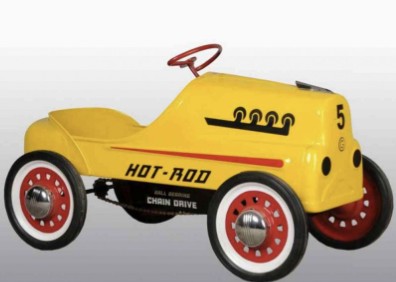
The interior isn’t much to write home about, but the drivetrain is a-okay! The basis of the “Tin Lizzie” was Garton’s “Hot Rod”, which it began producing in 1953. To make the Model T lookalike, Garton added fenders, a windshield, a “radiator” mascot, even pinstriping. Parts for pedal cars can be found here at Pedalcar.com (of course).
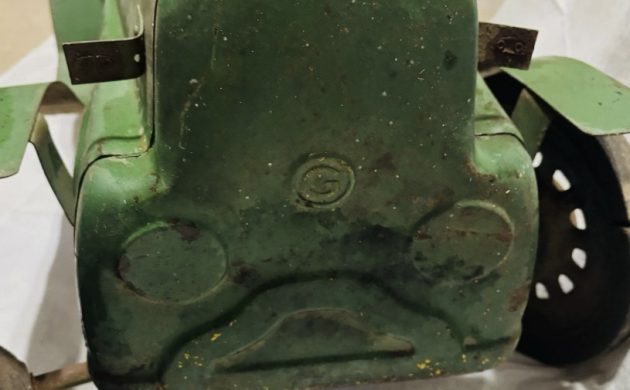
Beyond the “Tin Lizzie”, Garton made several other models, including the “Casey Jones”, a locomotive, and the “Kiddilac”, a custom-styled sedan with a continental kit. Competitors included Murray, AMF, and Steelcraft, among others. In hindsight, the pinnacle of the pedal car craze was the period between the two World Wars, when cars were still the new, new thing. But with the advent of the 1960s, both cars and pedal cars were old hat. A new invention was about to rock the boat: in 1969, Louis Marx and Company introduced the Big Wheel, a plastic trike with a difference: it was slammed to the ground, allowing kids to skid, pivot, and drift. Safer – but faster and lighter – the Big Wheel sideswiped the pedal car industry, effectively ending production.
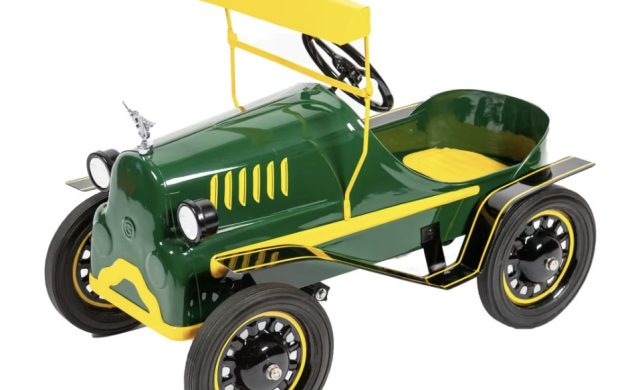
Here’s a restored Garton “Tin Lizzie”; this one sold a couple of years ago at Mecum’s Glendale auction for $2714. And that’s on the cheap side in the pedal car landscape; rarer models can sell for tens of thousands. Garton closed its doors in 1973, unable to adjust quickly enough to the age of plastics. But it left behind just what it always claimed to make: Great Toys Since 1879.
This TV show “American Restoration” with Rick Dale in Vegas does a lot of these restorations for people. His crew does outstanding work, and was surprised to learn, of all the reality shows, aside from some very specialized stuff, he really does all his own work. “Eclectic, Alabama”? Sounds like my kind of place and I thought the Badger has some unusual city names. Whether we care to admit, these were our first taste at a car and from here it didn’t take long. My mom said I painted my pedal car with my hands!
You oughta take a road trip there in your “RV”! Post plenty of pics, we’ll wanna see ’em! 😝
As a native Floridian having lived for a number of years near Eclectic, Alabama, I can attest to the natural beauty and friendliness of the people. Without a doubt the first owner of the car had to be dragged off it to go to church on Sunday morning. As a child in rural Florida, my father was a John Deere tractor dealer, so I had no such car. But man, you should have seen that magnificent green and yellow pedal tractor of mine!
I’m right with Howard on that comment, a pedal car (red Jag E Type ) that was a hand-me-down from my older brother was what started me. This is just so great Michelle, I’m hoping someone gives it a good new home and restores it!!! I really enjoyed learning about Garton from you too, thank you for all your research Michelle. I know I’ve said it before, and I’m saying it again, many folks don’t realize the hours you writer spend on Barnfinds researching vehicles, and company histories too. Thank you again!!
-Dave
I had this exact model in the late 90’s hoping to electrify it for my kids. During that re-evolution I converted the steering to 1/4 elliptical–like a Go Kart uses, abandoning the single pivoting inefficient front axle that was OEM on the car. The steering improved the function a good deal. Then I went backwards and restored the remainder of the toy vehicle nicely after finding how nicely the delicate and rare-find die cast hood emblem turned out restored – and never did electrify the car. I sold it at a garage sale to a VERY inquisitive collector. Now, I have changed the history of a significant collectable, and somebody else out there has to pan-out the hidden truth. Yet, this is the same as so many older unrevealed truths hidden in unknown history of vehicles that is difficult to sort out over time that collects stories that are often re-told in OTHER fabricated truths and are hard to prove and effect value in many directions. So, wherever that upgraded toy is now- here is a thread of truth about that enhanced steering as it visited our shop for a bit of hotrod work that is otherwise anonymous!
When I was a kid I had (and still have) an Ertl John Deere pedal tractor with a trailer and a pedal bi-plane that my Uncle custom made for me out of wood and painted it to match the real Steen Skybolt bi-plane that he built for himself! He got the plans and the non-wood parts (drive train and steering linkage) out of an airplane magazine. My brother had a reproduction Murray pedal fire truck.