
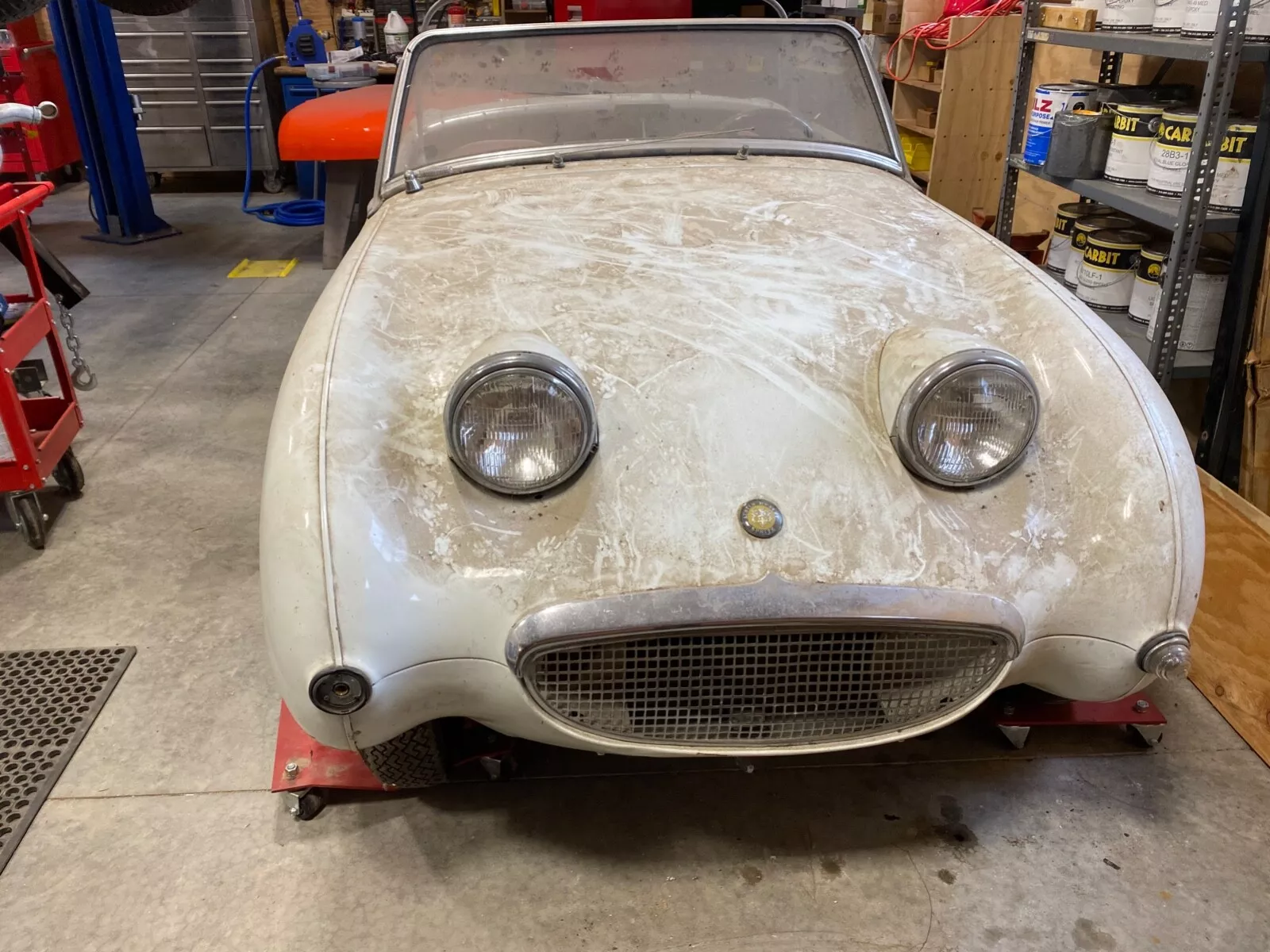
How simple can a car be? How much weight can be saved by utilizing the most efficient design possible using the least amount of parts? In the late fifties, sports car designer Donald Healey went to work on building a bare-bones sports car using off-the-shelf mechanical components and a body that was simple to the extreme. The result was thousands of diminutive sports cars like this 1958 Austin Healey Sprite for sale on eBay in DeKalb, Illinois. Known affectionately as the “Bugeye Sprite,” this remarkably basic and efficient little sports car was an immediate hit with enthusiasts. This example, which has been off the road for years, boasts numerous improvements and repairs. The problem is that the seller suspects that the sills will need to be replaced. At a current bid of $1,825 or a Buy It Now price of $4,000, is the fact that the low price isn’t attracting much interest a sign that the repair is too much of a hill to climb for most folks? Would you take a chance on a car needing extensive bodywork to have the smiling face in the picture above grinning back at you when you open your garage?
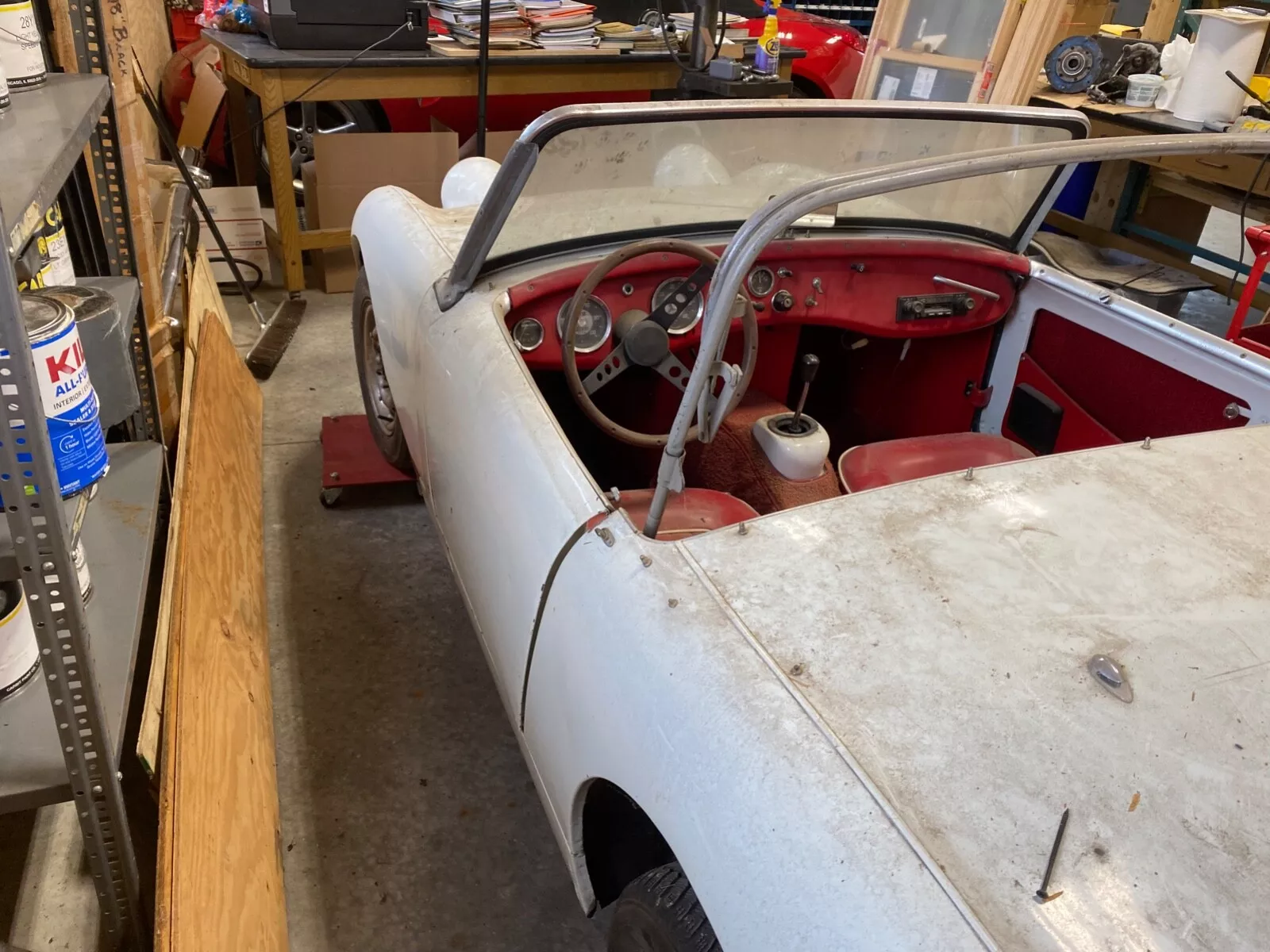
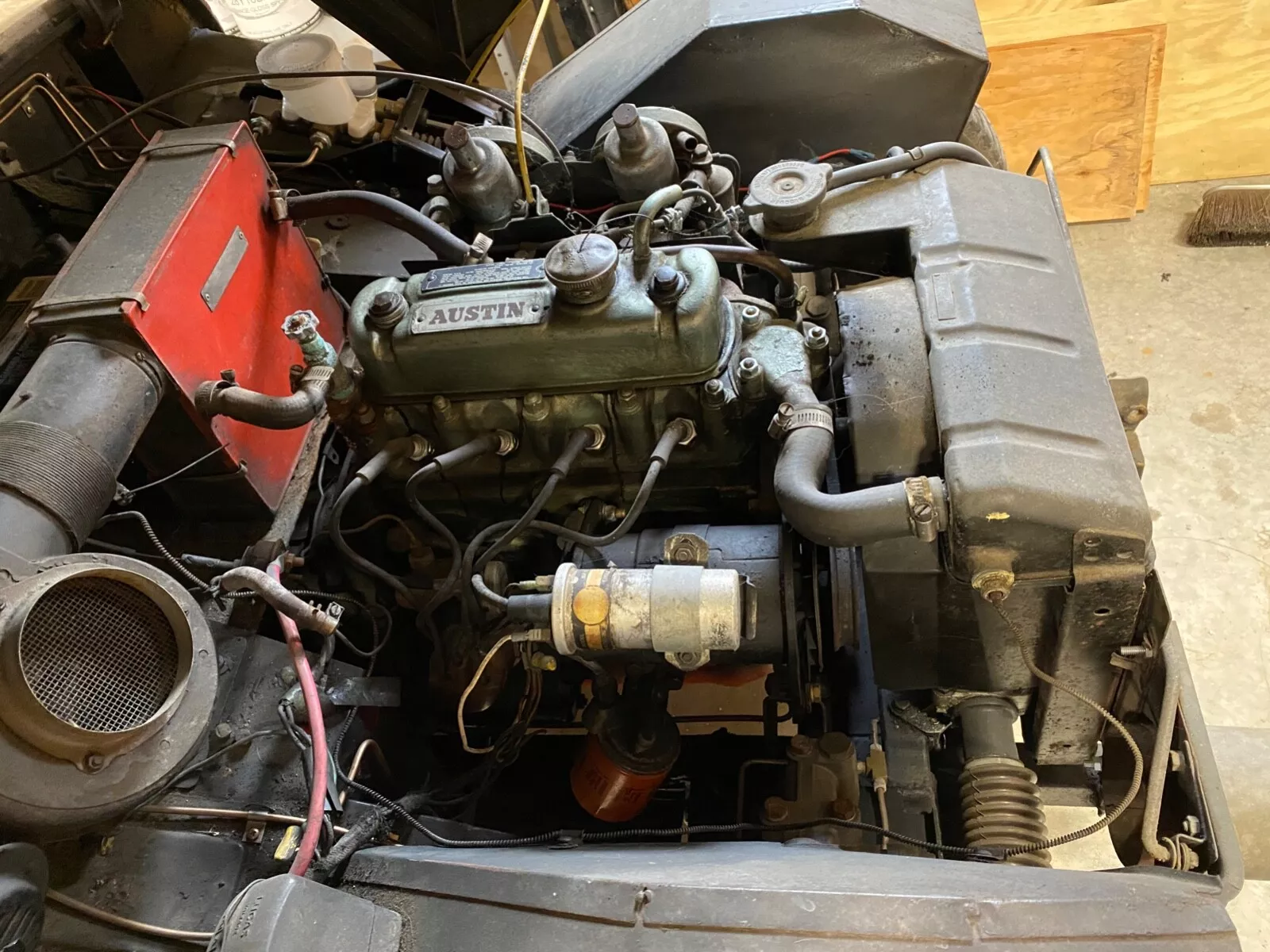
The main word you need to keep in mind when you look at a first-generation Austin Healey Sprite is simplicity. If you want to add another word, austerity is a good descriptor as well. Donald Healey’s goal was to produce an inexpensive sports car that young people and others without great means could afford. Making the car as inexpensive as possible forced him to focus on using mechanical parts from existing sedans, getting rid of anything that wasn’t completely necessary, and utilizing innovative construction techniques. He did so using a 43 horsepower inline-four cylinder engine used in Austin and Morris sedans displacing just 948 ccs. Power was transmitted through a four-speed gearbox and to a solid rear axle.
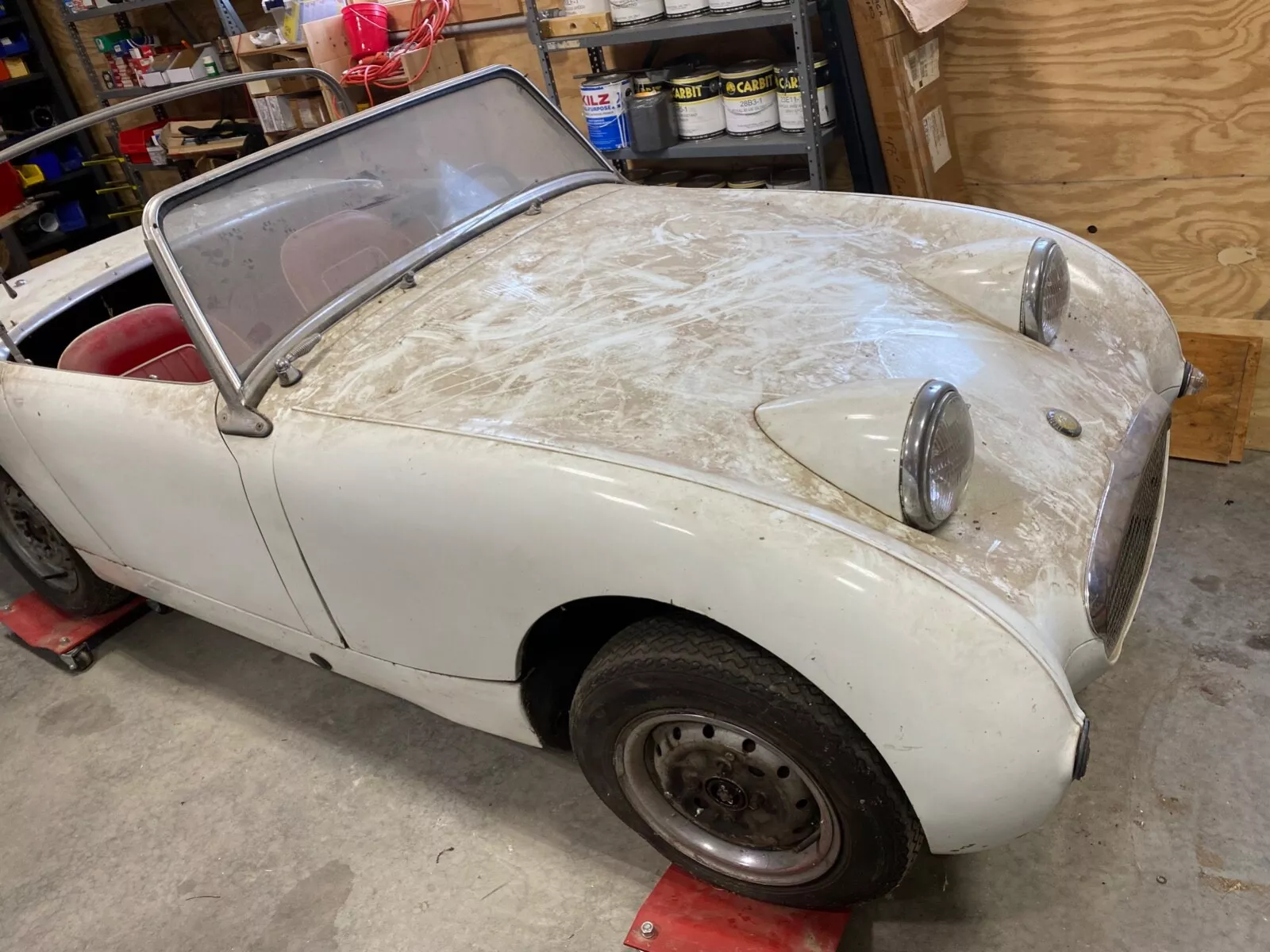
The body itself was a stroke of genius. In what was one of the first examples of unibody construction, the stamped panels of the body from the cowl back were welded together for strength and two front frame rails served to hold the engine, suspension, and the one-piece tilting hood and fender arrangement. The headlights were originally designed to lay back like those on the later 928 and be cranked up for use. This method proved to be too complicated and expensive. What resulted was the cheap solution of mounting the assembly to the top of the hood. While this was seen as an example of thriftiness, the headlights became one of the most endearing features of the design.
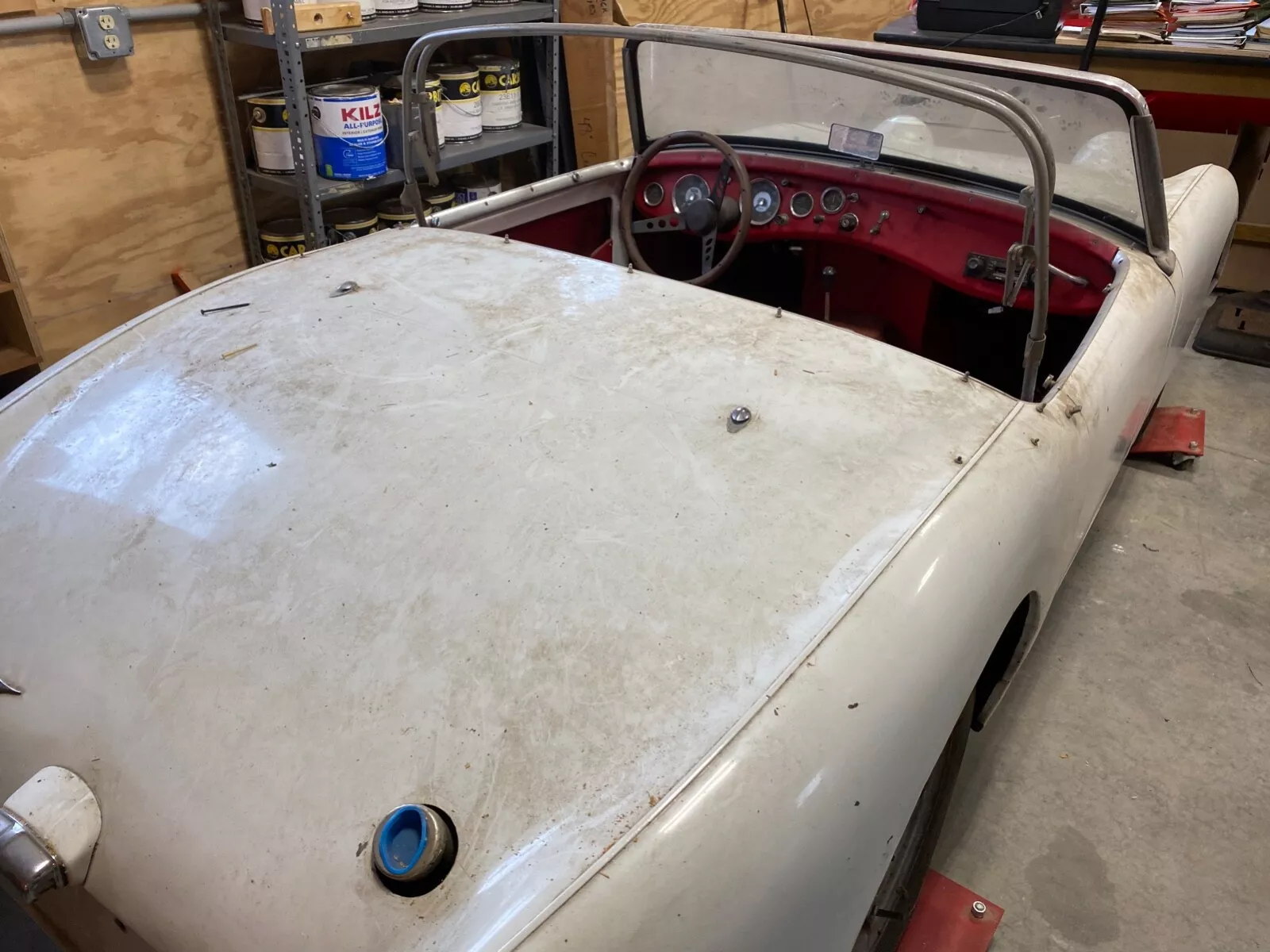
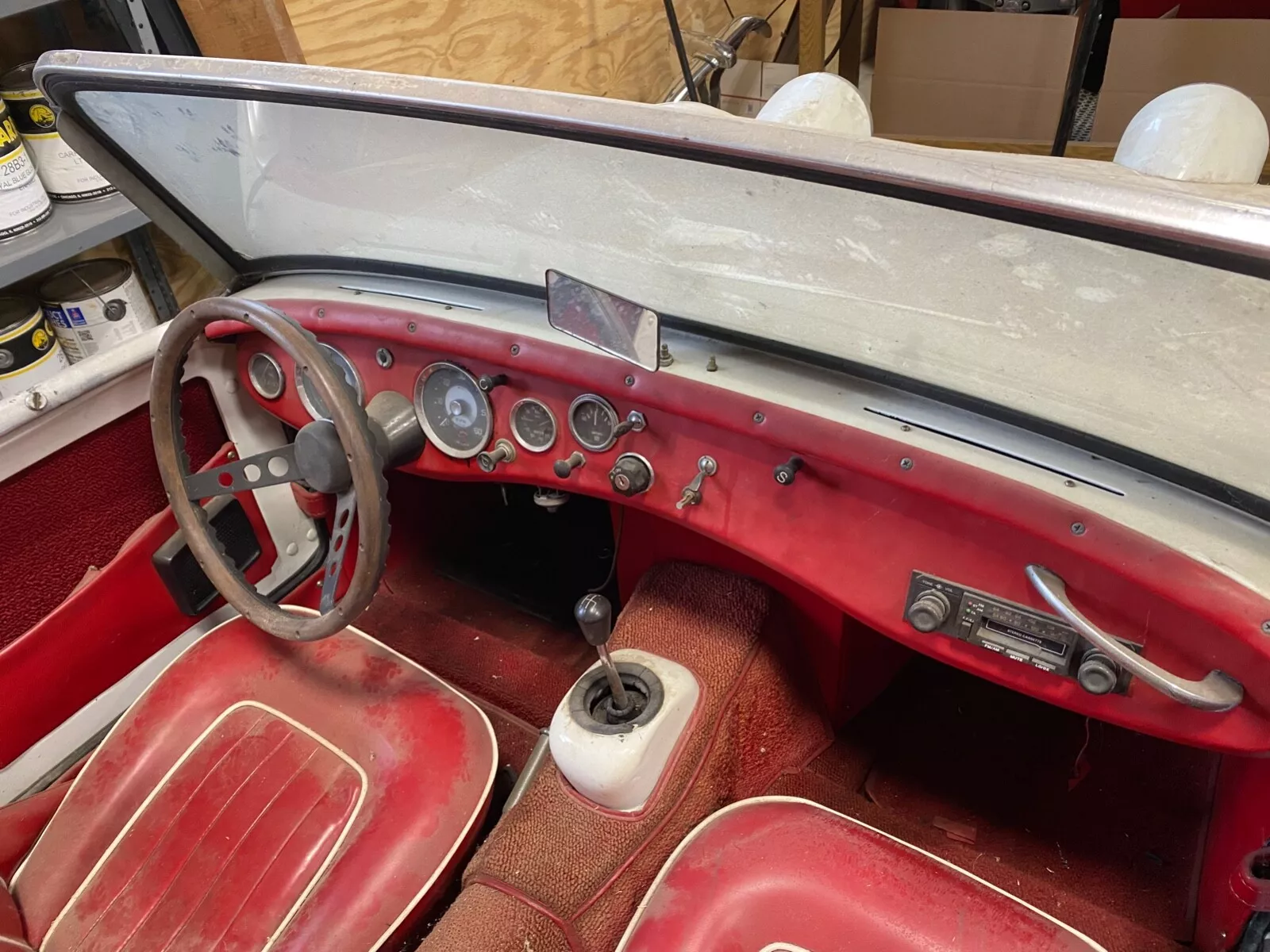
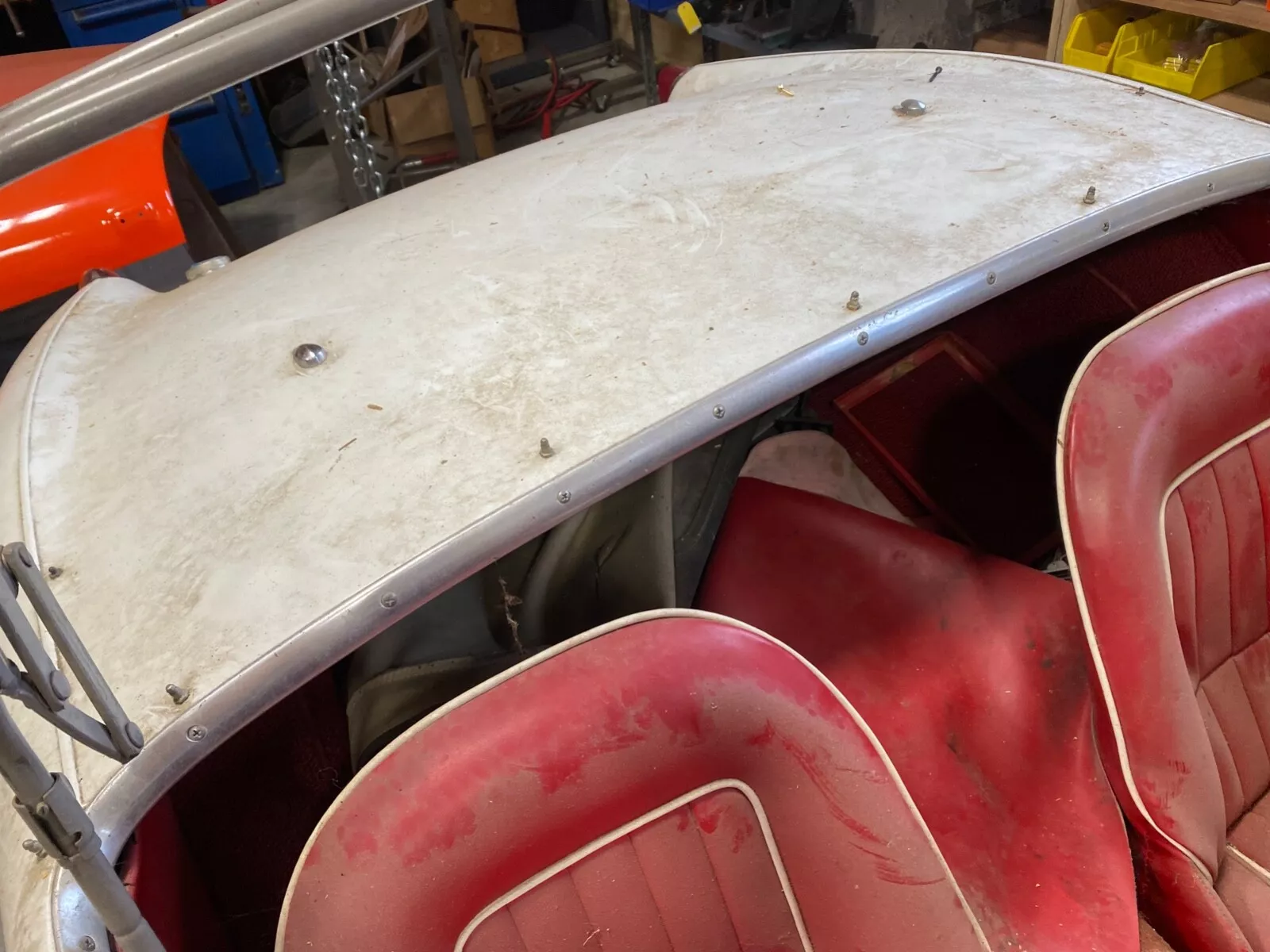
As for the rest of the car, the most cost-effective solutions won out in almost every instance. Instrumentation was rudimentary, as was the weather protection. The Sprite’s top was a canvas affair that snapped over a simple metal framework. Side curtains were substituted for roll-up windows, and the doors were opened by pulling a strap. Even an opening trunk was too much of a luxury. Occupants stored what they needed in a well behind the seats. All of these compromises resulted in an exceptionally light and very rigid car. Curb weight hovered around 1,460 lbs.
The Sprite immediately became a favorite of sports car buffs and racers. Customers on both sides of the Atlantic snapped up these inexpensive cars to use as both transportation and as race cars. A class win at Sebring solidified the Sprite’s reputation, and they are still seen in large numbers in vintage racing today. Some feel that the changes made in the 1961 redesign ruined the car. Extensive modifications to make the Sprite more civilized and thus appealing to a larger customer base started to erode the efficient simplicity of the original design. It wasn’t long before the Sprite was nothing more than a smaller version of the MGB.
Decades later, fans of the first-generation Austin Healey Sprite often pay a hefty premium over later versions of the Lilliputian sports car. The purity of the design, the lightweight, and the ability to install improved parts from later editions all combine to make these cars as appealing today as they were when they debuted in Monte Carlo on May 20, 1958. The seller of this 1958 model is obviously a fan from the way the car is described in the ad. They tell us that they purchased the car several years ago as a project car. Sadly, life happened and the project stalled. Even sadder is that the car was running when parked, but it has spent the time since then in a climate-controlled environment.
The seller shared with us that the previous owner replaced the floor. Among the repairs made by the seller are a new gas tank, a front suspension rebuild, and the addition of disc brakes in the front to replace the factory drums. Both the front and the rear suspension have received a new set of springs and the top and seat upholstery were replaced. The major issue appears to be the sills. Included in the sale are a set of inner and outer sills. They come with the car because the seller thinks that the car contains a “fair amount of Bondo.”



At that buy in price a redo on the chassis will get the buyer past the average retail numbers unless he/she can do the job themselves. I think the car is worth restoring as it is solid enough to help save a dying breed. The “sills” replacement isn’t a difficult thing to do as they are easy to access and the new pieces are easy to weld in. Picture shows what we started with on the ’60 race car in the picture on the upper left of this comment.
With all the safety, fuel mileage and other nanny state items that are loaded into even the cheapest car now days? There never will be another stripped down sports car, that mere mortals can afford.
Not one made in this century, for sure. A first gen Miata would be as close as one could come in later years to what the Spridgets were initially..
I’m pretty sure Lucas still sells tins of OEM Smoke, so no problem there!
Yes but I suspect they source it from China, so look for the NOS smoke at swap meets. ;)
The Lucas Smoke or the installation tool are normally on back order. The aftermarket replacements do not work the same as original and may not fit without much work. By now most Smoke harnesses have been butchered and are better replaced in total. I know because I do this for a living if you can call it that.
I came into a little money when I turned 21 in 1966. I felt compelled to blow as much of the money as possible on cars.
I decided to go racing. I bought a barely running 959 Sprite for $150. I got larger carbs for $25.00, disk brakes for $50.00. By the time I was ready for the track, I had about $1,500 in the car.
It was never even remotely competitive in SCCA racing, but it was a hell of an autocross weapon.
One of my favorite cars ever.
Autocrossed the yellow car for 12 years and as you said, quite a weapon. Hit the track with it and it was just as good. By the time we did we’d had 12 years to develop it into a full blown race car. Lot of fun in either venue. Picture is from a run at the Bay Bottom Crawl in the Florida Keys.
Sold! For $3500.
A good deal was had.
Someone is going to have a ball restoring this one. It’s a great start, and I am envious of that price.
The Lucas electrics ,gauges & wiring is not a major problem, I have restored a few cars & have had A 67 Sprite & 2 MGB’s it is easy to make or copy the wiring Harnesses. As a retired Heavy equipment mechanic ,I have also made complete wiring harnesses for both CAT & Komatsu equipment , the cars are easy compared to them.
These are cool little cars with the notable exception of driver’s side limitations. I dated a girl that had one and at the time I was 6′ 2″ and 195 lbs. (Little heavier now) and it was nearly impossible for me to get behind the wheel and attempt to drive it. Sill, this is a pretty neat car for the money.
Love the “smiley face” emoji grille and headlights Ha!