

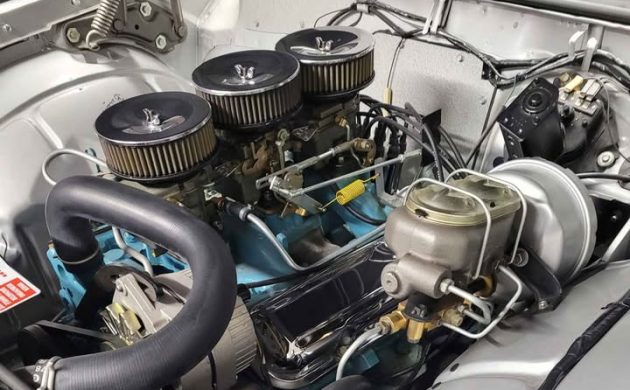
The Super Duty was a limited-production Pontiac built for action on the racetrack. It used a souped-up 421 cubic inch V8 that was deposited in no more than 88 Catalinas and a dozen or so Tempests. Aluminum panels were used for weight reduction. The seller’s car is a 1963 Tempest Super Duty tribute that uses a Tri-Power carburetion setup. Located in Johnsonburg, Pennsylvania, this could be one of the hottest small Pontiacs around and is available here on Facebook Marketplace for $64,900. Kudos to T.J. for the cool tip!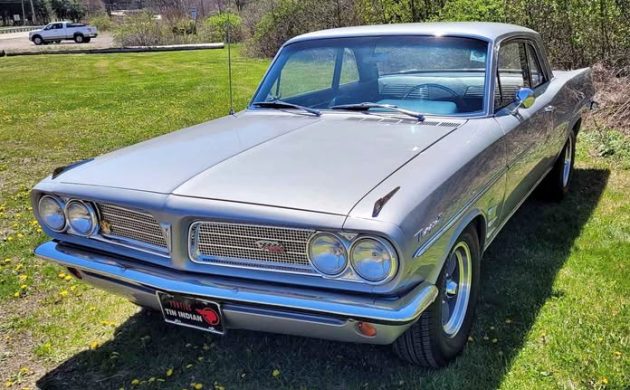
Pontiac dabbled in factory-supported drag racing for a time in 1963. The Tempest was one of its targets, and no more than 14 coupes and station wagons were given the Super Duty treatment. The 421 V8 was rated at 405 horsepower, though most think it was about 10% higher than that. The cars retained the Tempest’s unique rear-mounted transaxle. Besides giving the Ponchos the most potent drivetrains, the goal was to also make them as light as possible. The Super Duty’s were the brainchild of John DeLorean, who would soon champion the Pontiac GTO muscle car.
Few of the original Super Duty Tempests survive, so this one is a tribute. Clone might not be the correct term, as no mention is made of replacing metal body panels with aluminum ones. The car has triple 2-barrel carburetors rather than the dual quad setup of the original Super Duty’s. The seller says the mileage is 1,400, which we guess means that’s what’s been added since the transformation took place.
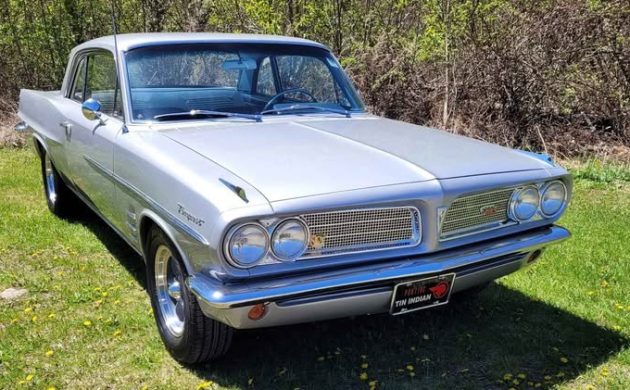
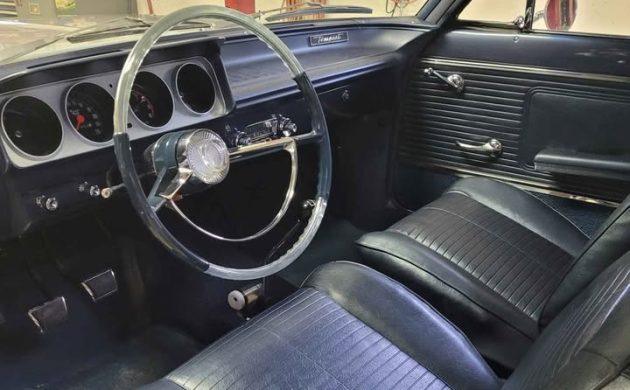
An M20 4-speed manual transmission with posi-traction is there to back the power up. We’re told the car drives exceptionally well and the body, paint, and interior all look up to snuff. The seller doesn’t brag a lot about this car, saying very few words like so many ordinary Marketplace ads. A special car like this needs a better forum for its next owner to find it.

Must absolutely fly. 🏁
Interesting factoid about these Tempests with the rear mounted transaxles. Of course they are known for the “rope drive” to the rear. In the case of cars with automatics, which was basically adapted from a Powerglide using the same basic adaptations which made that trans work in a Corvair, the torque converter was at the very back of that driveline. So at any time the engine was running the driveshaft was turning, regardless of whether the trans was in gear or not, or the vehicle was moving. The manual transmission versions used a clutch and pressure plate in the normal position, the back of the engine and so the driveshaft only turned when the clutch was engaged and the vehicle was moving. And because the manuals did not of course use a torque converter they were more subject to driveline shock and were spec’d with a larger diameter driveshaft than the automatics.
thanks for the explanation regarding the auto trans and the clutch placement of the manuals. I’ve often wondered about both on the transaxle Tempests. A fellow radioman in the Navy had a sharp 64 LeMans with a 326 that was much faster than my 170 Special 63 Falcon (surprise, no match off the line). This one looks sharp but would love to “test drive” one of the originals, would probably blow the wig off my 82yo noggin.
And driveline shock was the reason for the “rope driveshaft’! The same reason BMWs had a guibo clutch. (A rubber insulator between the drives haft and rear differential.) I will see this car in my dreams for a few days. Just very cool!
That doesn’t apply to this one.
$65k?? Its an ordinary Tempest with a transplanted engine. Yes, a very nice engine and car but $30k over priced.
45
One of my favorite stories is the challenge race held at Daytona in 1963- a “run what you brung” affair that saw a super duty Tempest lead every lap and lap everyone including Ferraris, Jags, Corvettes etc.
Paul Goldsmith was driving the Tempest and beat A.J Foyt who was driving a Corvette by five miles in that race.
https://www.youtube.com/watch?v=aQbIwjBXQKA
Enjoy :-)
cool but way too expensive. they may get lucky though with i got to have it buyer.
A real good tri…to be what it isn’t.
Can’t fault this one a bit. Cool old Poncho.
I’m still confused about the transaxle. We had one of these cars, with the four cylinder, and the gearbox was not the M20 and it was at the rear axle. I don’t see how you can have both the transaxle, the M20 and a limited slip all in the same car.
I found a better link than the one in the article, There is only one coupe left, the DeLorean racer, and one wagon, with the four speed transaxle: https://www.hagerty.com/media/car-profiles/pontiacs-stripped-down-63-tempest-was-super-duty-quick/
This car does not use the transaxle. The rear end/suspension is regular solid axle with the transmission in the conventional location, bolted to the engine.
The Arnie Beswick prescription.
Starting out very High. There’s always an offer that’s just right.
Cool Pontiac. Like others have stated, a tad bit on the expensive side. I am thinking more around low forties, but you don’t see many like this, so ya never know, the seller may just get lucky with the “right” buyer.
Car was signed by famous Pontiac drag racer- Arnie ” the farmer” Beswick. Did Beswick have a hand in building this car? If so, car would definitely would be collector market vehicle.
If you go to the Facebook marketplace ad for this car you can see the transmission and rear end setup which is a conventional setup, very unlike the rope drive / trans axle which would have originally been in this car. The car may be a bit overpriced but you would be hard pressed to duplicate it for less.
Ron, I agree with you 100%. Building another car like this would probably cost more than the seller is asking for this one. There’s a lot of engineering involved in the driveline/rear suspension conversion, and sourcing a 421 might not be an easy quest. I don’t know what the market for this car might be, but you wouldn’t see another one at cars ‘n coffee.
I always wondered (and I know I’m weird) what the later Corvair (’65 on up) with the 4 speed gear box would have been like. (production car) That gear box was a Saginaw box inside like ones used in Camaros. They used them in the V8 Crown Corvair conversions. A 350 Pontiac, with aluminum heads and intake and the ‘ 65 Corvair transaxle and rear suspension would have (in my thinking) been very cool. I heard a story about a Chevy engineer who said that when they redid the Corvair rear suspension (they knew it would out handle the Corvette) they started playing with twin turbo Corvair engines. They had one on the dyno and when a higher up heard about the horsepower it was putting out. They were instructed to crush it. Too bad John Z. Wasn’t ahead of GM instead of only Pontiac!
Wayne – maybe you’ve read ‘On A Clear Day You Can See General Motors’ by Delorean- it’s entertaining.
Yes I have. But it has been many years ago. (Read it when it first came out.) So how many years has that been?
I’m wondering how much Pontiac would have beefed up the transaxle to handle that little 421!
Nice looking car. Pricey, but nice.
Stunning car that has been totally rebuilt with front transmission, modified floorboard & driveshaft, and solid rear axle, suspension replacing the original “rope” drive and rear transaxle & IRS swing axles.
Original 12 421 Suoer Duty’s were 6 Lemans coupes and 6 Tempest wagons.
It was my understanding that they retained the original “rope” drive but each had front clutch with a modified doubled-up 2-speed TempestTorque automatic transmission W/O the torque converter. Clutch was used for takeoff/launch and clutchless shiftes through the rear modified twin-automatic now with 4 forward speeds!
A 421 Super Duty 1963 Lemans coupe so equipped dominated the race at Daytona as mentioned in another comment.
The seller’s car is a great “tribute” but more like a lot of other 1963 Tempests that were modified back in 1963-64 for drag racing, especially Arnie Beswick’s and Gay Pontiac’s (Don Gay, Dickinson, TX).
Nice looking Tempest but I agree with other comments. It’s way over priced.