

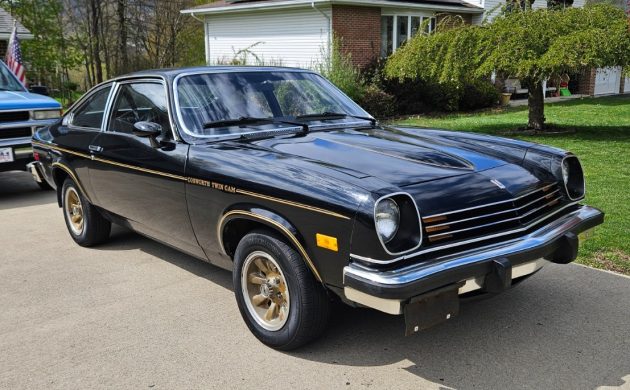
Contemporary motoring publications described the Chevrolet Vega as competent, but few labeled it as exciting. Chevrolet attempted to right that wrong, collaborating with one of motorsport’s most successful engineering companies to produce the Cosworth Vega. The concept was sound, but the sticker price was so high that the “Cossie” failed to set showroom floors alight. This 1976 Cosworth Vega is unmolested and surprisingly solid. It is a prime candidate for restoration and has generated reasonable interest since hitting the market. The seller has listed the Vega here on eBay in Scranton, Pennsylvania. Bidding sits below the reserve at $3,275 as the auction heads into its final days.
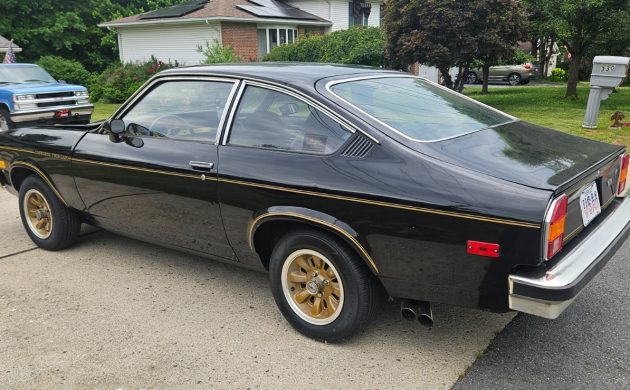
Detroit was at the height of its power in the 1960s and was America’s wealthiest city. This is understandable because new vehicle sales were increasing annually, and “The Big Three” loaded the market with some of the most iconic classics in the muscle, pony, and personal luxury car sectors. However, its ability to produce compact and subcompact vehicles was lacking, and European and Japanese companies were happy to fill the void. Against that backdrop, Ford and Chevrolet commenced development of new subcompacts to serve them into the next decade, and to counter the growth of those imports. For Ford, it was the Pinto, while Chevrolet brought the Vega to market in 1970. The Vega was competent, but not exciting. Chevrolet sought to right that wrong by introducing the Cosworth Vega in 1975. Positioned as a “halo” offering, it featured significant mechanical upgrades and a unique paint-and-trim combination. Buyers could order any color in 1975, as long as it was Black. The choices expanded in 1976, but the first owner ordered this Vega in the most iconic shade. The seller purchased the car years ago, planning a thorough restoration. However, failing health stalled the project early, and the car has sat in their garage ever since. Its presentation is surprisingly good, with no major paint or panel issues. Rust was a bugbear with these cars, and this Vega hasn’t escaped completely free. However, the seller suggests that a small area in the lower corner of the driver’s door is its worst problem. There are a couple of further minor developing spots, but addressing them should be relatively straightforward. The trim and glass look pretty respectable, and this Cosworth retains its unique Gold wheels.
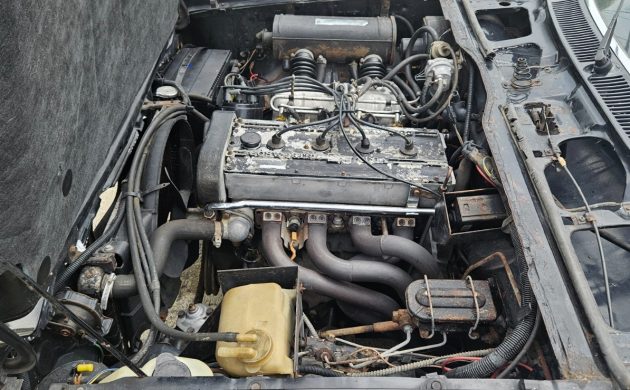
Chevrolet’s quest for an exciting Vega becomes apparent when we lift this car’s hood. Buyers could order a Vega GT with a 2.3-liter four-cylinder motor, producing 84hp and 113 ft/lbs of torque. However, Chevrolet knew that buyers wanted more, so it contracted Cosworth to develop a unique all-alloy four-cylinder engine featuring upgrades to deliver additional performance. The 2.0-liter engine featured twin overhead camshafts, sixteen valves, fuel injection, and stainless steel exhaust headers. The motor showed enormous promise on the dyno, but lost its edge when tuned to meet emission requirements. However, with power and torque figures of 110hp and 107 ft/lbs, it represented an enormous improvement over the standard four. Chevrolet hand-built each motor in a clean room originally used for the mighty ZL-1, which meant the cost was high. In fact, by the time it came to market, the Cosworth Vega was only a few hundred dollars cheaper than the iconic Corvette. This Vega doesn’t run or drive and hasn’t since the seller parked it years ago. Reviving it might be possible with patience, but I suspect that years of inactivity may force the buyer to rebuild the fuel-injection system in the process. Otherwise, this Cosworth is original and unmolested.
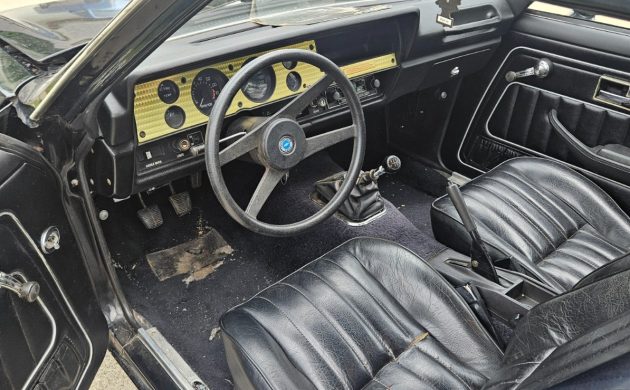
Trimmed in Black vinyl, this Vega’s interior is surprisingly good. The driver’s seat shows some seam separation, but the remaining upholstered surfaces are free of issues. The dash is clean, and the machine-turned gauge fascia looks virtually perfect. I believe that a few hours spent inside this classic with high-quality cleaners would make an enormous difference. If the new owner spent approximately $450 on a pair of front seatcovers, its appearance would comfortably tick the boxes for a driver-grade classic.
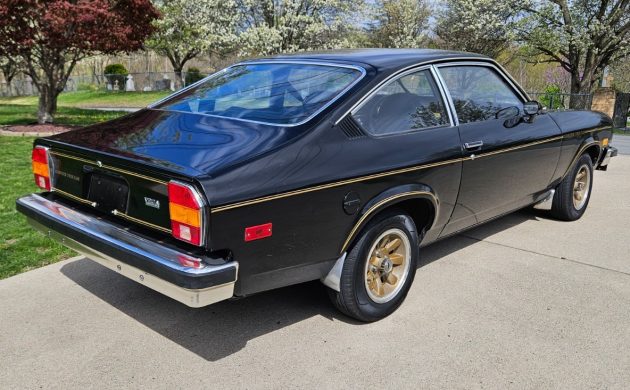
Chevrolet had bold plans for the Cosworth Vega, positioning it as a “halo” model to generate interest. It planned to produce 5,000 of these classics, but the extraordinary sticker price saw the final tally of 3,508 vehicles during the two-year production run fall well short of expectations. The 1976 model is the rarest, with only 1,447 cars leaving the line. The Cosworth Vega has developed a strong following in the classic world because the badge represents a moment when Detroit was bold and daring in its attempt to squeeze improved performance from a model savagely impacted by tighter emission regulations. Many of these cars have succumbed to the rust issues that plagued the Vega, but this Cosworth has avoided that fate. The bidding has been modest, but I won’t be surprised if it intensifies. Will you?

Unfortunately for values, of the 3,508 produced, it seems like about 3,502 are still on the road for some reason, so there are always a ton of these available. Probably more than people who want them
Definitely
3502 still on the road? I am wondering how many of those might be clones. Seriously.
To me this is just lipstick on a pig.
Definitely.
By ’76, the rust problems were licked. The things the car mags liked about Vegas from the start were still there….styling, and flat cornering. A Cosworth was reported to corner better than a ’76 Corvette with radials, per one of the magazines. Great interior IMHO too. One of the mags tested one back then against several imports similar. Not the conventional wisdom, but they rated the car highly.
There’s always a reason why an old car was parked. The seller doesn’t mention it. Dead battery, or blown head gasket?
Bad news the day it rolled of the floor
Definitely
I owned #2196 (also a ’76) for a couple years and loved it. It was an absolute hoot at autox (my car had been rebuilt in 1990 and set up for autox).
As a non-runner, the subject car is probably not a $10K proposition. More like $4-5K, depending on what the issues are. Duel Webers are a good upgrade, and if the car still has a cat, removing that is good for a nice HP bump.
True. Borla makes a TBI setup that mimics Weber DCOE carbs, that might work as well. Units with carbs and the cat removed have been dyno tested at over 140 hp! Whee! These have almost nothing in common with the stock Vega engine except the engine block, and the block was modified to address the Vega’s well known shortcomings, so issues like overheating won’t be an issue with these.
I owned a 75 woody wagon Vega (not a cosworth). It was great for hauling a bunch of small stuff, got great mpgs, and responded well to tuning tricks. A/C worked fine though it did take its toll on power. Wifey took it to work one day and got rear ended. Totaled the car, she was fine. Not a great car but no problems over 49k miles of ownership.
Finding parts for the Bendix fuel injection system will be tricky, as Bendix got out of that business years ago. The injectors are made by Bosch, so you’ll have better luck finding those. The Cosworth Vega is interesting because it was a forerunner of the future. Today, such engines are as common as dirt, but in 1975, this was technology that was only found on exotics like Ferraris and Porches, or on Formula 1 racers that cost well over $100,000 to build. Yes, the Vega’s poor quality reputation, combined with the high price hurt sales, but these are still worth saving, if for no other reason than they showed us the way forward! GLWTS!
I owned a ‘73 Vega wagon with an automatic. 63k on the car, 17k on the new and improved factory replacement engine. It was a dog. It overheated repeatedly in cool weather. The new replacement engine also had to be scrapped. Competent? Not hardly.
Defi…
put a 3800 super charged v6 in it. then you will have something.
I put a 3.8l in my ‘71 notchback (first car), and it was plenty fast even without a blower.
Very hard to sell when they were new, very hard to sell now
A beautiful car that only needs $15 to $20k to bring up to standards and still not be better than a hyundai accent, i like nostalgia as much as the other guy but these things are but a malaise era remnant ! The pre big bumper maybe but it’s way too much unless you really , really need to throw money and time away ! Let’s see how much it sells for on ebay
I agree 100%.
Ive peeked at these over the years, and almost bought one.
I get the feeling there is more misunderstanding and misconception as to what these Cosworth Vega’s are meant to represent nowadays.
With emissions probably no longer an issue, I’d take one to where the factory intended and get as much safe streetable performance out of it, per original intentions and enjoy it for what it is.
As for the price, I’ve seen a couple go for in the 3k range and look as decent as this one, except in running condition.
I won’t take a dump on one of these should I come across one in the future. At the moment I’m about to put a TKO in my 04 Anniversary GT Mustang Convertible!
“This listing was ended by the seller on Sat, Jun 20 at 9:54 AM because there was an error in the listing.”