
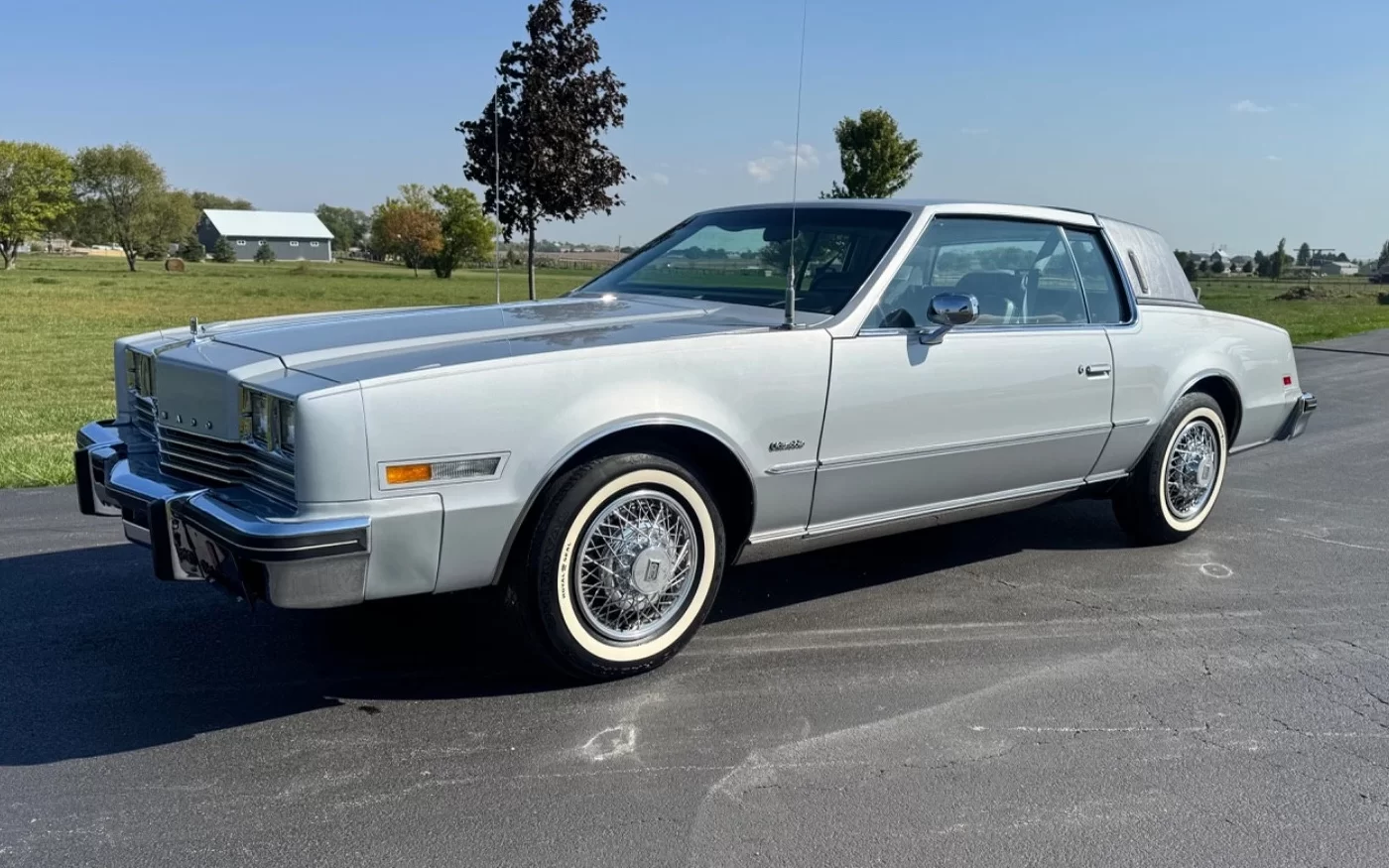
Are you an Oldsmobile fan who’s disgruntled because you can’t find anything from your favorite brand on the lot anymore? Are you a personal luxury coupe buyer who hasn’t been able to find a decent American big coupe since the turn of the millennium? Are you a diesel booster who’s still upset about “Dieselgate?” If you replied in the affirmative to any of the above questions, this 1981 Toronado Brougham is for you. Barn Finder T.J. found it here on eBay in Beecher, Illinois, and it’s a 1,800-mile diesel-powered Toronado that’s been recently bought from a large collection, where it has spent the last 45 years in “climate-controlled storage.” To paraphrase Elwood from The Blues Brothers, it looks like the new Oldsmobiles are about 45 years late this year. The asking price is just above what it would have been new: $24,500 or best offer.
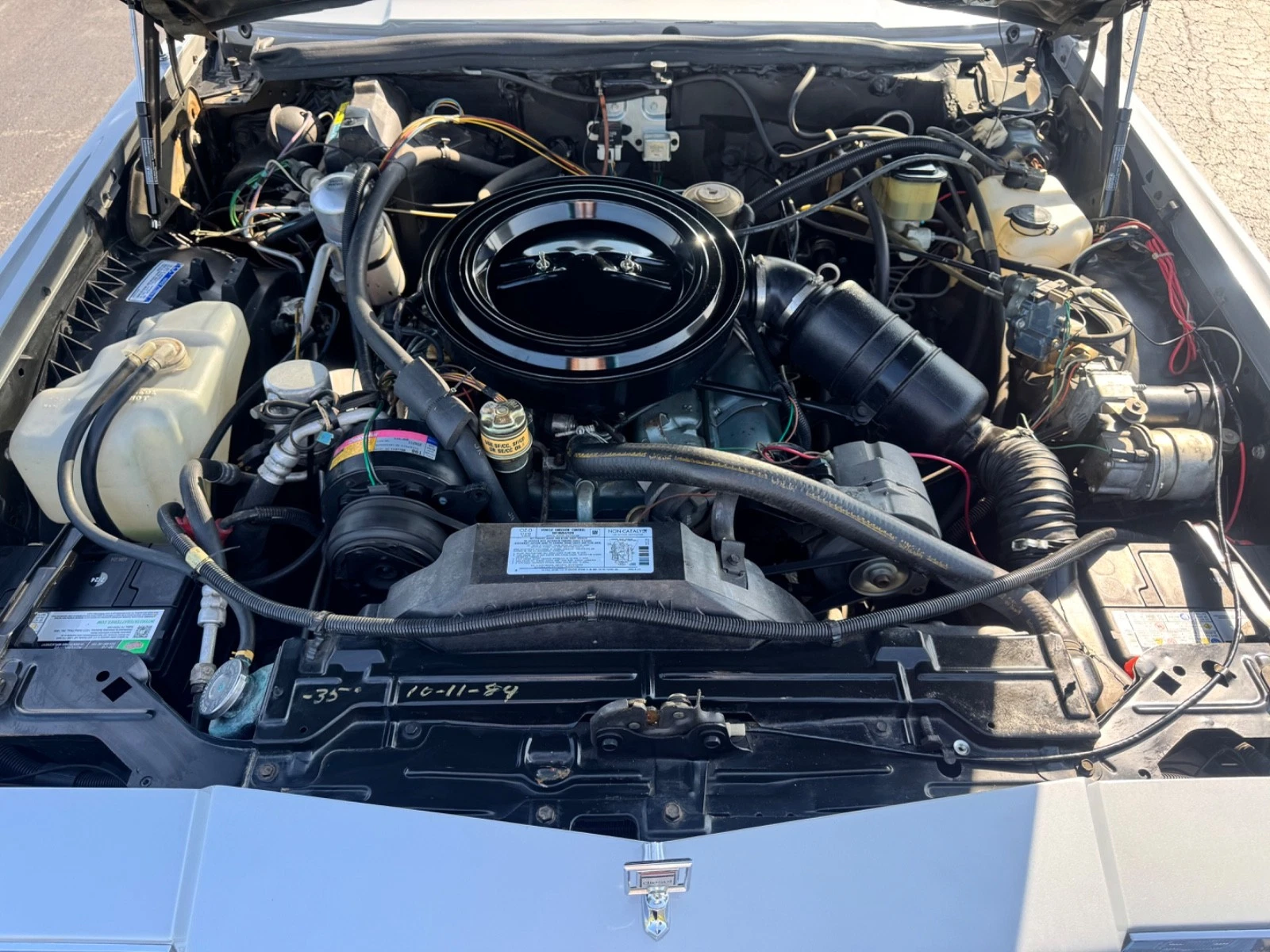
It’s not terribly uncommon to find the 105-horsepower Oldsmobile 350 diesel under the hood of an early 1980s GM car; after all, the second fuel crisis was still on people’s minds, and the days were dark for horsepower fanatics. The Oldsmobile diesel has long been a controversial engine; its bad reputation was probably earned, but it’s also true that the engine was continually improved to the point where a lot of people were extremely happy with both its power and fuel mileage. The 1981 model was the last Toronado with the three-speed THM325 automatic, and it was paired with a 2.41:1 final drive, which certainly helped the big diesel sip fuel at highway speeds.
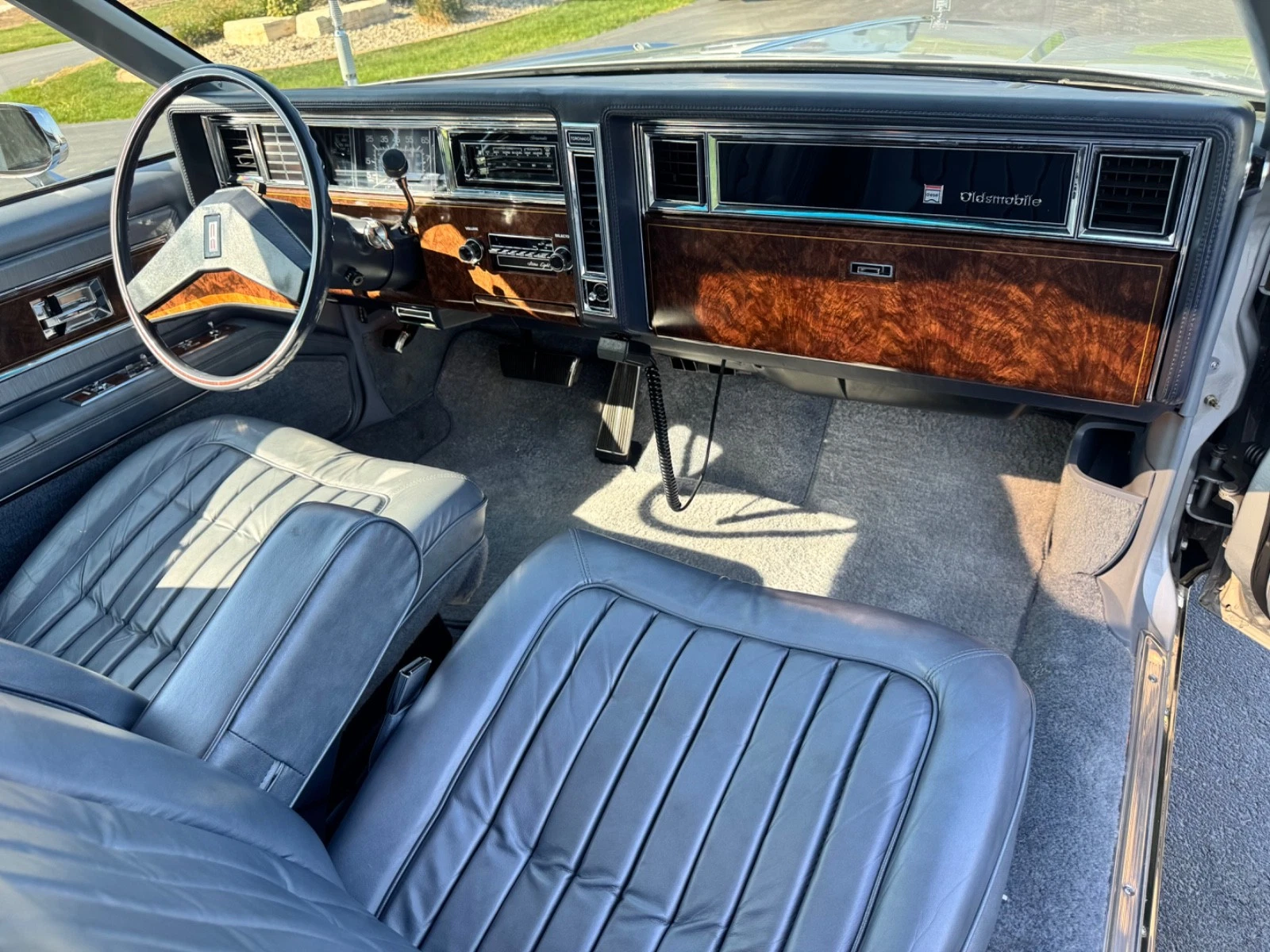
Although there’s no doubt that some buyers would have equated diesel engines with something you’d find at a truck stop, the Toronado Brougham looked every bit the luxury car it was. With power everything, leather upholstery, almost-realistic-looking wood trim on the dashboard and door panels, and even a moonroof (on this car), the personal-luxury Olds did its best to align people’s diesel expectations with a more car-based reality.
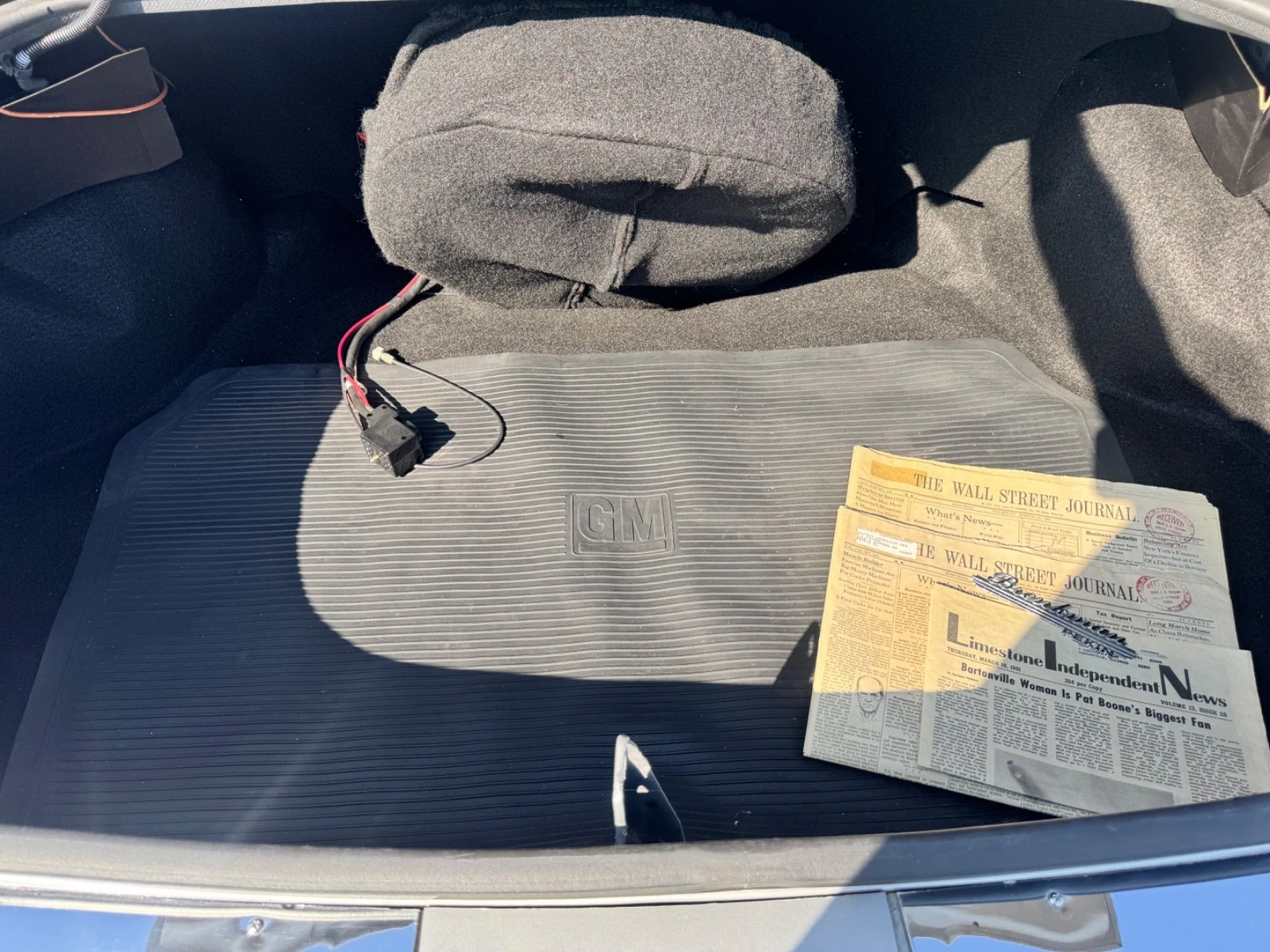
The trunk looks new, as one would expect. The dealer tag (Brenkman Oldsmobile-Cadillac in Pekin, Illinois) and a pile of Wall Street Journals are a nice touch.
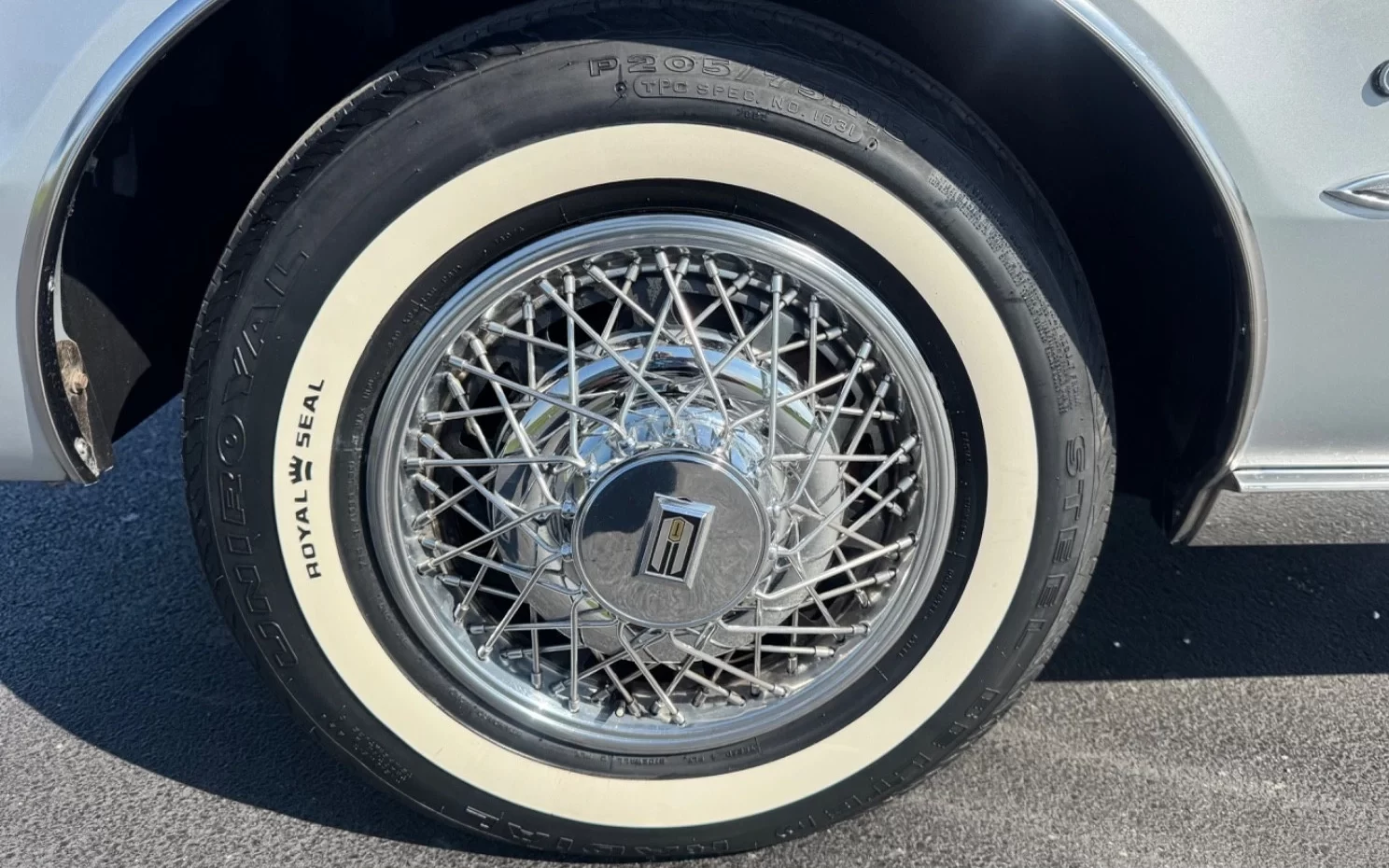
If you plan to drive your new 45-year-old Toronado, however, you may want to do something about the ancient Uniroyal whitewalls that are currently on the car. It’s possible that they are original, and it scares me to even look at them. How much longer will they hold air once they’re exposed to UV rays, ozone, and the like?
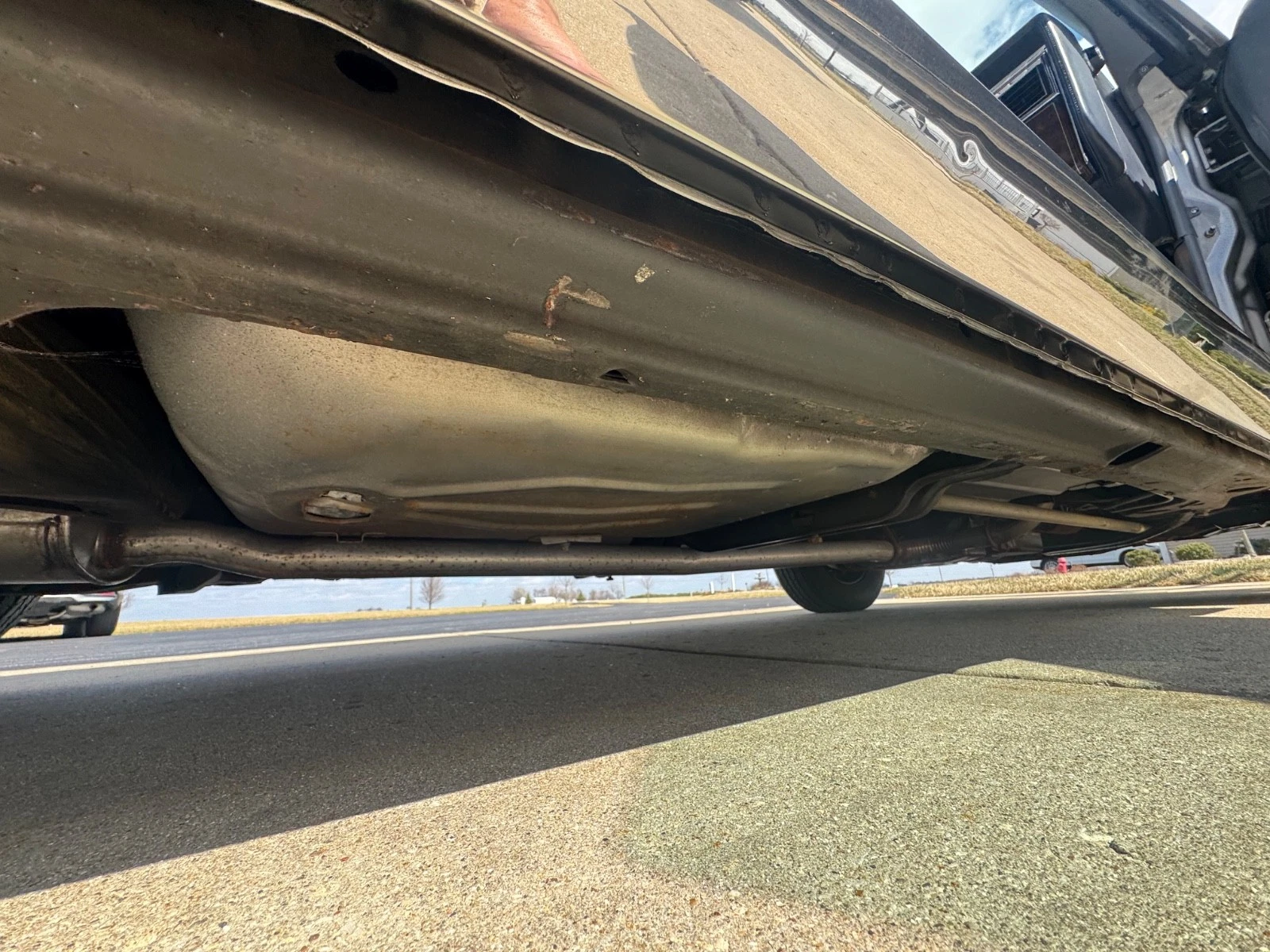
While you’re getting the tires replaced, you can get a closer look at the undercarriage and exhaust system. They both look immaculate.
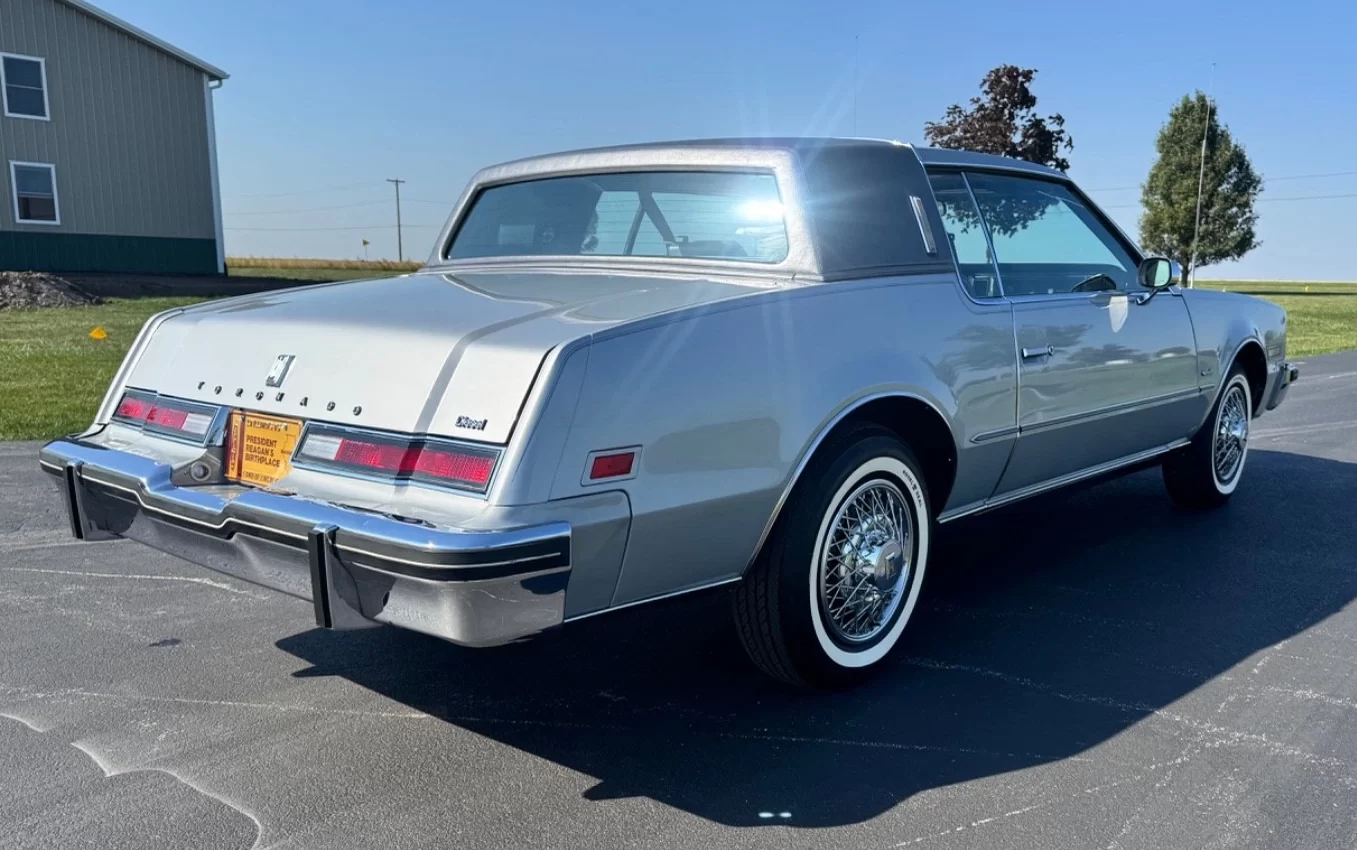
No, this Silver Metallic beauty is not the collector car that will appeal to everyone, but if you are one of those “ones,” there’s really nothing like it.



One other thing the buyer will want to do..install a water separator in the fuel line if it doesn’t have one.
Absolutely stunning. The price is too high for my personal taste but if it was a lot cheaper, I might be on my way down there with a trailer tomorrow morning! No matter what you think of the engine, this piece of history needs to be preserved.
Quite cool, in its own way. Those silver bucket seats are the clincher.
We put a lot of these and not as many Buick Rivieras, Cadillac Eldorados and Sevilles. All basically the same chassis. Of course the Eldorado will always get my vote.
There were a few customers who thought the diesel shouldn’t have been offered in these personal luxury cars. I sure wouldn’t have kicked one off my driveway although I was never a fan of the Seville.
These were the nicest diesel cars to work on. They had such a long hood and there was a significant amount of space around the back of the engine.
The 1980 and up American diesel cars used the “poppet” nozzles. The injectors threaded into the heads like spark plugs. Very easy to service and they didn’t require a leak-off line. They definitely gave the engine a distinct sound when idling. I actually liked it.
For some reason, Canadian built 1981 cars used the pencil injectors but resumed the Poppet nozzles from ‘82 onwards. Some said that Canadian environmental regulations weren’t as stringent and demand for diesel engines at that time was high, so, for ‘81 only, Canadian engines were different.
It’s kind of sad, seeing these once popular cars get pushed aside and then dropped from the production line by ‘85.
My understanding is that they were pretty near perfect by then as well. I do remember gas being very cheap however in 1985, and GM has a long history of shortsighted thinking when it comes to quarterly profits. Lots of innovative designs were scrapped just as GM got it right.
Have you seen the Olds V5 diesel? Always wondered about that one. There is one in the GM museum I believe.
That prototype is at the R.E. Olds Museum in Lansing, Michigan.
https://www.curbsideclassic.com/blog/engines/cc-weird-engines-outtake-oldsmobile-v5-diesel-grasping-at-straws/
I heard of the V-5 but never saw one. I worked on lots of German inline fives though. Just checked your link and saw one…
Hi Jason. The 350 diesel definitely went through some growing pains, yet there were some that did well right out of the gate.
I had a customer with a ‘78 Chevy pickup that was powered by the venerable 350 diesel. He was a relief scaled operator and drove all over the Pacific Northwest in that truck with an ungodly cap over the bed.
He lived on an acreage, a little over 100 acres, that was sown entirely to Alphalfa-Brome hay that he irrigated and sold to a local farmer who cut it and baled it and hauled it off.
His irrigation pump was powered by an Oldsmobile 350 gas pot running on LPG. One day it made a loud expensive noise and quit running.
He had about 200K miles on his truck and there was a sale of new diesel engines at the truck dealership. He bought a new engine, dropped it in his truck, then took the old engine and put the water cooled exhaust manifolds on it. I took the injection pump, reworked it and changed the governor over to a variable-speed and he was pumping irrigation water with the diesel out of his truck.
He used that engine for at least 7 years before he retired and moved out to the coast. I don’t know what happened after that. I understand that his boys sold the acreage and moved away…
I’ve written many times about my Olds Diesel (1980 Custom Cruiser with the fake wood trim). I’d buy another in a heartbeat, just for nostalgia. But the actual car was excellent. The Toro here is so nice, just a great example, and would be the definition of 1980’s luxury. I wonder how the reality matches with my memories. It certainly can’t be any slower than I remember…
Liked that you used the word “disgruntled” in your first sentence. I belonged to, “The Disgruntled Diesel Owners” group (out of Virginia) back in the day which helped me recoup some money from the issues I had with my ’79 Eighty-Eight.
I think finding someone to work on this relic would be almost impossible to do and parts would be almost impossible to find.
Cash registers become electric. The modern diesel locomotive replaced steam. The young automobile went from hand crank to electric. In 1949 the modern Olds ‘rocket’ is born. Thank Charles Kettering.
The Toronado becomes a me too. The Olds engine becomes the diesel flop. Olds loses its identity and dies a slow death.
Thank you overpaid talentless GM executives.
Amen brother Amen!
I think finding someone to work on this would be very hard to find not to mention the availability of parts would be almost nonexistent
this is a stunningly clean toro right down to the 1981 Uniroyal tires. i remember these came on all of the toros till 1985 that came into the dealership. love the interior. this really needs to be preserved as stated.
When I worked at the Saint Louis plant 76/80 these Diesel engines biggest issue was Glow plugs failing.
Actually, the biggest problem with the glow plugs failing was people bypassing the switch to make them stay on longer. That didn’t hurt the ’78/’79 models because they were 12V plugs that took half a minute to heat in the first place. But the 6V plugs, we had people pull up in droves to get new plugs.
We replaced a lot of glow plugs back in the day. A lot of customers brought their vehicles in because they couldn’t get the burnt plugs out (tips would swell up). I would unscrew the plug until it was clear of the threads then start the engine.
A loud BANG, like a rifle shot, followed by a hiss and the culprit was free. Sometimes I had to put the car in gear and press down the accelerator. They made a louder bang…
Factory digital 8-track with CB. My grandfather ordered the same combo in his ’81
I guess by ’81 a lot of the bugs were worked out after 4 years. This is a beauty and loaded with twilight Sentinel, power passenger seat + power recliner, cb-8-track radio, and the roof.
Personally, I wouldn’t open the roof. These had their issues and I’ll never forget being behind this vintage Eldorado at a car wash In winter and watching him valiantly trying to close the roof when he was locked in and hoing through! Don’t know if he succeeded avoiding an interior shampoo or not but it was a good laugh.
Even with the mileage, still overpriced. And, as others have said, what about parts availability?
As a teen when these were new, I was surrounded by different diesel GM vehicles. My dad was in the farm equipment business and travelled extensively, usually hauling equipment to / from equipment auctions and other dealers from all over the map. Most of those guys were diesel fans and their personal and family cars were often diesel Toronado’s, Eldorado’s, 98’s, Park Avenues. I remember my parents Park Avenue diesels worst problem was its transmission. I loved the Toronado’s and Eldorado’s the most and there were quite a few to drool over. One Toro had the sand gray paint with navy blue landau top and interior. The prettiest Eldo was a light green metallic with a dark forest green leather interior and matching top. I remember them sitting and idling, as they’d use them as their offices at “the sales” and sit in them, talking, trading, doing business… the diesels didn’t overheat, they explained… oftentimes wives would be waiting in the cars as they’d step out to bid on something. To this day, I still love to hear the diesel engines run.
When I was driving, I sometimes got to drive the diesel Park Avenue to school and, on cold mornings, I’d have to make sure I’d get it running ahead of time. I admit that I did like passing the bus and blowing out the gray smoke.
I find it interesting that you mentioned transmission troubles. I remember in 1980 there were a lot of transmission complaints with what seemed like the converter lockup engaging and disengaging. The problem was officially labelled “Chuggle,” and there were more than a few transmissions torn down, rebuilt and/or replaced, only the find the condition continuing. If you unplugged the wire to the lockup control, the problem went away–at least for the moment.
It turned out that the problem wasn’t in the transmission but in the retraction value of the delivery valve in the injection pump. They switched out the DV and the problem was solved. You could run the injection pump on the test bench until hell froze over and never be able to duplicate the condition.
That particular problem was confined to the 1980 passenger car models with the Poppet-Nozzle engines only. In ’81 they went from .250″ plungers in the injection pump to the .270″ units, plus updated the injectors to a slightly newer version, and there were no further problems except the odd broken head bolt.
I always preferred the idle of the ’80 models; they had a distinct “crackle” that could never be mistaken. In ’81 they were considerably quieter and thus boring and mundane. As I have mentioned in other comments, my most desirable diesel is the ’80 Eldorado. Looks, sound and performance were all in one package. Unfortunately I was never able to come across one…
I’m so glad you commented about that! Their Park Avenue was, indeed an ’80 model and I can still hear that “crackle” exactly. Being a teen, I didn’t know all of those details you shared but it aligns so much with what my dad and our shop guy (for the machinery business) talked about. It sat, 1 year old, behind the business, for months on end while waiting on the transmission to be replaced, as it happened more than once. It was an odd sight, a shiny new black Buick Park Avenue sitting on the back lot of a farm machinery business. When it was up and running, it was such a fun car for my buddies and I to ride around in, as well as for going on many dates.
I agree with you in that an ’80 Eldorado diesel is (and was, from my recollection) a very special and rare one. The Eldorado was my favorite design of them all. It wasn’t a diesel but the neighbors across the street had a 60’s Buick and a 70’s GMC pickup… and one day went to the Chevy Cadillac dealer and came home with a sparkling new Eldorado Biarritz (just not a diesel) that sat in their carport for the rest of their lives. She had me come over and explain how everything worked. I can still smell that leather interior. Their family kept the car and was driving it still decades later.
If I remember correctly, my loaded 80 Toro with a 350 stickered around $12k with the diesel version costing a bit more but nowhere near $24.5k
One of the pictures in the sales ad shows an incomplete window sticker, which displays a list price of $17,464.72.
That makes more sense than $24.5k.
In the late 70s Mercedes Benz started sending Diesel 123s and even S Class 116 cars to the U.S. Suddenly a diesel was almost a status symbol. Then General Motors took up the trend and nearly extinguished the whole concept. They modified the existing Oldsmobile 350 to take the extra pressures of diesel operation, only they didn’t modify them nearly enough.
I had a new 1981 Oldsmobile 98 Regency with that diesel engine. When the third engine went into terminal throes at 43,000 miles (in 1984), that beautiful 98 sailed off into the sunset. I had several friends who bought Cadillacs, Buicks and a Chevrolet with that diesel engine. They were furious, without exception, that their big beautiful luxury cars, purchased from an erstwhile reliable company had spent half of their ownership experience sitting in a dealership awaiting the defibrillator paddles, which, if they worked at all, only served to raise false hopes.
Some of the comments indicate there were some GM diesel cars which served a long and faithful term. I’m not saying the four to five intervening decades have cast these metastasizing, clanking disasters in a softer, more romantic glow, but, of the eight cars I was friendly with, not one made 65,000 miles. The three primary reasons for buying a diesel were longevity (they weren’t supposed to break), great mileage (some exceeded 30 miles per gallon in an enormous, albeit downsized, General Motors B or C body), and fuel costs (we were all aware that diesel fuel was a by-product of refining gasoline and, as such was a lot cheaper to make and, therefore cheaper to buy than regular at the pump).
However, they did break in mind-boggling numbers, making great throngs of well-to-do, upper middle class, intelligent people feel as though they had been tricked by a company they had revered. These big, fine cars got good mileage, fulfilling that promise well. The cost of diesel fuel, relative to regular gasoline was appropriate back then.
Now the cost of diesel is much more expensive than high-test, even though it is still a by-product of the gasoline refinement process and is still a lot cheaper to make. In other words: every time you buy a gallon of diesel fuel now, you are putting an untoward amount of profit in the pocket of some villain who thinks you are a fool. Odds are, you are merely too young to know that diesel used to be considerably less expensive than regular at the pump – and rightfully so.
Incidentally, if memory serves(and it sometimes doesn’t), there was a General Motors truck diesel engine, which bore no relationship to the automobile diesel, and which lasted forever…in trucks. It was considered much too unrefined by the GM brass to put into a Buick Park Avenue or a Cadillac Eldorado. They did enormous damage to the reputations of their high-line automobiles by not cancelling the stupid diesel program immediately, putting everyone from the CEO to the chief engineer in the unemployment line, and retrofitting gasoline engines into every diesel automobile they sold. That would have been a huge financial hit but probably a small price to pay relative to having a generation of people who don’t know that Cadillac was once the “Standard of the World”. And that General Motors once had a division called Pontiac that symbolized youth, beauty, and power; and a division called Oldsmobile, that was the experimental division which pioneered the automatic transmission and the overhead valve V8, which was the ruling power plant in American cars for over half a century. My guess is that loss was considerably larger. Chevrolet, alone, once sold over forty percent of the world’s cars. Now their trusty top brass nincompoops build self-destructing, anonymous cars which look like bars of soap while Toyota steals their lunch money in every segment.