

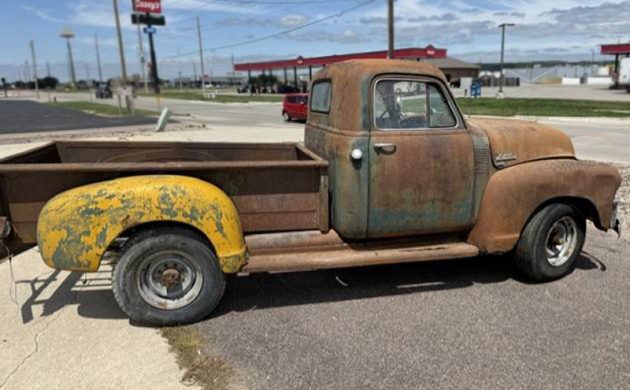
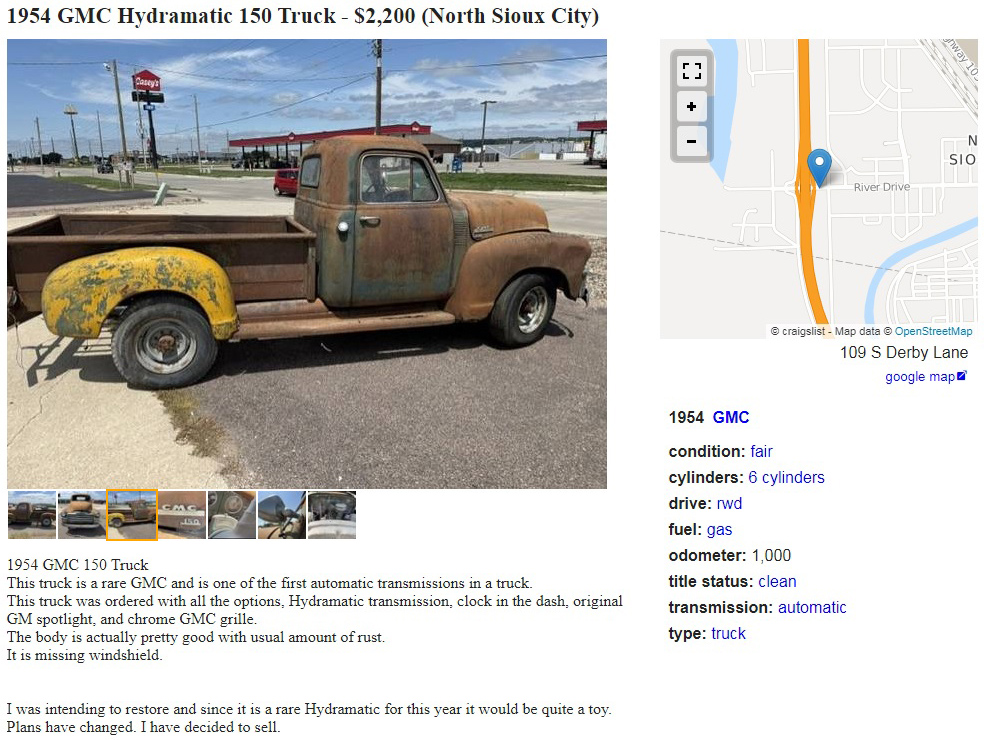
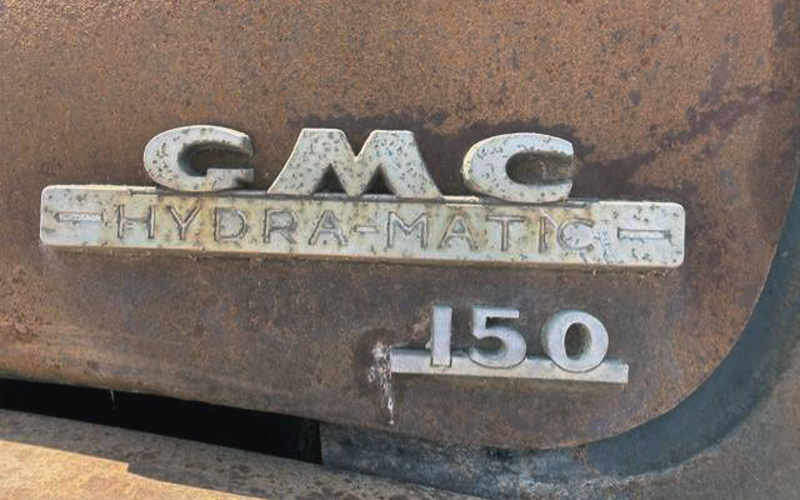
“A factory automatic transmission in a 1954 GMC pickup? You’ve lost your mind, SG!” You’re right about both of those things, but the first one is easy to verify without the need for a straitjacket. This 1954 GMC 150 has a rare factory Hydra-Matic automatic transmission. The seller has it posted here on craigslist in North Sioux City, Iowa, and they’re asking $2,200. Here is the original listing, and thanks to Rumpledoorskin for the tip!
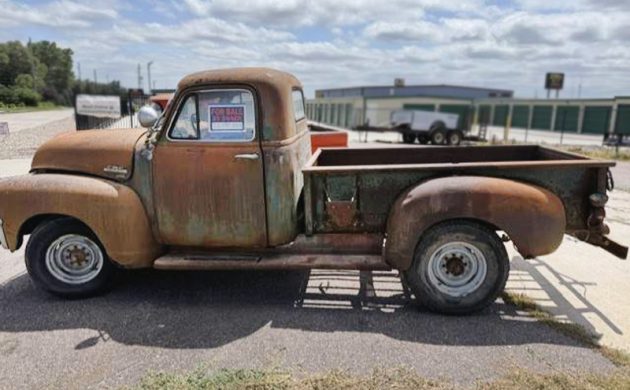
Known as GMC’s 102-24 longer-bed truck series, it would look great if it were in a bit (lot) nicer condition, with a spare tire on the side of the left rear fender. GMC pickups were similar to Chevrolet’s Advance Design trucks with subtle differences. 1954 would be the last year for what would soon look like a very antiquated design compared to the sleek, new, somewhat modern Task Force trucks that were introduced for the 1955 model year.
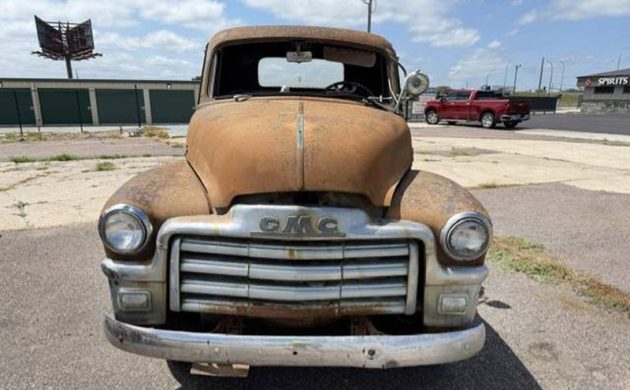
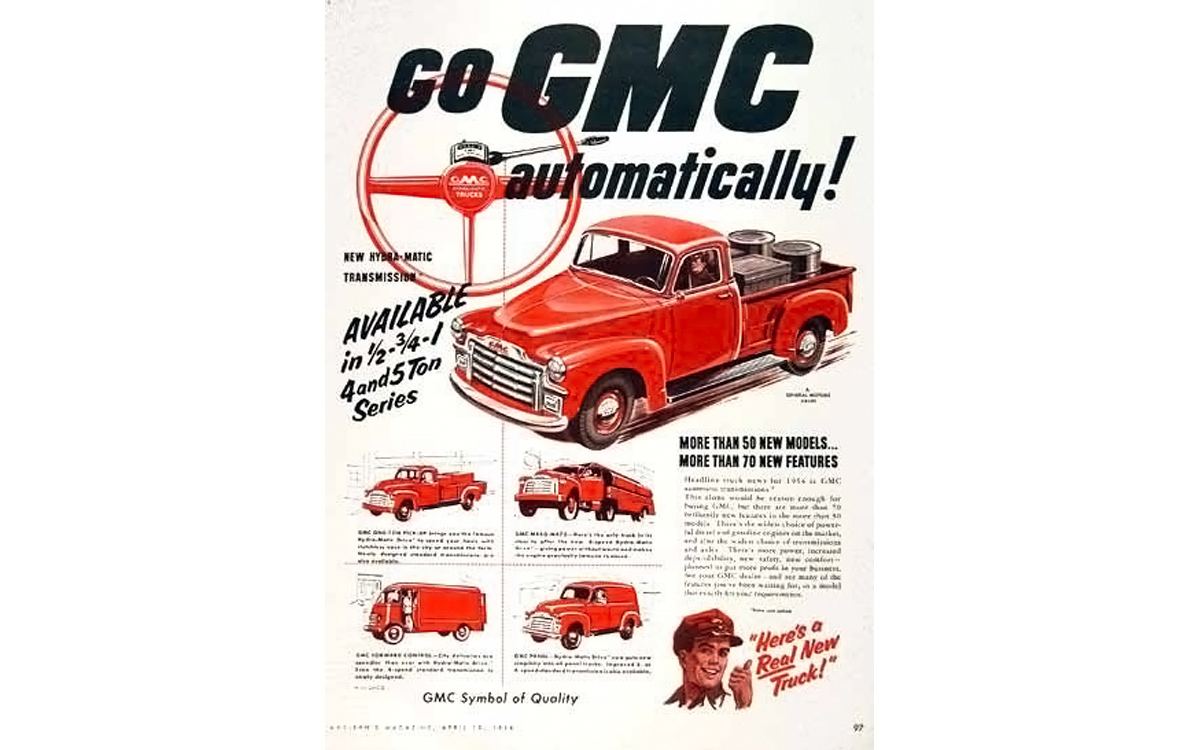
The seller doesn’t give an overload of photos, but they show at least three sides of the exterior of this truck. Unfortunately, we don’t get to see the back at all; there are no photos showing the public view of the tailgate or the inside of the wood-lined bed. The seller does mention that the “body is actually pretty good with usual amount of rust.” It does look pretty solid. 1954 was GMC’s first year for a new one-piece windshield, and this one is gone, so add that to the list. Here’s a somewhat pixelated 1954 GMC pickup brochure. And here is a very cool 1953 (for the 1954 model year) Hydra-Matic transmission brochure showing them in a variety of GMC trucks – with pages 7 and 8 duplicated.
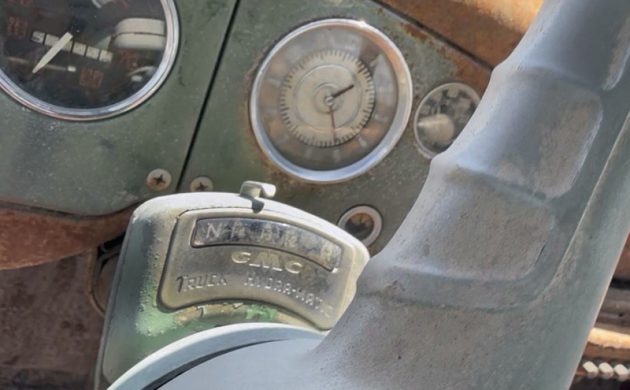
Oddly, this is the only interior photo, so plan on much more work here as well. Anytime something isn’t shown in my world, I always think the worst and am disappointed when it shows up on a trailer. I’m not saying that’s the case with this interior, but maybe the seller would send any interested parties more photos. This is the big thing with this truck: one of the first GM pickups to use their Hydra-Matic automatic transmission, which had been around for 15 years or so by this time. Most buyers, me included, usually prefer manual transmissions when possible, but this unique setup makes this a very interesting truck, in my opinion. I guess, since it’s still for sale after a couple of weeks at what seems like a reasonable price in 2026 dollars, maybe I’m the only one.
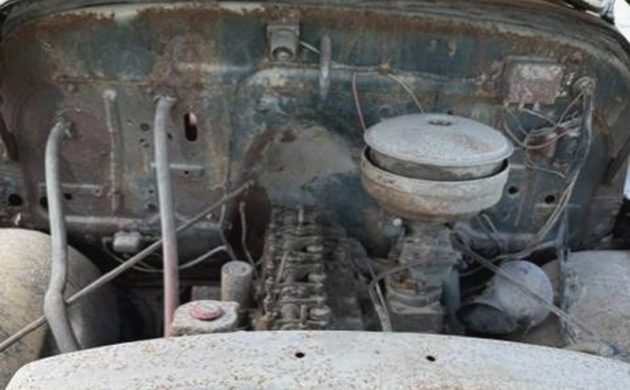
The valve-cover’less engine should be GMC’s own 248-cu.in. OHV inline-six with 125 horsepower and 210 lb-ft of torque when new. Backed by the Hydra-Matic transmission sending power to the rear wheels, the seller says, well, actually, they don’t say one word about how or if it runs, so I’m assuming it doesn’t run. I hope it at least turns over. They say this truck has many options, including the famous automatic transmission, a GM spotlight, a chrome grille, and an in-dash clock. It sure would be nice to have more interior photos and to know more about the drivetrain. Have any of you heard of a Hydra-Matic automatic transmission in a GM pickup from the 1950s? I would restore this one back to drop-dead bone-stock condition. It’s probably rare enough to be a show-stopper.

Those old Hydramatics are pretty tough transmissions. I’m pretty sure in WW2 they were used in a couple of different tanks. I think the M5 Stuart was one of them. They held up well. So in a pickup, why not? This old workhorse is begging for a restoration. It would look great all redone.
’53 was the first year for the Hydramatic in GMC light duty trucks, 1950 was the first year for them in M-135 tactical vehicles, although as Driveinstile earlier stated, they were utilized in Army tanks produced for WWII. I understand they were standard equipment on forward control GMC’s but don’t know when that started – doubtful many pickups were optioned that way, so a rare survivor today.
You can say that again!
’53 was the first year for the Hydramatic in GMC light duty trucks, 1950 was the first year for them in M-135 tactical vehicles, although as Driveinstile earlier stated, they were utilized in certain Army tanks produced for WWII. I understand they were standard equipment on forward control GMC’s but don’t know when that started – doubtful many pickups were optioned that way, so a rare survivor today.
My older brother had one of these Hydramatic equipped trucks in the mid/late ’60s that he put a ’59 Olds 371 in – apparently, because Olds had used Hydramatics and Jetaways, it was a near bolt-in conversion once he had built motor mounts. I don’t know what year the truck was, but it had the shifter shown in the picture here and it was a nice driver. He installed the ’59 Olds rear end and towed our 16′ Shasta camp trailer with ease at freeway speeds. If it was closer, I’d have new project – price seems reasonable.
I think I see a little green showing through the rusty surface. Yes, I’d restore it to as close to stock condition as I could and then I’d drive it !
I heartily agree. No LS swap, or any other modifications. These trucks look best when they are not mercilessly cut up for little to no reason.
I always thought the rear wheels were too far forward when the truck is not loaded. Even when the springs are squished flat the wheels would be centered. I would not restore it to stock.
So, you’re saying that the wheels move closer to center, with a load? Is that normal?
My friend Google AI says: Yes, the rear wheels sitting slightly forward in the fender opening on an unloaded 1954 pickup (like a Chevy Advance-Design) can be normal due to factory leaf spring design, but a noticeable forward offset often happens if aftermarket rear axles or replacement springs were installed incorrectly.
I agree , it’s so strange that the rear wheels are too far forward. First thing I would “fix”.
Do you think some had been working on the rear end/axle and put everything back together, in correctly? It does look strange.
It’s hard to screw up, the factory will use something like centering pins to keep things aligned.
Steve R
Leaf springs are rarely symmetrical. So reversing the springs could cause this visual effect. BUT, front spring pivot bushing would be different than the rear shackel mount/bushings making a “mistake” not likely to happen. PLUS, I believe that this has an enclosed drives haft. So there would be no way to get it wrong as the drives haft length would make it impossible. Wrong application springs and open drive shaft would do it. But “me” thinks it’s this way from the factory.
There is a nice ’54 Chevrolet pickup in Kuna Idaho with a factory Hydramatic, restored a few years ago and is a semi-daily driver. It is much rarer than a GMC Hydramatic!
Okay, one at a time, yes, you have lost your mind, and 2nd, I think GMC was the 1st to offer an automatic, but the others were close behind. By ’55, all the companies offered automatics on pickups. It was a market they had to get in on, and automatics, while a hefty priced option, ( $200) on a $1600 dollar vehicle, were slow to catch on, in many cases, this was the farms only vehicle, and had to be “mom compliant”.
Dancing around the obvious, we all know what will happen here, out with the old, in with the new, and that’s okay too.
Timothy, Yes, that’s what the shackles are for at the rear of the spring and the driveshaft yoke. The spring compresses and gets longer so it pushes rearward and brings the axle centerline with it.
If only it were a little bit closer, I may jump on this instantly. It seems to be a decent price.
I just noticed that the listing says Odometer: 1,000 miles. (?)
Confusion made easy. GMC and Chevy were so close yet so far away. Back in the day each division had to run its own system, right down to the powertrain. Now just imagine if you’re a border brat.
Two neighbors with ‘54 GMC 3/4 tons. One is a 150 and the other is a 9320 (I may need to be corrected here). One has a 248 (GMC) engine, and the other has a 235 (Chevy) engine. They both have Hydramatic transmissions because they were GMCs (Chevy trucks were Powerglides). But one was made in USA and the other, in Canada.
Okay, let’s go one more: In 1953 Hydramatic burned down. Massive scramble for automatic transmissions by everyone. Canadian GMCs got a Powerglide and American GMCs might have gotten a Powerglide, or, a Dynaflow.
Working in a service shop in the border region you learned to check them out thoroughly before you took out the wrenches because you could be in for a surprise…
I had a 1952 GMC with the hydramatic trans. The rear axle was set forward just like this too. So I’m assuming it came from the factory like that.
I had a 1952 GMC with the hydramatic trans. The rear axle was set forward just like this truck pictured.
no surprise being a GMC to see this trans and a clock.
Does it have windshield wipers too?
I wonder if the 102-24 model # holds a clue as to the offset axle position.
102″ is 8’6″. the bed may have been extended at the front end by 6″ for manufacturing effeciency, there by leaving an extra 6″ gap behind the wheels.
Maybe……………
Ford also had an automatic available behind the FH V8 in a pickup. Friend in HS bought a running/driving ‘53 F100 short box with a flatty and an automatic for $100. Those were the days…
I am not up to date on GMC model number designations. BUT this is a 3/4 ton truck!! Full floating drive axle and 8 lug wheels.. I have seen several Hydamatics in 1/2 ton GMC’s of this era, not sure about a 3/4 ton??? As to the rear axle vs fender clearance, would GMC have added a few inches to the front of the box so the spare would clear the fender instead of a concave dish??? Even though it is a standard 3 window cab, I would restore / refurbrish this truck into a semi daily driver. Enjoy it, work it, and show it with pride.
A few years ago in our local paper was an article about a guy that delivered coal with a ’59 GMC truck that he bought new. He said when he bought the truck it had 394 Olds. engine and a Hydra-matic trans. It got about 2miles to trans. the gallon so the next year he had it converted over to a six cyl. and manual
GMC Used the 4 speed Hyramatic in medium duty trucks, the size of an F-600 Ford, behind the 351 V-6. GMC attempted to use the Hydramatic in bigger trucks by stacking them up and got 7 speeds forward. DID NOT WORK!!! GM ended up replacing them under warrantee.
Awesome!!