

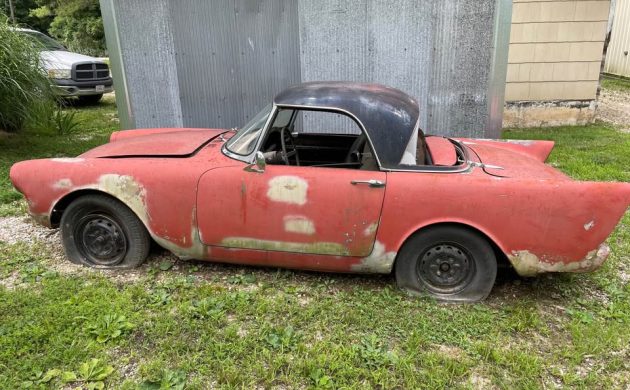
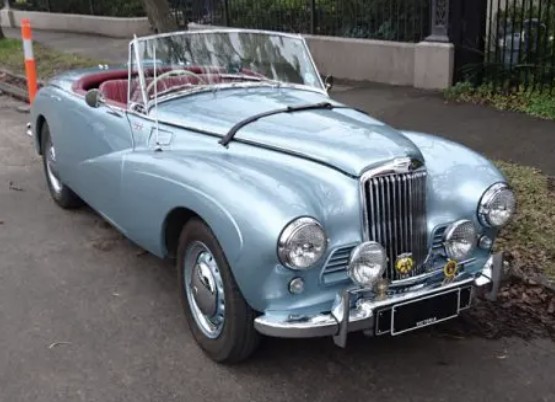
This Sunbeam Alpine Series II is defying its original intent, growing into the ground rather than sailing over the roads. Those tires couldn’t be much flatter. If you’re in the mood to rescue a British roadster, find this Alpine here on facebook Marketplace at the rock-bottom price of $1000. Of course it doesn’t run, and it’s going to need plenty of work otherwise, but in terms of cheap, this is about as low as it gets. Pick it up from Eldon, Missouri, and while on your journey, thank Zappenduster for finding this project! The Series II retains fins, one of the last designs to do so, as the world had shed that obsession a couple of years before. Aside from that anachronism, the Alpine was a futuristic approach to the sports car, more akin to the Ford Thunderbird’s “personal luxury” niche than the MG’s nimble tossability. It had roll-up windows rather than side curtains; its cabin was wide and roomy; it was powered by a four-cylinder engine that supplied only adequate performance thanks to a 2200 lb curb weight. Two versions were sold – a soft top and a GT with a removable hard top, like our subject car. Let’s look at some of the best Alpines, to find out how far the new owner will need to stretch to transform this field find.
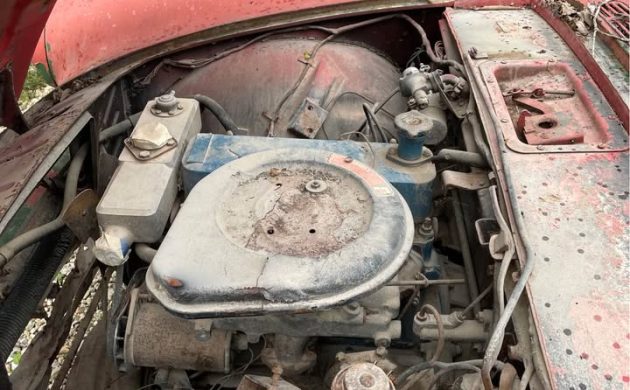
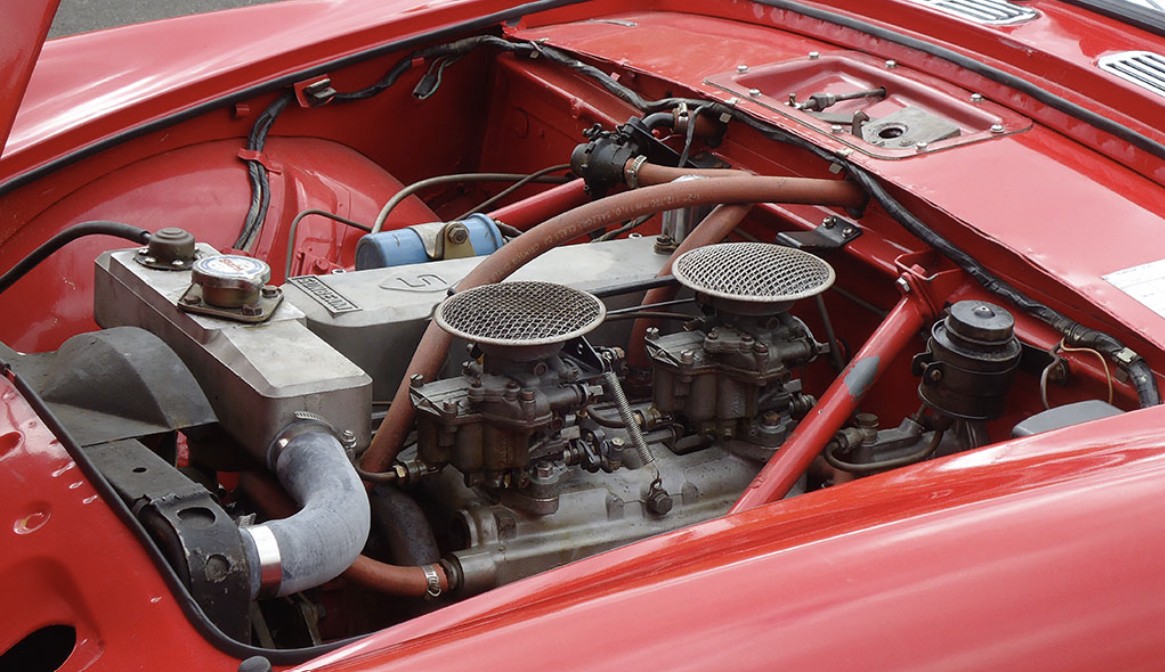
The Alpine name harkens back to 1953, when the Sunbeam Talbot saloon was used as the basis for a new drophead coupe, then a roadster. The Mk I and Mk III sold in small numbers through 1955. When the “Series” cars were introduced in 1959, it wasn’t only the sheet metal that had changed. The new car was based on the Hillman Husky saloon with bits borrowed from an assortment of other Rootes models. The 1.5-liter four-cylinder generated 80 hp, though sequential increases in displacement bumped that figure up over time. Disc brakes and independent suspension up front distinguished the Sunbeam from its competitors. The four-speed manual gearbox could be optioned with overdrive. Chasing the dream underhood here should result in an engine bay that looks at least as good as this one, with body-colored engine bay and reasonable finishes everywhere.
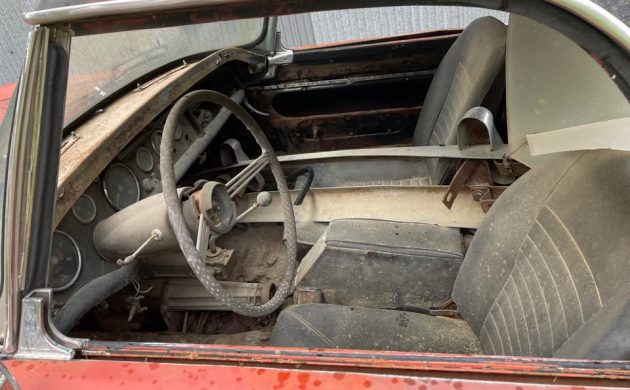
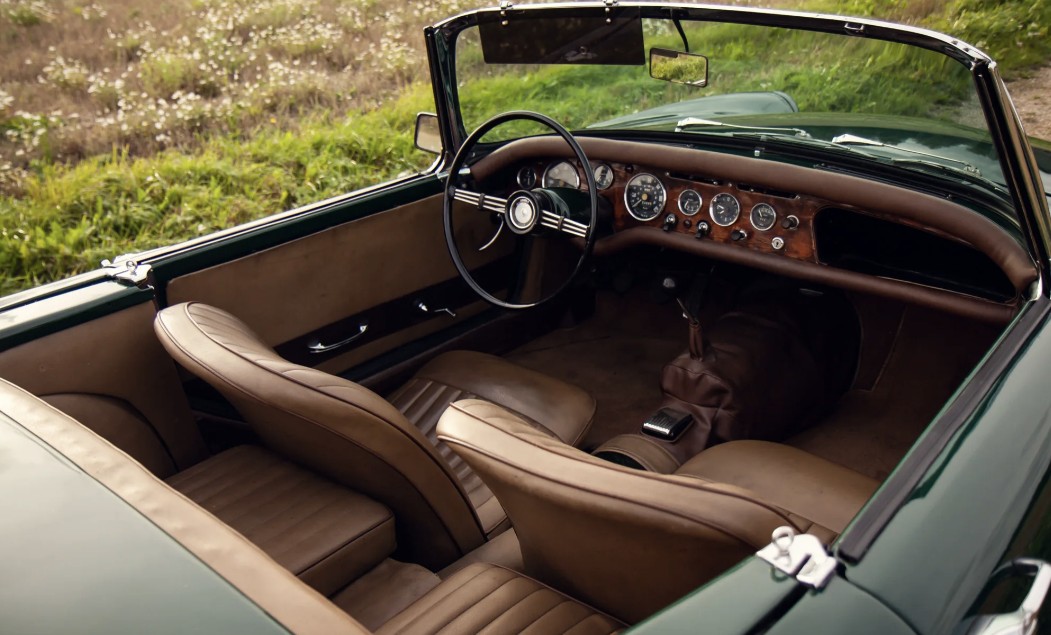
The interior can be the Alpine’s strong suit: this link shows a beautiful example finished with a wood dash, iconic banjo steering wheel, color-matched upholstery and carpets, and plenty of brightwork. Tackling the Alpine’s well-appointed cabin will entail removal of every bit, the acquisition of several replacement parts, and reassembly. Never throw anything removed from an Alpine into the trash: parts are not easy to come by, and you may be forced to either restore your originals or find a talented fabricator.
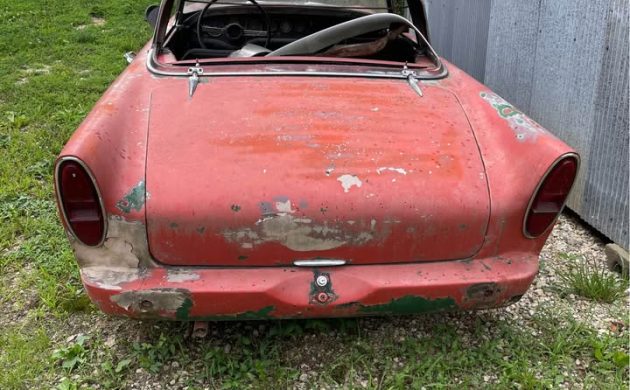
Speaking of parts, the seller is silent regarding the completeness of this car, but we can see plenty of issues without his commentary – missing bumpers, passenger’s door handle, and door glass; a hard top that needs a rebuild; dented front air dam… The factory color may have been British Racing Green; that “resale red” paint has got to go. Many Alpines have been remade into faux Tigers, so the population of nice examples is thin. But this ’63 in excellent condition sold for only $9100 a year ago – leaving little headroom for the restorer. Our subject car has been listed for almost a year – a reminder that resurrecting a British roadster is necessarily a labor of love.

Oh, there’s that rusty windmill with a couple blades missing, squeaking in the night,,,I always felt bad for the Alpine, living in the shadow of the Tiger. In fact, upon seeing a very rare Alpine, it was, “aw, it’s not a Tiger”. truth be known, Alpines were probably some of the nicest roadsters for the masses, from any country. I thought those fins/tail lights were the nicest, for a foreign car. Almost Chrysler like. Why, I bet even today, someone might look at this and say, “aw, it’s not a Tiger”,,,50 years later,,um 60 years later. Nice find, no interest. If it hasn’t sold in 49 weeks, it probably won’t sell. This is where the classic car hobby is collapsing, watch out, another piece of sky just fell,,,,in the form of a 1963 Sunbeam Alpine.
I’d call, but I can’t reach my shoe phone, but my wife activated the “Cone of Silence ” over any more car purchases, anyway.
A voice for the other side. I would see the Tiger and think “crap, it’s not an Alpine”. IMO the extra cylinders ruined a wonderful car. Plus, the fins are amazing.
I hear ya’, I never thought much of the Tiger either, and yes, an Alpine was ruined for a Tiger, but you know good old Yankees, the Alpine just wasn’t good enough for them, especially anything related to Shelby. I read almost 70,000 Alpines were sold worldwide, and only about 10% were Tigers, and most of those came to the states.
Why bad mouth a tiger…..Ever drive one? I bet not…I own alpine and a tiger…tiger is a joy to drive
Sorry to tell you. This is a series 1 alpine. The lack of vent windows tell me that. The engine may be a series 3 looking at the oil cap. $1,000 my be a good deal anyway.
Vent windows were introduced on the Series III.
I have a 1960, great little car and I love the fins! I think it is one of the better looking early sportscars!
I bought a new Alpine in 1961. Good car, better than Triumphs or MGs at the time. Drove it to high school every day here in Wisconsin. Then to college. Traded in for a new Lotus Elan in ’64. I would buy today if I could find a Wedgwood Blue one with wires.
I have a RG one with wires I would sell you….it is in florida
I have a 1960, great little car and I love the fins. I think it is one of the better looking early sports cars.
Am I mistaken but isn’t that a lot of Bondo there.
Those tires are only flat on the bottom.
Have an Alpine and a Tiger and both are fine cars. The Alpine I drive with the wife for joy cruises. The Tiger I bring out to unleash and get out some aggression. Both of these car were finely appointed when they came out and are fun to drive. I like them both for what they are and never compare the two against each other. They are stand alone in there own right.