

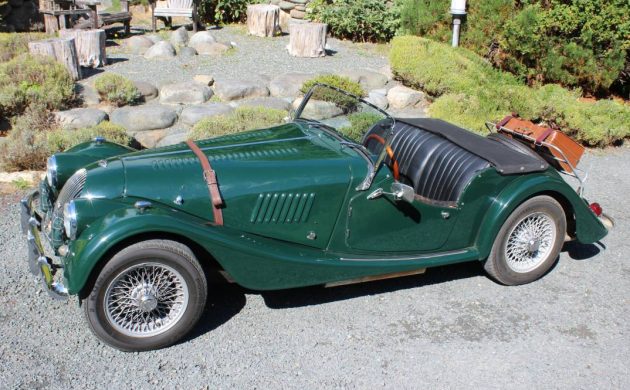
Founded in 1910, Morgan Motor Company Limited cemented its reputation by producing hand-built British sports cars. The company’s early offerings featured three wheels, but the 1936 release of the 4/4 marked its first traditional four-wheeler. Our featured 4/4 left the factory in 1970 and presents nicely as a driver-grade vehicle. The buyer could give it a light cosmetic restoration, but leaving it as-is would also be a valid option. I must say a big thank you to Barn Finder Curvette for spotting the Morgan listed here on Craigslist in Port Alberni, British Columbia, Canada. The seller set their price at C$34,900, or US$26,000.
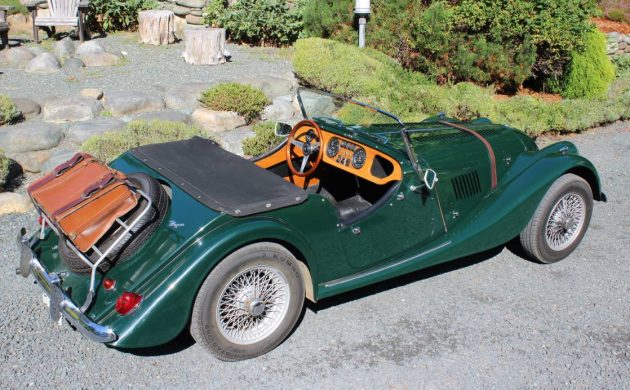
After performing ongoing updates during its production life, Morgan unveiled the “1600” version of the 4/4 in 1968. It derived its model designation from the car’s engine capacity, as the company utilized Ford’s Kent four under the hood. It also became the most popular variant to date, with 3,513 examples leaving the factory. Our featured 4/4 started life in Orange, then received a color change to iconic British Racing Green many years ago. It still presents acceptably for a driver-grade vehicle, with cracks around the front turn signals as its most serious cosmetic shortcoming. The exterior shines warmly, and its lack of winter use makes its rust-free status unsurprising. The canvas soft-top and tonneau are both new, while the luggage rack is a practical feature. The trim and glass look pretty clean, but I think the wire wheels would benefit from restoration, as they look slightly tired.
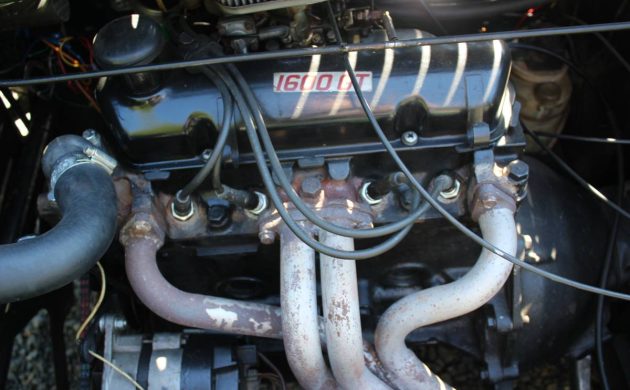
If ever a British Ford four-cylinder engine could be considered bulletproof, that honor falls to the Kent range. Produced in several capacities, Morgan utilized the 1,599cc version in this 4/4. They paired the Kent with a four-speed manual transmission, and although the power and torque figures of 95hp and 103 ft/lbs sound modest, it is worth remembering that with a curb weight under 1,500 lbs, that motor wasn’t moving much mass. However, this little Morgan may have more to offer, because it inhales through a Weber carburetor, and the spent gases exit via headers. Potential buyers can consider it a turnkey proposition, as a couple of YouTube videos suggest. One provides a walkaround and an engine start, while the other shows the Morgan galloping effortlessly down the road.
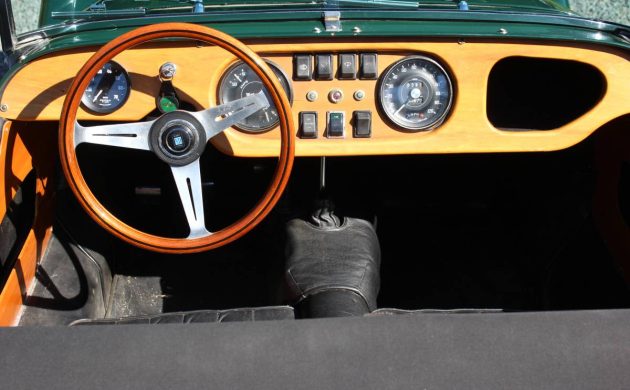
This Morgan left the factory in right-hand drive form, but a previous owner converted it to left-hand drive soon after it arrived in Canada. Trimmed in Black, the interior is very presentable for a driver-grade classic. The seat base upholstery is slightly stretched, but it isn’t worn or showing evidence of developing holes. The dash is immaculate, and the gauges feature clear lenses and crisp markings. It isn’t luxurious, but Morgan designed the 4/4 to provide an entertaining motoring experience, keeping the weight low by avoiding automotive “tinsel.”
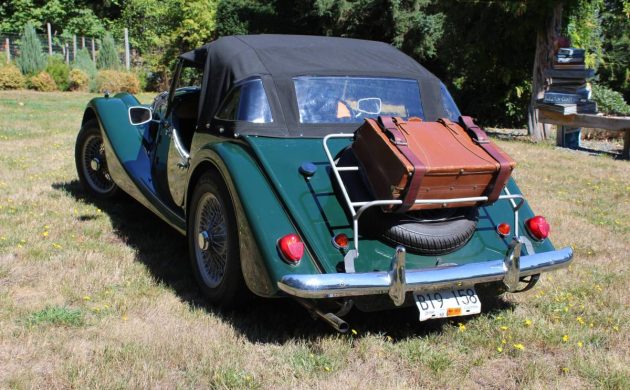
The Morgan 4/4 proved a true automotive stayer. Launched in 1936, the final cars left the factory in 2018. Time didn’t stand still, though, because the 4/4 evolved over the years. However, the company never abandoned its design philosophy, producing an engaging sports car that delivered respectable performance from a relatively humble drivetrain. This 1970 example is a gem that is ready for action. Alternatively, spending the upcoming winter months refreshing the paint would improve its appearance, ensuring it turns heads when rolled out of the workshop the following summer. I’m not sure what path I would take, but since the seller’s price looks competitive, a refresh is financially viable. Do you agree?

Was a vehicle like this still mostly handmade in 1970? Amazing how lightweight it is, a featherweight compared to my (very light itself) old school Miata.
Indeed, they were still largely hand-built in 1970. And for quite a few years thereafter.
The majority of the large parts were made at the Morgan factory — running gear, tires, switches, etc. excepted — and what wasn’t hand-hewn from raw materials was generally hand-finished. Very well, too.
I’ve always had a soft spot for Mogs, admittedly preferring the Standard-Triumph- (and GM/Rover-) powered examples. I wouldn’t pass this one up, though, if I were in a position to buy. The price seems pretty reasonable if it’s as good as it looks.
I believe that employee/builders were permitted to leave their names or initials on the underside of a mudguard/fender! (NB, I can’t quote a source)
The problem with a small production handmade car is finding replacement parts. We are installing a new wiring harness in a 68 Morgan, ordered 3 different ones based on manufacture date, and all were different. We are using what we thought was the closest and during installation have found many issues with it. The dash part wasn’t close on any. This is just the current headache, any replacement part has been an experience to find accurate replacements for as they swapped many parts mid year as supplies ran out, you don’t know what is in yours until you need a replacement.
But fun to drive like mo other, and the looks you get driving one are constant.
OK! Will someone PLEASE explain to me what is holding on the right rear wheel? I’ve worked on British cars living in the rust belt. Where the wire wheels seemed welded on the splines. But I would never attempt to drive one without the cap torqued on.
I remember the Isis company converting these to propane on the docks in San Francisco. I’m guessing that now you could register a regular gas version like this one here in CA.
Great write up Adam. Thank you very much!
Good point about the car being so light. Colin Chapman once said simplify then add lightness. There’s something about a light car when you drive it that can’t be compensated by adding horsepower. My 1990 Acura Integra GS felt very nimble compared to my 2019 Honda Civic Type R. They have different feel as far as what’s transmitted to the driver.
I would imagine this Morgan would be a ball to drive! It has a better weight to horsepower ratio than a new Honda Civic SI, which does 0 to 60 in about 6.5 seconds. This Morgan must be lots of fun on our track!
The 1600 Kent engines in the GT configuration came with headers and a two barrel Weber in stock condition. The numbers given would include those pieces so they wouldn’t give an additional boost over the posted numbers. Great engines, even in a non GT configuration. The GT benefited from a hotter cam than the stock 1600 Kent.
I am interested in this Morgan. May I please see more pics of the vehicle for example interior, undercarriage etc. Maybe 20 angles please. Thank you,
Corey Hudson
Santa Rosa, CA
[email protected]