

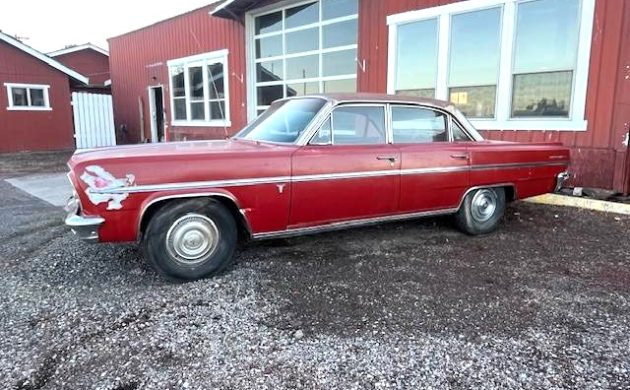
Oldsmobile, Pontiac, and Buick all joined the compact car movement in 1961. The three were based on the new Y-body platform, and the Olds version was dubbed F-85 as a nod to the Jet Age. The car was in production for just three years before being promoted to mid-size status (as was its other GM cousins). This 1963 F-85 is a decent project that could be moved to driver status with some engine work (aluminum block). Located in Redmond, Oregon, this dealer set of cheap wheels is available here on craigslist for $900. But will it stay cheap after you start the work?
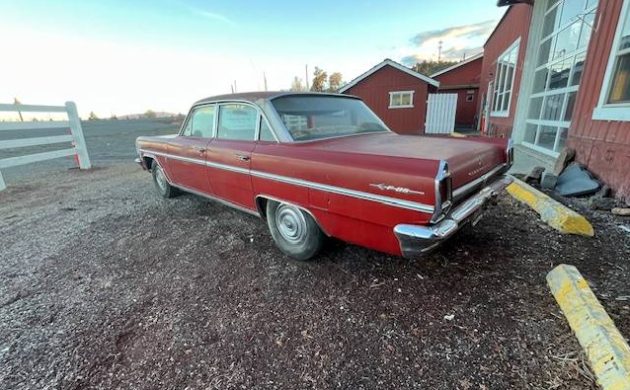
These “senior compacts,” as GM referred to them, employed unibody construction, still something the industry was starting to grasp. Surprisingly, a V8 was standard fare, a 215 “Rockette” V8 whose block was made of heavy-duty aluminum (Buick had a similar motor). It produced 155 hp and was typically paired with a 3-speed “Roto” Hydramatic transmission. The cars got a styling refresh in 196,3 giving the vehicles a “squarer” appearance over the 1961-62s. Alternators replaced generators in every Oldsmobile that year.
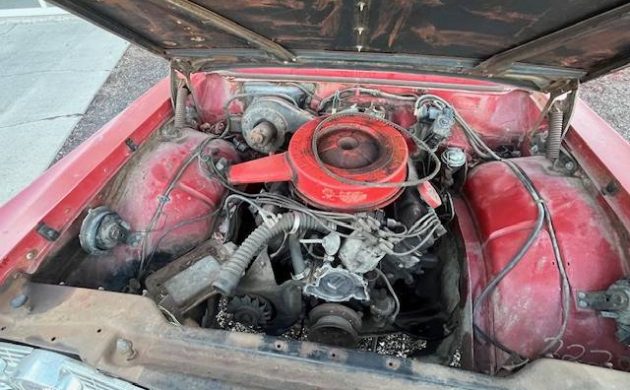
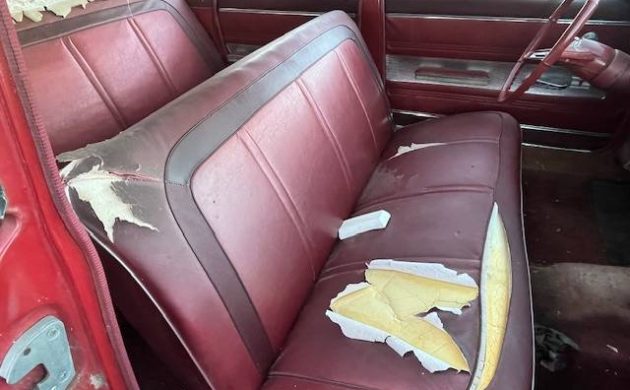
When the F-85 became an intermediate in 1964, Oldsmobile wouldn’t have a compact car again in the lineup until 1973 (Chevy Nova=based Omega). The seller’s car has the aluminum V8, but it’s seized and inoperable at 76,000 miles. The rest of the car doesn’t look bad, though the seats will need new upholstery and the maroon/burgundy paint is past its prime, with no rust issues, per the seller.
These cars are seldom seen today after six decades. And the V8 and tranny are unusual and may be worth saving if possible. Not being a rust bucket is a huge plus, although someone may feel the asking price is good enough to buy the vehicle for parts. If you can fix the propulsion problem, I’d skip the paint and interior for now and grace Cars & Coffee with your unusual find. A nod goes to “Curvette” for the tip.

This is from the same seller whose 1955 Imperial was featured last hour. Both have been listed on Craigslist since 8/21, with no takers.
Steve R
My parents bought a 1963 Cutlass convertible – powder blue with white top and interior. For the life of me I don’t know what possessed them to do that but it was a cute car that we had for a year until dad got a company car. During that time he managed to burn a piston. I later had a 1962 Cutlass convertible and the engines were fairly peppy but not particularly durable.
These ‘senior compacts’ were right-sized in my opinion. Large enough to feel substantial like an Olds 98, but a lot easier to drive, park, and handle. GM missed the boat by not figuring out how to load them to the gills with options.
This car would have to be a DIY project to make any financial sense. Learn how to repair upholstery, paint, and cannibalize a later model minitruck for a drivetrain.
An definitely add some whitewalls.
The question one needs to ask on the “seized” engine is whether or not the engine is seized from overheating. When you overheat an all aluminum engine it suffers much more than a cast iron equivalent. If it is seized from long term sitting then there would be little difference in the effort required to get this all aluminum engine moving vs a cast iron one.
Could also be just a stuck valve and the pushrod hasn’t bent yet holding it tight and unable to be turned too.
cool ride and cheap enough. if were in the Phila area i would defiantly snatch it up. i have a couple of drive train set ups sitting around i could stuff right in there and make a driver out of it. you never see these around.
I have seen the little Buick 300 V8 (is the 340 the same engine?) installed in these with little effort. I agree with the “right/correct size” of automobile. And I have always liked “the 3” for that reason. However I still lean towards the Tempest with the independent rear suspension. (Always wanted a Tempest to see if the later model Corvair rear suspension could be adapted without too much effort. )