
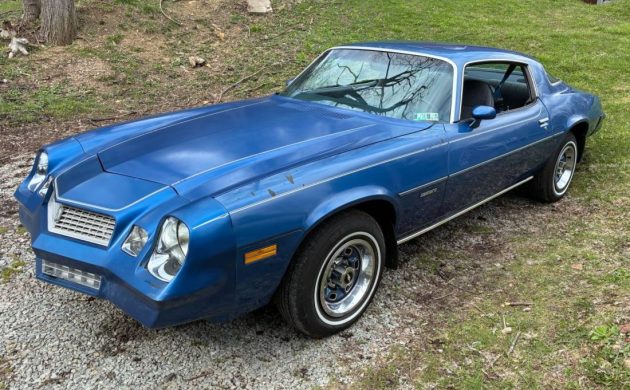
The Chevrolet Camaro’s second-generation enjoyed a successful run across 12 model years (1970-1981). That was longer than any other generation, though the third was close at 11 years. By 1981, the design was getting tired, and nothing much changed except the addition of a “computer” to regulate the carburetor mixture for lower emissions. The seller’s car has a V6 engine and 102,000 miles, but it runs well, though the auto is in need of new paint. Located in Monongahela, Pennsylvania, this driver-quality Camaro is available here on craigslist for $9,500.
Sales were still decent in 1981 at 126,000 units. The “Foxbody” Ford Mustang was in its third year after returning to pony car proportions, so it was once again a competitive threat. With the word on the street that the 1982 Camaro would be all-new, some buyers held out for another year, which may have limited the demand for a 1981 Camaro. Visually, the 1981 looked just like the 1980, so changes were held to features like halogen headlights and a space saver spare tire.
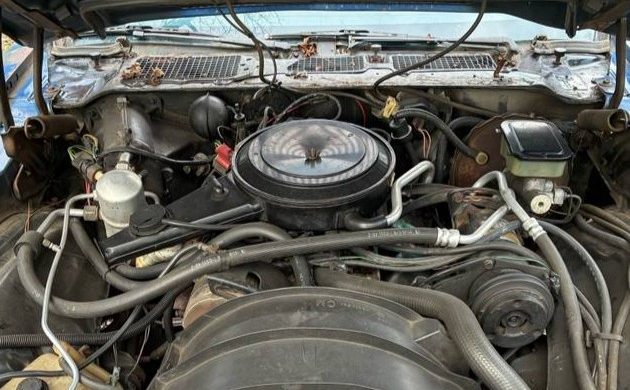
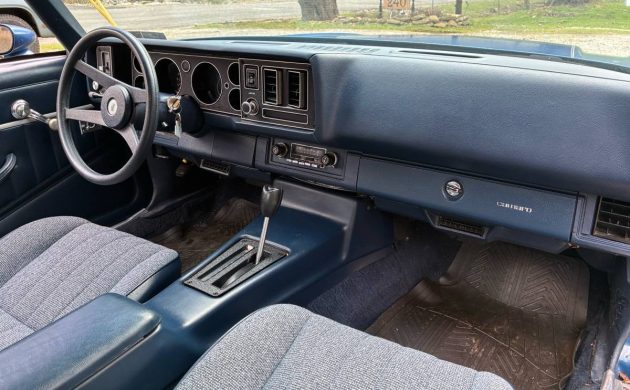
A 267 cubic inch V6 was standard fare in the Camaro. With just 115 hp, we assume the car was anemic in the performance department with an automatic transmission. The seller’s Chevy has recently had the odometer turn over (remember those days?), so it reads 102,500 now. We’re told the car has been garage-kept and is original, which we assume includes the blue paint, which is past its prime. On the other hand, the interior looks almost spotless, especially for 45 years.
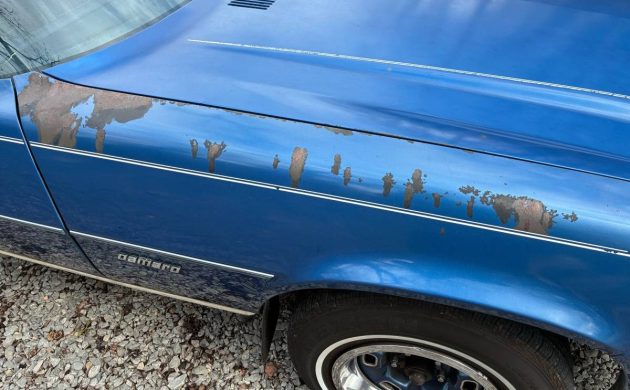
If you can get past the large chips missing from the paint, this could be a nice driver, especially for Cars & Coffee. Attendees may overlook that fact because the car is otherwise so clean and seldom seen these days, except perhaps in those circles. Maybe to save fuel, the V6 was a popular choice in 1981, comprising more than 40% of deliveries in the second gen’s swan song outing. Kudos for the Bow-Tie tip, Rocco B.!




Hi Russ, the V-6 engine in 1981 displaced 229 cubic inches. The optional V-8 was 267 cubic inches.
No matter what size engine, those white wall tires have to go !!!
White walls were very common with these wheels back in the 80’s.
I believe 1981 was the peak year for gasoline prices in the United States if we adjust for inflation. They started to come down after that. So that provides context for these anemic engines that we saw in these cars.
As further context, it seemed that most non-Z28 or RS Camaros in these years had whitewall tires. The younger people who bought them used almost always upgraded to wider white letter tires, which is what everybody is used to seeing now. But if you remember them new, you will remember most of them had whitewalls. So this car is actually very authentic to its era!