

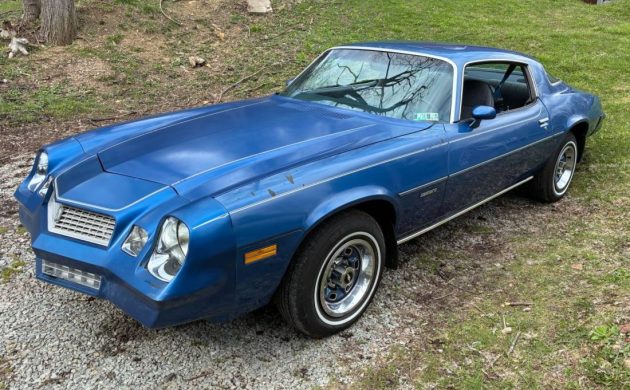
The Chevrolet Camaro’s second-generation enjoyed a successful run across 12 model years (1970-1981). That was longer than any other generation, though the third was close at 11 years. By 1981, the design was getting tired, and nothing much changed except the addition of a “computer” to regulate the carburetor mixture for lower emissions. The seller’s car has a V6 engine and 102,000 miles, but it runs well, though the auto is in need of new paint. Located in Monongahela, Pennsylvania, this driver-quality Camaro is available here on craigslist for $9,500.
Sales were still decent in 1981 at 126,000 units. The “Foxbody” Ford Mustang was in its third year after returning to pony car proportions, so it was once again a competitive threat. With the word on the street that the 1982 Camaro would be all-new, some buyers held out for another year, which may have limited the demand for a 1981 Camaro. Visually, the 1981 looked just like the 1980, so changes were held to features like halogen headlights and a space saver spare tire.
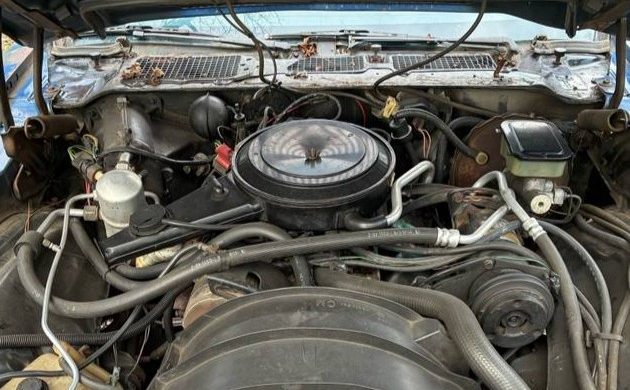
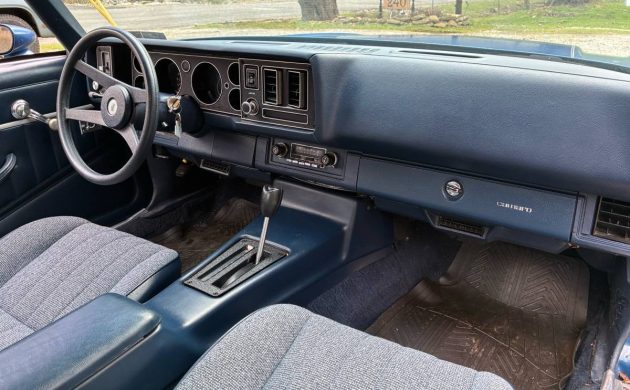
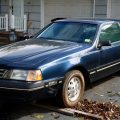
A 267 cubic inch V6 was standard fare in the Camaro. With just 115 hp, we assume the car was anemic in the performance department with an automatic transmission. The seller’s Chevy has recently had the odometer turn over (remember those days?), so it reads 102,500 now. We’re told the car has been garage-kept and is original, which we assume includes the blue paint, which is past its prime. On the other hand, the interior looks almost spotless, especially for 45 years.
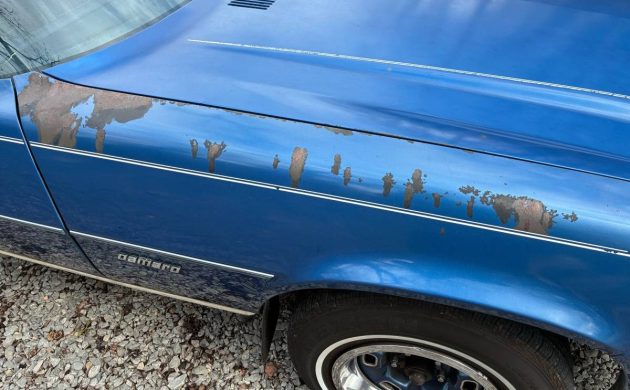
If you can get past the large chips missing from the paint, this could be a nice driver, especially for Cars & Coffee. Attendees may overlook that fact because the car is otherwise so clean and seldom seen these days, except perhaps in those circles. Maybe to save fuel, the V6 was a popular choice in 1981, comprising more than 40% of deliveries in the second gen’s swan song outing. Kudos for the Bow-Tie tip, Rocco B.!

Hi Russ, the V-6 engine in 1981 displaced 229 cubic inches. The optional V-8 was 267 cubic inches.
I believe they offered two v6s in those years, the Buick 231 and the Chevy 229. 231 came with the auto and 229 had the 3 speed manual trans. I had a 1980 with the 229/3 speed combo.
This needs to come down about $3k and it would be more reasonable. And first year of the computer carb, no thanks.
Dan, I don’t recall the 231 being an option when I ordered my ’81. I ended up with the slug 229 with an auto – gas prices were on the rise in ’81/
Ah yes “Computer Command Control” was what it was called.
I just looked it up: the 231 Buick was available in CA.
No matter what size engine, those white wall tires have to go !!!
White walls were very common with these wheels back in the 80’s.
& so were wheel covers – espec on 1st gens – even with big v8s!
https://hips.hearstapps.com/hmg-prod/amv-prod-cad-assets/wp-content/uploads/2015/05/DN706-67-CH-164A1-626×828.jpg?resize=980:*
The 1967 Shelby GT500 Super Snake had whitewalls!
I believe 1981 was the peak year for gasoline prices in the United States if we adjust for inflation. They started to come down after that. So that provides context for these anemic engines that we saw in these cars.
As further context, it seemed that most non-Z28 or RS Camaros in these years had whitewall tires. The younger people who bought them used almost always upgraded to wider white letter tires, which is what everybody is used to seeing now. But if you remember them new, you will remember most of them had whitewalls. So this car is actually very authentic to its era!
I agree with Tony and Cayenne, I remember these with whitewalls all the time. Even wire wheel covers as well, I prefer these rims. It was actually quite normal. Then once a high school kid bought one used, a set of affordable white letter tires would go on.
Because I am a nerd, I looked it up in my Camaro White Book. Of the Camaros built in 1981 with P205/75R14 tires (which was all of them except Z28s), 63,839 had white walls compared to only 16,364 with white letter tires. So my memory was correct, lol!
You have to remember, before these became associated with blue collar muscle Americana, Camaros were just stylish transportation. They were very popular with female drivers in particular.
You are correct about gas prices. When I went to order my ’81 Camaro, I was going for a small V8. The sales manager talked me out of it saying that he would give a huge discount on any Camaro in the lot with a V8, they just weren’t selling (talking non Z/28s here). I might have gone for it if he had anything worth looking at. I ended up with the 229. The car looked good, but was a dog.
My coworker did have the same engine with a manual – I think it was a 3 speed – and it moved along a bit better.
The price seems high for a late-1970’s 102,000 mile, V6 Camaro that needs paint. These aren’t particularly sought after, for $9,500 there are plenty of options for cars from that era that don’t need anything other than a good detailing and a new owner.
Steve R
He’s trying to sell it for what the market will bear. This car is in very good condition, for being in the rust belt. We don’t have the quantity of second generation Camaros up here, that you have in California. If he is flexible on his price, it should sell.
Late second generation F-bodes are rare sight in California. Due to emissions regulations and the availability of inexpensive 1960’s and early-1970’s American intermediates through the end of the 1980’s most these were crushed by the early-1990’s, even that era of Z28’s and Trans Ams never caught on like they did in the Midwest and east coast.
Steve R
“Cash for Clunkers” killed a lot of these cars. Rust killed a lot of them too.
I’ve said it before and I’m sure I’ll say it again, do a little detail and mechanical work and just drive it. Unless someone is looking for a what looks to be a solid donor car for a Z28, enjoy it as it is and wear it out. It is already 45 years old and I know as a car lover it’s hard to admit they can’t last forever but it will get recycled at some point so enjoy it. I think it would still make a very nice around the town car which is what this one was made for anyway.
1st thing to go is that junk v6. I’ve replaced many of those back in the day.
lot of money for a 6cly in my opinion.
Just my opinion. What an awful thing that they ever put a 6 cylinder in a Camaro. I owned a new 73 z28 with a 4 speed. These cars were meant for a V8 and 43 pedals.
John
There could be and was worse a couple years later in the 1980’s next gen camaro.
Friend had one with auto and the iron duke 4 cylinder.
Never knew that but I think after the second generation they had completely wrecked the Camaro anyways. To me it almost looked like a Chevrolet sedan. Again this is just my opinion but after the second generation Camaro it was all down hill and in a hurry
Iron duke was better than that 229. God that was a junk motor
Made the month and year I turned 16. Would get my first car the following summer, which ended up being a Camaro, a 68′ though. This was actually the model I wanted but I knew so little about cars then I just assumed it would look like a 2nd gen. when I went to see it lol. Overall it looks pretty clean. Especially being from PA. I’m on the east coast and these cars are sight unseen nowadays. A new paint job would do wonders. It’s not a screamer but not every car has to be. Just too see another nicely restored one on the road would be cool enough.
A V6 with a/c on a 3800 lbs car with an automatic. An optional V8 would have been the way to go. I can’t remember clearly but I think the 305 and 267 were the optional V8. 350 was reserved for the Z28 except for CA Z’s that got the 305.