

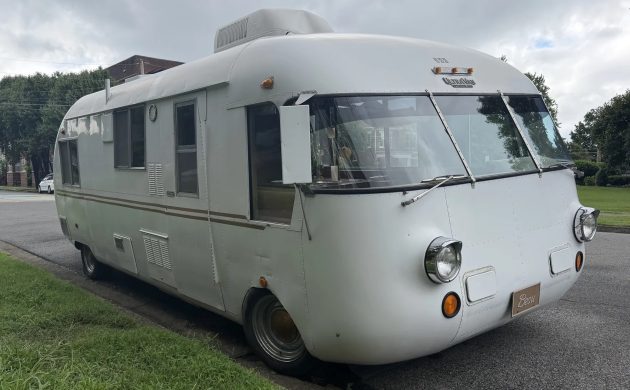
The first Ultra Van was the ultimate garage project. Conceived by David Peterson, an aerospace engineer living in Southern California, it was built to solve a problem: Peterson needed a live-in camper stable enough to tow his boat. When the Corvair was introduced in 1959, he saw that an engine mounted low in the rear could leave plenty of space for living and provide enough power to pull the boat. He installed Corvair’s 80 hp 140 cu. in. flat six into a monocoque aluminum-skinned vehicle with good forward visibility and stand-up room all the way from front to back: this was the first “Go Home” Peterson motorhome. When orders arrived from friends and acquaintances, Peterson hired students to produce another 15 units. Soon, rights to build the van were licensed to others, eventually sending about 376 Ultra Vans onto roads all over the country. Here at Hemmings is a motorless 1968 Ultra Van bid to $1,550 in a no-reserve auction. Pick it up from Paducah, Kentucky, find an engine, spiff it up, and van life here we come!
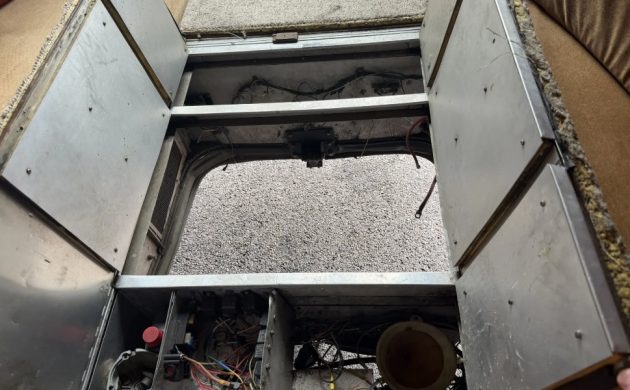
The engine bay retains the seals so crucial to cooling the Corvair’s six, but don’t feel confined in terms of powerplants: Ultra Vans have been built with small block Chevy V8s, Olds V8s, and there’s even a record of an Ultra Van wearing a Chevette in-line four. The standard transmission was a Powerglide automatic. Many upgrades have been installed, including suspension and brake improvements, and an automatic leveling system from Firestone.
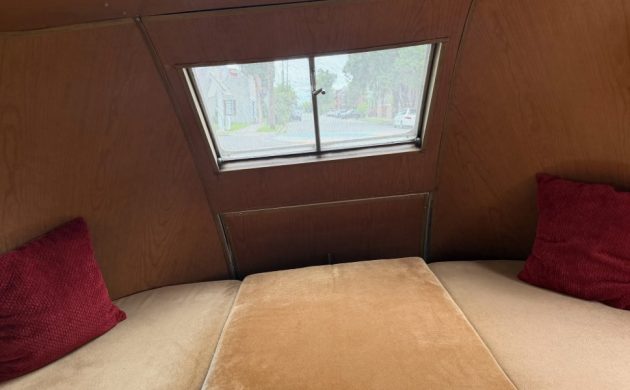
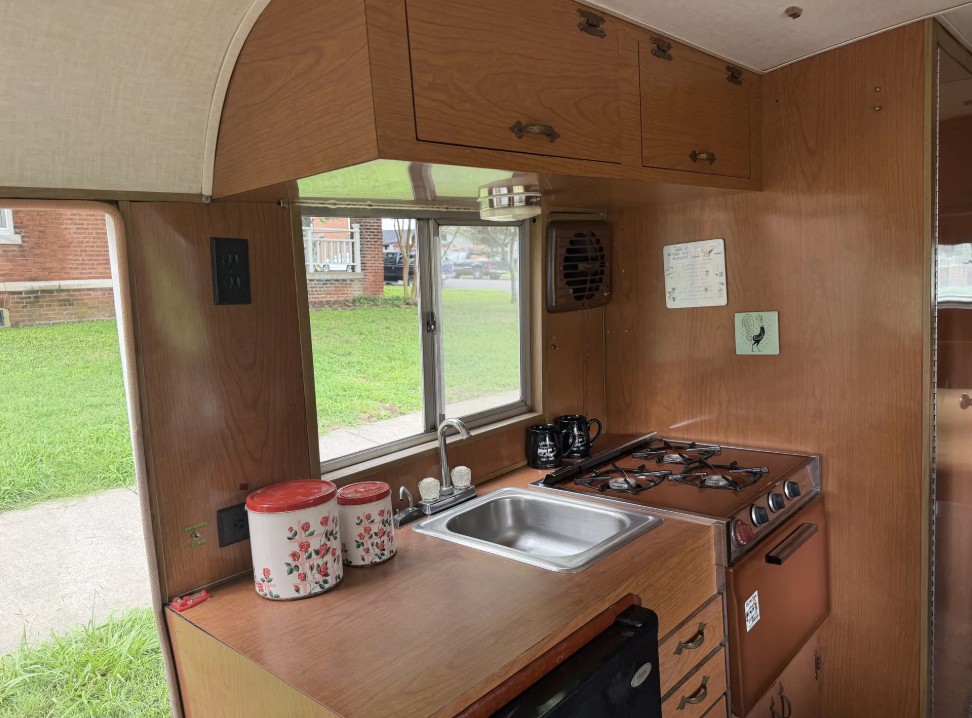
The interior is light and bright, thanks to decent-sized windows, including three in the aft bedroom. The kitchen features a Magic Chef three-burner stove and Haier refrigerator; comfort upgrades include a DirecTV hookup, air conditioning, a stereo, and a backup camera. On the other hand, the seller – who just acquired the vehicle himself – can’t vouch for the electrical systems.
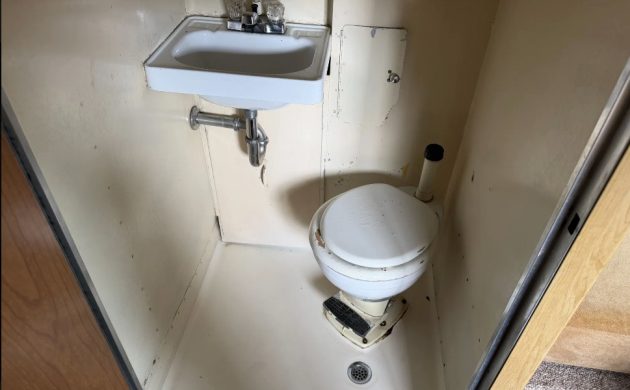
So many RV ads forget to mention the size of the water tanks, but this one tells us the fresh water tank is 44 gallons, and the grey and black water tanks are each 28 gallons. That’s on the light side compared to today’s enormous 100-gallon capacities, but when the engine doesn’t even have 100 hp, notching back the loaded weight makes sense.
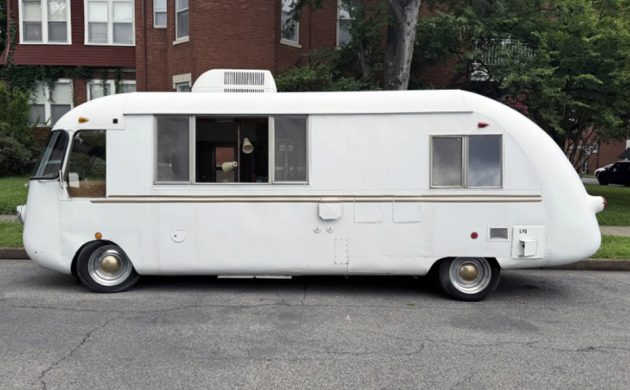
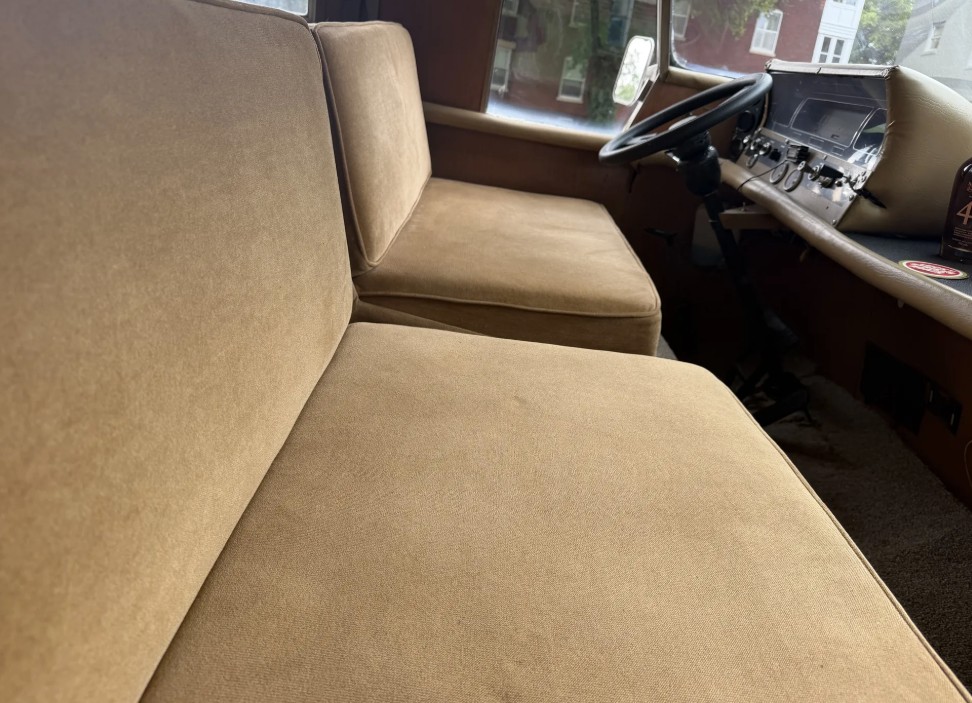
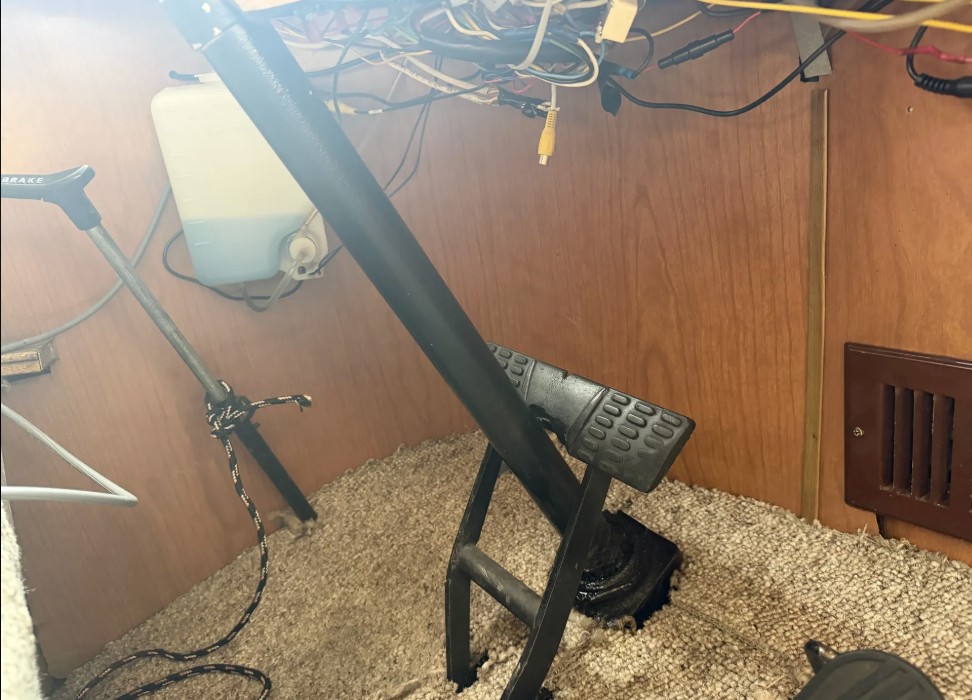
The exterior aluminum has a few dents, the rooftop AC unit took a hard knock, and the driver’s-side windshield is deeply scratched (why is it always the driver’s side!). The front cabin accommodations have been modernized but retain swiveling seats to form part of the dinette. The wiring scares me, and take a look at that weird pedal arrangement! Values are difficult to pin down; this spiffy example is priced at $17,500 with work remaining, implying the current bid is about right given the work required here.

I saw one of these in Hayfork,CA a few years back,& saw one
on American Pickers that was in New England.
I’ve always had a fascination with all the many funky late ’60’s motorcoaches I used to see bumbling about back then, Small numbers, unbridled creativity, and a true cottage industry, until the company named Winnebago stormed onto the scene.
And I have great affection for Corvairs.
But when I laid eyes on this project I thought someone could really, as Michelle might say, “spiff it up.” Like maybe go all out. And then it hit me…Porsche!
Would a Subaru conversion be less expensive and have a better/again less expensive availability of replacement parts?
Designed by a ‘60’s aerospace engineer. That’s an excellent selling point in and of itself.
Keep it up, Michelle. Good stuff as usual.
I’ve always had a fascination with all the many funky late ’60’s motorcoaches I used to see bumbling about back then. Small numbers, unbridled creativity, a true cottage industry, until the company named Winnebago stormed onto the scene.
And I have great affection for Corvairs.
But when I laid eyes on this project I thought someone could really, as Michelle might say, “spiff it up.” Like maybe go all out.
And then it hit me…Porsche!
Oops…twice is always nice
Oy, it’s a loooooooong way to Tipperary,,in this. I wonder if it would be easier to just schlep it behind your diesel dually as a trailer. The Corvair motor, unless a 180 turbo, would be horribly inadequate. With gear, water( 500lbs. alone) poopy water a sloshin’ around,( pee-yew) it would be a slow ride, trust me. Tell you what, with current rentals routinely in the 4 figure bracket here, for $1500 clams, get a nice spot down by the river, and call it home. :)
I know you like to chime in and put your twist on it. You might have missed the part that mentioned these were designed to be very light weight. The skin the hoops and the chassis is all aluminum.the Corvairs donated their front and rear subframes. My guess is weight was equal to or less than 4 door sedan that GM installed that flat six into . Would it travel today’s highway speeds? Probably not but when these were designed we were still driving 10 mph slower at night, remember those signs? Well that’s my take, peace be with you all.
Every time I see a weird van/RV like this, I think “meth lab”. Why not? No one would suspect until someone who’s high on his own concoctions blows the thing and himself to bits in some shopping center parking lot. If I owned this rig, I’d be tempted to put an SBC in the engine bay , sort the wiring and use it as a camper van in the summer months. Let them think I’m homeless, I wouldn’t care.