
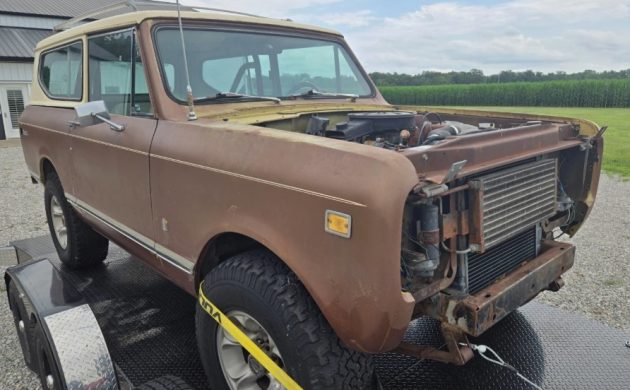
What was the first passenger vehicle to replace the horse in the farmer’s field? The Jeep might have been pressed into service; Citroën’s 2CV can take a bow in France; the Land Rover, certainly, in the UK. In America, designers over at International were asked to produce a four-wheel-drive “replacement for the horse”. A fast development period followed, and in 1960, the Scout 80 was launched. It beat Ford’s Bronco to market by five years, and was sold alongside International’s heavy duty trucks. Demand shocked the company – more than 25k Scout 80s were made annually through 1965. Upgrades to the 80 brought the 800 series, and in 1971, the Scout II – now marketed against the Blazer. These stout off-roaders trail the Bronco in value but have enjoyed a similar renaissance. Here on eBay is a 1972 International Scout II for restoration, currently bid to $2550, reserve not met. The seller states that it’s for sale locally – that’s in Casey, Illinois – for $13,000.
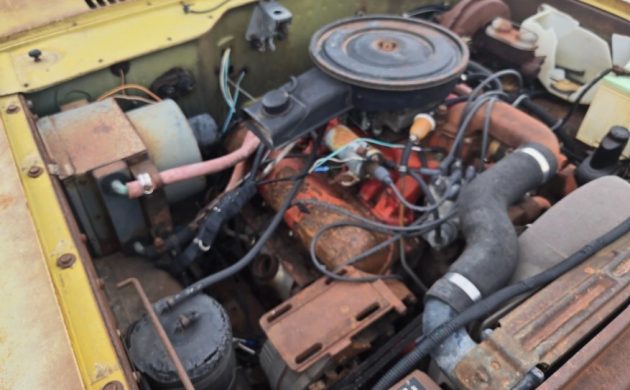
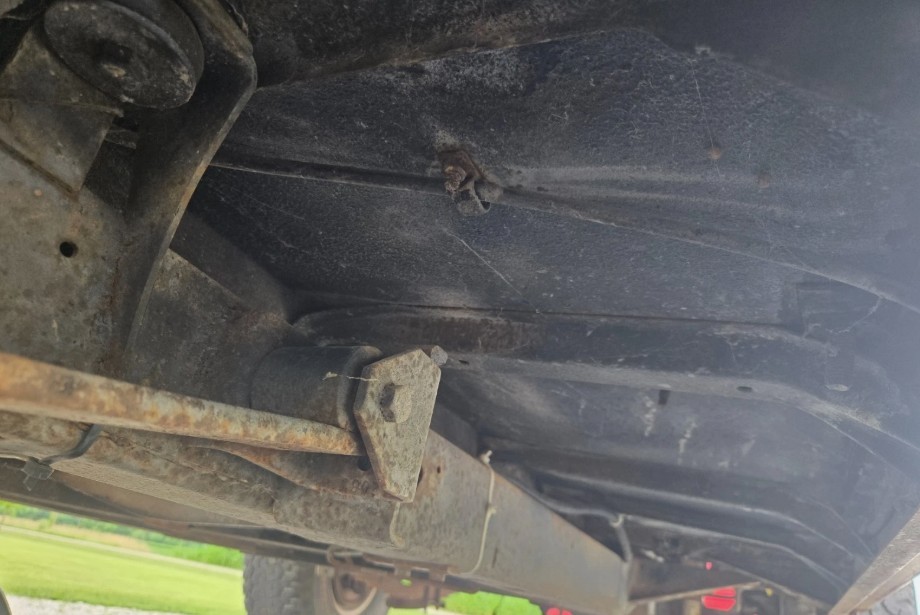
The redesign that brought us the Scout II was forced on IH by stiff competition from Chevy’s Blazer. The revised Scout was longer, more comfortable and roomier inside. Engine options ranged from a 196 cu. in. four up to a 345 cu. in. V8. This 345 is frozen; once it’s unstuck, output should hover at 197 hp and torque will come in at about 310 lb-ft. A three-speed automatic handles gearchanges. Very few Scouts were ordered with 2WD – this one has the more common 4WD configuration. The underside is dry and clean.
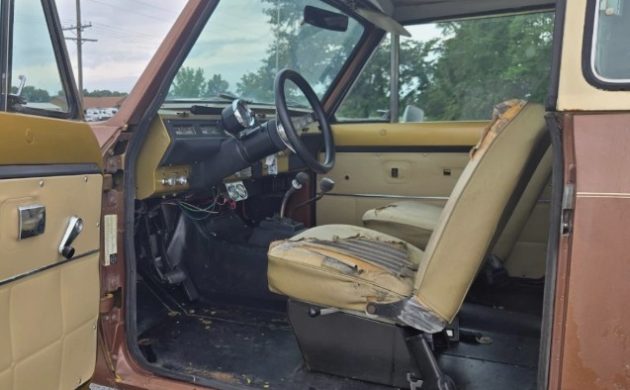
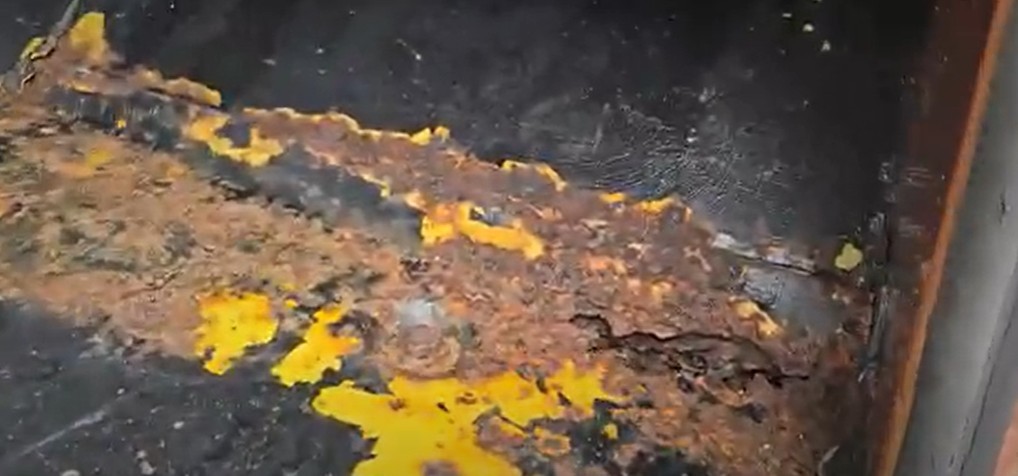
As expected given its “restoration candidate” condition, the interior needs plenty of attention. But the popularity of Scouts has spurred aftermarket parts suppliers: entire interior kits are available for about $3300 – with optional seat heat! A video embedded in the listing reveals rust in most corners of the car as well as the toe board of the passenger-side floor. The seller says the car is complete, so we’ll have to assume that the missing interior trim is somewhere in the accompanying boxes of parts.
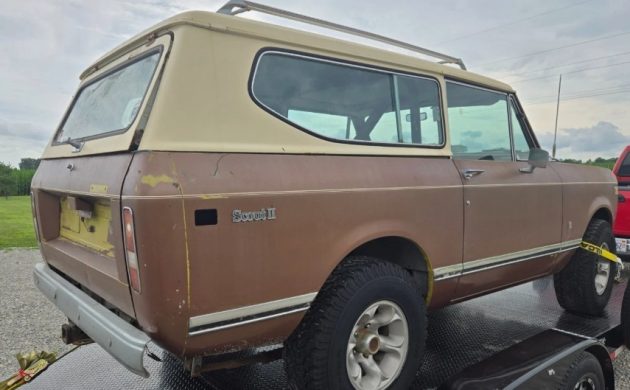
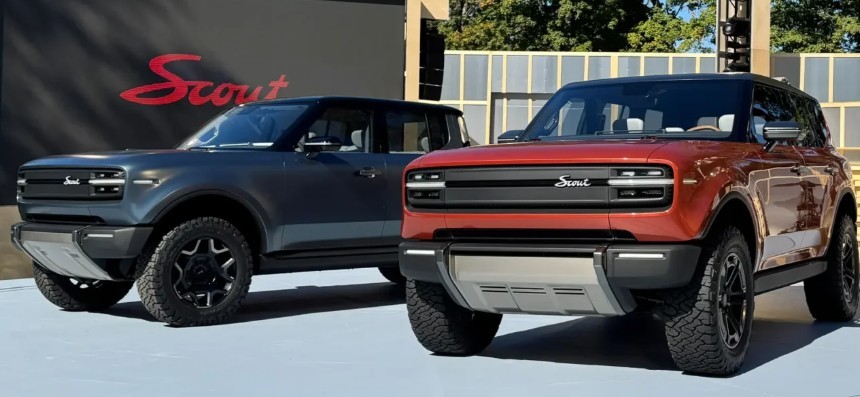
Scout IIs were optioned with a metal Traveltop, a soft top, or as a half-cab. Its cargo area bested the Blazer, its payload was several hundred pounds higher, it had a tighter turning radius. Still, the Blazer persists today, and the Scout is long gone – though in 2024 we were teased with a couple of Scout concept vehicles. Whether these enter production is anyone’s guess, but word is, they will be EVs. If you pine for old technology, a running, driving, originally configured Scout II with a 345 V8 will cost you somewhere around $40k to $50k. Resto-mods cost even more. What do you think this project is worth?


These Scouts were increasing in popularity during the last years. I find if interesting that IH chose to cancel the Scout. Of course I find it interesting that IH cancelled the light truck line. Skuttlebutt from a former dealer from the Chicago area suggests that IH made a deal with Chrysler in that Chrysler would terminate its heavy truck line if IH shut down its light line. Maybe some politics?
Anyways, I always liked the Scout II; it was styled well and ran as good as it looked. I have a friend who bought one in ’73 and he still drives it today.
This one is going to need some work but it looks like its rebuildable. There’s getting to be more and more reproduction body steel on the market and from what I’ve seen it looks good. If the buyer does the majority of the work himself, he should be able to get away with a fairly economical restoration.
It’s interesting to look at the side windows of this and of the prototype new “Electrolux.” Obviously some styling was borrowed.
Bidding closed at $3,850. I’d say that’s plenty, hard to tell what’s under that peeling repaint.
Scout EV, I hate the thought of that. Nope, don’t like it. $13k on this was way to ambitious, to much work. Can be restored with some $$$ and time.
$13,000? Surely, you jest.
$13,000? Surely, you jest?
We had a short bed Scout pickup on the golf course. When the tractors were tied up in other service, we used the Scout to pull the gang mowers to cut “the rough”. Six cylinder, automatic, dual range, 4wd. Prior to the Scout II, they were truly an agricultural vehicle. Did not even have rubber mats on the floors, just painted grey metal worn bare by years of utility service. Officially it was probably a “Scout 800 Half Cab Pickup”.
Internationals were junk poor quality rust drive train were bad that’s why they when out business