
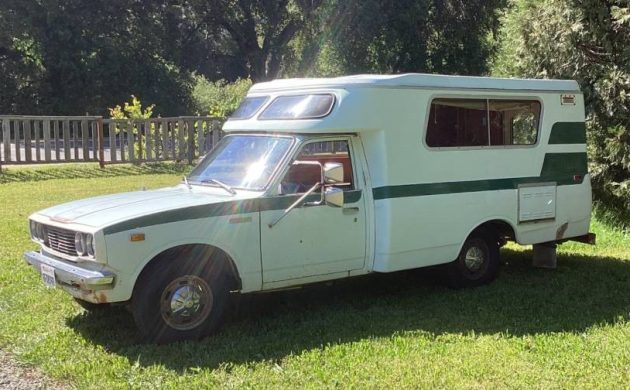
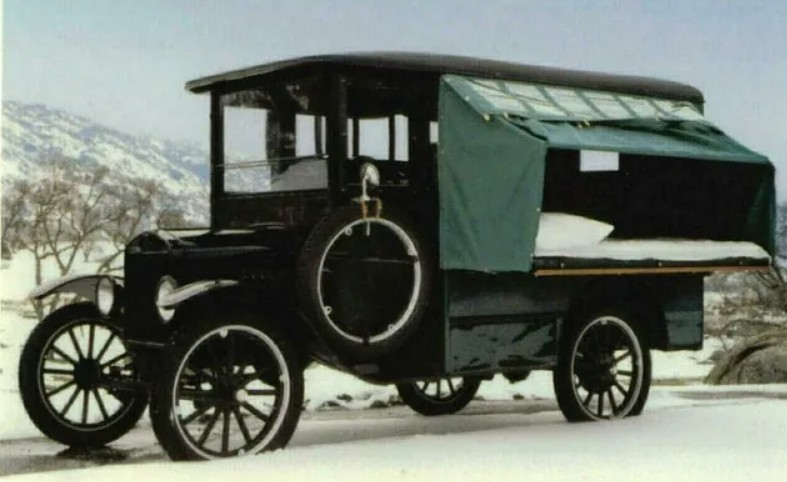
Outdoor adventure has been popular ever since there has been an outdoors. In the early 1900s, Ford produced the Model T Kampkar, but they were only capitalizing on a trend that saw owners crafting their own camper vans. Fast forward to the 1970s, and major car makers were also offering campers or motorhomes. Toyota joined the party in 1973, partnering with Chinook International – known for its work making campers since 1938. The result was the Toyota Round Tripper, with a fiberglass hull built on a Hilux chassis. About 15,000 were made. with improvements coming in 1975 along with a name change to simply “Toyota Chinook”. A strong suit was its excellent gas mileage – given its job of hauling a camper – of around 20 mpg in the city, a big advantage in the day of fuel shortages. This 1975 Toyota Chinook is available on craigslist for $6,500; it’s located in Atascadero, California. Thanks to Barney for spotting this gem for us!
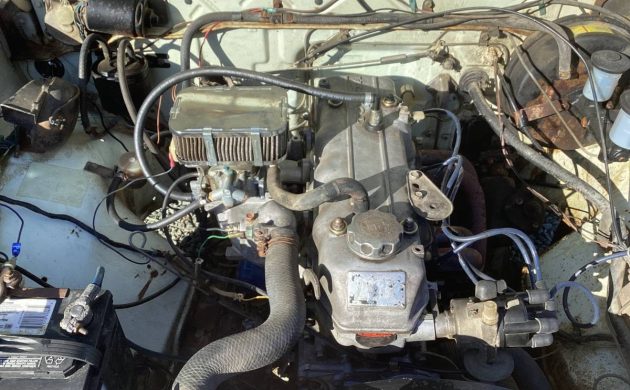
When the Round Tripper was introduced, it was powered by Toyota’s 18R four-cylinder, and not much was done to accommodate the extra weight of a camper sitting back there. By 1975, the frame was reinforced along with the rear suspension; and in the engine bay, buyers found Toyota’s 2.2-liter 20R engine, good for almost 100 hp! – well, 96. A four-speed manual sends power to the rear wheels. Looks like an aftermarket air cleaner here, hovering over a Weber – a common swap from the original Solex-style carb. This one’s odometer reads 81k, but the seller says it runs great. Beware long trips though – the fuel gauge is out of order.
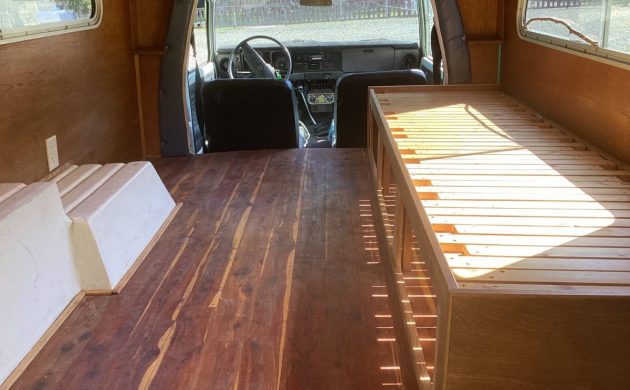
The interior was apparently shy on photo day, so our examination of the cabin is restricted to this long view from the rear. The seller does mention that the seats need to be reupholstered and the windshield is cracked. Sky’s the limit regarding the living quarters, however. That nifty wood flooring makes a great base to set up your home away from home.
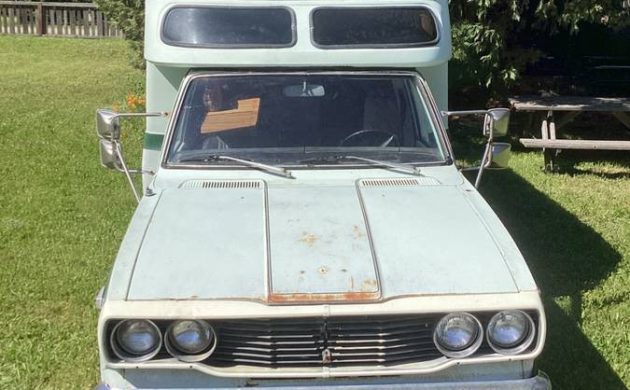
The front valence, bumpers, grille, fenders, and doors are straight as a pin as far as we can see, and panel gaps are great. Sure, the paint is worn, but patina is all the rage these days. As far as values go, here’s a comparable example for sale in Portland, Oregon, accompanied by all its original interior fitments, with an asking price of $6500 – same price as our subject vehicle. What would you pay for this vintage van?



Those four little hamsters under the hood will be
working their little hoofies to the quick.
Where’s Howard? You got one more chance!
Not for me. Living in the most mountainous state in the lower 48. (Nevada) It’s either going up or going down. (Not to mention going around mountains.) It’s the going up part that would frustrate me to the point of distraction. The common condition of this vehicle stated in the Toyota store I worked at was 50lbs of mess (you can guess what the real word was) in a 10lb. bag!
Looks like the owner already stated what should have been done with it a long time ago. Drive train appears to be good I say pop the body off and build something else
Or just buy something else.
I had a couple of these in the 1980s, a 1974 with the 18Rc engine, and a ’75 with the better 20R . They came with a full camper equal to a VW Westphalia ; Sink,stove, furnace, mine had a flush toilet compartment . . but with more room inside than a VW . I bought each with less than 100,000 miles on them, sold with 200,000 miles, including each did an 11,000 mi circle of the US, back through S Canada. The 20R engine was ultra reliable, but be sure it will pass Smog Check if in Calif , the carb may not. All had full 6′ stand up pop top room and excellent ventilaltion ; I would love to have my 20R back today. I also pulled a small trailer occasionally. If mine had 200,000 miles in the ’80s they could easily have 400,000+ mi now ! David in Calif