

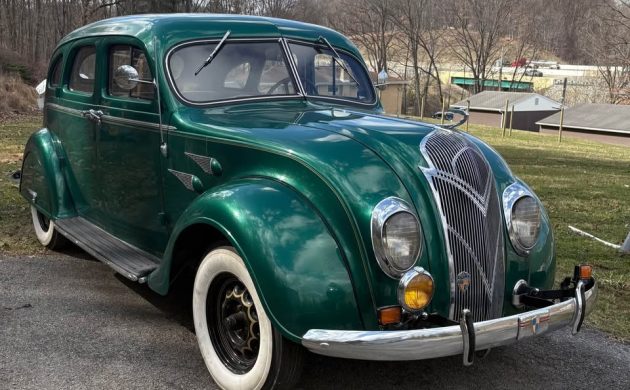
The Airflow was the first U.S. car to be designed in a wind tunnel. Its aerodynamic looks may have been an acquired taste, and Chrysler pulled the plug after three years. Between 1934 and 1937, both Chrysler and its DeSoto division built 55,000 copies, but their unorthodox appearance kept the car from catching on with the public. But the seeds for wind testing had been sewn for years to come. The seller has a 1936 DeSoto Airflow that looks to have been restored, but practically no details are provided. Located in Gibsonia, Pennsylvania, this unique sedan is available here on Facebook Marketplace for $24,000.
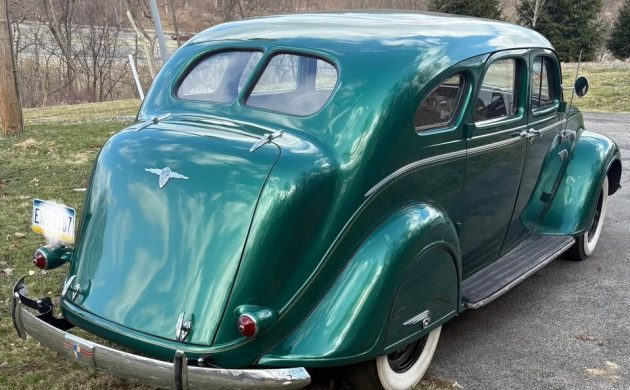
Differences between the Chrysler and DeSoto Airflow were mainly related to wheelbase, with the Chrysler having a longer one and a better level of trim. The cars were designed to negate the impacts of wind on “air flow,” so the headlights were moved inboard, for example. The grille was waterfall-like rather than squarish and upright. And the windshield was curved and angled in two pieces to facilitate greater aerodynamics. Unibody construction was employed, somewhat uncommon for the 1930s.
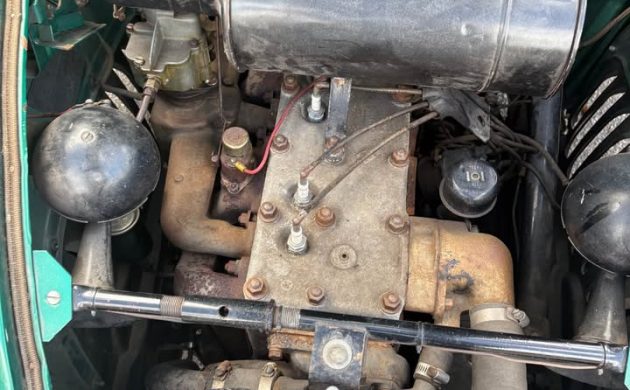
The DeSoto Airflow used a 241 cubic inch inline-6, and the car was built in 1934, 1935, and 1936, like the Chrysler. Except the latter car saw a 1937 model year before Chrysler decided to go back to producing cars that were more like the flurry of post-Depression competition. The seller’s listing is undecided whether the mileage is 6,600 or 66,815 (we’re betting on the larger figure). We’re told the vehicle is in “great shape” and “runs.” And that’s the extent of the input from the seller.
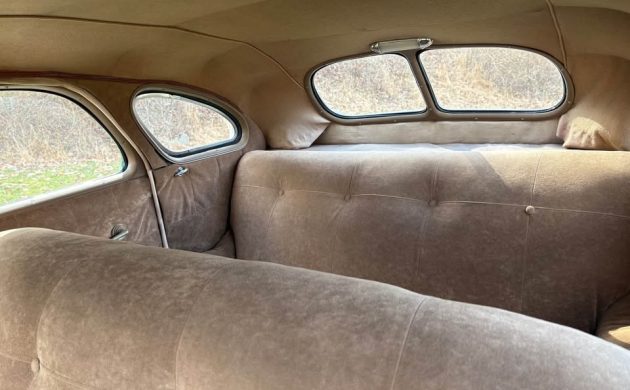
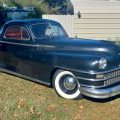
This DeSoto has the earmarks of a restoration, from the quality of the body to the green paint, which seems like it might not be period correct. The interior also looks nice and tidy. Assuming no further work is needed, this could be an awesome machine to show off because a lot of folks have never heard of the car, much less seen one in person. Kudos to Russell J Glantz for the tip!

Perhaps a bit ungainly looking to the modern eye but in 1934 these were revolutionary. Early Art Deco styling-not entirely dissimilar to the Union Pacific passenger trainsets of the period (designed to “modernize train travel thereby competing with the looming airline business). Seen as a product of their time, I think they’re quite attractive. They were good cars and this one is definitely a collectible-for sure no one else in your neighborhood is likely to have one.
I LOVED seeing these when I was a child; however, they seemed to vanish quickly, and I almost never encountered one after about 1950.
I’ve always found ArtDeco designs to be really striking and evocative of an era too.
This Airflow is a very cool slice of Americana.
I’m like you. I love the art deco style (trains, buildings, etc.) and love the Airflows. I’ve noticed that there are some modem International trucks with that look.
My Dad had one in the late 30’s and said that it was a cool car at the time for a young guy, but blew head gaskets regularly. He said he and his friends got real good at quickly installing a new gasket.
I love these Airflows. They kinda look like they were designed by Citroen or Renault.
Because one of them bought the designs and made them successfully for years. Doesn’t the Citroen 2CV have a similar silhouette? These were great cars.
I do not believe there is any link between the design of the 2CV Citroen and the Chrysler Airflow, other than that they are products open 1930s, when aerodynamics became increasingly important as roads and engines improved. The French company certainly did not buy anything from Chrysler, it did have strong influences from Ford, for its larger cars.
Toyota did make a nearly perfect copy of the Airflow.
Speaking of aerodynamics, I do not believe this car was actually tested in a wind tunnel. Such facilities would’ve been very rare in the 1930s. If anyone knows different, fill me in.
There are some weird coincidences between the VW Beetle and this car, although it is important to remember that the Chrysler came out first
The Chrysler body was engineered by Budd Steel, .The same American company did some engineering on the KDF wagen, which later became the VW Beetle. I’m not sure there was any cross pollination, but there is that.
The engineer at Bud Steel that worked on both cars was named Joseph Ludwinka.
Another weird coincidence: his cousin, Hans Ludwika worked for Tatra, the Czech company that Ferry Porsche copied his “people’s car.”
The two Ludwinkas were distant cousins and I don’t think they ever met. Joseph immigrated as a young man to the United States and was educated here. Hans to my knowledge never left Austria and I don’t think that they ever met.
You may be thinking of the Peugeot 402, which was strongly influenced by the Airflow but not a direct copy (bought or otherwise), and far more successful and longer-lived than the Airflow.
In the mid 1930s, there were several cars that came out featuring aerodynamic hoods that eliminated the vertical grille we associate with 1920s cars.
The Chrysler Airflow, Tatra T97, Tatra 77, Citroën 2CV (1939 lauched delayed by, “problems”) KDF Wagen (became VW Beetle after the war) Peugeot 402, Lincoln Zephyr (originally designed as a rear-engined car) and the never produced, Chrysler Star Car of the early 1930s (an economy car never produced, with a striking resemblence to the VW Beetle Ferry Porsche saw it in Detroit)
They were all adapting to higher speed driving and the tough economics of the 1930s.
The world of industrial design is small, and the designers might have had a clue of what some of the others were up to, but the increasing need for more aerodynamic designs shaped them most of all
It is hard to tell from the photos but my readings indicate on these Chrysler aerodynamic designs the doors were interchangeable on the diagonal. Rear left can be front right and vice-versa.
Money savers.
I went to the FB site and it looks like there is a small cutout on the rear doors to clear the fenders. Otherwise it looks plausible? I don’t know how the sheet metal is formed in detail. maybe they could use the same dies? Perhaps the cars would have looked better if the headlights were somehow faired into the fenders.
I don’t think the doors are interchangeable.
They were on the Nash Metropolitan!
Again, like the Kaiser above, an interesting gem from the industry. Very nice!
These were quite the car in their day. I remember seeing a video where one was pushed over a cliff, rolling end-over-end, and landing on its wheels. The heavily damaged car was started and driven away with no other ill effects.
My Dad was only 9 years old when he saw the first ones. He thought they were overdone, even back then. My grandfather looked at them and said they were too fancy for him. He went down the street and bought another Ford.
There was a guy in our club who had a ’37. He drove it quite a bit but had some head gasket problems until he had the engine pulled and gone through. They planed the deck and head, put it all back together and no further problems.
My understanding was that the reason DeSotos were shorter than Chryslers was because DeSotos ran sixes and Chryslers ran eights.
These cars were one of the most revolutionary designs in automotive history, and it wasn’t just the aerodynamics
Yes, unit body designs were “unusual” in 1934 but the technology was invented in Italy and first released by Lancia in 1927. The Chrysler took that several steps further, as this was the first all-steel automobile body in history. It was designed by Budd Steel.
As for the aerodynamics, Walter Chrysler built a couple of Chrysler in the early 30s that had the bodies mounted backwards on the chassis, and demonstrated that these cars were faster than the regular design because of improved aerodynamics. This was to introduce the public to the concept.
Passenger packaging was also revolutionary. The engine was moved forward over the front axle, allowing the passenger compartment to extend forward. This allowed the rear seat to move forward, in front of the rear axle giving a smoother ride and a wider seat.
The larger passenger compartment in introduced new proportions that were part of the jarring nature of the new design. Early cars had problems with body integrity and General Motors launched deceptive ad campaigns, claiming cars without wood in them were somehow less safe.
I would venture that the change to an all steel unit body was one of the great advances in automotive safety.
Previous car designs had all of the integrity of a backyard shed built on a Radio flyer wagon. This changed that completely and I suspect that all automotive safety advances that followed were the result of this innovation. Tucker may have added safety glass , but without the steel unit body, that was farting into the wind.
The original plan was for the airflow models to be only at the top of the Chrysler range, but a last-minute decision by Mr. Chrysler himself, which was disastrous.
Lancia Lambdas were actually introduced about 5 years earlier than stated in your very informative post.
Thanks for the compliment. I’ll check on the date of the implementation of that revolutionary technology. People do not give Lancia nearly enough credit for its amazing Engineering.
If you look on line for pics of the 1st Toyotas in 1936, they are a copy of the Airflow. So I guess the design appealed to somebody. I always like the looks of these. My favorite is the Imperial Limousine. Too bad they didn’t catch on.
I know they made one perfect copy, but I don’t think it was ever put into production. Not sure about that.
There is such an Imperial here in Australia.
As well as cars Chrysler also built a medium duty Airflow Truck about the size of an F-600 Ford. There was one at a Kansas auction a few years ago and IF(??) I remember right the Iowa 80 museum in Walcott Iowa bought it?? That museum is one to put on your bucket list.
These cars were highly advanced for their time. As was often the case with Chrysler Corporation, engineering dominated style and this style was unique to Chrysler Corporation at the time. As someone who watches DeSoto vehicles and other old Mopars with great interest; this particular car is very well priced. It seems to be in good nick and top notch Airflows hit the market occasionally with significantly higher asking prices. I have never seen this particular color on one but in the pictures it looks pretty good. Once again, left to my own devices I would be scheduling a road trip sooner rather than later to take a closer gander at this one. GLWTS.
When I was a kid in the 50s our neighbor MR Bean ( real name) had a gray DeSoto air stream and at my young age then I thought what a cool car, but then I also thought my Grandfathers Nash airflyte was cool ! still like both!