

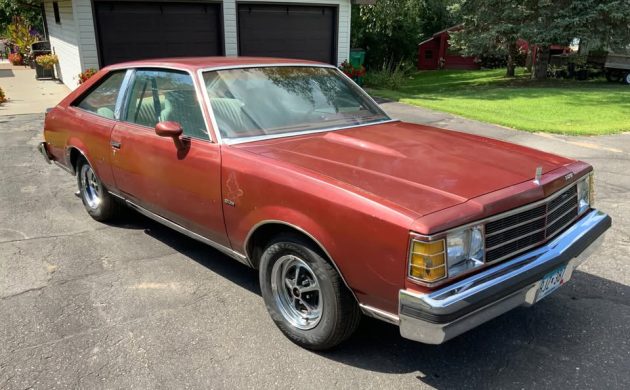
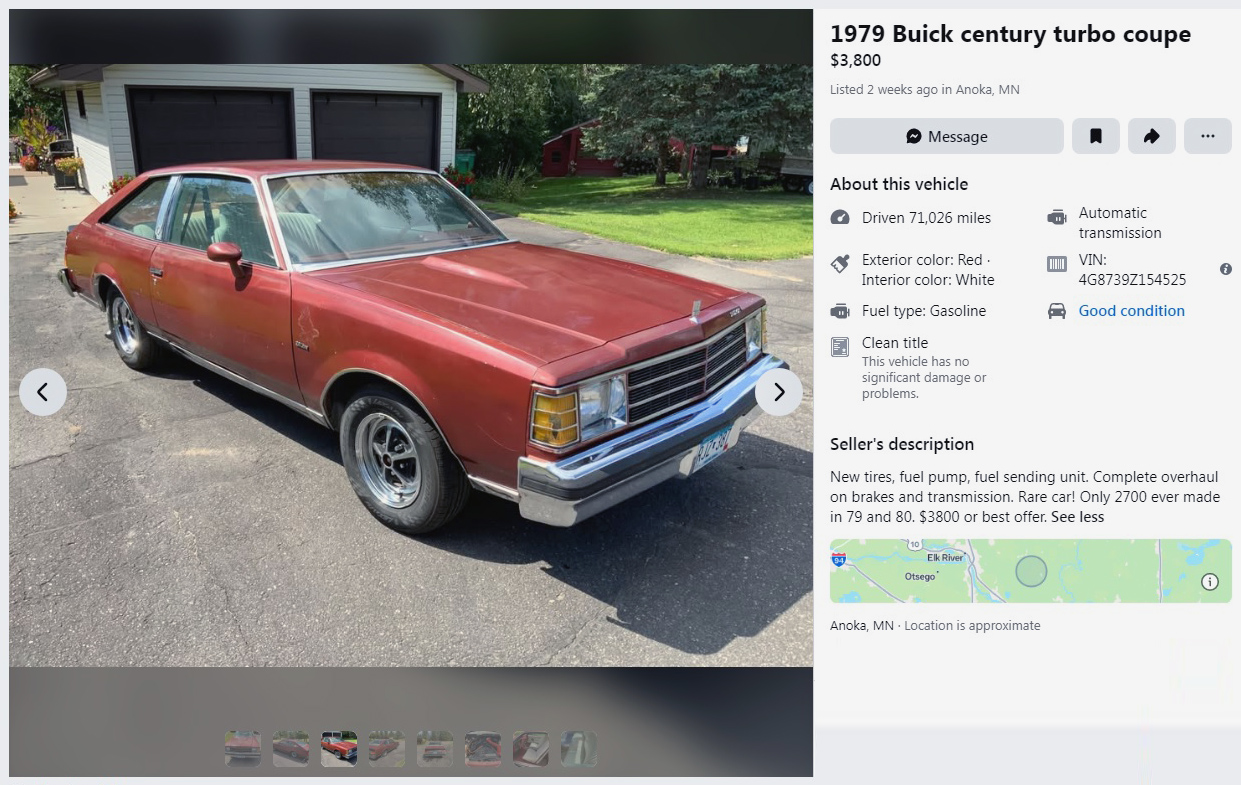
Production numbers are all over the board for the uber-rare 1979/1980 Buick Century Turbo Coupe, from 1,000 to 2,700 total in the two years it was offered. This 1979 Buick Century Turbo Coupe is listed here on Facebook Marketplace in Anoka, Minnesota, and the seller is asking $3,800 or best offer. Here is the original listing. I couldn’t resist this one when I saw the ad. It’s close enough that I should really run up and take a peek at it.
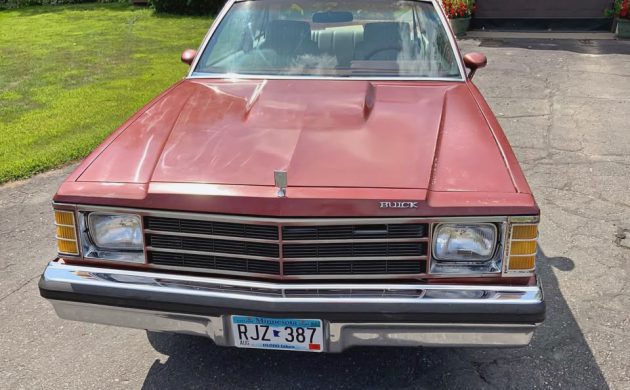
If I weren’t clearing out the storage units, I would be all over this car. It’s right in my interest area: it’s unusual, rare, has one of my favorite body styles, and it’s local. Oh yeah, and it’s inexpensive, at least to purchase initially. Rust is an unknown factor for any upper-Midwest vehicle, and having grown up in Minnesota, the thought of rust or bodywork scares me a bit. Although in all fairness to the seller, this car looks solid, and they don’t mention rust at all in the listing. The seller includes the VIN (Well done!), and this one was made in Fremont, California. If it had stayed there, I wouldn’t be worried about rust. There’s a broken piece out of the grille, and the right-side marker/blinker lens is broken, so plan on spending money there. We have only seen two 1979 Buick Century Turbo Coupes here on Barn Finds, and both had non-turbo V8 engine replacements. Interesting.
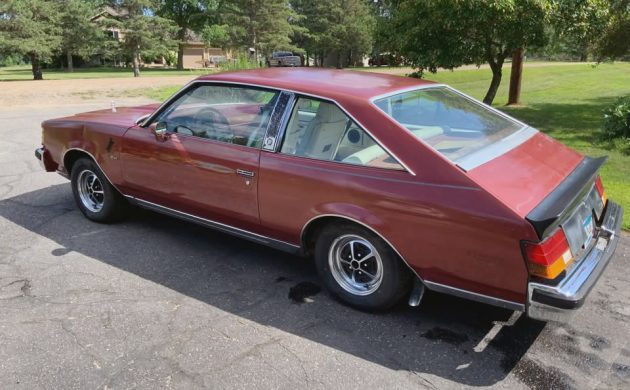
What an absolutely killer body style! It isn’t for everyone, but for those of us who like our vehicles on the unusual side, this is a 10. Yes, that rear spoiler and valance are supposed to be painted black; that’s how they came from the factory when those very few customers ordered one of these unusual, carburetor-equipped, non-intercooled turbo coupes. You can see a dent on the left fender, and I’m assuming that waviness behind the rear wheels is bodywork, but we don’t know for sure. Buick offered four turbo cars in 1979: the Riviera, Le Sabre, Regal, and Century. This body style is the one I’d want. Buick reportedly offered the V6 turbo in all Century body styles other than the wagon, so not just the coupe got the turbo.
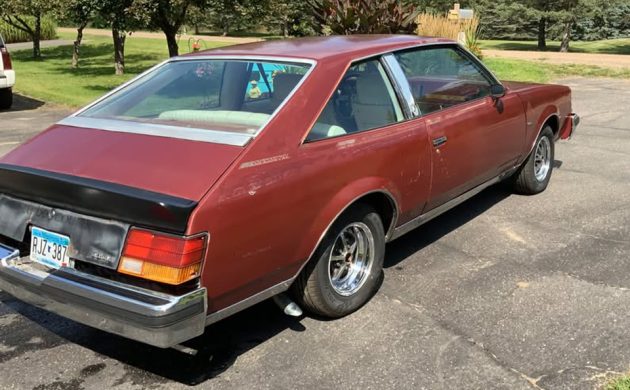
It would have been great if Buick had fuel injection and an intercooler on these cars; it would make this one so much more desirable, at least for me. I know, “Hey, just swap it out for a Buick Grand National Turbo engine. It’s that easy!” Not, at least for me, but that’s an option for those folks who have the facilities for such a thing. Plus, I like my vehicles as close to factory stock as possible, good or bad. It clearly could use a “refresh,” as they say, but what a crowd-gathering car this would be at almost any car show when it was looking like new again.
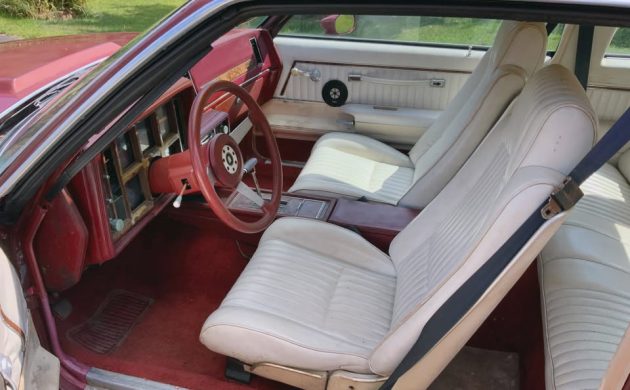
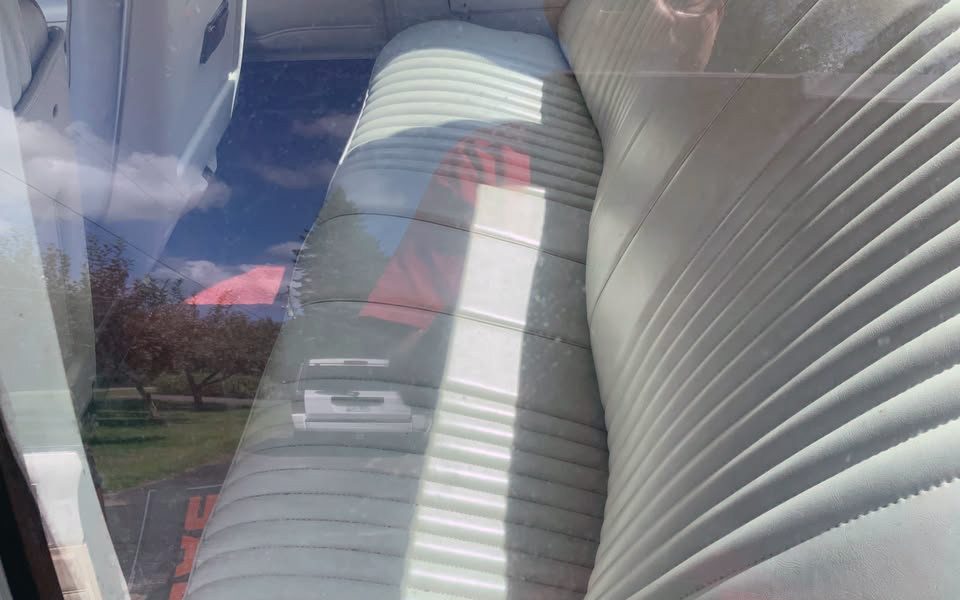
Hemmings, which I tend to believe more than most sources, says that somewhere between 1,000 and 1,200 of the Century Turbo Coupes were made for 1979 and 1980. Another source that sure looks reliable – BeforeBlack.net – says that 1,653 Century Coupes of all varieties were made in 1979 and another 1,074 were made in 1980, but Buick didn’t differentiate the Turbo Coupe from the other coupe models of the Century. Whatever the number is, this car appears to be in pretty nice shape for being almost 50 years old now. The horn hub/button isn’t missing; that’s how it should look. The seats appear to be in almost perfect condition, and here’s a photo of the back seat taken through the non-opening rear glass. No manual transmission was offered for the Century Turbo; they were all THM-350 automatics.
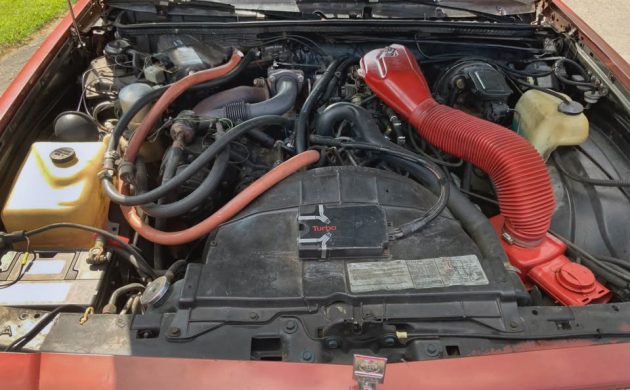
Who would have painted that red?! Actually, Buick did that, as seen on page 13 of this 1979 Buick brochure, showing an actual Century Turbo Coupe engine! I love it. The red hose, not so much, and that would go away instantly for me, but otherwise, this looks like a pretty clean engine compartment for a 1970s engine compartment – which generally means that you can’t even see the actual engine. Although, sadly, I do see paint overspray over the radiator support area in the engine photo above. Here’s a turbo engine in a ’79 Regal as a comparison.
This one has a 3.8-liter (231-cu.in.) OHV V6 with a 4-barrel, turbo-specific carburetor (meaning that a regular replacement won’t work well), and a factory rating of 175 horsepower and 275 lb-ft of torque when new. A Turbo-Hydramatic 350 three-speed automatic transmission sends power to the rear wheels. The seller says it has a new fuel pump and new sending unit, new tires, and a complete overhaul of the brakes and transmission. All for $3,800, or offer? I don’t know how that’s possible, but I hesitate to look at this one because I may end up buying it, which would be frowned upon… Have any of you owned or driven a ’79 or ’80 Buick Century Turbo Coupe? What are your thoughts on this one? As a project car that would be interesting for car show duty, it looks great to me.

Haven’t seen one since the 80s still just as ugly as they were back then
I never knew these even existed. The overall styling doesn’t appeal to me, but there’s an a** for every seat.
This series of GM product (and their counterparts at Chrysler and Ford) are why the Japanese and German carmakers blitzed the US market in the 1980s.
The pieces of crap simply fell apart at 50,000 miles. Knobs fell off, trim fell off, they rusted like tin cans, were horrible driving experiences, with horrible bench seats, no handling, engines like tractors than blew seals and gaskets, wonky transmissions, and on and on and on and on.
All of it based on arrogant bean-counting MBA-types who’s simple mandate to engineering was to “We’ll compete solely on price. Just make it even cheaper, they’ll have to buy it anyhow, and then get a new one in three years”.
Well, low and behold, the general public got fed up with that and bought Toyotas that would do 200,000 miles and keep rolling.
It took 2 decades to run these jokers out of Detroit, until someone had the guts to put an end to the “sell them garbage, they don’t know any better policies”, and the aftermath is still being cleaned up.
And now they are selling garbage cars again…
Total digital nightmares. And not just Detroit.
Cars? Do they make cars still or just SUVs and trucks?
I say buy it Scotty. Great and detailed wrote up as always. As a G-body person I have always wondered who in GM green lighted this fastback style, it just seemed too much out of the box. It sure is rare first being the fast back, then the turbo, and still not modified and it’s a low optioned car. I would consider it if it was closer. Just check the dreaded frame rails as with all G-bodies and to me the rims look like a pair of Buick rally knock offs, but I could be wrong on that they don’t seem deep enough. I had a 84 Regal with the Buick rims and they were deeper and they were 14′.
I’m curious why GM didn’t use the same FWD platform it used for the late (but not lamented) Citation?
These cars came out about two years prior to the X Bodies. The Century was moved to the new A Body in 1982. The A body was a slightly modified version of the x body.
Hen’s teeth.
This is a cool and interesting, but not valuable car. It would be cool to find a wrecked GN and swap the interior and drivetrain and suspension into the fastback. A nice black paint job and you’d have an even cooler and more interesting car, not to mention a faster one.
That “fastback ” style for this line seemed like a good idea to some back then, but I never cared for it. Kind of reminds me of a big Chevy Citation.
The rear end is sooo big and ungainly looking that it makes think of a toddler wearing a loaded diaper,…
My sister owned the Olds version and it was such a bad experience that she’s been buying Toyotas ever since.
I thought these were much cooler than the stuffy sedans that replaced them (yes, I know the coupe didn’t carry on). To note that the brochure illustrate a bucket seats-no console arrangement. The coolest of the few would have been at the Detroit Auto Show. Turbo coupe with a 4-speed. Now you’re taking.
not a popular car for sure nor a good performer. needs a v8 in it.
Olds offered this body line as a Cutlass Salon for 78-79. It even served as the base for the 442 in 78 – definitely the least desirable 442, at least up until the Quad442. We Olds guys call this body style the butt-less Cutlass.
The whole car has been repainted. None of the original body decals are there. You can see the outline of one on the right front fender. Rare car. Cheap repaint. Perfect for a daily driver.
When I read this, and then looked at the specs of that Turbo 3.8. 175 horsepower and 275 lb-ft of torque. I thought to myself, You have to start somewhere. And thats what we have here with this Century. These numbers may not look like much, but in 1979, that was better than many of GMs small V8s for that year, and heck, the next few years. Buick had to start somewhere. A THM350 is a great trans, way better than having a THM 200 behind it. The interior looks very good as well. While many folks reading this may not have bought this one new back then, I know, at least for me, that I’d actually consider it now. It’s unique, and a genuine ancestor of the Grand National in my book.
Carbs and turbos never faired well together. Dave how about an 86, 87 intercooler equipped powertrain swap from a
GN/T-Type 🏁
SG would approve lol.
I completely agree Stan. A carburetor couldn’t mix the air fuel ratio good enough to use with a Turbo. Or, at least, so I’ve read. A GN or T Type swap would definitely surprise a lot of people. And it would fit.
I agree carbs and turbos are not good together and neither are carbs and computers. This is a odd duck here.
If you want to check out one in detail and see it on the drag strip check out Cars and Zebras on YouTube
Some amazing cars on that channel.
“Holy unicorn, Batman! But not much of a looker.”
“Perhaps, Robin. Remember, beauty is in the eye of the beholder.”
If I had a dog that ugly, I’d shave its butt and teach it to walk backwards. Oh wait, Buick already did that !
I used to sell them new and you couldn’t hardly give them away!!!
I used to sell them new and you couldn’t hardly give them away or the four doors in that body style either!!!
I think it’s pretty cool in retrospect.
Scotty, if I was literally in your shoes, I also would not be able to resist this. A turbo hatch? Yes please!
Again, you gotta love those dealership brochures, A full page photo of the turbo 3.8 along with another page expounding the virtues of turbocharging. If you bought this, you would have to seek out the matching brochure.
Scotty, you and I are oddballs I guess. I like this body style. Buick and Olds Cutlass. Nothing wrong with marching to the beat of your own drum. Glad you’re back.
If you want to see one on the drag strip check out Cars and Zebras channel on YouTube, as for the Red air induction setup, its has to stay, I’m a factory “look” guy all the way. If I had more room I would love to add a carbed version of the 3.8 turbo to my hot air and inter cooled collection
GM’s bigger answer to the Pinto.
This will show Ford.
Everyone can like what they like – but I never liked this style.
In the summer of 81 – just before I got my license – I would ride my bike to a an elderly couple’s house to cut their grass.
In the driveway was a gorgeous mid-70’s Cutlass Supreme, and a four-door Cutlass Salon, the Olds version of this body style.
Always thought they were on opposite ends of the beauty spectrum.
I had a ‘78 Regal turbo coupe. Worst car I ever owned. The turbo was a joke.
Class A crap, as far as the drive train goes. Had turbo lag almost in the seconds range and it was a ticking time bomb to use as a driver. A few years made quite a difference.