

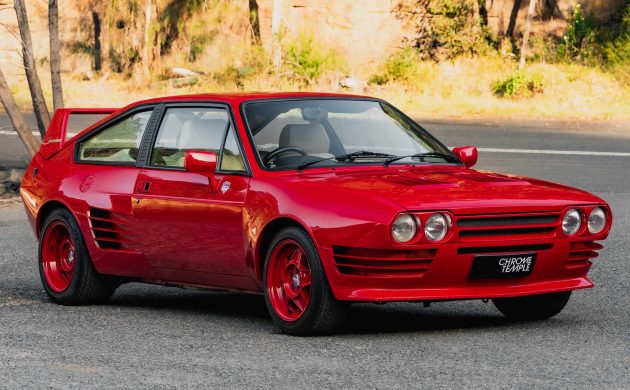
If I mention the brand “Giocattolo,” many readers will likely have never heard of it. The name suggests an Italian exotic, and that’s correct…sort of. However, while the car is based on an Italian model, it has a lot of Down Under tenacity, technology, and Formula 1 engineering. For one brief shining moment, it promised to be the ultimate Australian Supercar, but the company went broke before the car’s potential could be realized. Only fifteen examples of the 1988 Giocattolo Group B ever left the factory, and with two confirmed destroyed in accidents, only thirteen remain. Our featured Group B is one of those cars, and the time has come for this classic to find a new home. The seller has listed the Giocattolo here on Chrome Temple in Sydney, Australia. The seller has set their price at A$550,000. That equates to US$386,500 at the current exchange rate.
Understanding Giocattolo requires background on its visionary creator. Paul Halstead built a considerable fortune in the early 1980s IT industry, which let him indulge his passion for classic cars. He became renowned for effectively taking a can opener to a desirable 1978 Ford XC Falcon Cobra, lopping off its roof to create a Targa version. He opened a business in Sydney, The Toy Shop, becoming the Australian distributor for De Tomaso, and also selling cars from Porsche, Lamborghini, and Ferrari. The De Tomaso Pantera was part of the catalyst behind his creation, as was the canceled Alfa Romeo Sprint Group B program. Ford Australia was producing the 351ci “Cleveland” V8 into the 1980s, well after North American production ended. Halstead signed an engine supply contract with De Tomaso, allowing Pantera production to continue for many years beyond original expectations. However, the Sprint Group B remained his passion, and he formed Giocattola Motori, planning to produce his own version of the Group B with a mid-mounted Alfa V6. When Alfa Romeo refused to supply engines, Halstead employed former Formula 1 engineer Barry Lock, and together they designed the Group B with V8 power. However, ongoing supply issues with other Alfa components caused problems, and Giocattolo collapsed after only fifteen cars left its factory in Caloundra, Queensland.
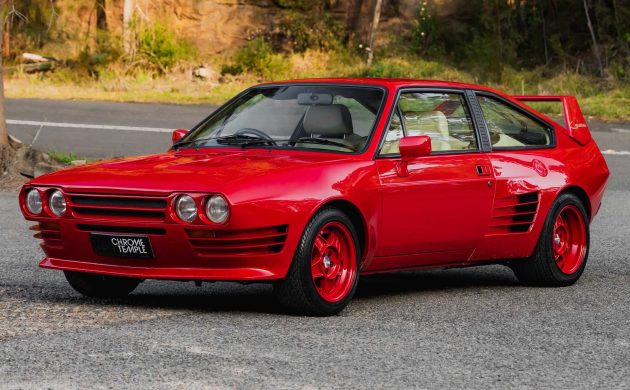
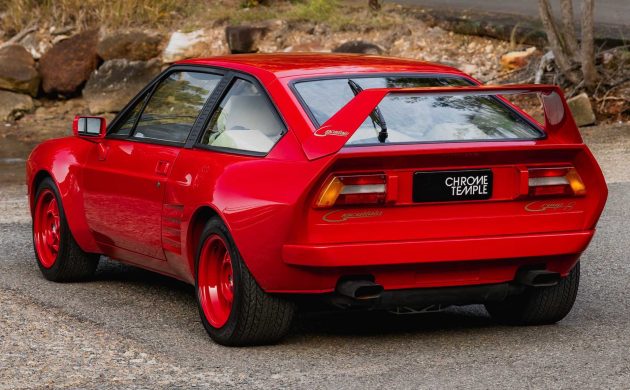
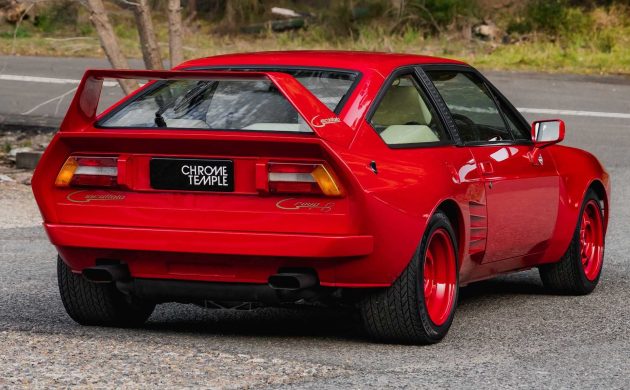
Paul Halstead approached Alfa Romeo when developing the Group B, endeavoring to sign a contract for the company to supply bare Sprint bodyshells. Alfa refused point blank, which would have discouraged lesser mortals. However, undeterred, Halstead began buying cars at retail directly from dealerships and shipping them to the Giocattolo factory, where the magic began. Once cars arrived, workers removed the engine, transmission, rear suspension, brakes, much of the interior trim, and every panel forward of the windshield. They then sold these surplus parts, providing additional revenue for Group B production. With the body reduced to a bare shell, they cut away the floor in the rear passenger compartment, ready to install a mid-mounted engine. They then bolted on new exterior panels made from Kevlar composite, including enormous fender flares, a rear wing, and a more aggressive front spoiler. This Group B is #4 of the 15 production examples, ordered by its first owner in Rosso Chiaro. The seller believes that the paint is original, although I wouldn’t be surprised if prone areas like the front spoiler have been touched up. The fender flares are a practical feature, helping to house the unique three-piece 15″ Simmons wheels that were standard equipment. The ones on this car are color-matched, giving the car a striking appearance. The panels are as straight as an arrow, there is no rust, and the glass is clear.
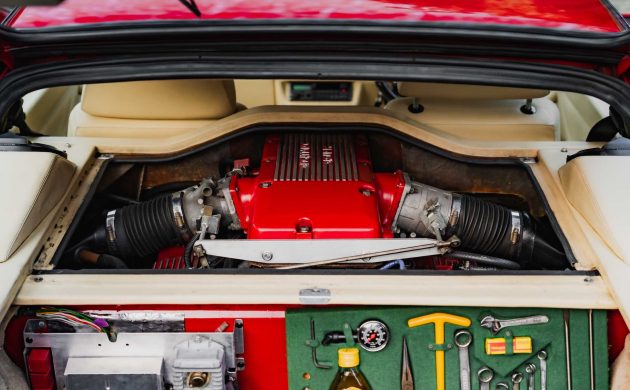
Australian Alfa Sprints received a 1.5-liter four-cylinder engine, sending 105hp to the front wheels via a five-speed manual transaxle. Halstead envisioned a faithful recreation of Alfa’s Group B prototype, with a mid-mounted 2.5-liter V6 sending power to the rear wheels. If the company opposed supplying bodyshells, that was nothing compared to its attitude toward supplying engines. The answer was a resounding “No,” and it was non-negotiable. That’s where the Giocattolo story becomes genuinely interesting. The Italian marque may not have wanted to play ball, but Holden was very accommodating. It saw the benefits of a Supercar powered by one of its V8s, and immediately signed a supply contract. The V8 wasn’t any old engine. It was the same fuel-injected 5.0-liter powerplant homologated for International Group A Touring Car Competition. In its factory form, it developed a fairly healthy 241hp and 280 ft/lbs of torque. Giocattolo “breathed” on the motor, upgrading the camshaft, pistons, fuel injectors, and installing a dual throttle body. The work paid dividends, boosting power and torque to 295hp and 369 ft/lbs. The next piece of the puzzle was the transmission, and the solution’s cost hurt the Group B’s sales potential. Halstead decided that the transmission that worked for the Pantera would be ideal for the Group B, so he imported the five-speed ZF manual transaxle. The sticking point was that each transaxle cost $30,000 landed, which is why the Group B’s sticker price was an eye-watering $92,000. The company wasn’t going to throw everything together and hope for the best. Barry Lock designed and fabricated a subframe to house the motor and transaxle, adding double-wishbone rear suspension, enormous four-wheel disc brakes, and upgrades to the standard front suspension to improve the handling, creating a “complete” package. Was the effort justified? You’d better believe it! Giocattolo claimed a 0-60 mph time under 5 seconds and a ¼-mile ET of 13.2 seconds. These weren’t idle boasts, as several contemporary reviews matched or beat both figures. The company also claimed a top speed of 160mph, although it is worth noting that since the rear wing was more effective than the front spoiler, the steering would become very light at that speed. I don’t know about you, but I prefer my wheels to be firmly in contact with Planet Earth when clocking 160. It is worth noting that while the power and torque figures aren’t outrageous, the Group B weighed a mere 2,392 lbs. With so little mass to move, this classic was always going to be a potent package. The seller says that this Giocattolo is mechanically original, although it received a mechanical refresh and a professional engine rebuild in 2017. The car runs and drives extremely well, and is a turnkey proposition, not a garage queen.
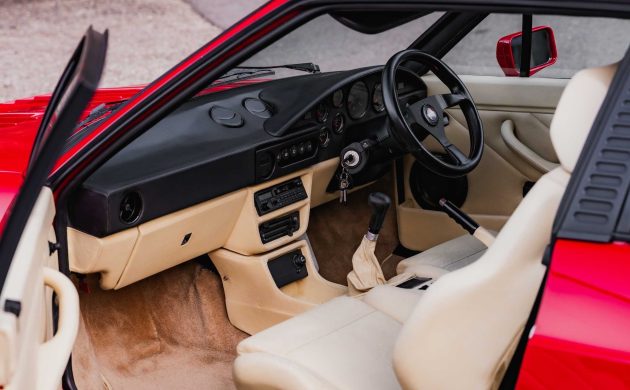
Giocattolo lavished plenty of attention on the Group B’s interior, reupholstering the rear cargo area, fitting body-hugging cloth-trimmed Recaro seats, and a bespoke VDO gauge cluster. This car’s first owner raised the bar, ordering this beast with Cream leather trim. It exhibits wear in a few spots, but the issues are extremely minor and don’t detract from the overall presentation. It retains its original three-spoke leather-wrapped Momo wheel and radio/cassette player, and the original tool kit includes a correct bottle of Bundaberg Rum and two shot glasses! One motoring journalist suggested that once you’ve sampled the Group B’s performance potential, the Rum may be medicinal to calm the nerves. Overall, the interior is comfortably acceptable for a driver-grade classic of this vintage.
The 1988 Giocattolo Group B shares many attributes with the DMC DeLorean. Both featured body panels made from unusual materials, and both benefited from engineering input from individuals with Formula 1 experience. Unfortunately, both also left their creators broke. The difference is that while the DeLorean delivered performance that could be diplomatically described as modest, the Giocattolo left people weak at the knees. It was a genuine Supercar that has become legendary in the Australian classic scene. Sadly, the two men behind the project, Paul Halstead and Barry Lock, have passed away, and there is no chance that anyone will resurrect Giocattolo. So vehicles like our feature car have to carry the torch and leave anyone who’s experienced one to ponder what could have been if the project hadn’t failed financially. The Group B possessed performance that matched almost any European exotic available at the time, but cost Australian buyers considerably less. I clearly remember seeing my first one and knowing it was love at first sight. Those feelings haven’t diminished, but short of a lottery win or the sudden appearance of a wealthy relative, ownership will remain a dream for me. Still, as long as there’s life, there’s hope.

Adam… All I can say is wow!!! One of the reasons I enjoy Barnfinds, especially on a Sunday morning with a cup of coffee in my hands, is reading about, and learning about new things. I’ve never heard of the Giocattolo Group B, and I was a car crazed senior in High School that year. I’ve also never heard of Paul Halstead either. He seems like the kind of guy that gets a vision and nothings going to get in his way. This is a really nice looking car too, the paint scheme and interior are beautifully done. Its a shame they didn’t make more. Yes, that price is eye watering, but I don’t think these come up for sale very often on Craigslist or Facebook Marketplace. I also like how you likened this car with the DeLorean. I’m sure, knowing the performance history John Z. DeLorean had with Pontiac, he surely wanted his car to perform a lot more like this one and sadly didn’t. This is an amazing find, and a great history lesson too Adam, thank you for your research and the great write up. Now… Back to my coffee ☕️ .
Put me in the “never heard of it” camp. Very interesting car, back-story, and write-up. Excellent job Adam.
Redundancy being what it is, all we can say is what we’ve all said here, Adam. Fascinating stuff, sir.
A tale of try, and try again… love how he just paid full pop for the Alfa, only to strip it, and sell everything else off it lol. What a machine. 😎
Certainly no Barn Find here, but wow, what a striking car that I’ve never heard of. Thanks Adam!
Much as I like the red color I would like to see it in black, like the mad max movie car.
Cool car, lots of red.
The headlights look like how I imagine a guppy would look if it had 4 eyes.
Steve R
It’s different and pricey. It does look on the smaller side.
imagine the collection you could put together with US$386,500