

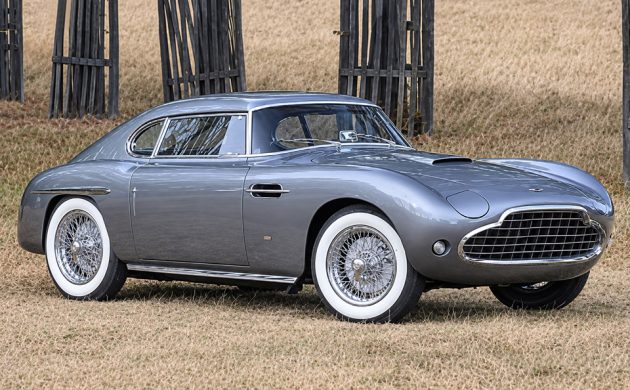
Alfonso Balbo was one of a few dozen Italian artisans capable of conjuring metal into fabulously fluid shapes in the early 1900s. His first endeavor was chassis and body modification, mainly for Lancia. By the 1920s, Balbo was concentrating on coachbuilding, working out of a factory in Turin. When Balbo passed away from a stroke in 1926, control of his company transferred to a long-time business partner, Carlo Follis, who retained the corporate name. Elaborate interiors and baroque trim became a hallmark of Carrozzeria Successori Balbo’s stylistic approach – not everyone’s cup of tea, which is why Balbo remained less well-known than many of the firm’s contemporaries. Today, it’s easy to appreciate a car that doesn’t look like the last SUV you saw, and on that score, Balbo delivers: a collaboration with Siata in 1954 resulted in nine bespoke 208 CS Berlinettas, one of which will be sold by Gooding Christie’s at Retromobile in New York, November 20th-21st. The estimate is $1,500,000 to $2,000,000 – a bank-breaker for sure. While none of us is likely to rush to Javits Center with our checkbooks in hand, it’s worth contemplating the fate of Lot #38 – will it sell within the estimated range? Or not?
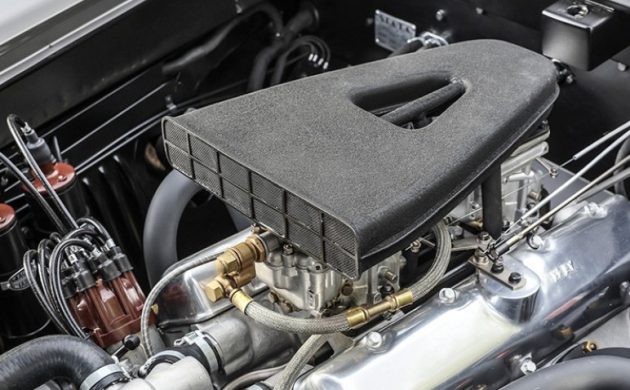
As obscure as Balbo was, Siata was nearly equally so. Excluding the weird Siata Spring, the company made fewer than 150 cars from 1949 through 1970. Granted, much of its business was devoted to making performance parts and tuning engines, but still, finding a Siata of any type today is a trick. The 208CS evolved after Fiat and Siata collaborated to produce a 2.0-liter, aluminum-block, eight-cylinder engine – the Tipo 104, or Otto Vu. This engine was destined for a luxury sedan, but its lack of horsepower called for a less matronly application, leading Fiat to develop its 8V sports car. The 8V was spritely but it was no racer. Siata stepped in with a tubular chassis, aluminum panels, wind-cheating styling, a spare interior, and upgraded engine parts. The new model was christened the 208CS. Early cars were constructed by Stabilimenti Farina; Balbo made nine; and a few others were given to Vignale and Bertone. This example boasts a thoroughly-researched provenance, several concours wins, and a recent restoration. Its 2.0-liter V8 breathes via twin Weber carburetors, producing 110 bhp. A five-speed manual gearbox, four-wheel drum brakes, and independent suspension promise an entertaining driving experience.
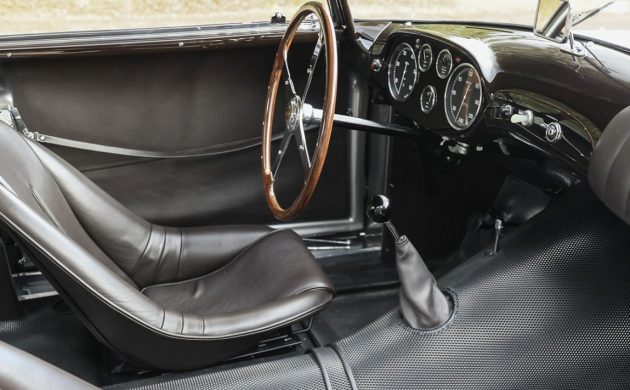
A tobacco-brown interior is an elegant counterpoint to the anthracite exterior – enough so that this example won its class at this year’s Concorso d’Eleganza at Villa d’Este, also receiving an award for Best Italian Berlinetta. That’s on top of two awards at the 2025 Pebble Beach Concours d’Elegance. The flat-plane four-spoke wood steering wheel, wide-eyed Jaeger gauges under the sculpted metal dash, and lavish interior brightwork are reminders of Italian craftsmanship at its best.
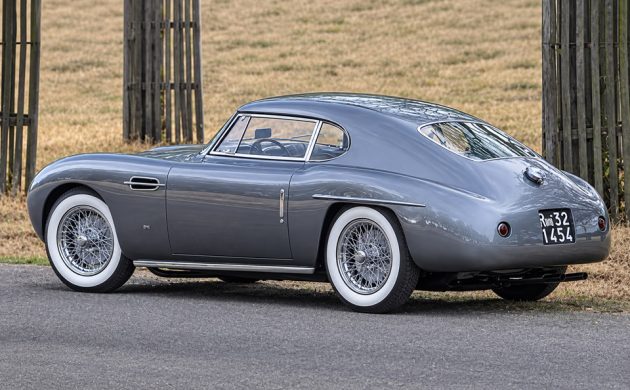
Balbo’s quirky side can be seen in the rear fender strake (why?!), the vertically-situated door handle, and up front, a ponderous grille. The elongated roof line – while looking a bit ungainly – aided the car’s aerodynamics. Chassis CS 072 will be sold still wearing its “Roma” license plate, and this will be the third time in five years that it’s been seen at auction. In 2021, Gooding Christie’s sold this same car for $1,627,500. At that time, it was wearing its original colors (blue over tan). In 2023, it was offered by RM Sotheby’s, where it failed to sell. Meanwhile, this stunning 208CS bodied by Vignale sold for a mere $1,407,500 last year at Gooding’s Amelia Island event. Based on the change from factory colors and recent results, I’ll hazard a guess that Chassis 072 won’t quite make the low end of its estimate. What do you think?

About all I can say — besides “Great work as usual, Michelle!” — is the 8V and its Siata derivative were often not clad in what might consider the best of Italian coachwork. The Fiat body was, well, ungainly, the Ghia “Supersonic” was either gorgeous or overdone according to taste — I love it, but am not sure why — and the rest were all over the place, design-wise.
I like the Balbo design, though it certainly merits its share of criticism. Looking at the Gooding auction photo, I think I prefer the original color scheme and blackwall tires. As it is, the car now looks too much like a Concours Winner and not enough like a Real Car to suit me.
What a find! Keep it up, Michelle!
Wow, incredible and a design way ahead of it’s time.
So beautifull!!!!