

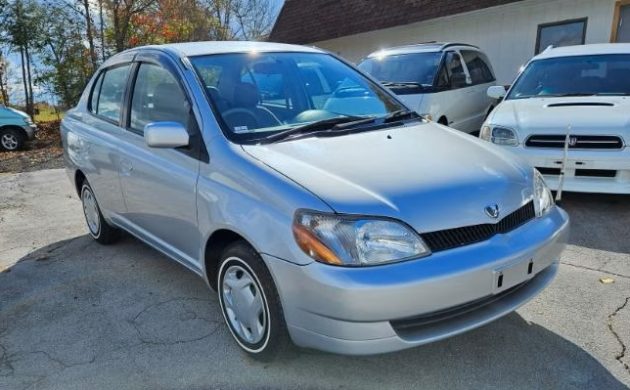
Economy cars may not be the first choice for many of us who prefer high-performance vehicles, but we can all appreciate a survivor – especially one that packs an unusual combination of features. The Toyota Echo is a vehicle that isn’t quite a household name in the company’s economy car lineup, slotting behind nameplates like the Tercel and the Corolla. However, it has the same reputation of those models for durability and exceptional fuel economy. The Echo shown here on the Postal Cars website is a Japanese market import known as the Platz, and it features all-wheel drive and a 5-speed manual.
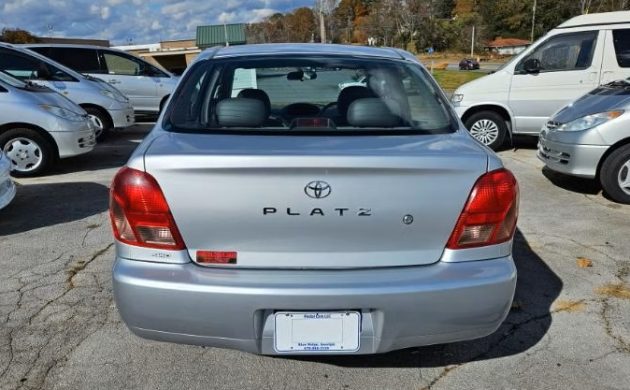
The Echo was a surprisingly competent car in the U.S. market, offering a unique combination of base model thriftiness and outstanding packaging. The narrow footprint may fool you into believing it’s tiny, but inside, there plenty of room for four adults – five if you squeeze the last one in. Toyota offered the Echo in the U.S. with a 108-hp, 1.5-liter four-cylinder engine. That doesn’t sound like much, but it was surprisingly quick when compared to other economy cars of the same era. And it achieved this on 87 grade octane while going on to record almost 40 miles per gallon.
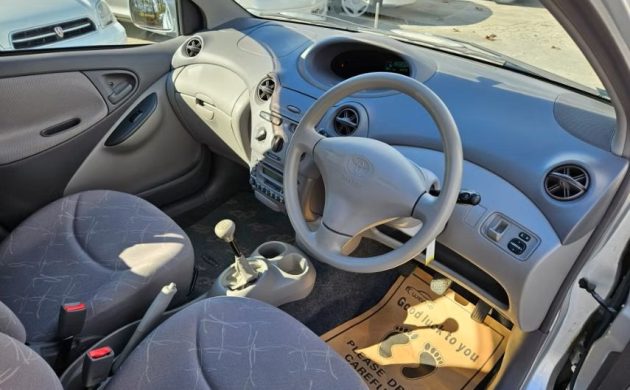
The 5-speed manual was praised when new for being buttery-smooth, if not particularly racy. But it could reach 60 in around 8.5 seconds, faster than both a Kia Sephia and the Dodge Neon as noted in a Car & Driver test when the Echo was introduced. The only real complaint about the Echo was its road-holding abilities, that it wasn’t all that competent on the skidpad – which makes me wonder if this Japanese-market model, with an all-wheel drive system not offered stateside, may address this one shortcoming. And with just under 30,000 original miles, this one looks absolutely mint inside and out.
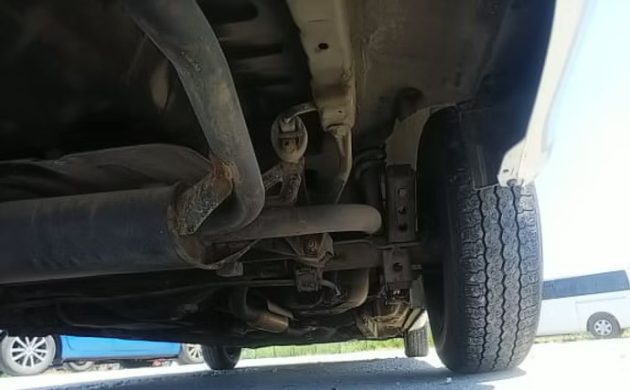
Tiny tires are a reminder of this car’s true purpose: low-buck commuting and reliable running, with an annual maintenance budget that makes supercar owners blush. The Echo, or Platz as it’s known here, was a compelling offering when new that didn’t stick around long in the U.S. With the 1NZ-FE timing chain engine known to go the distance without needing replacement and just basic servicing, this low-mileage import will likely outlast anyone who owns it next. The AWD may not turn it into a track car, but it does add a layer of intrigue not often seen in this vehicle segment. The selling dealer is asking $8,900.


Thanks Lavery. They’d probably have sold alot of these North of the border.
Interesting car! Good on for a contract rural mail carrier with a small number of deliveries.
Insofar as being a track car, for the money a well used Miata might be a better choice.
Someone out there is going to plotz at the sight of this Platz.
I was going to say, the first thing I thought of was the Yiddish word “plotz”. Probably not something you want people associating with a car you’re trying to sell them.
The seller doesn’t describe the car in much detail. There’s no mention of the car having air conditioning or power windows.
If you’re blue and you don’t know what to drive,
Here’s an idea to drive you bats,
Puttin on the Platz!
Wrong-hand drive and almost fast enough
To outrun gnats,
Puttin on the Platz!
The jokes write themselves! I imagine that the corporate types thinking up model names for Japanese cars do this kind of oblique teasing thing deliberately (ex: Starion, Justy, Stout, Toyopet, etc…). A good way to get the car-buying public to focus on the product….
The handling of the North American Echo came down to packaging. In other markets it came with things like a loaded torsion beam in back, essentially an integrated rear sway bar. Yet in North America they didn’t get it. The Scion breathren did, so taking the rear torsion beam off of a first generation XB or XA bolts right up.
Another couple oddities, the front control arms of the first generation xB, xA and MR2 Spyder are all the same when you look at a Toyota parts website. Yet if you look at the Echo, they only fit the Echo. Yet you can take a Scion front control arm and again it’ll bolt right up. The difference? Slightly firmer bushings.
Last but not least, the 14×5.5 wheels and 175/65 s-rated tires– not even h-rated (130mph) but s-rated (112mph) tires to keep rolling resistance down for economy. I mean hey, it worked.
But I grew up with an Echo and playing Gran Turismo where I recognized the Vitz RS was the same car as my dads commuter coupe. And now that it’s been mine since 2006, I’ve made it a mission to help owners make these things what Toyota could have done, and didn’t. Many Scion parts are bolt-on upgrades to the Echo. The suspendion, seats, more aggressively geared transmission– all of them make it more lively than the Scions because it weighs 150-300lbs less with the same engine.
Pretty sure this isn’t a 1.5L car, by the way. As far as I know, AWD Platz, Ist (the Scion xA) etc at most had the smaller 1.3L 2NZ-FE, if that. I’m not even certain the AWD’s offered in manual, honestly.
I have 2 Echoes, one for summer (rust free) one for winter. Economical, reliable and durable cars!
A really nice car! I wish I owned this! These are great cars! 👍🏻
We rented an Echo in the early 2000’s when my wife’s Taurus was in the body shop and it was a decent little car. It wasn’t anything I wanted to keep especially when the Taurus had the 220hp Duratec V6 but it got me through for a week or so. A five speed would be fun too.
What year is this car, Jeff?