

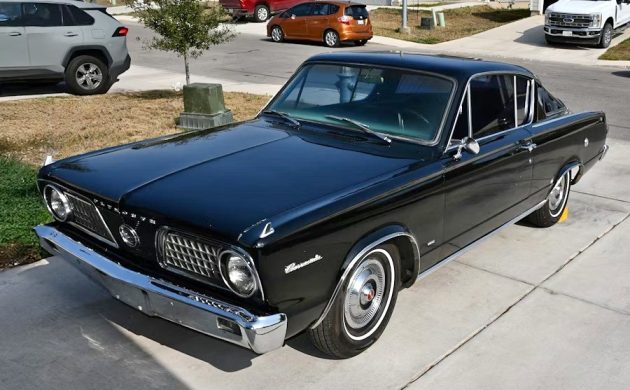
There is something quite appealing about classics that are genuine sleepers. Take this 1966 Plymouth Barracuda as a prime example of the breed. It presents acceptably as a driver-grade classic, and its wheel-and-tire combination is quite conservative. However, hiding under the hood is a V8 that gives this Barracuda teeth. The seller planned a cosmetic restoration, but fate has thrown a spanner in the works. Therefore, it is set to head to a new home with an enthusiast who can do the Barracuda justice. I must say a big thank you to Barn Finder Hans H. for spotting the Plymouth listed here on Facebook Marketplace in Barrington, Illinois. You could drive this beauty home for $18,000, and when you assess the potential, you will probably agree that someone is getting a lot for their money.
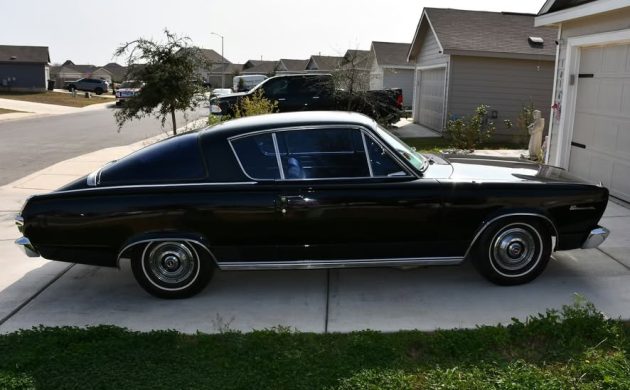
Although the Mustang is considered by many to be the first pony car, Plymouth beat Ford to the punch when its Barracuda hit the market two weeks before the first Mustang left the lot. The First Generation remained in production until 1966, with our feature car rolling off the line in the final year. The seller confirms they are its second owner, and that the car has spent its life in Texas. That state’s dry climate has effectively protected the steel, leaving the Barracuda rust-free. The Code B Black paint looks okay from a distance, but a close inspection reveals flaws and defects. However, with no appreciable dings or dents, the Plymouth remains presentable for those seeking a survivor-grade vehicle. The aftermarket tinting looks menacing and could be a positive attribute. The film utilized is typically extremely robust, making it hard to shatter automotive glass. This quality is particularly relevant when we focus on the rear window, as replacements are typically quite expensive. I have seen this type of tint in action, and it’s pretty impressive. The trim looks acceptable for a driver-grade classic, and the steel wheels with their sparkling covers give this classic an almost conservative appearance.
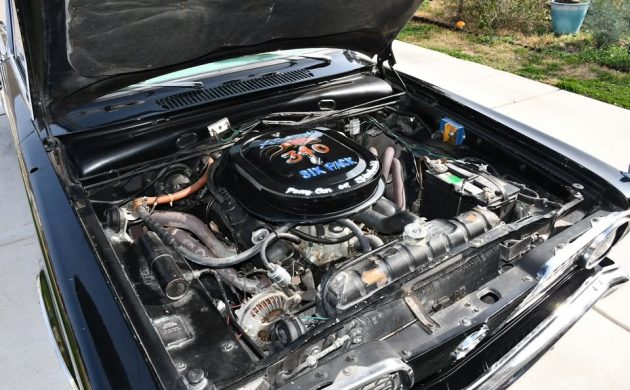
The range-topping motor available to 1966 Barracuda buyers was the 273 V8, producing 235hp and 280 ft/lbs of torque. It offered very respectable performance, but this Barracuda offers so much more. Its engine bay houses a 340ci Six-Barrel, a motor that wasn’t available in the Barracuda until 1970. In standard form, it delivered 290hp and 345 ft/lbs of torque, but the headers and embedded video in the seller’s listing suggest it may feature a few upgrades that would boost those figures. The builder teamed the 340 with a four-speed manual transmission, a combination that should guarantee rapid acceleration. Although not stated specifically, I believe that this Plymouth is a turnkey proposition.
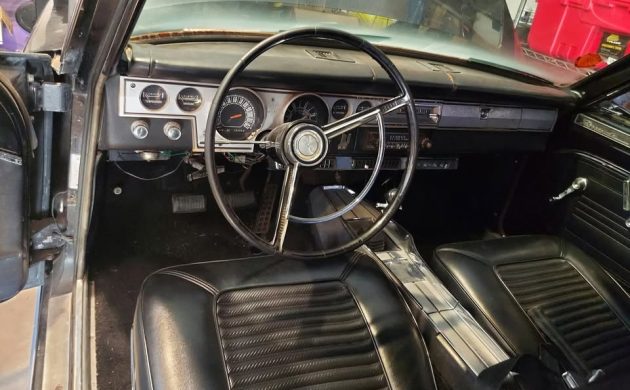
I admit I was surprised when I inspected the seller’s interior shots. I expected that life in Texas might have baked much of the interior trim. However, the Black vinyl looks surprisingly good, with no splits or other problems. The same is true of the carpet, and the dash is clean. The pad has waved the white flag, and while a replacement might cost almost $500, it is the interior’s most pressing need. Some armrest plastic is discolored, but it might respond positively to attention with a high-quality plastic paint. The car originally featured air conditioning, but the compressor and some engine bay components are AWOL.
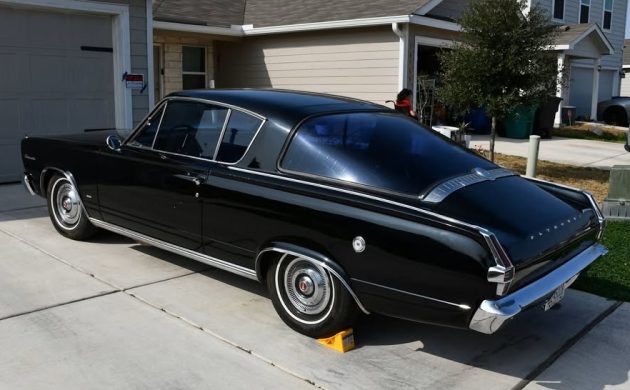
This 1966 Plymouth Barracuda offers its new owner a world of possibilities. Its rock-solid nature and tidy presentation should allow them to enjoy the car immediately as they contemplate the path they would like to pursue. They could grab the baton and run, cosmetically refreshing the car and adding touches hinting at its performance potential. I’d perform a faithful cosmetic restoration, but leave its overall appearance as “stock” as possible. That way, it could spring a surprise at any “Traffic Light Grand Prix,” or set tongues wagging when I lift the hood at a Cars & Coffee. Which approach would you choose?

My favorite year. Love the engine swap. Dash is cracked, windshield might be delaminating, don’t like the tint but these are easy fixes. A worthy prospect.
Buy one allready !!!
Worth a look if you live in the area. Seems like a pretty decent car for the money with some good upgrades.
Steve R
Gotta push back on “ sleeper”. Anything still on the road from 60 years ago can’t be a sleeper any more. Maybe in the 60s. Certainly on a used car lot in the 70s. But everybody is swinging around to look at a 1966 model car.
Respectfully disagree, the term sleeper has nothing to do with the age or year model of the car and everything to do with being surprised by the performance vs the appearance and perception of the vehicle being a ho hum vehicle.
Nobody at the traffic light 🚥 is guessing a six pak 340 and a stick shift 🏁 sweet swap for sure 👍
That tint will get you pulled over in a number of states.
…it USED to… but like so many laws it isn’t enforced. In 1965 driver’s training we were taught to make eye contact with the other driver…. what happened to that ?
Another thing we were taught was that at intersections there would be clear view lines free of bushes, signs, etc….. also GONE….. Some intersections are just plain dangerous and calling the law gets you a circle of ”not our authority”….
Dad had one……….but with the 273 v8 and automatic transmission. Still, it was a nice car that ran well and never gave him any trouble. And afterwards, he regretted selling it.
Love this classic American body style. Might save the stocker rims for shows and get some steelies with some wider rubber for driving, but I am a handling/cornering guy, not a quarter miler. Funny how window tint tickets were a thing for a while, now it is front license plates (so their scanners work). The side view pic you can see opposite side window frame, so don’t think this would get ticketed in CA. (no elec windows, so you can’t creatively lower the windows real quick if the m/c cop comes up between at a traffic light)
Love this because it is not just another Camaro or Mustang. Good price for some unique hardware.
it’s neat but it’s a shame those fender liners were cut for headers. i would have sourced out some manifolds. be costly to fix that.
Hairyolds68, I agree with you on the headers. Besides butchering the fender liners, it makes it really unpleasant to work on it if you need to have it running. Also makes a mess if you drive over a road that’s at all sloppy. Otherwise, a nice 65 Barracuda with a 340 and a 4 speed.
I don’t know what is going on with B/F today but there sure are a lot of cars today that I like. They all seem priced right and mostly models that I wouldn’t even consider. I did have a birthday last week maybe I am just getting older and wiser.
Cool put together package . But black on black with no A/C would limit my corouseing around to 12am at night till 6 am in morning. Dracula shift . Other wise roast !
What a difference 4 years makes. If this were a ’70 with a 340 6 BARREL (Plymouth, not a Six-Pack!), it would have sold in a second for 4 times as much. Instead, this really nice car flounders for 5 weeks.
Lovely looking car. My favourite gen Plymouth Cuda are the 1965-1970 models.