

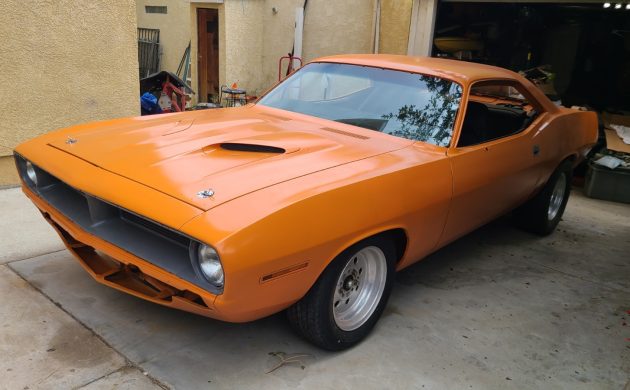
If I were to pick a car from the 1970s to park in my garage, any classic from Chrysler’s E-Body range would be a strong contender. The styling is bold and aggressive, with an inherently purposeful feel. This 1970 Plymouth Barracuda is one such car. It is an unfinished project featuring a healthy 440ci V8 under the hood. However, it is a case of “what you see is what you get,” leaving the buyer to source a few parts to complete the build. I must say a big thank you to Barn Finder Curvette for spotting the Barracuda listed here on eBay in Granada Hills, California. The seller set their BIN at $30,000, with the option to make an offer.
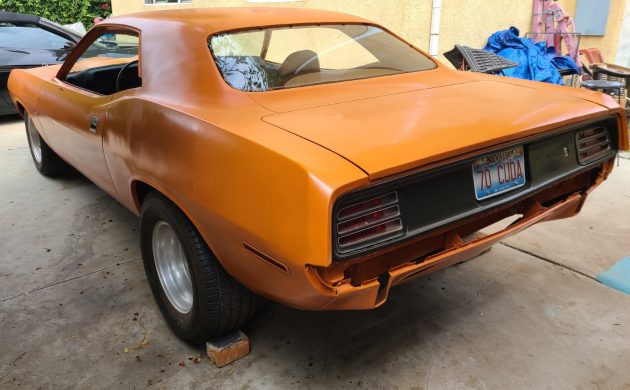
This first-year E-Body Barracuda has spent its life in California, which is good news for potential buyers. The seller provides several underside shots confirming the car’s rust-free condition. Interestingly, the seller says that a previous owner replaced some panels and the trunk pan, emphasizing that this wasn’t due to rust. The Fender Tag confirms that the Vitamin C Orange cloaking its exterior is correct, and the seller states it requires a cut and polish. Still, I’m wondering whether there might be more to achieving excellent presentation than that simple process. The image above seems to reveal panel imperfections in the rear quarter and the door. These could be a photographic illusion or a sign of low-quality steel preparation. Only an in-person inspection will reveal the truth, but potential buyers may need to brace to strip the existing paint to address potential panel shortcomings. As the seller states, this Barracuda is a case of “what you see is what you get.” Therefore, the new owner faces a shopping list of parts, including bumpers, some trim and badges, and a few pieces of glass. It is also worth noting that while the Plymouth wears alloy wheels in many of the images, the deal includes the steelies and “half moon” hubcaps in the final photo of this article.
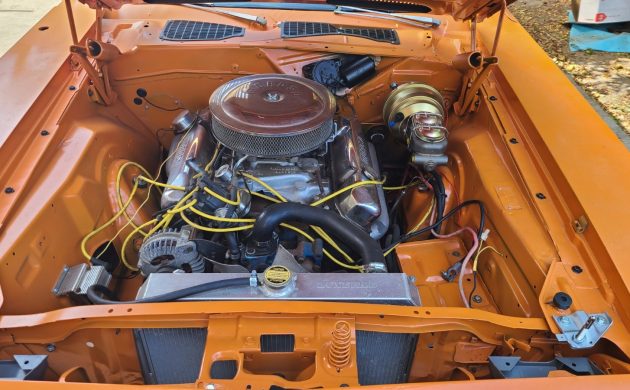
Decoding this Barracuda’s VIN reveals that the original owner ordered this classic with a 318ci V8 under the hood. It is no longer numbers-matching, but its mechanical specifications are pretty mouthwatering. Starting at the front, the engine bay houses a 440ci V8. Bolted to the motor is a three-speed A-727 automatic transmission, feeding the power to an 8¾” rear end. The car also features power steering, and the seller has upgraded the brakes to power-assisted front discs. The engine inhales through a Holley 750 carburetor, with spent gases exiting via Hooker headers and a new dual exhaust. Throw in an aluminum radiator, a trunk-mounted fuel cell, and an HEI ignition, and this should be a pretty potent package. The Plymouth runs, but doesn’t drive. A few tasks await the new owner, although none appear particularly complicated. They need to install the supplied metering block, wiring, a driveshaft, and brake lines. There are no major tasks, meaning that reaching a roadworthy state could be a realistic short-term goal.
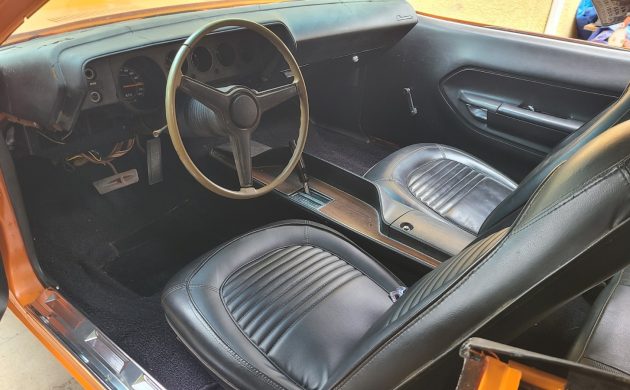
As with its mechanical components, this Barracuda’s interior is close to complete. Featuring Black vinyl trim, bucket seats, and a console, the general presentation is pretty impressive. I believe it is freshly retrimmed, but a few tasks are awaiting the buyer. The dashpad exhibits some pretty bad cracks, and while a cover would conceal the problem, this classic deserves better. The sticking point is the price, because high-quality reproduction pads retail for over $1,000. The wheel is cracked, representing another expense. However, a relatively brief online search on typical auction sites unearthed several pristine secondhand wheels for under $250, which isn’t as painful as the cost of the pad!
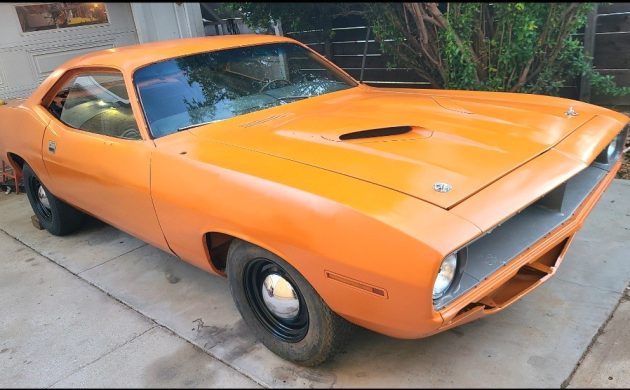
I might be an E-Body fanboy, but that doesn’t mean that I can ignore potential flaws or problems. This 1970 Plymouth Barracuda looks promising, and its mechanical specifications should deliver a pretty rapid motoring experience. However, I would recommend an in-person inspection to determine whether the panel imperfections seemingly visible in the listing images are real or an unfortunate illusion. It could still be a stunning classic demanding respect, but the path to that goal might be longer than a brief glance suggests if it involves further sheetmetal massaging. Do you agree?

Nice car ! Good one !
Maybe I’m reading things wrong, but the VIN indicates a 383 (G) and the fender tag indicates a 318 (E44)?
G is correct for a 318 in 1970.
Adam.. good write up on the Mopar. Since is a Barracuda BH23 not a Cuda BS23 and it came with a 318 and someone installed a mid 70s low compression 440. I notice corporate blue paint on it. Anyone who looks at it should look by the distributor tab to see if its stamp HP if not then you know. This is a project car. Needs another $25,000.00 to get it right. No bumpers? At least the seller said what it needs. That interior needs plenty of work. Also notice no heater blower no hoses hook up. I can go on and on. It looks like a good soild project. If someone wants it I would go with cash and start at 18,000 and see what happens. I bet it would sell at 25,000. Good luck to the next owner! 🇺🇸🐻
Just another big block swap and the factory stock aspect is long gone. So it’s a street rod that’s not road worthy at this point.
It’s maybe worth this asking price once you get it very presentable.
It was just listed on eBay with a $28,000 BIN or best offer. That listing ended 6/25/2026. When everyone talks about the high cost of living in California this is a good example of how everything keeps getting more expensive.
Steve R
Asking price has now been lowered to 27K. Maybe in another month, it will priced to actually sell.
why the gm master cylinder? that was a drum brake car?
The ad reads like they used a disc brake conversion kit, many kits source parts based on price and availability, not originality. That makes it difficult for the cars owner to find replacement parts such as calipers, rotors, pads and other small parts.
Steve R
30K must be a misprint. That car needs too much work to get it where you can find out if the engine and trans are any good.
That orange Rustolum paint turns me off . No thanks
Look closely at paint. Not the best job at latches, and paint on things that should be bare metal. But much worse is trunk. Pic with mat rolled back shows trunk pan riveted, not welded. That’s a structural integrity issue. And why a fuel cell in a convertible? Buyer beware.
This car isn’t a convertible.
The left rear quarter photo looks like a decent panel with a reflection showing. Notice the garage window reflection.