

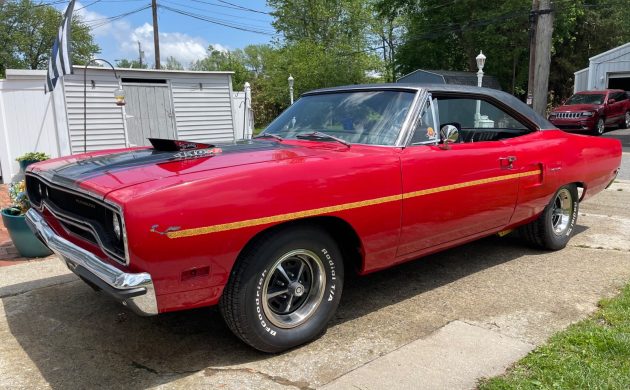
Some classics hint at stunning performance, but fail to live up to expectations. This 1970 Plymouth Road Runner won’t disappoint. Its engine bay houses a 440ci Six-Barrel V8 with power and torque to burn. It presents nicely following a restoration several years ago and is ready for action with a new owner behind the wheel. I must say a big thank you to Barn Finder Curvette for spotting this stunning Road Runner listed here on eBay in Salem, New Jersey, for $46,500 OBO.
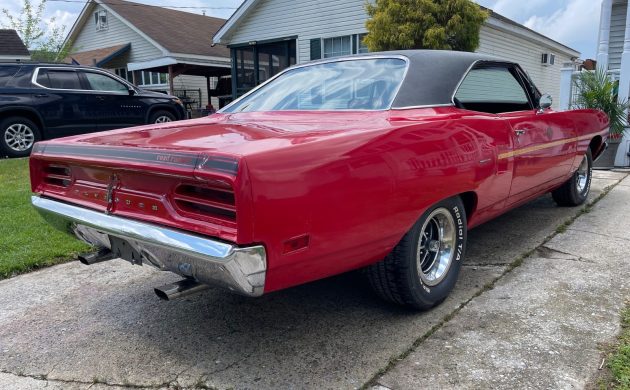
Life is full of contradictions. While I sometimes lament getting older, I also wish I’d been born earlier so I could have appreciated the muscle car era as an adult. I can only imagine how exhilarating it would have been to walk into a dealership in 1970 and drive away in this Road Runner when it was shiny and new. Fifty-six years have passed since the first owner did that, and while time hasn’t stood still, it has treated this classic kindly. The seller bought the vehicle about ten years ago as a roller and refreshed it, smoothing the panels before applying fresh Rally Red paint and a contrasting Black vinyl top. They admit it is no longer pristine, but the overall presentation ticks the boxes for a high-end driver. There are no dings or dents, the vinyl is in as-new condition, and the underside shots help to confirm the car’s rust-free status. This Road Runner features an Air Grabber hood, with most of the correct air cleaner assembly included. The trim looks excellent, and the glass is clear.
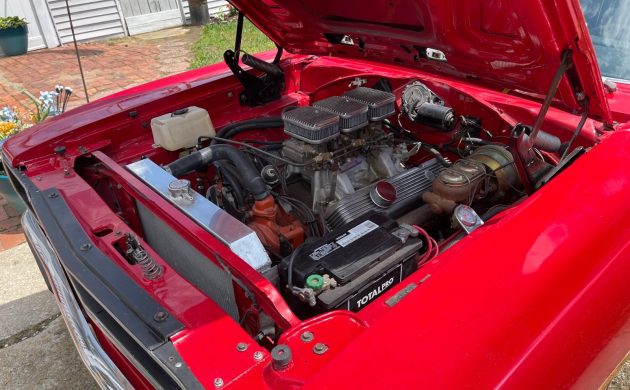
The Road Runner meant business from the start, and even in its most conservative form, no one questioned its muscle car credentials. This beauty left the line equipped with the entry-level 383ci V8, producing a factory-quoted 335hp and 425 ft/lbs of torque. Of course, almost every muscle car owner craves more ponies, and this Plymouth delivers. Since the seller acquired it as a roller, their mechanical updates didn’t destroy an original survivor. The engine bay houses a professionally built and balanced 1970-coded 440ci HP V8. It features an upgraded camshaft, but its crowning glory is the correct aluminum Edelbrock intake and the Six-Barrel carburetor setup. This combination was available to 1970 Road Runner buyers, placing 390hp and 490 ft/lbs of torque at the driver’s disposal. The seller installed a four-speed manual transmission and a 4.56 Posi rear end in 2016, along with an aluminum radiator, air shocks, and a dual exhaust using the original manifolds. Add power steering and power front disc brakes, and you have a complete package. The seller has clocked only around 150 miles since the build ended and says this beauty runs and drives exceptionally well.
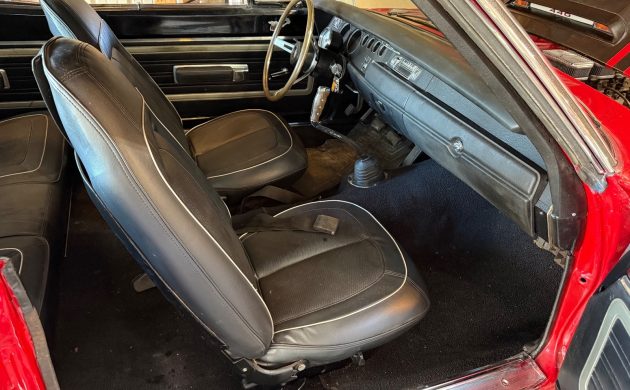
The refurbishment included a complete retrim, and its lack of use since then makes it seemingly impossible to fault. The upholstered surfaces and carpet are wear-free, while the dash and pad are spotless. The only visible aftermarket addition is a Sunpro Super Tach II, though I question why it was needed, since this Road Runner features the desirable Tick-Tock-Tach. The buyer also gets a sports wheel, a pistol-grip shifter, and a factory AM radio/8-track player.
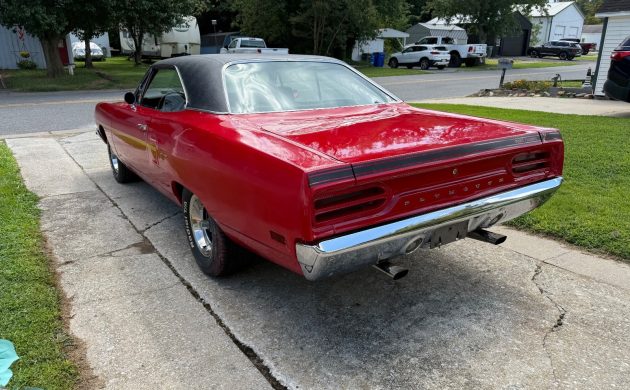
While some enthusiasts focus on original, unmolested classics, others will compromise for something special. This 1970 Plymouth Road Runner isn’t numbers-matching, but the V8 under the hood likely makes up for it. The factory 383 would have been fast. This motor is simply faster. The listing statistics confirm that this Road Runner has generated considerable interest. Since the BIN figure looks realistic, I won’t be surprised if it finds a new home fairly quickly. If you’ve long wanted a classic muscle car, could this Plymouth be a contender?

Based only on pics, this looks quite attractive. I’m not sure the aluminum 6 barrel manifold is correct as I recall Edelbrock was having trouble keeping up with production early in 1970 and they moved to cast iron because of it. Am I correct? But who cares given this is NOM anyway and the aluminum version weighs a lot less. Of more importance is whether the body reinforcements were upgraded like factory to handle the additional torque of that tweaked 440-6.
With the 4.56 rear end and no 5 or 6 speed overdrive tranny, this is a car for local driving only. I suspect the Sunpro Tac was added because the original tac won’t work with electronic ignition. You can get a conversion kit, but you have to pull part of the dash and the instrument cluster to put it in. I did just that to my 70 AAR cuda.