

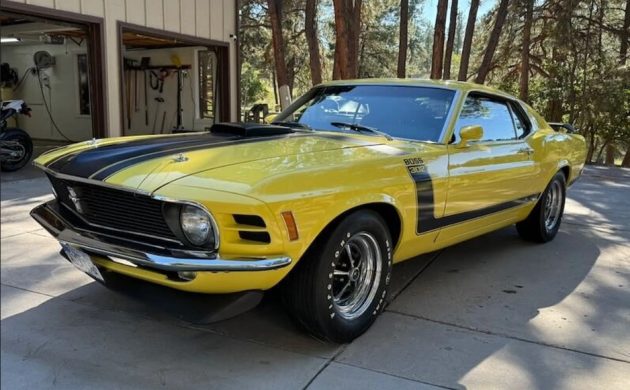
People often say racing improves the breed, which is why vehicle manufacturers remain committed to various types of motorsport competition. Nowhere was this truer than in the cutthroat world of the late 1960s and early 1970s Trans Am Series, when companies committed significant funds and adopted a “win on Sunday, sell on Monday” marketing philosophy. It produced classics like this 1970 Ford Mustang Boss 302. Since it has undergone a Concours restoration, the winning bidder can immediately slip behind the wheel and revel in the performance it will provide. I must say a big thank you to Barn Finder Curvette for spotting the Mustang here on Hemmings in Parker, Colorado. Bidding has reached $40,000, although that figure is below the reserve.
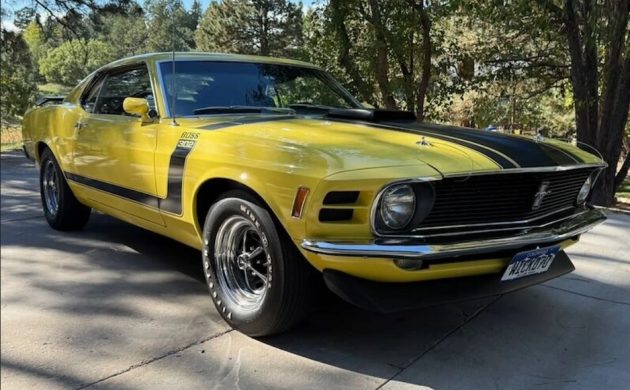
After performing its second major upgrade to the iconic First Generation Mustang in 1969, Ford made a few further tweaks in 1970 to keep the car looking fresh. The company revised the headlights and grille, and deleted the scoops in the rear quarter panels to generally “soften” the appearance. The Boss 302 appeared in 1969, and remained available for the 1970 model year as a homologation special for Trans Am competition. The seller says that this 1970 Boss underwent a Concours restoration, but it is unclear when this happened. The faithful approach included repainting the car in its original Competition Yellow with Black stripes. The exterior shines like a new penny, with no obvious cosmetic shortcomings. The comprehensive image gallery reveals Red Oxide paint on the underside, with no evidence of rust or other nasty surprises. The trim is excellent, and the glass is clear. The included Marti Report indicates that the Magnum 500 wheels are original, although the rear Sport Slat and “Shaker” hood scoop could be later additions.
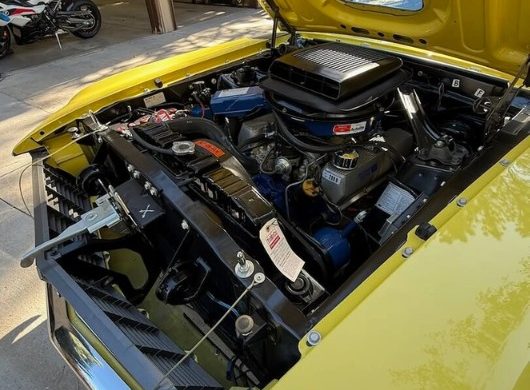
Lifting the hood reveals what set a Boss 302 apart from lesser vehicles in that year’s Mustang lineup. Ford saw a significant benefit in Trans Am competition and produced these cars to homologate the Mustang for the under 5-0-liter racing class. The Boss powerplant featured a high-nickel engine block casting, four-bolt mains, solid lifters, and revised cylinder heads for improved breathing. The company quoted power and torque figures of 290hp and 290 ft/lbs, but everyone knew that Ford had significantly understated both figures. No self-shifting option was available, and buyers were limited to a four-speed manual transmission. This Boss also features power steering and power front disc brakes. The seller believes this Mustang is numbers-matching, although the engine block stamp is illegible. However, the date codes are correct, which is encouraging. They report no mechanical issues, suggesting this Boss is a turnkey proposition.
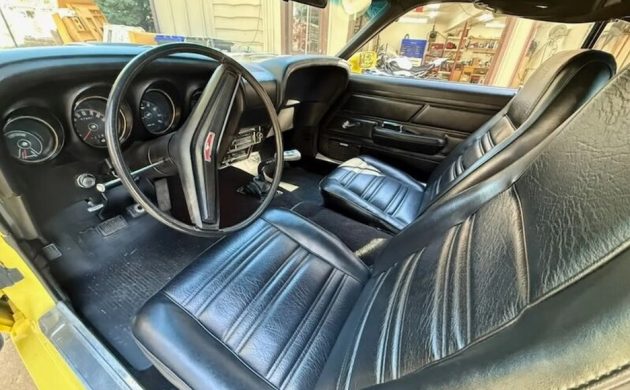
The positive vibes continue inside this Mustang, with no significant wear or other cosmetic shortcomings. The Black vinyl is excellent, and the dashpad shows no signs of UV deterioration. The Hurst shifter looks purposeful, and I can’t spot any aftermarket additions. The first owner ordered the car with a factory tachometer and an AM radio/8-track player, which is inoperative. Otherwise, everything works as it should.
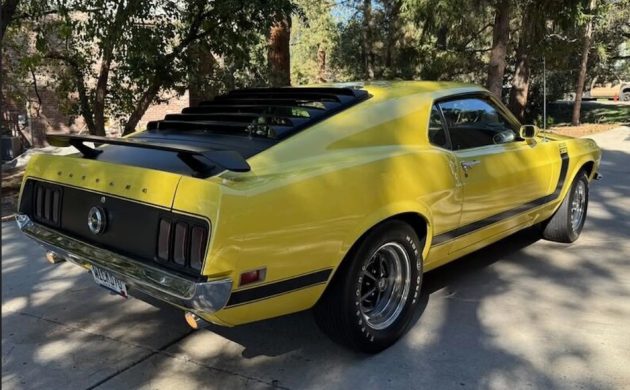
This 1970 Ford Mustang Boss 302 is a stunning classic that seems to need nothing. It may have only attracted a single bid. Still, with over 130 people watching the listing and over five days remaining before the hammer falls, that figure is virtually guaranteed to rise. If recent successful sales are an accurate guide, the price should at least double before passing the reserve. Considering that values have softened in 2026, do you think that will happen?

All the boxes have been checked, love a shaker.
Thanks for the write up Adam. Very nice Boss. Is it me or does the hood need a little alignment? Regardless, it’s a gorgeous Boss and will end up out of my price range.