

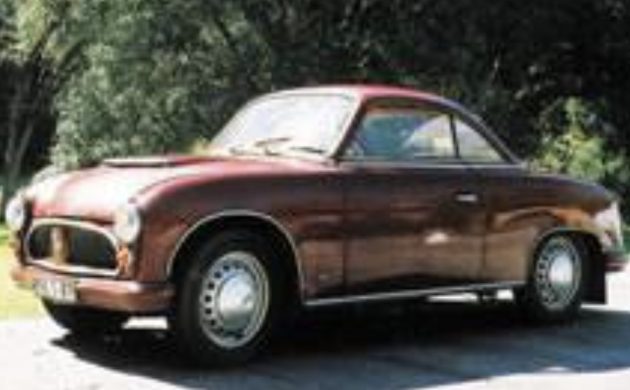
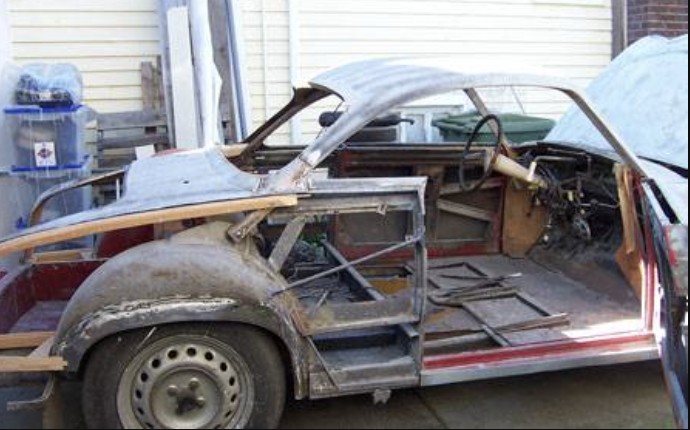
This blurry photo is a “before” shot – before this 1950s East German predecessor to the Trabant arrived at a shop to replace a fender. The shop discovered that the wood framing supporting the panels was rotten. A teardown and replacement of the wood left the car looking like this. No progress has been made for years – we found this same car described in this article from 2009 when it was for sale back then. So what is an AWZ? Well, when Germany split after WWII, East Germany inherited DKW’s factory in Zwickau, Saxony. The government nationalized the facilities and created VEB Automobilwerke Zwickau, aka AWZ. At first, the company made DKW-based vehicles, but trademark suits blocked further production. The company then designed its own car, modifying the DKW engine and crafting parts of the body from Duroplast, a hard composite. The AWZ P70 came in wagon, sedan, and coupe styles. Find this immigrant here on craigslist for $6000 or best offer, including parts. It is located in Rainier Beach, Washington. Curvette sent the tip over – thanks!
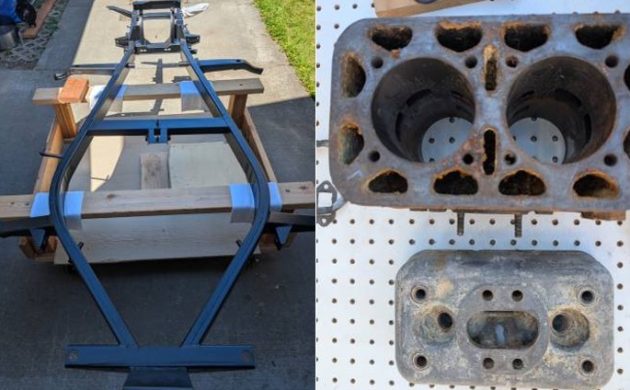
Progress includes the restoration of the frame and replacement of the wood support structure as noted. The engine was found to be inoperable thanks to decades of sitting, so it was torn down. Fortunately, this 684 cc two-stroke, two-cylinder is about as ubiquitous as a 1950s East German engine can be – parts are still available. On the other hand, is it worth rebuilding to attain the same factory output of 22 hp? Typical of basic cars of the era, cooling is via thermosiphon, so don’t go anywhere in the summer without an auxiliary fan; BVF made the flat slide, side-draught carb, still available here. The gearbox is a three-speed manual with a free-wheel feature, sending power to the front wheels. Parts included range from brakes to hubcaps; good glass to marine plywood to replace the floors. Manuals come with the car, all in German. Prospective owners can also visit here and here.
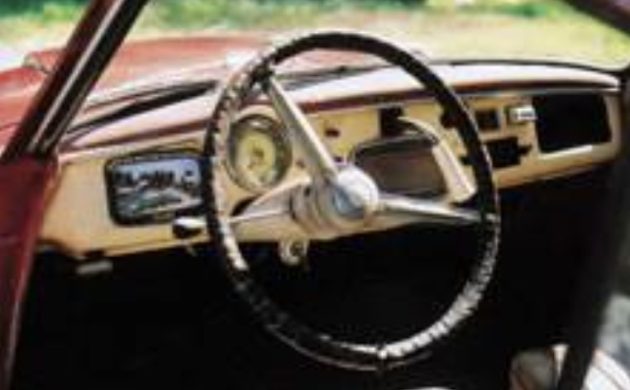
That white-handled lever on the dash is the gear shift; a single multifunction gauge sits front and center. The glove box is a cubbyhole. Since this photo was taken, everything has been dismantled.
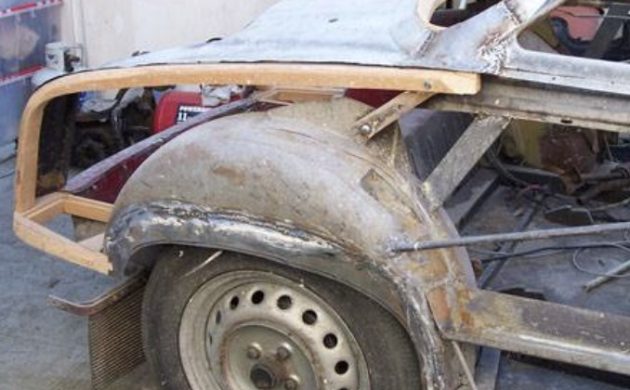
Only about 1500 coupes were made, out of total P70 production of around 36k. If you simply must own an AWZ coupe and you live in the US, this project car is your only option at the moment – and while the import documents are with the car, it’s never been titled here, so expect a struggle on that front. European buyers willing to be patient will find the occasional listing and reasonable prices. Whether these cars are easy to live with once restored is another issue altogether, but if you can rustle one up and make it down to Cars ‘N Coffee, you’ll be a hit.

Well, it’s certainly a welcome departure from the usual “Firevettes”( Corbirds?) I know, I’m about to get a message about that, hey, just sayin’, and while the authors posts are practically guaranteed to be of interest, this is in keeping with her excellent posts. A what now? A Kvetchenheimer? See, thing is, any interest for this would probably have to come from someone who came to the US years ago,, and might want a reminder of their homeland. E.Germany was not even talked about then, so radically different than the good ol’ USA, we were told, much less a car from that area. For all we knew, they still used oxen carts. Something about shift levers coming out of the dash on European cars, I suppose our cars features seemed just as odd. These cars weren’t cheap by any means. I read they cost DM 9260, or about twice the cost of a VW Bug. From what I gathered, E. Germany was not a pleasant place then, and there were waiting lists for everyday items, like cars. I’m not sure anyone wants to be reminded of that with a car from that era, especially living here. Overseas could be another story, Germany has made great strides to forget that past, and maybe a whole different view. Great find.
That looks similar to the Nissan Figaro, albeit some years apart.
For reference, there’s a book about Trabants called “Duroplast In Pastel Colours”. It’s an interesting read.