

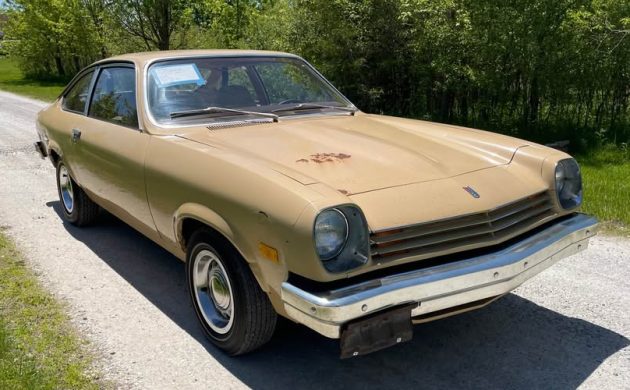
Here we go with another tan-on-tan ’70s car; find this 1976 Chevrolet Vega on facebook Marketplace, priced at $7500. With a purported 10,209 original miles on the clock, nearly every component is as delivered from the factory. Though those words might cause a sensation if applied to a Ferrari of the same vintage, today we’re contemplating what they mean when the subject car is an econobox from a US maker produced during the Dark Period for auto enthusiasts. But before we get to it, we have PRA4SNW to thank for finding us this paragon of ’70s motoring – thanks!
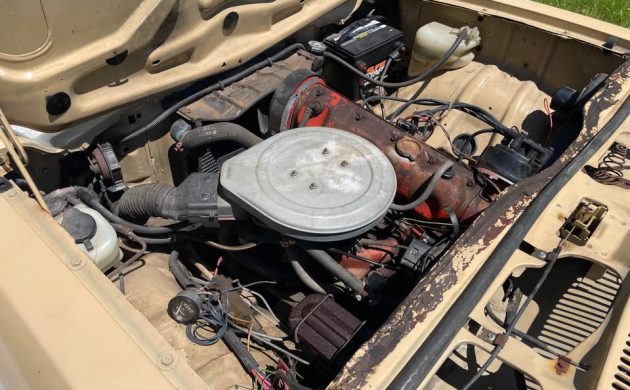
The Vega was launched in a heck-fire hurry for model year 1971. GM was losing market share to imports, and more importantly, it had no viable competitor in the low-priced segment, where the company hoped young buyers could develop a lifelong affection for GM products. So making a new subcompact was Job Number One. At first, all was well with the Vega: its styling was sleek, it was cheap, and Motor Trend named it Car of the Year in ’71. But its aluminum block/cast iron head engine was poorly designed. Cooling was hampered by the lack of an overflow tank and a radiator position too low relative to the motor. Valve stem seals were brittle and broke. Worse, the alloy mixed by Reynolds Aluminum to form the block contained silicon, which via the manufacturing process, became residual in the unlined cylinder walls. The silicone was meant to provide glide, but if the engine overheated due to inadequate cooling, the silicone disintegrated, allowing the pistons to score their bores. Bad! Early engines overheated, broke head gaskets, spewed oil smoke, and let pistons wreck blocks. GM applied fixes incrementally, causing still more angst. The company eventually replaced all the blocks, even those out of warranty. Finally, in 1976, when this car was built, GM quelled the mayhem by introducing its Dura-Built four-cylinder. The new engine was a tough guy, but it came too late to save the Vega from its reputational shellacking. This car’s plugs, wires, gas tank, fuel pump, and muffler have been replaced in the interest of making it a driver.
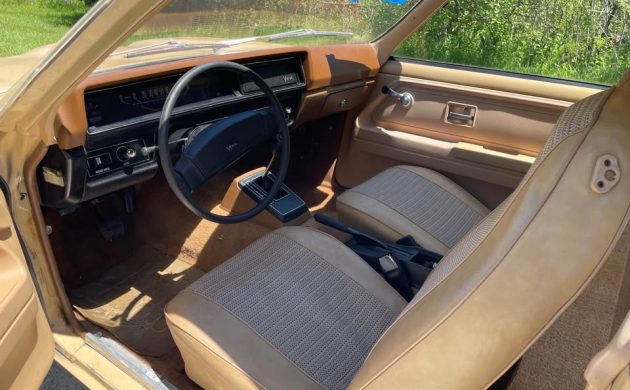
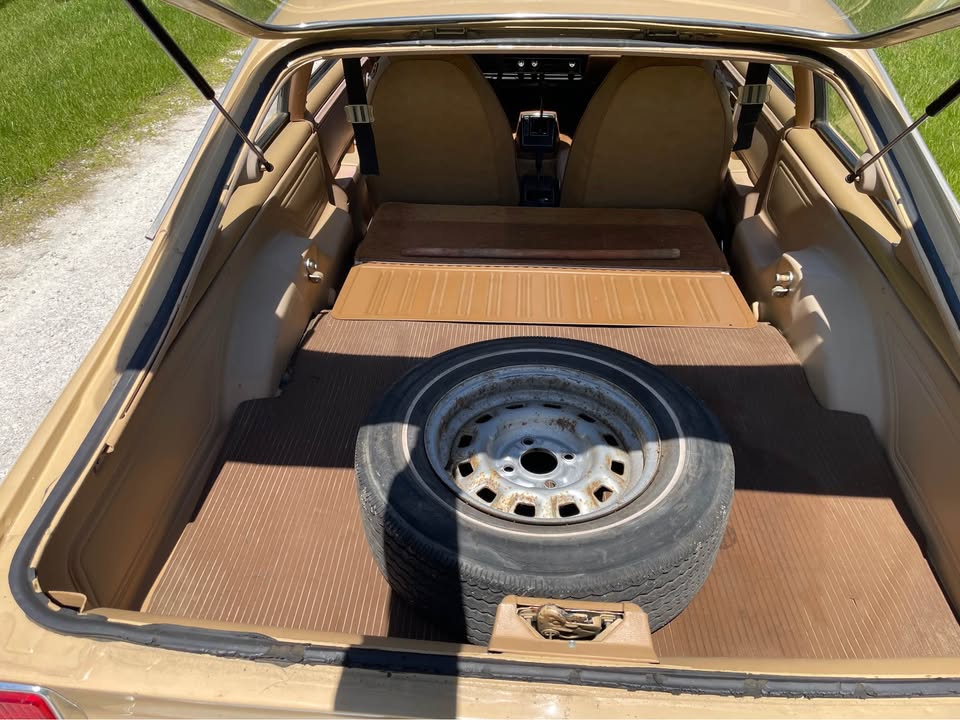
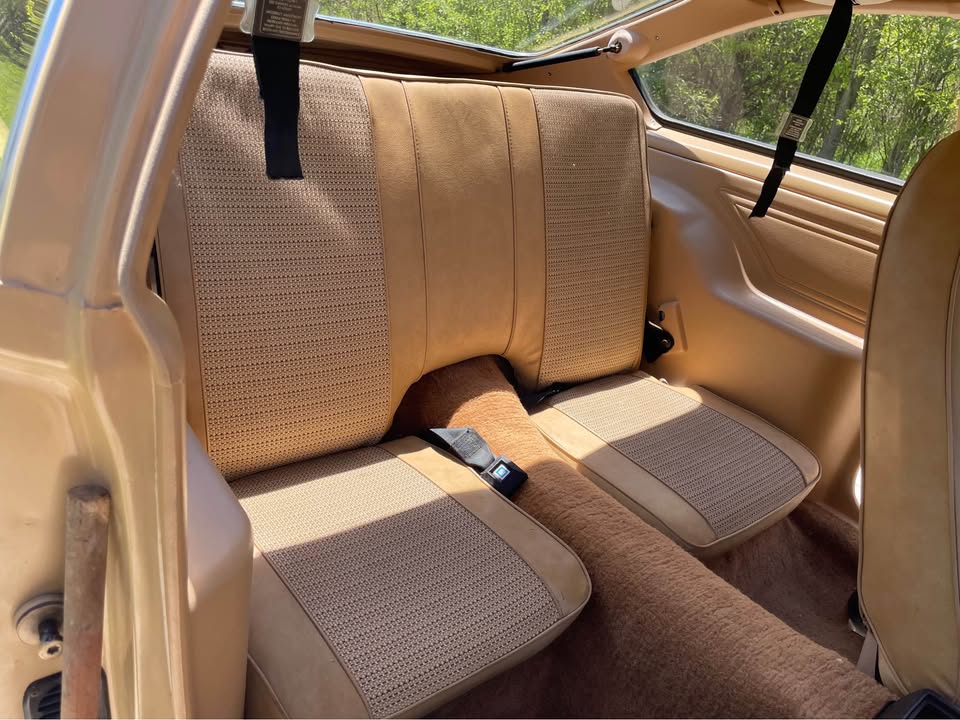
The condition of the interior supports the mileage claim. Someone took good care of all the plastic in here. The cargo area is clean as a whistle, and other than very mild wrinkling, the rear seats are dandy. Vegas were sold with a selection of manual gearboxes over their production range, but this one has an automatic.
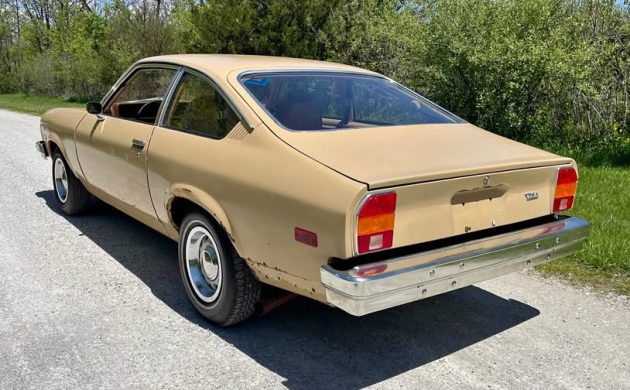
Alas, the Vega was also plagued by rust, which we see on this one’s hood, in most of its lower panels, and in the engine bay. Despite its demerits, the Vega notched sales of over 2 million units. Today, inevitably, many ordinary Vegas have lost their original mechanical components in favor of modern replacements; these cars sell for substantial premiums. The Cosworth has collected fans, sending prices up. Vega wagons are desirable and tend to find homes quickly. But very fine hatchbacks languish in the four-figure area, with the occasional example rising into the teens. Do you think this hatchback could be a future collectible?

1st, rather than start these posts on a negative note, I’ll say what a great find. So many were thrown away like old soup cans. The Vega was a very important car, as foreign makes were slow to catch on, this was the best small car a Chevy fan could get, and made in Lordstown, Ohio, a city devastated by GMs pullout, like most US cities in that situation.
The author is bound by BFs law to state what the ad says, but she knows as well as we all do, 10K doesn’t look like this. We see the cars that actually DO have 10K, even a Vega would be nicer than this. The spot on the hood seems in proximity of the radiator cap, indicating it may have gotten hot at some point. Who knows from there. It did accumulate at least 110K, which for a Vega is pretty good. Regardless of the motor shortcomings, I actually liked the Vega. If only they went with the Opel 1.9 or equivalent. Know why? It was then president Ed Cole, who demanded the Vega motor, or “melting engine” as it came known to be called, be “home grown”, and was rushed into production. Provided this runs good, and it seems like it does, be a wonderful car to have. Nobody is going to take this car across the desert, the kiss of death for a Vega.
They also went with an aluminum block because they had the Massena, NY plants and adjacent Reynolds smelting plant made for the Corvair. And a cast iron head to cut costs.
Too bad they didn’t just put an aluminum crossflow head on the Nova 4.
Looking at the interior, engine compartment and body as a whole, I believe the 10k is original. The interior is in too nice shape for 110k and you would not be able to get the parts to restore it like this , even if somebody would bother. Sorry Howard
These cars rusted prolifically. It could very easily have rusted like this if it was driven at all in the 50 winters that have passed since this car was new. I would want to see undercarriage shots before I would even think about buying this.
No apologies required, it’s just you are exactly the kind of person the seller is looking for, people that don’t know what a 10K mile car would look like. The interior is the easy part at fooling the public, it can be dollied up, it’s the underside shots they conveniently leave out that is a lot tougher to fix up. The seller is banking on people are so bamboozled that a Vega of ANY condition shows up, but the next REAL 10K mile car that we see, I’ll point it out. With 50 years of cars experience,, I can say this is not a 10K mile car.
Sorry, but I also dont get the 10K milage claim. The interior seat material was not made of cloth- its basically made of plastic fibers. These are very tough and durable and can look like this even after 110K miles.
I had a 75 Vega with the same seats, so ask me how I know.
The body with the medium rust issues and the poor engine bay does not make this a $7.5K car. I fear, that the maximum you may get is around 4K, and even here its difficult to find the right enthusiast for it.
The automatic doesnt help- the engine is slow and even slower with the auto.
And I agree- the car should have got the 1.9L Opel- engine at launch. Here it would have been a success.
i doubt I’m the kind of person the seller is looking for because there’s no way I’d spend the most valuable commodity of all – garage space – on one of these, LOL! I just think it has 10k miles on it is all. I didn’t say it’s in good shape or doesn’t need a ton of work. I just said I believe the mileage claim based on the totality of the pictures.
If anything, let this be a lesson learned that low mileage doesn’t always equal pristine condition. It doesn’t.
This was an important car because it showed how Toyota and Datsun cleaned GM’s clock and never looked back in 1976. !976 was a VERY big year for Japanese imports. People were practically standing in line to buy them.
If I had to have a vega I’d pay the extra $1400 for the cosworth vega from yesterday.
No kidding. Even if you believe the sellers mileage claim.
Steve R
Engine compartment says 110,000 at least, not 10,000. Had one of these in 76 maybe a 72 model I got for 500 bucks, decent little cars but still just worth 500 bucks in my opinion.
Good body, bad motor!
Low mileage! of course it is, the Vegamatic’s didn’t make it very far.
Why are the seatbelts cut?
I know the dollar ain’t what it used to be, but $7,500 for a basic Vega with automatic ? I suppose there might be that one person out there who REALLY wants a tan 76 Vega with tan interior, and this one is certainly in good shape, especially the interior, but $7,500 still seems steep to me. But we have all seen people pay crazy $$ for things we wouldn’t, so I guess I can just wish them good luck with their sale.
Look at the engine paint ? Looks like it got cooked ! 10k No way !
Marion, IL means salt in the winter. If it was driven even lightly in the winter, even with low mileage the body could look like this. Agreed, priced too high but could make a cool V8 conversion.
Michelle, appreciate getting the facts correct on the engine and cooling fixes with these. Easy to fact check, but that never seems to keep the haters from a cheap shot on the Vega. The 1976-1977 cars were quite good.
Back around 77-78 I had a nice 327/4speed combo that needed a home, so I decided to build a Vega. I started combing through the local wrecking yards for a decent body. I quickly discovered that I could buy running, driving ‘salvaged’ Vegas for $200-400 with very light damage, like broken grilles or whiskey dents. Insurance companies were totaling them out with practically no damage at all. I decided it would be unwise to invest in something so worthless and went another direction.
My first legal car was a 1973 Vega GT! Yellow with a black stripe! 4 speed with a black cloth interior! Bought for $400 in 1980 from an ad in the PennySaver! Pretty cool wheels when you’re 16 years old! I remember a lot of other kids had Vegas too!
lot of rust showing here. new gas tank. looks to me the gauge is inop. why not fix while in there. keep on moving along nothing to see here
10,000 because the thing died and that’s all it ran for. Then, it sat in the back yard under a tree for the next 25 years before somebody thought, maybe it will be worth something 30 years from now.
I sure wish I had this special ability that some seem to have knowing how much mileage a car has on it by photos alone. I am just amazed at the talent here sometimes…
My thoughts exactly Jason V.
Well,,,if you dealt with hundreds of cars in your lifetime, you get to see a pattern, and I mean no disrespect, it’s a valid question, but pictures tell a story( thanks Rod) and in many cases make it worse for a sale. In the future, I hope to call out a car that actually has 10K miles, and you’ll see a stark difference. The underside would tell more of a story, but the engine compartment clearly shows all the signs of a higher mileage car. You wouldn’t have so many malfunctioning things on a 10K mile car, and certainly not an oil pressure gauge on the inner fender. The interior is the easy part, and could be kept clean, and I don’t mean to challenge anyone, but the consensus here is it’s not 10K, from people that dealt with these cars the 1st time around.
I like Vegas. Honestly I do. For one thing I love the mini Camaro look. I had 2 of them. A 72 (I believe) in 1980. It was a 4spd. Air shocks and bigger tires in the back and mandatory bigger tires in the back. It WAS 1980 after all. Lol. I lived in Bagdad AZ at the time. We definitely got hot weather there but never had a bit of a problem with it
In 1983 in needed an economy car for commuting. Found a low miles excellent condition 76 that completely similar to this one right down to the automatic. As far as power goes it was an absolute dog with having an automatic. But I will give it a lot of credit. Despite living in Phoenix AZ at the time it never overheated or gave me any grief. Both were AZ cars and rust wasn’t an issue whatsoever. Now that it’s established that I’m a Vega fan, no way in the world is this one worth anywhere near the seller is asking. You can like or live a type of car but that doesn’t mean you have to think something is a good deal when it clearly is not. I would be willing to pay $500.00 for it as a fun project.
Wow, included in the cheap asking price are free flowing seat belts , probably a very rare option …
A taupe Vega showing rust with a tan interior… how many ways can you say “mid ’70s”… Would be fun, interesting, and a conversation piece at Cars & Coffee, but, I personally couldn’t justify paying $7500 for that privilege… its just that I’m old enough to remember when used Vegas were in the few hundred dollar price range all day long, and my head is stuck there.
I know the owner, they can prove the mileage with service history, and previous owner history. The Indiana title reads “actual” miles. It’s a legit 10k mile car. It was stored poorly, not climate controlled and no moisture control that’s why the rust and ugly engine bay.