

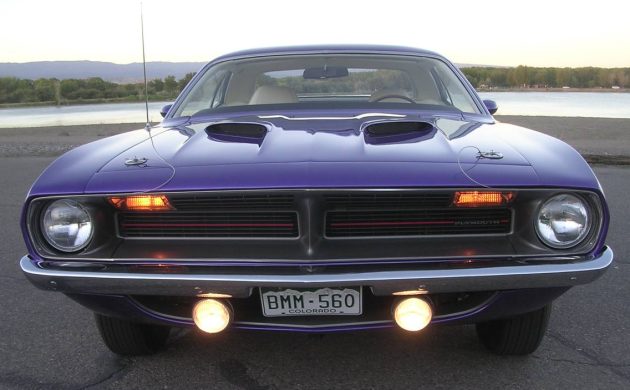
In the automotive world, performance almost always comes at a financial cost. When the car in question is inherently desirable, and its presentation is seemingly flawless, the stakes are raised. Such is the case with this 1970 Plymouth ‘Cuda. The seller approached their build as a “no-expense-spared” exercise, meaning that no aspect of this classic escaped their attention. It isn’t original, but it should command respect wherever it goes. I must say a big thank you to Barn Finder Tony P. for spotting the ‘Cuda listed here on Craigslist in Delta, Colorado. I said that performance comes at a cost, and taking this beauty home will cost someone $114,000.
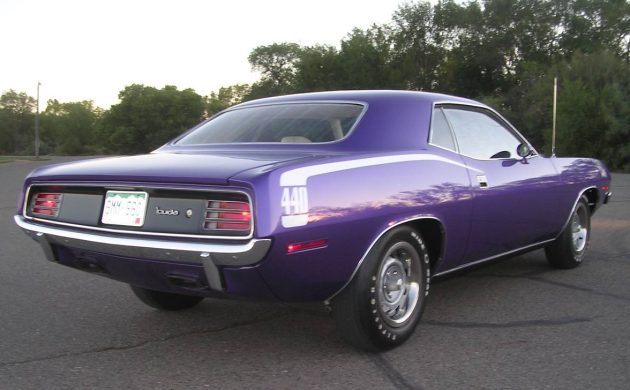
I’ve mentioned in previous articles how much I admire Chrysler’s E-Body range, and how I believe they are probably the most attractive cars to emerge during the 1970s. From its low stance to its bulging haunches, this 1970 Plymouth ‘Cuda reinforces that belief. The car has clocked fewer than 200 miles since the seller completed their build, so there has been no opportunity for it to develop cosmetic imperfections. The Fender Tag confirms that the first owner ordered it in Ivy Green Metallic, but much has changed since then. The seller stripped the car, replacing some substandard steel while retaining the original hood, roof, decklid, cowl, quarters, floors, and rear valance. It provided a perfect opportunity for a color change, and it seems a no-brainer that they selected ultra-desirable Plum Crazy to grace its panels. They added contrasting White “440” stripes, and almost all of the glass is new. The paint looks flawless, and the panels are arrow-straight with tight, consistent gaps. I can’t spot any trim issues with the Plymouth, which presents as new. The ‘Cuda looks stunning and is guaranteed to turn heads wherever it goes.
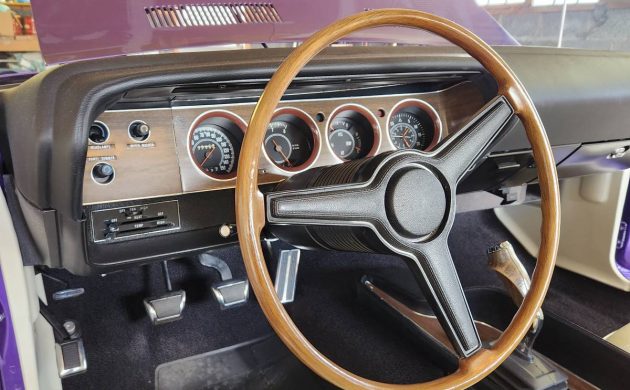
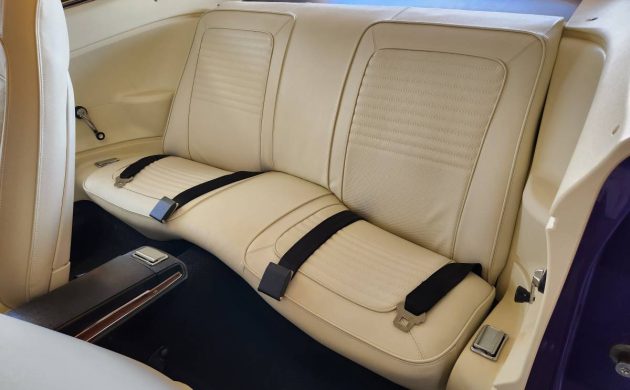
The seller didn’t cut corners on the Plymouth’s interior, performing a complete retrim in White vinyl using a Legendary kit. Some original items, such as the wheel, were deemed fit for purpose after being cleaned. The dash features the Rally gauge cluster, and the faux woodgrain is flawless. The vinyl is as spotless as you would rightly expect, the plastic is in first-class condition, and the pistol-grip shifter looks purposeful as it emerges from the console. The seller comprehensively documented the build with invoices and photos, leaving no question marks hanging over their approach or the considerable financial outlay involved in producing this stunning classic.
We’ve reached the point in this Plymouth’s story where the seller has made an almost unforgivable mistake. One of the car’s greatest attributes is its mechanical specifications, but the seller supplies no engine bay images. The first owner teamed a 383ci V8 with a three-speed Torqueflite transmission, and with that motor producing a factory-quoted 335hp, the performance would have been quite impressive. However, this ‘Cuda is a case of more being better, because almost nothing beneath the surface is original. Its engine bay now houses a 440ci V8 that was professionally built with an eye on extracting as much power as possible. Bored 0.030″ over, it features a steel crank, a Lunati billet steel roller cam with roller rockers, “906” cylinder heads that are port-matched and polished, and an Edelbrock 750cfm carburetor atop the original intake. The motor hasn’t been on a dyno, but the seller estimates it now churns out over 500hp. The A833 four-speed manual transmission is rebuilt with all-new internals, feeding power to a nodular Eaton 3.55 Sure Grip rear end. Rounding out the mechanical components are rebuilt power steering and a front cross-drilled disc brake conversion. Add stainless fuel lines, a new fuel tank, and new wiring to the equation, and you begin to appreciate that this seller left nothing to chance. The ‘Cuda has only clocked 155 miles since the build ended, and potential buyers can consider it a turnkey proposition.
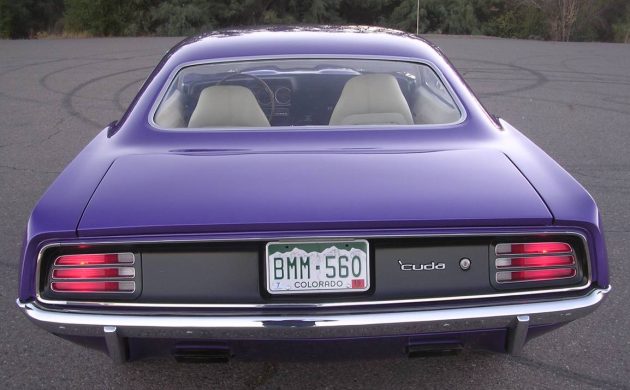
This 1970 Plymouth ‘Cuda has the “wow” factor, but, at the asking price, it needs to. “Cheap” is not a word that could ever be used in its description, and the seller has left no stone unturned in their quest for perfection. The biggest challenge with cars like this is quoting a definitive potential value. If it were a faithfully-restored original example with a numbers-matching drivetrain, the seller’s price would be realistic. As a modified vehicle, it is worth what someone is willing to pay for it. It would be possible to recreate this classic from scratch for the asking price, and the process would be deeply satisfying. However, that path would almost certainly involve a certain amount of pain and heartache. If you wish to avoid those problems, this finished product might be the ideal alternative.

Beautiful car. Checked the wallet. $24.
For that level of cabbage, everything on that car should match the VIN.
Agreed. Why the hell color change, drive train change, heck EVERYTHING change ANYTHING?
My take. He can enjoy what he screwed up.
The car would and could have been worth his ask. Probably more if he would have done a nice restore and add a few internal power components.
I’m disgusted. The factory green on this body style is hard to beat.
I only have $ 23 , you win. This checks all of the boxes, except it wasn’t an original FC7 , 4 speed, bucket seat “Cuda” It would have been nice if they had decoded the fender tag for us.
nice but not seeing somebody drop that kind of coin on a non-original Cuda. i think that ask is an optimistic number. on craigslist no less. not seeing a sale.
The inside of quarters don’t look they were finished right, the headliner was not stretched to get the wrinkles out, plus it was a F8 Green paint and interior! No engine compartment photos, almost no under carriage except for one of the rear. I see other things I’m not even going to mention. If the car was originally an FC7 paint code with a white interior, then the price I think might be more inline.
Clocked only 155 miles since rebuilt?
Hmm, probably only driven for an hour then…
Beautiful looking car but I was never one to like changing a cars DNA from what it was born with. I’m sure he’s got a good chunk of change into that resto, but still trying to get that back on a non original car might be rather tough. Personally the ’68 Barracuda listed here interests me more.
I can find several items to question, but, if it was my car, it would be pretty dam close to a car i would want that was not the way it came from the assembly line. I am a huge fan of Mopars from 1965-1974. If i had the $ i would own at least 20.
There’s only one ‘Cuda worth this kind of money. This ain’t it.
I don’t know how many 440 Cudas were sold in Plumb Crazy. But there are probably more of them on the road now than there were in 1974. I’m a huge fan of real 440 Cudas, especially 4 speed Pistol Grip cars. But a the original green this car was built with along with a 727 Slap Stik would have made a perfectly respectable restoration. I love a restomod as much as the next guy. But for this much work and money I’m not sure the Juice is worh the sqeeze…
The VIN BS23N0B is a Cuda. BH code is a standard Barracuda. EF8 would be metallic dark green. It was 383 car as well. It would be very nice stock.
Troy
Awesome car, but you wonder when these blue chip muscle cars are gonna start to tumble in value. Is it five years? 10??
A big problem here is this one isn’t blue chip. It’s basically a tribute car. Prices are already falling on these and regular muscle cars. Just a natural progression of the collector car market. The younger generations prefer cars from their youth. Hot right now are 1980s and 1990s cars, certain ones anyway.
The year that this country votes in a ignorant, socialist, democrate president.
A year into that and this country will be in a civil war like you can only speculate about.
That’s when pretty things won’t be worth their scrap weight.
Amen.
😆🤣😆
Hah Hah
Love it or hate it, Craigslist is not the place to sell a car like this.
Steve,
That’s a simple matter of opinion. You certainly wouldn’t put a $100k authentic Rolex watch on CL however this ‘cuda is right at home on CL.
Read into this what you will.
Beautiful car but that price is way to spicy for a restored color changed non matching numbers car. Someone out there actually thought they could make a profit restoring it and we all know that you will never even recoup your costs with this type of resto. that is a 50k-60k car all day long and not a cent more.
For this kinda money I’ll have a minty Cuda AAR in a high impact colour, 340ci/4 speed please.
+1 for me. Frankly and AAR would be more fun to drive and a better investment!