

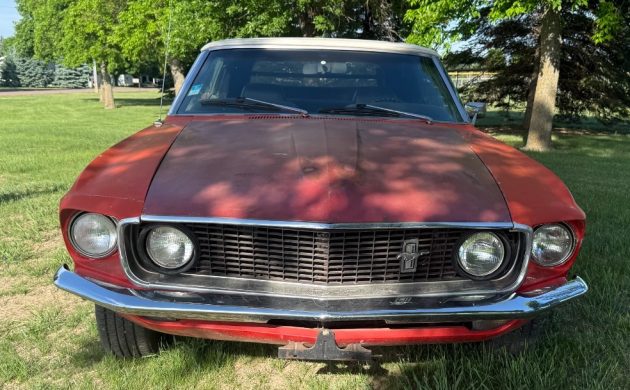
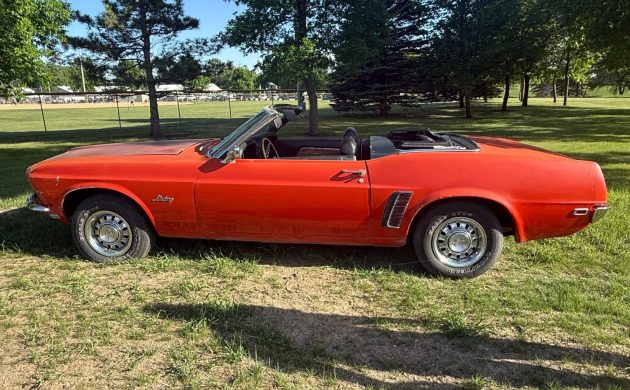
Although nobody knew it at the time, the release of the Mustang Mach 1 in 1969 sounded the death knell for the Mustang GT. The badge soldiered on until the year’s end, then disappeared. That makes this 1969 Mustang GT Convertible the last of its breed, and while it needs work, it appears to be a promising project candidate. The seller indicates that a thorough mechanical inspection and some new tires might be all that stands between this drop-top and the open road. However, that may not be its greatest attraction. Their decision to list the Mustang with No Reserve may make it irresistible. You will find the GT here on eBay in Tyler, Minnesota. Bidding has raced to $4,525 as potential buyers seek to give this classic a new home.
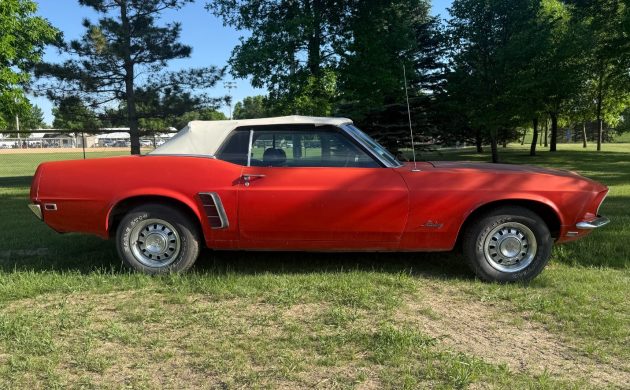
There’s a bit to consider with this Mustang, especially for those focused on a car’s originality. The seller indicates that this Convertible only recently emerged from hiding, but it is unclear for how many years it had been hibernating. They describe the vehicle as an older restoration, but many readers will consider it refurbished as we delve deeper. The existing Red paint isn’t the car’s original shade, because the seller’s Marti Report confirms it started life wearing attractive Silver Jade. We will probably never know why a previous owner chose to change the shade, but personal preference seems the obvious answer. The White power top is original, and the seller states that it works perfectly. The panels are generally quite straight, with no major dings or dents. Rust? I’m sure you thought I’d never reach that question. Unsurprisingly, there are problems, although they aren’t severe. The seller states that the passenger-side torque box requires replacement, and there is rust in the floors, one rear rail, and the lower quarter panels. The remaining rails are solid, as are the rockers. Therefore, it is fair to say that this GT is far from a lost cause.
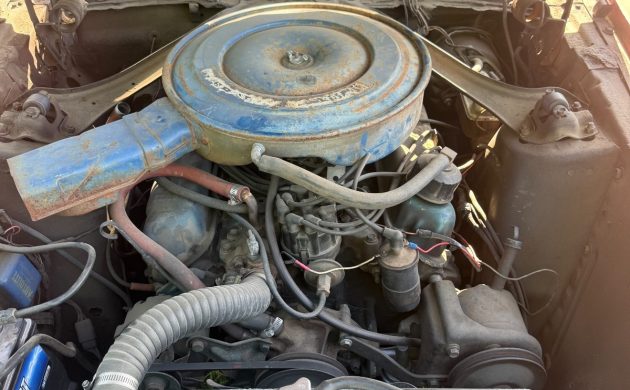
Decoding the VIN confirms that the first owner ordered this GT with the M-Code 351ci V8. It sent 290hp and 385 ft/lbs of torque to the 3.00 rear end via a three-speed manual transmission. The first owner also ticked the boxes on the Order Form next to power steering and power front disc brakes, thereby increasing the car’s desirability. We’ve reached the point where we must assess any changes performed by the previous owner. The original transmission has gone the way of the dodo, with this car now equipped with a three-speed automatic. Someone removed the original carburetor and intake, substituting a two-barrel system that will have dropped the engine’s power. Reversing the changes is a viable option for potential buyers considering a faithful restoration. The seller states that after years in storage, this GT runs and drives, and its brakes work. However, the winning bidder should have the car thoroughly inspected and bolt on new tires as part of the pathway to roadworthiness. They may also need to check the power steering, as somebody removed the belt.
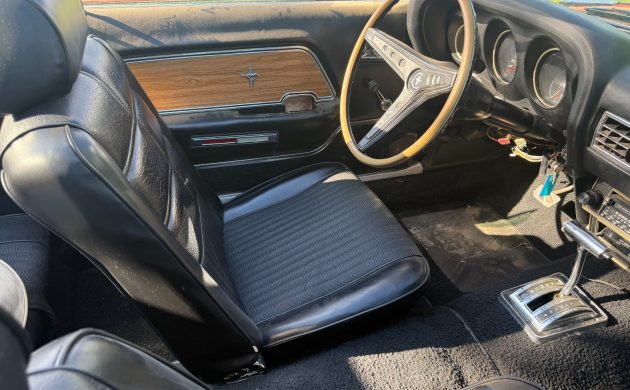
This Mustang’s interior is a genuine surprise, because its condition is far better than I expected. The dashpad is cracked near the speaker grille, but that appears to be its biggest shortcoming. The Black vinyl surfaces are free from wear, as is the carpet. The interior isn’t pristine, but I believe that a few days of concentrated effort in a home workshop with high-end cleaning products would leave it looking very presentable. The air conditioning system is incomplete, with most of the engine bay components AWOL. An aftermarket radio/cassette player occupies the spot formerly reserved for the factory AM radio, but the rimblow wheel is intact.
The 1969 sales figures graphically demonstrate why Ford discontinued the Mustang GT. The Mach 1 found 72,458 buyers during that production year, but only 5,396 customers handed over their cash to drive home in a GT. However, the Mach 1 was a Fastback-only package, making me wonder why the company didn’t limit the GT to the Hardtop and Convertible variants. The package would have cost Ford virtually nothing and may have contributed to the company’s bottom line by luring potential buyers into showrooms who weren’t drawn to the Fastback. Of course, that question is easy to pose from my desk, and I’m sure that the bean counters provided compelling data that led to the decision. Do you agree with them, or do you believe that the GT had a right to survive as the performance alternative for Hardtop and Convertible buyers?

i see a lot of rust in crucial spots on the underside that will need attention. better examples out there.
Are those fake grills on quarter panels before back wheels stock ? Car would look alot slicker with out them .
They are stock, however the paint has been stripped from them. They are normally body color with chrome highlights. For the adventurous, this would be a nice project. How many 69 GT convertibles are out there?
This one is a real “Dough Boy” on top of all the rust you see!
Look at the rear quarters where the rear of the wheel lips have been modified with dough (Bondo). Doors, fender and more all full of dough!
Let’s not forget about all the rust holes in the bottom of the car.
I would like a 69 Mustang GT convertible HOWEVER this one is definitely a HARD PASS even if it were priced at half the current bid price!
Honestly, I believe this car was stripped of all the GT items and left to rot in the field (or wherever) ’cause no one had any use for what was left. I also believe the current owner or seller had enough Mustang stuff lying around to “get it running” so he, or she, could sell it. Seller may have shown a Marti report, but, from what I saw on ebay, failed to show the VIN tag, or at least the buck tag, to validate the Marti. There’s also enough rust on this car to dissuade most sensible folks from bidding.