

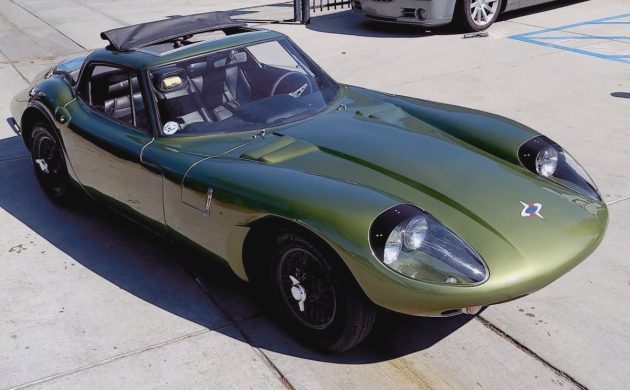
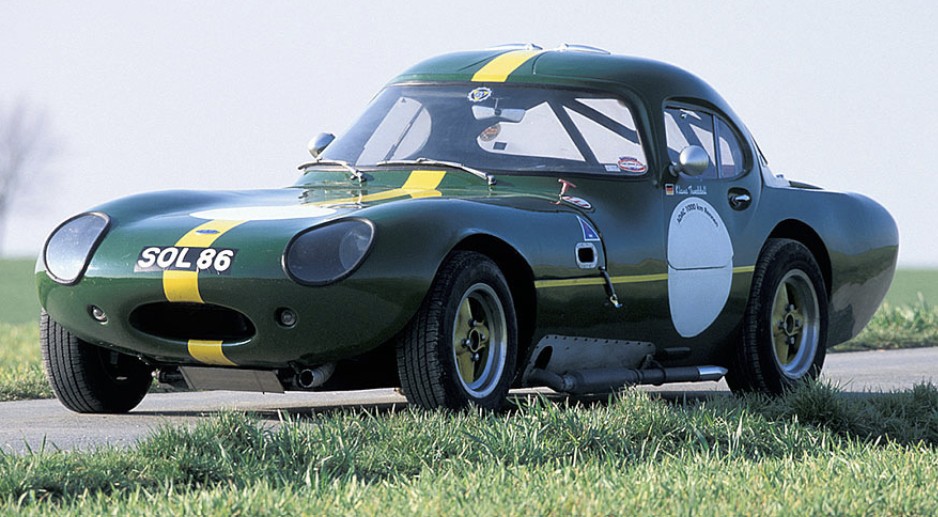
The panels of many British cars from the 1920s and 1930s were crafted by wrapping metal around wood frames. That practice began to phase out in the 1950s. But there’s one car with a bona fide wood chassis – made in the 1960s, no less. The Marcos GT was launched in 1964, with a bonded plywood chassis underlying a fiberglass body. The car is strong and light, and the chassis is surprisingly durable, but making a wood frame was very expensive. About 500 examples were produced until the company was forced to shift to less costly steel construction. Here on eBay is a nicely-restored 1969 Marcos 1600 GT, advertised for $48,000. The car is located in Stanton, California, and the new owner can drive it home.
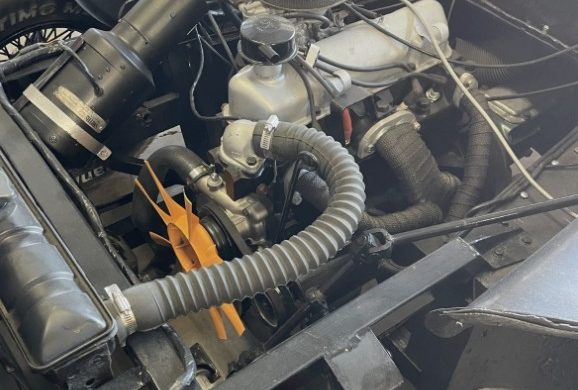
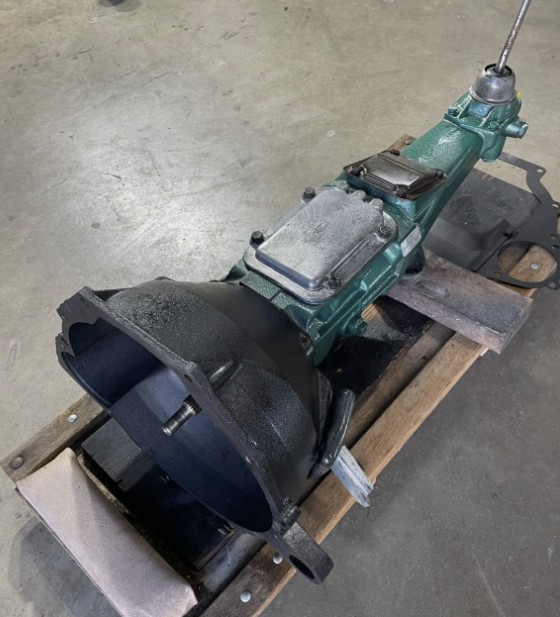
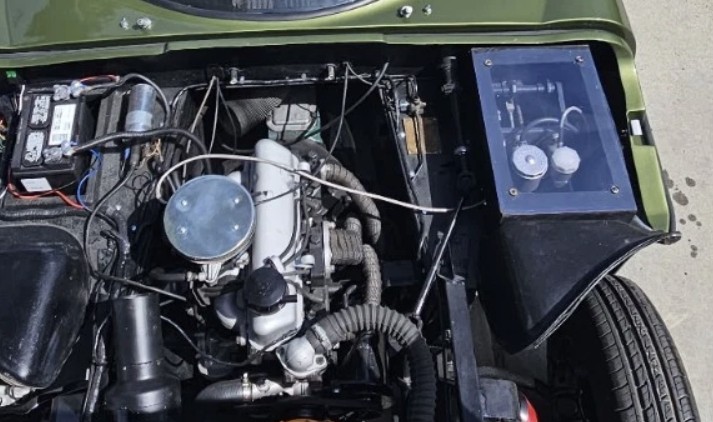
Marcos Engineering was founded in 1959 by Jem Marsh and Frank Costin. Costin was an aerodynamicist, while Marsh had worked for Speedex, a sports car maker. The company’s first car was an ungainly gullwing racer called the Luton. The GT arrived next, equipped with a Volvo B18 four-cylinder. But for a company struggling financially, the Volvo mill proved too expensive, so Marcos contracted with Ford to provide its four-cylinder Kent engines for future production. Later, Marcos installed various six-cylinder motors in its GT – these cars will tend to sell at a premium. This car has a 1600 cc crossflow Kent, decked with what the seller believes is a Weber. These engines were so pliable and powered so many makes over the decades – from the Cortina to single-seat racers – that quoting output is difficult, but 100 hp is not out of the question with the right performance parts. The gearbox is a Ford Cortina four-speed manual. The list of new and rebuilt items on this car is as long as your arm – it’s largely new from its OEM “Pine” paint coat to its adjustable coil-over shocks.
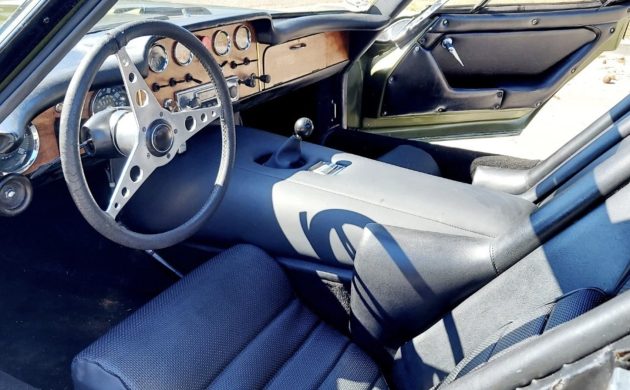
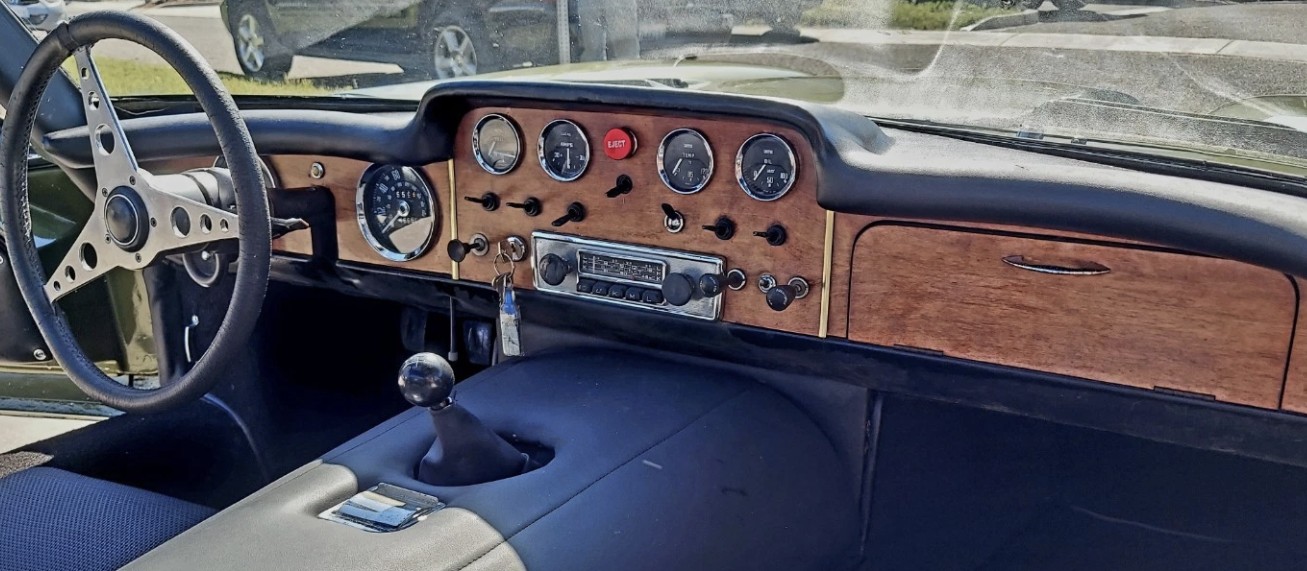
The black vinyl upholstery – embossed with the Marcos logo on the seat backs – is fresh; the wood dash is in decent condition; the carpets and headliner are new. Though the cabin is challenging to enter, once seated, it’s very comfortable. The seats are fixed; instead, the clutch and brake pedal are adjustable using a dial on the dash. Note the Perspex cover over the master cylinder.
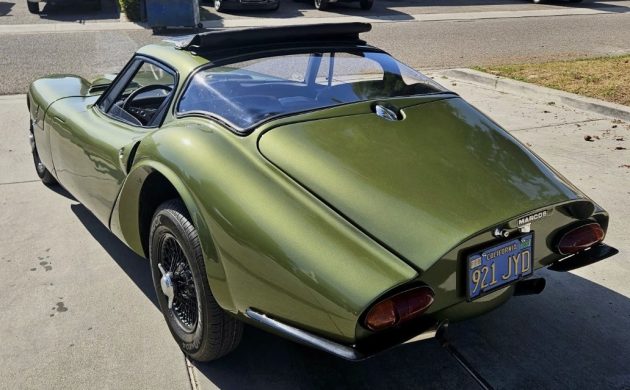
The Webasto sunroof works well; rumor has it that Jem Marsh was very tall, so he wanted his cars equipped with sunroofs to ease entry into the cabin for tall people. The seller indicates he installed tubes on the wire wheels along with new tires. Yes, the rear wheel wells do look too large for their rubber – that might be the new suspension combined with tire/wheel size. The car has all-new seals, looking spiffy against the glass here. The original California title, two blue license plates, and the car’s factory jack accompany the sale. This unique British sports car has a lot going for it: performance, rarity, condition. But is it worth the price? Several examples have sold for more than $40k over the years, though lately, prices have fallen off. Nudging $50k is a bit aggressive, but I’d think the car could find a home if it were priced in the high thirties.

Another fact-filled post from Michelle. She really has an eye for the strange and wonderful!
I believe Jem Marsh was influenced by the WWII-era De Havilland Mosquito aircraft, which also had a fuselage made of marine-grade plywood. At the time, this was cheaper and lighter — and more readily available — than steel or aluminum.
Years ago, I rode in a Volvo-powered Marcos, and you could not detect any difference between the wood monocoque and its metal-framed kin.
Of course that construction method didn’t catch on, but neither did the fiberglass tub used by Jim Hall for the Chaparral II.
The Marcos is a little odd proportion-wise, but you have to give bonus points for creativity.
The DH Mosquito influence came from Costin, who was a design engineer on the Mosquito project. Frank Costin was not much interested in cars until his brother Mike Costin ( the ” Cos ” in Cosworth) asked Frank to do a body for Mike’s erstwhile employer, Colin Chapman. Lotus 8- 15 were mainly Frank costin shapes. So were Vanwall F1 and some Lister sports cars.
Jem Marsh was more of a businessman, the owner of the Speedex company Michelle refers to. Frank Costin’s engineering purism and Jem Marsh’s commercial pragmatism didn’t make for a strong partnership. When Marsh wanted to build a less ugly car, Costin left and Marsh got the Adams brothers to come up with this classic Marcos shape.
And yes, this car is nice but an expensive. Asking price.
Thankss, Martin. I appreciate your knowledge of the marque.
John
Pretty cool, but that color is not for me.
Still as beautiful to me as the first time I ever saw one 59 years ago. I think at least one of the designers had worked at DeHavilland, building the Mosquito but I could be mistaken. Frank Costin was also the “Cos” half of Cosworth. Plywood is an amazing material!
Too cool for school !! amazing color for this body shape. these wood frame cars are amazing to drive, exceptionally light, lively and nimble. wonderful viceral experience. amazing condition on such a rare and unique vehicle !
These are one of the very few cars that you can look down on from a lowered Mini.
I raced against Jem Marsh a couple of times (24hr race, so teams).
Another beautiful car Michelle has highlighted that I’ve never seen before. Its a really beautifully designed car. And I’d love to see that wooden frame. The shape of that rear glass really catches your eye too. Looking at all those different angles on the Ebay ad really highlights the design. Thanks Michelle. This is indeed very different, and very unique.
Thanks, as always, Driveinstile. I don’t tell you enough how much I appreciate your compliments – I do indeed.
I agree with you on the aesthetics of the car – it’s attractively unique!
Thank you Michelle for the kind words. I call them as I see them!!! You prommised us unique finds, and you are seriously delivering!! Thank you again. Keep them coming!!!
-Dave
The Marcos styling is very….’Saab Sonnet-ish’! if you want to call it that!
Hmmm… the Sonnet looks like an offcut from a wood shop compared to this sensual shape.
Only one I’ve ever seen didn’t have the rear hiked up like this one. Looked a lot better with the wheel further up into the wheel well. Nice car.
Interesting… Just watched “Steve” on his “This Week With Cars” Youtube channel give a restoration update on his Marcos… In the same (or at least very similar) color… The guy has a massive collection he tends to…
Always love Michelle’s write ups excellent details. This one has set me thinking, My home town Sutton Coldfield I don’t live there now. A Marcos lay in a front garden Yellow with the V6 there for a long time maybe still there . The road Maney Hill Road cottages on the left before Maple Road. I guess people lose interest just hope it has survived.
I have heard of one in the same breath as Morgan because of the wood chassis. But had never seen one before. Very unique, and classy. And yes the hiked up rear does not help the esthetics. And yes, that is a Weber DGV carb. (32/36?) Being a coil over suspension, lowering the rear suspension shouldn’t be a big deal. Speaking of the suspension, this appears to have tons of suspension travel. Made me think rally car!. (But I would never submit a wood frame car to that) The front body shape (2/3rds of the car) is very Jaguar/Spitfire to me (front suspension looks Spitfire also) The rear 1/3rd. Looks very LeManns/Mulsane straight aero style. But does nothing for me esthetically. Very interesting car. Might be fun to take it for a spin.
Thanks for the comment and for confirming the Weber.
The Morgan does not have a wood chassis. Like many early British cars, its body panels were made of metal wrapped around an ash frame. I think people confuse “frame” with “chassis”.
The wood chassis Marcos GT
Windshield wipers?
We call the lower part of the passenger compartment “floorboards” for a reason. Don’t forget “dashboard” or “running boards.”
Wood was an important structural component of car bodies, carried over from coach building. The Curved Dash Oldsmobile of 1901 is mostly wood. The Model T contained a surprising amount. As steel became cheaper and manufacturing improved, steel replaced wood.The 1934 Chrysler Airflow introduced the first all-steel car body, and wood was pretty much gone by the end of the forties. Even woody wagons were plastic and vinyl by the 1950s
A wood chassis car painted in a color called “pine”? I love it!
You can take the car out of the woods, but you can’t take the woods out of the car!
I vaguely remembered Marcos having Mini engines. Turns out those are Mini Marcos, not to distract from this GT.
Great looking car. Great write up and reinforcing comments.
Love the write ups and comments on this site! Learn a bunch from all of you!
We really like the way the Marcos GT turned out. It was a “needs it all” type barn find complete with the original plates and old style California title just the way it was parked. It was a fascinating car to restore. Marine grade plywood? Ford’s “New” Crossflow engine with heads that are flat? Cupped pistons that form the combustion chamber? Triumph, Ford and Vauxhall parts? What a blast to bring it all together in 13 months. https://barnfinds.com/intact-plywood-chassis-1969-marcos-1600-gt/