

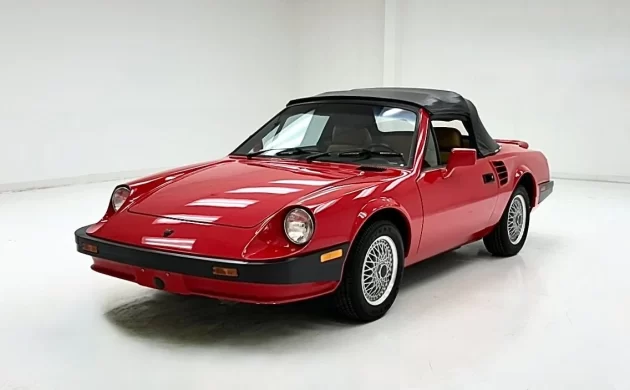
The automotive brand Puma is one of the few companies that seemingly produced a high-quality product despite the deck being stacked against them. These days, you read about plenty of organizations stood up with re-branded products, questionable manufacturing standards, and lack of ingenuity to the point that you almost don’t want to trust that a new, small, independent company will ever really “make it.” That wasn’t the case with Puma, which began life as a small Brazilian company known as Lumimari. 1992 marked the end of a fascinating run of vehicles, and this 1992 Puma AN4 convertible listed here on eBay is likely one of the last vehicles built.
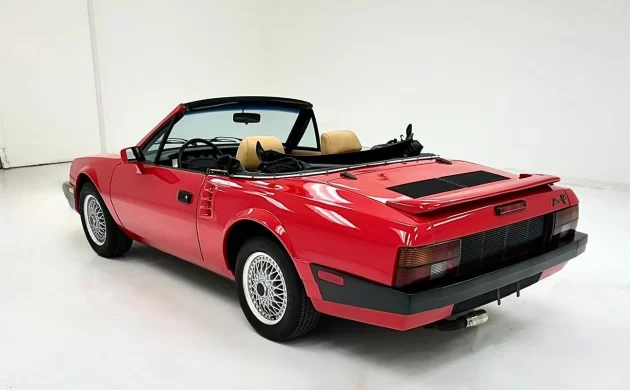
Puma became an almost instant hit when it first introduced its iconic GT model. Fabulous Italian-inspired styling, a willing chassis and engine, and decent build quality all combined to make the brand a beloved institution in Brazil. However, setbacks were numerous, with the company seemingly rising like the Phoenix every time to survive and move forward. The biggest blow was when its chassis supplier, German company DKW, announced plans to exit the market in Brazil, leaving Puma without a critical supplier. That’s when the pivot to VW running gear occurred, and the Karmann-Ghia became the new chassis and engine donor mated to a brand-new fiberglass Puma body.
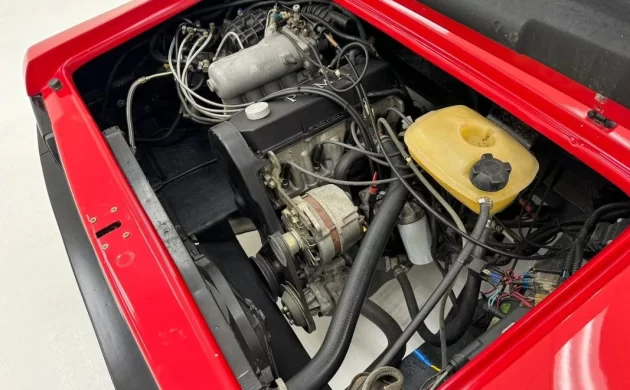
Now, it’s important to understand that the Puma GT was never seen as a kit car. There was an engine and chassis donor, yes – but Puma was a standalone company creating compelling models and designs to attach to existing running gear. They weren’t shipping bodies and engines in crates for a DIY builder to assemble. By the time this model rolled out, the GT undergone a steady evolution, with creature comforts introduced to make it palpable for modern transportation. I particularly like the BBS-style wheels, but don’t let them distract you from the biggest update of all which is a water-cooled VW engine. The 1.8L mill produced 89 b.h.p. and features electronic fuel injection.
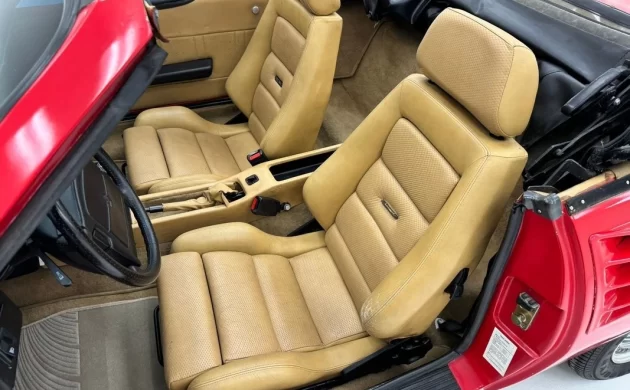
The Recaro-style seats look fantastic, as does the rest of the cabin. A quick search reveals this Puma AN4 last appeared at auction in 2021, and it looks virtually identical to the car’s current condition. I would imagine a vehicle like this suits a VW collection that has one of everything, but at the same time, the performance still falls short of other models from the same period. When they were in their prime, Puma offered owners a variety of performance upgrades that complimented the company’s impressive racing pedigree in its formative years. Should this Puma be modified with a modern VR6 engine or left bone-stock as a tribute to one of Brazil’s only successful car builders?

Not a bad looking car, and people say it’s not a kit.
But it really is a (high-quality) VW-based kit.
Not trying to disparage it or anything.
I’d love to have one with some decent power under the hood.
Looks good! The seller has 703 listings and it looks like all vehicles. And yet their feedback is only (33).
I think it’s a good looking car. It sold at auction in April 2021 for $10,000. Is this the type of vehicle you would expect to appreciate in value?
I have one with the VW flat four from the early 80s. I don’t expect it to ever appreciate, but it’s a lot of fun and I can’t even afford a nice 914 or any other air-cooled Porsche anymore.
Attractive car outside of the out-of-place spoiler and slightly awkward looking top. Guarantee at fill-up time people at the next pump will think it’s an Alfa. I don’t think its rarity in the US will ever translate into significant appreciation, but it would probably be a blast to have… and a hit at cars-n-coffee, in a “what the heck is that” kind of way… and that’s all that really matters.
I agree with you , spoiler is not a good look and the top is too high when latched , it looks weird and don’t get me going on the underpinnings …
The correct model name is Puma AM4. AM stands for “Alfa Metais”. The coupe version was the AM3. These were the last two Puma models with a VW AP engine.
Very cool! Never seen a convertible before, looks pretty nice.
When they used DKW drive lines they were a smash hit in Brasil; too bad DKW bit the dust – that was a great car, what it needed was todays superior oil, fuel injection and CD ignition, all things none existent in their day. The Japanese 2-strokes which burned up the race tracks where all based on DKW technology. There was even a 4.cylinder 500cc racing bike putting out nearly 200 horses by Suzuki (I think) which was designed by a German engineer who had defected from the commie part of Germany and had been chief engineer at MZ, the eastern counterpart to DKW. Some insane en gineering, vastly superior to any 4 strokes at the time. Strangely, the pilots were all Americans (BRAVE men, those guys) even coming from a country in which 2-strokes were looked upon with less than respect. Even today guys talk about pop corn engines etc.,etc. totally undeserved