

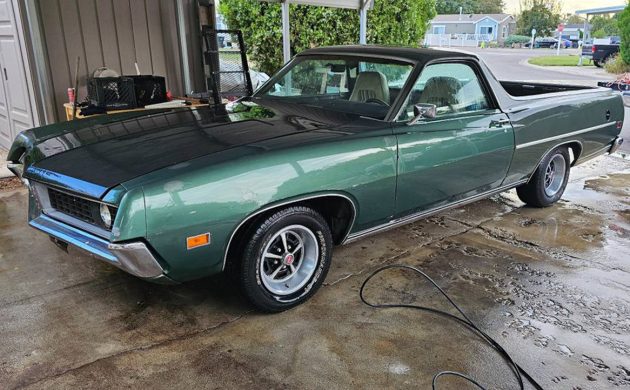
Ford’s Ranchero debuted in 1956, but long before its coupe utility body style graced the stage at the New York Auto Show, the company sold “utes” in Australia. The first Ford ute was designed during the depths of the Great Depression, when 22-year-old designer Lewis Bandt grafted a “tray” to the back of a Model 40 Ford sedan. Buyers bought “kangaroo chasers” as fast as they could be produced, appreciating the financial efficiency of a single vehicle for farm and family. The ute became a staple down under, with hundreds of thousands sold, attracting Holden and Chrysler to the market. (Despite Ford’s early start, anyone know what make is considered the very first “production” coupe utility and what year it was made?) Here on craigslist is this 1971 Ranchero project, located in Meridian, Idaho, and priced at $7500. Curvette – thanks for yet another great tip!
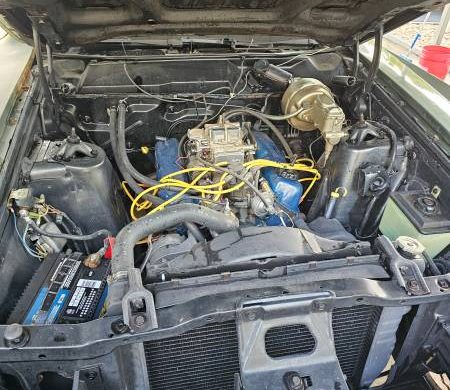
Like many American cars, the Ranchero gyrated through an identity crisis during its production run. First-generation vehicles sat on Ford’s full-sized platform, shared with the Courier, but 1960 brought a shift to the compact Falcon chassis. An about-face in 1967 took the Ranchero up the scale to the Fairlane’s intermediate platform, while the arrival of the Torino in 1968 triggered muscle-car aspirations. Suddenly, the Ranchero could go to the drag strip. Though the top-of-the-line 1971 Ranchero could be optioned with a 429 cu. in. Cobra Jet engine, this example currently harbors a 302 cu. in. V8. Extras include a four-barrel Holley, Weiand intake, long-branch headers and a C4 three-speed automatic. A great start – but the seller reports that the engine and gearbox need at least modest tinkering.
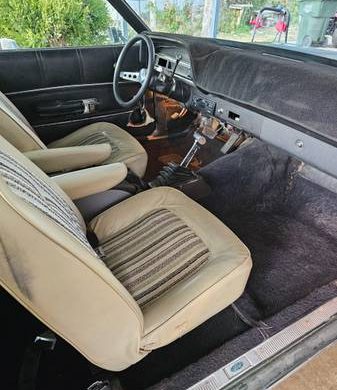
Inside, bucket seats are installed in lieu of the original bench seat – a great swap, though the upholstery needs to be cleaned and maybe refitted. A Cobra Jet dashboard, new floor pans (uh-oh), exterior trim and extra sheet metal come with the car. When these cars were new, four trim levels were available – the base model, the 500, the GT and the Squire (complete with faux wood siding).
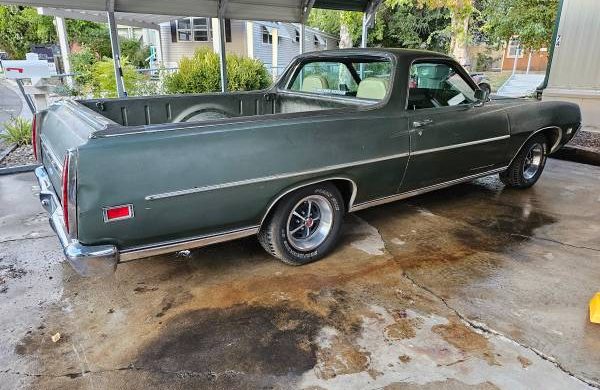
Just about all four corners of this ’71’s exterior need attention, whether due to dents, paint loss, missing trim, or misaligned panels or bumper bits. From the windshield forward, the ’71 Ranchero shares parts with the Torino; even aside from the common components, though, nearly every part can be sourced. I rarely care for engine swaps, but in this case, I would be mighty tempted; how would you finish out this Ranchero?

Interesting history and background, Michelle, but you do that well.
That this has replacement floor pans sets off alarms. Idaho doesn’t salt like its eastern counterparts do which begs for research of its past. Decent looking but knowledgeable potential buyers will know where to really look for problems.
What do you get when you own both an Elco and a Ranchero?
Da two utes.