

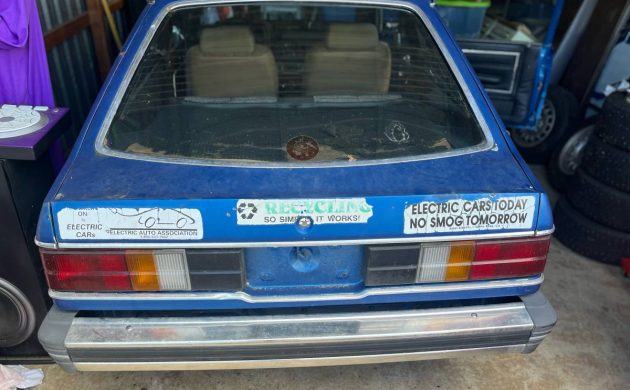
America’s interest in automobiles powered by something other than combustion engines is not a new thing. It came and went in the 1970s and 1980s as gasoline prices rose and fell, and then rose and fell again. One such early effort was the Electrica, which was based on the then-new Ford Escort. About 3,000 of them are thought to have been converted from gasoline to batteries by companies like Jet Industries. This 1981 example has just 38,000 miles and may be complete except for the batteries. Located in Dundee, Oregon, this interesting (maybe) project is available here on craigslist for $1,000. Our thanks to “Patrik” for the tip!
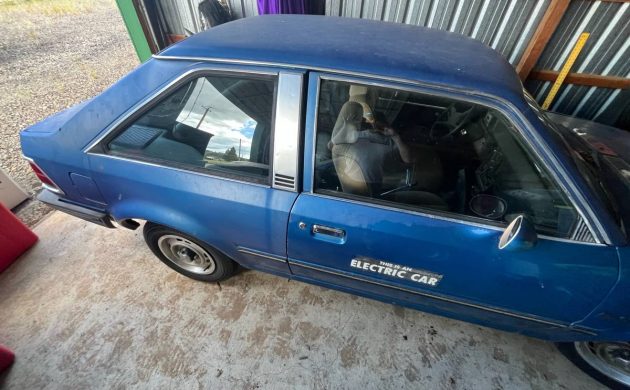
The Escort replaced the subcompact Pinto and was in production across three generations through 1981. Barn Finds’ own Scotty Gilbertson had the opportunity to do a write-up on one of these cars about 10 years ago. It seems as though they weren’t cheap, coming in at $11,500 when new, as opposed to the base gas-powered Escort starting out at half that amount. It appears that Austin, Texas-based Jet Industries was a forerunner in this sector. Their connection with Ford and the Escort may have been prodded by the U.S Department of Energy, who were looking for non-oil solutions.
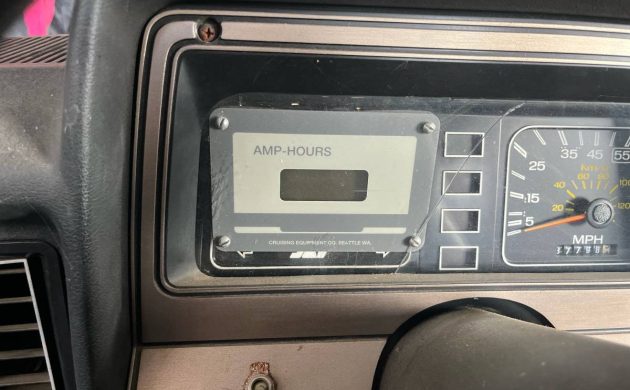
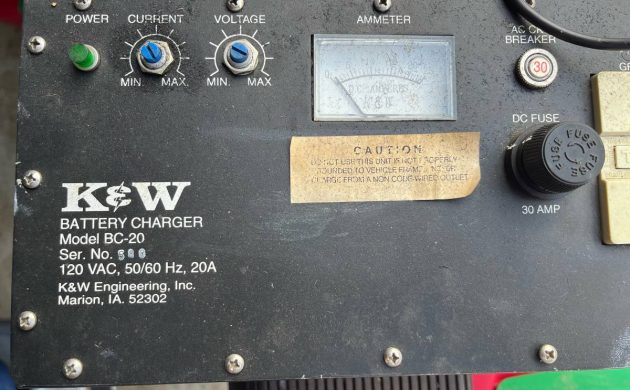
We assume the engine was removed and replaced by a 16×6-volt batteries and one 12v battery. The technology available in those days gave you a range of just 50 miles at 35 mph, so these cars were not for road trips. Some sort of 96V motor was paired up with the Escort’s original transaxle to make the Electrica go. The original configuration of batteries is thought to have weighed 1,000 lbs. When the seller was planning to get this Electrica running again, he was going to change out the 20A charger and use LiFePO4 batteries instead. But the years have gotten away from him, and that won’t happen.
So, if you bought this car, you could replace the original batteries and try to get it going. Or you could take it down the path the seller was going to go, or maybe scrap all that and find an inline-4 engine and related hardware to go back to a stock 1981 Escort. If it were me, I’d go with whichever route costs the least money because the car needs cosmetic work, too. The blue paint may be covering up white paint from Ford.

Cooler than a Tesla,better build quality too.
Probably easier to repair and it definitely won’t lock you out if you try to repair it.
The owner found out how much lead-acid batteries cost, then they found out how much LiFePO4 batteries cost, and said, “heck no!” I can’t see the use of this vehicle especially if you spent all the money on what it needs to move again. It would be useful as a one-off golf cart, is all. I’d convert this back to gasoline powered and at least make the car useful.
Nice work, Russ, and nice find, Patrik! I really like these cars for the unusual factor.
Saw an old timer show up at a local car show, with a converted Chevy S-10, a couple years back. The entire bed filled with lead acid batteries. My question then, and now was, why?
looks like a micky mouse set up to me. pass
Ask me if I’m surprised, that I’ve never heard of these.
Given a choice between this and a Cybertruck, I’m taking this.
Jet Industries first attempt were based on the small Plymouth/Dodge fwd subcompacts. They were horribly overloaded and many suffered from bent axles. The ones based on the Ford Escort / Mercury Lynx were much better. If I were younger, I’d find a totaled late model EV and adapt the running gear to the Escort. While restoring would be nice, I believe only a museum would want it.