

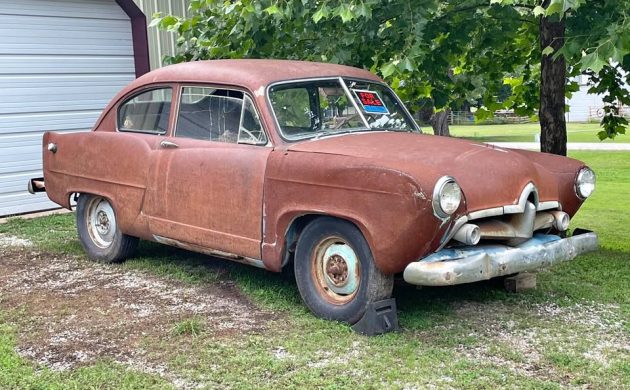
Henry Kaiser and Joe Frazer founded Kaiser-Frazer immediately after WWII, producing a twinned line of fresh-looking cars for a hungry market. The Kaiser Special and the Frazer Standard were attractive sedans covering both ends of the market, but neither of these satisfied Henry’s urge to build a car for Everyman. Sales were strong, however, providing the funds for Henry to return to his downmarket goals. After years of off-and-on development, the Henry J was launched in 1950 – and basic it was. To save money, the car had no trunk lid, no glove box, and no ventilation. Only one body style was offered – a two-door sedan – and its rear windows were fixed. Despite the spartan approach, the car still cost almost the same as a full-featured Chevy sedan. But it was cute and easy on gas, so some 80,000 were sold in its first year. Its day in the sun didn’t last: the Big Three were out with new post-war sheet metal, and buyers flocked to their showrooms. The Henry J was made through 1954, but in that year, just 1153 units were sold, and they may have been leftovers from 1953. Here on facebook Marketplace is a 1952 Henry J looking for a new home. The price is $2,800, and it’s located in a Claremore, Oklahoma driveway. Zappenduster found this tip for us – thanks!
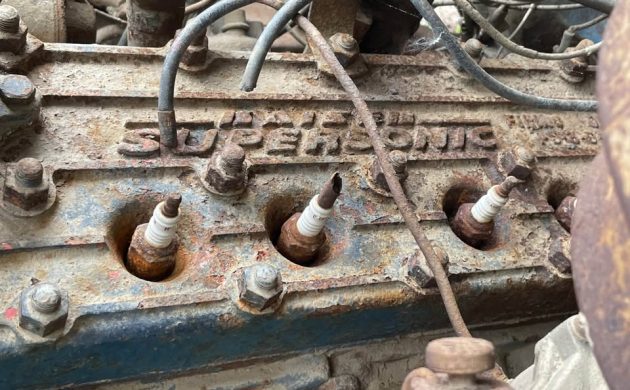
The first Henry Js received Willys’ 134.2 cu. in. four-cylinder but later, its 80 hp 161 six-cylinder – christened the Supersonic for Kaiser – became available. This motor will turn, but the seller hasn’t run it. The gearbox is a three-speed, column-shift manual. Though its mechanical components were undistinguished, the car’s 2300 lb curb weight combined with a thrifty engine helped place a Henry J at the top of the field in the 1953 Mobil Economy Run. Today, its short wheelbase and lightweight body make this model an ideal gasser prospect.
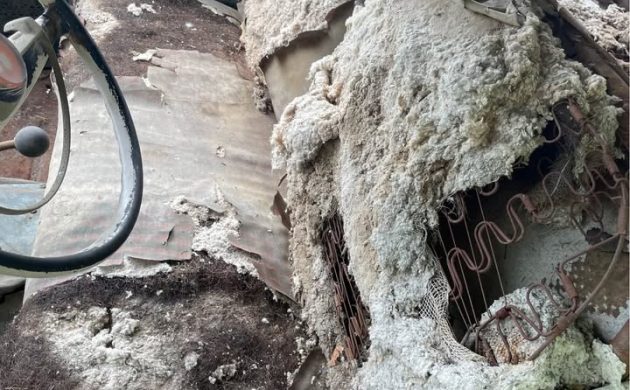
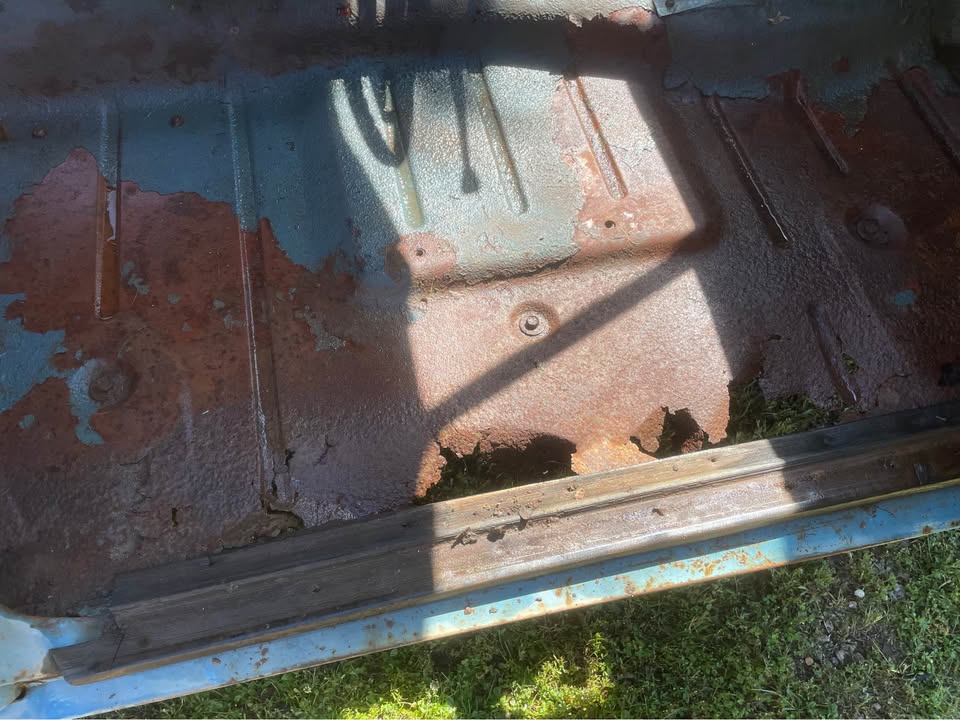
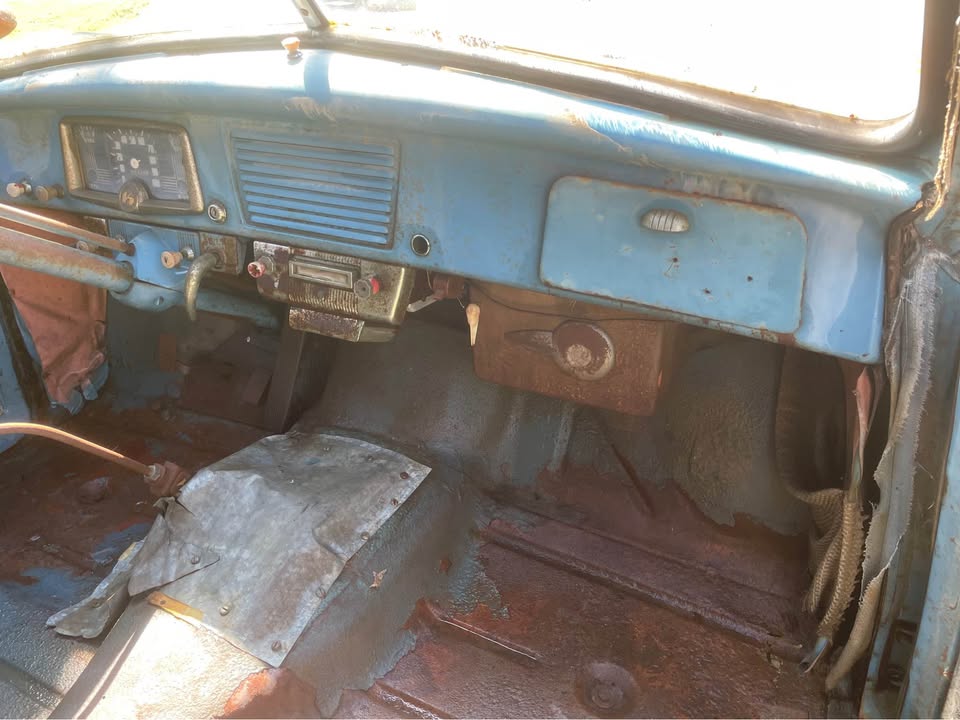
Here are a couple of reasons to dismantle this car – the interior is a mess, and it’s displaying plenty of body rust. By 1952, the Henry J had a glove box, and this example has a trunk lid too. Contrast the austerity of these sedans with the Nash Rambler: the Rambler was an inexpensive compact, but it came in a convertible body style with accessories such as a radio as standard. The Rambler substantially outsold the Henry J, giving Nash a financial lift in a tough market.
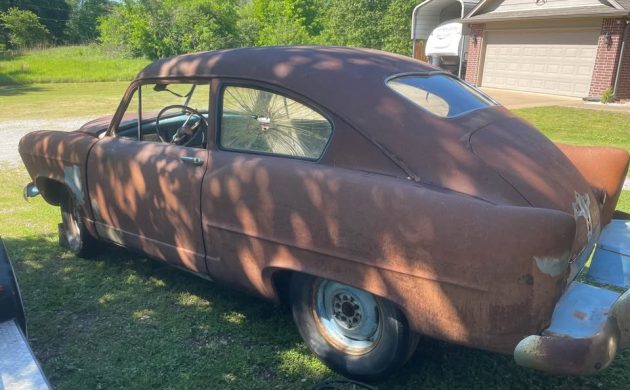
In an attempt to sell more units, Kaiser fitted a Continental kit to unsold inventory, as seen here, and called the car a Vagabond. All the badging has disappeared from this car, so it’s hard to tell if it was a Vagabond, or simply optioned with the kit. This view shows a broken rear glass, though the seller notes that the rest of the windows are intact. In terms of value, a nice unmodified Henry J sold for $7250 about a year ago; another excellent example is offered at $23k here. What’s the right track for this Henry J?

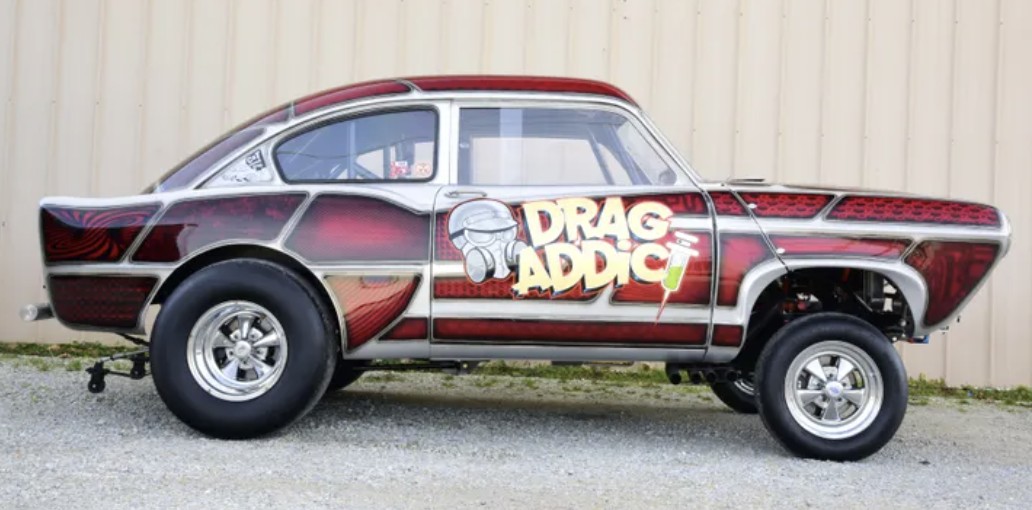
This thing looks like no other car you’ve ever seen and every car you’ve ever seen at the same time.
That’s hilarious. True, but incredibly hilarious.
And not a mention of the Sears Allstate model………
Fortunately, the broken side window is simple flat plate laminated safety glass and any respectable glass shop should be able to cut one out in no time.
As for the H-J vs. the Rambler, apples-to-apples- i.e.; both with flattie-sixes- it’s a toss up; similar size, accommodation and performance. The H-J should, however, turn circles inside the Nash which has those enclosed-front-wheels. Either one will attract more attention than tricked-out pony cars at the local show.
I’d clone it – make it into an Allstate… Thanks again for a great write-up and the history lesson, Michelle…
I hope no one “hot-rods” this one. There are so few of these left that haven’t been turned into racers.
That’s all I see when I see a Henry-J, hot rod potential. This one is pretty far gone and to try and resurrect it will be akin to throwing money into the ocean.
So let’s go racing! And no, not as a ‘gasser’.
Hopped up Ford windsor and a 4 spd for starters …
Just because it’s weird and almost forgotten doesn’t mean it should be preserved. You can shovel a bunch of money into this and what have got? Now the Darrin, that’s something worth keeping.
You are right. A popular talking point against rough, but desirable muscle cars is the owner will be underwater after restoration, that’s exactly what you will have with this car. Why does the economics matter for one car, but not the other?
“Gassers” have become passé.
Steve R
Not in Ohio.
And why does everything come down to economics? Must be awful to look at everything based on $$$$.
If someone likes it, what does it matter if they go under water to preserve it. Some people love old cars because they appreciate history. Not EVERTHING is about money for christsakes!
I’m not sure what your point is. If people like truly want something then it doesn’t really matter if they lose money. Like it or not most people don’t have unlimited funds and need to spend wisely. You are one of the most vocal critics on this site of cars you believe are overpriced, yet when you like a car, money suddenly doesn’t matter. I guess double standards don’t apply to you.
You want someone to “save” this from becoming a race car, I assume that somebody isn’t going to be you.
Steve R
Steve R: NO PERSONAL ATTACKS. Read the Rules. You are getting close.
never really noticed it until looking at the rear angled left side picture but with the sloped back and fins it looks alot like a twin finned fish. Since Kaiser was a major ship builder during WW II do you think he was “sea inspired” to create the Henry J?
Nash gussied up the cute little Rambler and sold quite a few. Back then I would think women liked the small size and bought them in bright colors and optioned out. The Henry J was as basic as a car could be and maybe didn’t have the same appeal. I remember many Pinto Squires fully loaded with air, bells, bows and whistles, and chances are mom picked it out.
Nice to see one of these that hasn’t been turned into a gasser.
And that’s the way I’d build this one. I’d use a 3800 GM V-6 from
a Buick and mate that to a 700R4
auto tranny, get it running so that
you could drive it down to a local
body or metal shop to get the rust fixed properly. After that would come a complete redo of
the interior by a local upholstery
shop and get that broken window
fixed so your brand new interior
won’t get messed up. Then, just
drive it for awhile til you can get
a decent paint job put on it. With
the car’s light weight, the Buick V-6 should give you all the power your right foot needs while giving
you really good MPGs. And if you’re building this car for the right reasons, the money you spend on it won’t be that much of
an issue as you are building this
car to suit yourself and NOT as an investment as we see so.much these days. And if you
build it with the mindset I’ve already mentioned, it could be a
really fun build. And I can almost guarantee you won’t see another one like it at your local car show.
And that folks, was what our hobby
was all about.
Hi Ken, I agree, PLUS I would upgrade the brakes, lower a couple of inches and upgrade the tires and wheels. Add a couple of sway bars and you could have a fun, nice driving car. I have have some experience with the chassis/frames of these cars. They are quite robust and easily upgraded. As much as I like the gasser look, I would like to see one lowered into an almost canyon carver. It would be DIFFERENT!
I agree. Build what you envision and not for some buyer down the road. From what I’ve often seen and experienced myself if it works for you it will often work for others. Just keep the ’investment’ angle out of it. Then you’re more likely to use and enjoy it for what it is.
I like the idea of a lowered canyon carver. Stout motor, enhanced suspension and real brakes.
Ken, I have thought about using the 3800 for such a swap. If used “as is” you’ll have to cut deep into the firewall to clear the throttle body/intake and filter. If you flip the intake 180 degrees there’s again no clearance for the throttle body because the accessories are already there. A custom accessory drive would be needed. Nothing is impossible though.
The Nash Rambler out did the Henry J in the Mobil Gas Economy Run in 1951 with 32.05 mpg. Had to get a plug in for the better looking and better selling Rambler.
Something different, tube chassis, tubbed to fit the biggest tire in the wheel well and slam it to the ground with a blown big block or small block.
OK, if you want a labor of love here it is. You have many years of busted knuckles and empty wallets ahead of you but at the end you can say “I restored that myself”. The one for $7k is beautiful outside has a beautiful exterior but a shabby interior that was 80% solved by front seat covers. It won’t win anything at Pebble Beach but it looks sharp enough for Cars n Coffee and Cruise Night. It’s a question of personal priorities, and even if you do it yourself that 5k you save is a drop in the bucket . Depends on your interests and priorities. BTW, I like Ken’s restomod idea.
My Uncle Tom bought a Sears Allstate new in 52. My memory isn’t as good as it once was, but I think he paid $1100.00 for it. It was a plain Jane model with few if any options. I think it was red with some weird patchwork looking interior. His claim was the economy of driving such a car.initial cost plus great gas mileage. The 4 Bangor with three on the tree and overdrive meant low power but great gas mileage. I’m with the group that says “HOT ROD”.
God Bless America
John, check the interior on the Craigslist car mentioned. It might ring a bell.
Thanks Kim, I think the multicolored plaid interior was the one in my Uncles car.
God Bless America
PLEASE, PLEASE PLEASE, do not make yet ANOTHER Gasser, please lets get this restored, we have more than enough gassers, for the rest of time, it would be much more interesting restored.
This is actually the first one I have seen with both bumpers and grill and has NOT been butchered up by the “gasser ” hot rod bunch.
A buddy and client of mine has Henry Kaiser’s own personal Henry J. Specially optioned for the big man.
To Autoarcheologist – I think maybe your client added the black racing stripe ? Just cannot see the BIG man Henry J having that on it when he had it . It is a nice looking car with the chrome bumpers and nice paint job. Thanks for sharing what one looks like not “Gasserized”.
This amazes me, frankly. Because Henry J cars were all over the place as a common sight when I was young, I do not naturally think that someone might need to discover what one looks like. “Who hasn’t seen lots of Henry Js?”, I ask myself; then I wistfully add, “Someone who isn’t OLD like me.”
Actually, it is documented, the “big man” had that stripe added.
There are some interior details specific for him as well that I don’t remember.
I wonder if Chuck Yeager, the first pilot to officially break the sound barrier, ever saw a Kaiser flathead six with the word “SIPERSONIC” cast into its cylinder head?
I wonder if Chuck Yeager, the first pilot to officially break the sound barrier, ever saw a Kaiser flathead six with the word “SUPERSONIC” cast into its cylinder head?
If he did he must’ve split a gutter laughing.
I remember well when these first came out. Crosleys were still around, and the 1950 Studebaker set the standard for “odd” and yet beautiful in their own way. The Rambler was practical, but not beautiful. The Henry J had something appealing about it, despite its austerity. Having its Sears & Roebuck nicer twin, Alstate, under selling it in 1952 didn’t help matters. Henry J ultimately incorporated the refinements which Sears had insisted upon for the Alstate, but by then it was too late. Nearly every Henry J I saw on the roads was a 1951. This was as much of a mistake as the Hudson Jet. A pint sized car at a full-size price: I think not! Hudson should have put their capital into an OHV V-8 instead.
I remember well when these first came out. Crosleys were still around, and the 1950 Studebaker set the standard for “odd” and yet beautiful in their own way. The Rambler was practical, but not beautiful. The Henry J had something appealing about it, despite its austerity. Having its Sears & Roebuck nicer twin, Alstate, under selling it in 1952 didn’t help matters. Henry J ultimately incorporated the refinements which Sears had insisted upon for the Alstate, but by then it was too late. Nearly every Henry J I saw on the roads was a 1951. This was as much of a mistake as the Hudson Jet. A pint sized car at a full-size price: I think not! Hudson should have put their capital into an OHV V-8 instead.
Yeah hind sight is 20/20 but in the real world when you’re trying to figure the market trend on a low budget it’s a whole different world.
God Bless America
Missing distinctive hood ornament.
Well, if you want an economy car that doesn’t look like a pregnant
jelly bean, here’s where you start.
And if that 3800 V-6 doesn’t float
your boat, then consider building
it with the engine and 5-speed tranny from a wrecked Toyota pickup. There’s plenty of them out there in junkyards all over the
country. I know, some of our readers out there will say that an
engine from a Nissan would be better. As for me, not so much.
I mean it’s your business if you want an engine that constantly blows head gaskets, cracks cylinder heads, and has parts availability issues, then that’s on
you. Here in Florida, I’ve seen people wait 18 months for a dealer to get the parts just to service them. And then there’s that CVT tranny they have that’ll
cost you as much as $5-7K to have it rebuilt–and they may not
have the parts available to repair
And that folks, is why you see so
many Nissans at your local U-Pull-it. For my money, a Toyota 4
banger with a 5-speed tranny is
a viable option for you guys who
want MPGs over horsepower. There was a fella in my hometown that built one of these
using a 2300cc Pinto engine and
a 4-speed for power. His wife said he could keep the car if he
built it to get good gas mileage.
It looked pretty slick and he and his wife lived happily ever after
Hi Ken!
I was thinking 2.3 4 cylinder AND 5 speed from a Ranger. (Both vehicles are about the same weight.) So normal driving would be tolerable. And plenty of room to add headers and an A/C compressor!
Another great option. Would be the starting point for a sweet ride.
You”re right Wayne. The Ranger
4:banger you mentioned is just an
improved version of the Pinto 2300 mill Ford had been selling for years. And I think that fella I
met 50+years ago was onto something. But if I were to use this mill, I’d want the unit with the
real timing chain instead of a timing belt. It’s a great way to low buck a build and do it right. And while you’re redoing the brakes, you’re gonna have to put
a slave cylinder near the master cylinder as Ranger pickup trucks
have hydraulic clutches on them.
At least the truck I had did. And if
you wanna take the manny tranny
thing even farther, get a tranny with overdrive. As for lowering the car slightly, dunno if I wanna do that after having seen a lowered sedan get stuck on a speed bump in the complex we live in. Other than that, if you can
find all the stuff you need from local U Pull It’s, There’s no reason
why you can’t get this car finished
for less than $5-10K. And that amount includes the paint and interior too. Oh sure, it’s gonna be austere as hell, but wasn’t that
what this car was like when Henry Kaiser built it in the first place? I can see it painted black
with plain steel rims capped with
baby moons. Inside, there would
be a tan vinyl interior complete with A/C. And even if it is a plain
jane, you’ll be the hit of the car show or wherever it is you drive
it.
Hi Ken,
I said lower it. Not SLAM it. The 2.3 Ranger engine is very easy on timing belts. (100,000 miles are the norm) And they are not interference engines. Timing belts are a snap on that engine.
Since I usually have a spare 2.3 and 5 speed. I will start watching for one of these that is a reasonable price. You don’t have to go “whole hog” with the car. Decent paint, some upgrades (suspension, and brakes) that you can source out at the wrecking yard and do a nice tasteful, inexpensive interior. And you can have a decent interesting driver. Doing all the work yourself you could be under $20k fairly easily. Not a hot rod by any means. But an eye catcher!. What a cool piece that engine would be on a rat rod! With a turbo charger and the cylinder head wording highlighted! It would be rare for anyone to have seen that engine before. Saw one with a Packard straight 8 amd a turbo. Really cool!
1Hi Ken,
I said lower it. Not SLAM it. The 2.3 Ranger engine is very easy on timing belts. (100,000 miles are the norm) And they are not interference engines. Timing belts are a snap on that engine.
Since I usually have a spare 2.3 and 5 speed. I will start watching for one of these that is a reasonable price. You don’t have to go “whole hog” with the car. Decent paint, some upgrades (suspension, and brakes) that you can source out at the wrecking yard and do a nice tasteful, inexpensive interior. And you can have a decent interesting driver. Doing all the work yourself you could be under $20k fairly easily. Not a hot rod by any means. But an eye catcher!.
Yeah, those interference Ford engines were the pits! Break a timing belt, and you bent every valve in that engine. Had a first gen Escort that spent more time in the shop than in my driveway.
Soured me on Ford products quite a while before they improved the Ranger fours in the
’90s. Would’ve loved to have seen that turbocharged Packard
straight 8 too! Now that’s an idea
if you ever buy a Packard and have to redo the engine. I can see it now. You take a ’51-’54 200
coupe or sedan, slide in a turbocharged straight 8, and let the fun begin! Talk about a Packard sleeper! Wonder if Angel
would ever drive it?!!! Find a way to bolt in an M-22 Muncie 4-speed, and really shake up the troops at Old Town or your next
local car show! Now that’s what
I call backyard engineering at it’s
finest! Uh Wayne, that would be just the ticket for that ’51 Frasier
sedan I saw here a week ago or so. Now Ya’ got me thinkin. If you can turbocharge a Packard,
can you do it with a Continental
Six?
I don’t see why not. Most of those flat head engines use the old style metal head gaskets that I think would resist boost head gasket failure. Naturally boost control and fuel supply are always number 1 concern. The Packard engine I saw had a 4 barrel Holly draw through system. That engine idled so smooth it was amazing! Pretty sure you could pull off the glass of water trick on the cylinder head. (No ripples in the water) And the workmanship on that rat rod was exemplary! It also had a custom made header (needless to say, no company makes a header for that application!) and an awesome sounding exhaust system.
One from hometown growing up was race setup, believe me when I say he used to pull wheel stands on main Street at 2 am was witness to this those were days.