

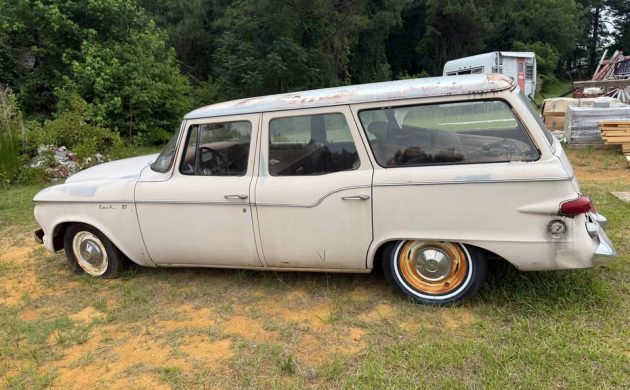
By the end of the 1950s, things were looking bleak at Studebaker-Packard. Their merger in 1954 didn’t produce the desired results, and the Packard brand was gone after 1958. A temporary reprieve came in the form of the new Lark compact in 1959, which added much-needed capital to Studebaker’s wallet for the next couple of years. The seller has a 1960 Lark station wagon with an inline-6. It looks restorable, though you wouldn’t want to rule it out being a donor, too. Located in Bailey, North Carolina, the field find is available here on Facebook Marketplace for $1,234 (is that a placeholder or the real price?).
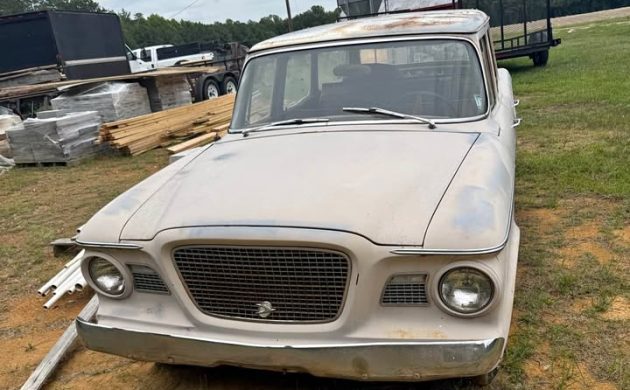
The Lark hit the streets in 1959, a year or more before the competition jumped in. AMC was already there with the Rambler American (1958), but the Chevy Corvair, Ford Falcon, and Plymouth Valiant wouldn’t arrive until 1960 (then the Dodge Lancer in 1961 and the Chevy II in 1962). So as the field became more crowded, Studebaker’s initial brisk sales fell off, beginning in 1961-62. Starting in 1964, the cars were restyled and given different names in hopes of recapturing the original Lark magic, but it was too late. Studebaker was gone for good in 1966.
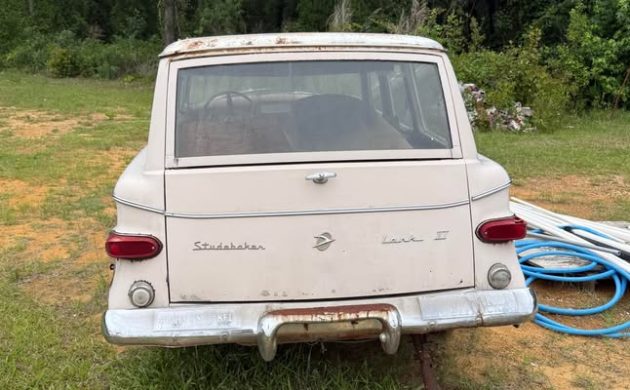
This 4-door wagon is one of about 18,000 that Studebaker produced in 1960. It has a 170 cubic inch “L-head” six-cylinder likely paired with a “3-on-the-tree” manual transmission. There are no pictures from under the hood or any mention if the wagon runs or when it last did. It doesn’t look to be in too bad a shape, so we agree with the seller’s assessment that its condition is “fair.”
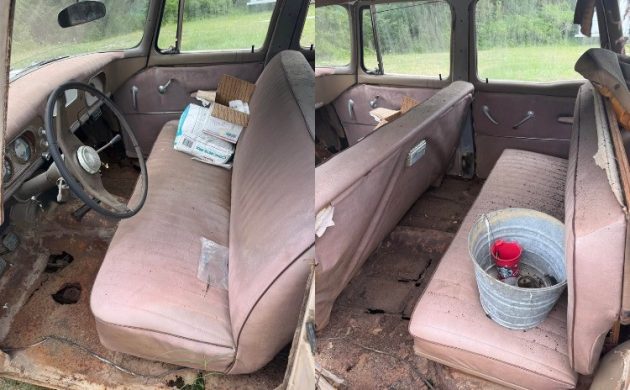
The photos don’t portray a rust bucket, and the interior has some tears in the seats, but looks workable. Maybe the goal should be to get it running and not worry about the cosmetics. A 66-year-old Studebaker is a rare sight in any condition, so one with a few bumps and bruises should still draw attention at Cars & Coffee. Kudos to Chuck Foster for the tip!

Still looks better than any pinto or mustang II.
Perfect fishing car. My wife would have a fit if that followed me home though.
So this thing has been sitting the last 40 years in the barn that got torn down, now that it’s seen the light of day (and is in the way of the new barn) it needs to go. Depends what you call a “rust bucket”, I think holes in the drivers floor as big as softballs would qualify, but that could be repaired with one giant patch. No decision without a lot more info.
Another perfect wagon to pull my ’57 Feather Craft Rocket Runabout to the lake house…
Another perfect wagon for towing my ’57 Feather Craft Rocket Runabout to the lake house…
Part of the one hole on driver side is the master cylinder fill hole that has rusted bigger. The whole floor is shot.
In high school a friend and I bought a Lark (not a wagon) from a friend’s dad for $25. Used it as a patient in auto mechanics class so it got brakes, a carb rebuild and anything else we were studying at the time. It ran and drove, same setup as this one. Never licensed it but we had it around our farmette for several years . Bolted a piece of angle iron on in place of the rear bumper, drilled a hole in it and used t it to haul a feed trailer back and forth to the mill up the road. Also had a ball doing smoky burnouts with it in reverse after getting about 30 mph in first gear first of course. Oh and catting around in a stubble field was a high point as well. Someone finally rolled it onto its side which popped the clutch linkage apart so you had to start it in 1st or reverse and shift without the clutch after that. Finally cut it up for scrap. Fun times! I’d almost be tempted by this one…we live near South Bend and there’s a sizable Studebaker club in the area…
In high school a friend of mine and I bought a Lark (not a wagon) for $25. In auto mechanics class it was our patient for brakes, carb rebuilding