

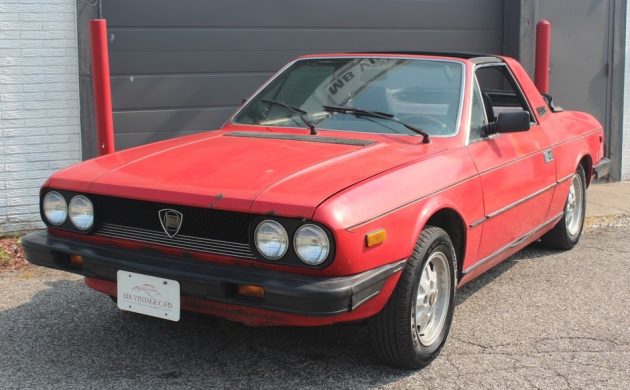
There are sensible ways to build production cars, and then there’s the Lancia way. This 1981 Beta Zagato demonstrates that, with the build process requiring multiple moves between two factories. It is believed that the company lost money on every car produced, helping to explain why they are relatively rare. The good news for enthusiasts seeking an Italian classic is that this Lancia has avoided the rust issues for which the marque has become a virtual poster child. It runs and drives, and I must say a big thank you to Barn Finder Araknid78 for spotting the Beta listed here on eBay in Elyria, Ohio. The buyer set their BIN at $9,950 with the option to make an offer.
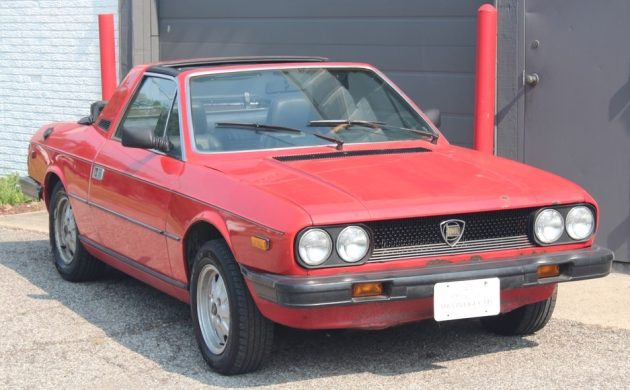
Lancia launched the Coupe version of its Beta in 1973, with the Convertible variant joining the party in 1975. Marketed as the Spider in some countries, it was known as the Zagato in North America. It received that badge due to the collaboration between Lancia and Zagato during the build process. Lancia shipped completed Coupe bodies to Zagato, where the roof was cut away and additional bracing added to ensure the body retained structural integrity. The bodies returned to Lancia for rust-proofing, before once again heading to Zagato for paint and other trim assembly. That helps to explain why Lancia couldn’t turn a profit on these classics if they wished to sell them at a competitive price. This Zagato left the line in 1981, finished in Red. It’s a bit of a surprise packet, because while the paint looks tired, its rust problems seem relatively minor. It appears that there might be small bubbles developing in the hood’s leading edge, along with another in the rear quarter panel just behind the driver’s door. Crawling under this classic reveals that it may have been undercoated early in its life, which is why the floors show only a few spots of surface corrosion. The paint is tired, but both sections of the top are in good condition. So far, this Zagato looks like a winner.
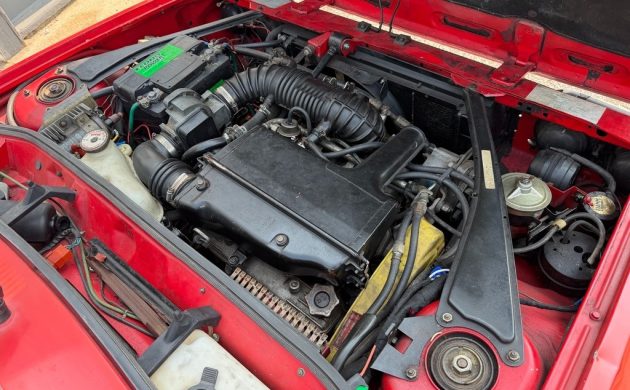
Italian manufacturers enjoy a well-earned reputation for producing cars with bubbly little four-cylinder engines, and the Beta Zagato is no exception. This car’s 1,995cc fuel-injected four sends 108hp and 114 ft/lbs of torque to the front wheels via a five-speed manual transaxle. The Zagato isn’t a fire-breathing monster, but that peppy little motor will happily sing all day. The car’s lack of rust isn’t the only slice of good news. The seller doesn’t mention documentation confirming the odometer reading of 66,000 genuine miles. However, this little gem runs and drives, allowing the new owner to revel in the Italian motoring experience before hitting the workshop during winter to address the Zagato’s cosmetic needs.
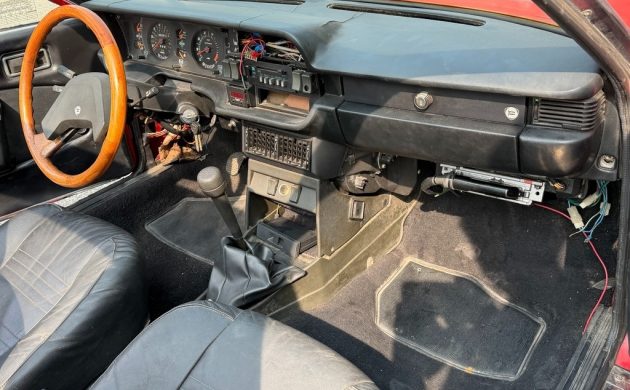
Trimmed in Black leather, the Zagato’s interior hasn’t fared as well as its body. Fragile trim and plastic are known problems, as demonstrated by the cracked dashpad. The radio is gone, and the heater controls are swinging free. However, the Black leather seatcovers are free from rips and splits, and might present well if handed to a specialist for careful conditioning. The back seat looks really nice, and there are no major problems with the door trims. Throw clean carpet into the mix, and this Lancia’s interior could present quite nicely without costing the new owner a fortune.
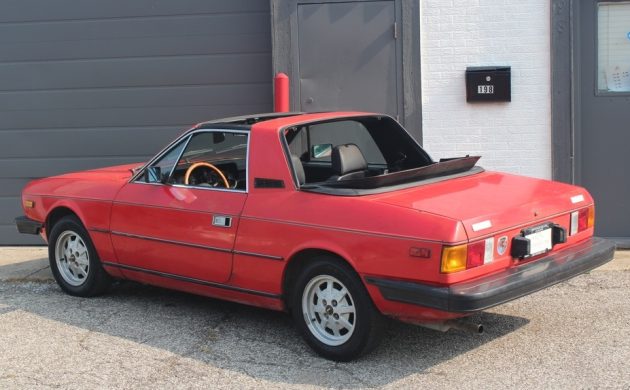
The sensible way to conduct business in the automotive industry is to ensure that every vehicle you sell delivers the company a profit. The Lancia Beta Zagato’s convoluted production process virtually guaranteed that this wouldn’t happen, which may explain why the company only sold 9,390 examples of a car with such crisp styling. Rust has inevitably claimed a few scalps, but our featured car has avoided the worst of those problems. I believe that the seller’s price is optimistic, but the fact that they appear willing to negotiate may improve the situation. Are you tempted to ask that question?


Can anyone tell me what a Zagato cost when new? I was buying my first new sports car around the time this came out, and Lancia never even crossed my mind
This one looked pretty nice…. until we got to the interior. Wow! What happened to that dash/instrument panel?
In 1981, the base MSRP for a new 1981 Lancia Zagato (sold as the Lancia Beta Spider in other markets) ranged from $11,880 to $12,593 in the United States. Add in A/C and some other options and you get to under $15,000. That’s $55,000 in today’s dollars. These cars were notorious for valve and head gasket failures at 60k miles.
Accuform Plastics still offers a molded ABS dashcap for these, to cover the cracks on top, and Covercraft still has patterns to make a carpet or fabric Dashmat, for more protection against further sun damage.
This dashboard is also missing a trim panel that tidies things up around the upper central stack, also providing an ashtray and a clever blanking plate for the radio that can still be snapped in front of an installed shaft-mount style radio, making it appear as if no radio is installed, with a gap at the bottom still allowing you to manipulate the knobs and some buttons without even removing the cover.
Raul Dipp-Solis can probably provide those trim pieces in the US, among many other obscure parts, and of course Midwest-Bayless stocks most other common mechanical parts and routine maintenance items. BetaBoyz in the UK also offer some NOS obscure parts and reproductions/upgrades for NLA components.
Finally, this glove-grade leather upholstery they used responds very well to a generous application of mink oil (the liquid, not the boot paste); just slather it on until it won’t absorb any more, then wipe off any excess. I’ve seen this treatment restore very marginal, puckered and dried-out looking seats to nearly-new appearance.
I sold my Zagato with 56000 miles for $4000 a few years ago. It was in MUCH better shape than this one.They were about $23k new in the early 80’s. They really are a “cult” car due to the rareness of survivors.
As a 50s-80s Italian car fan, the willingness to deal with them is a huge consideration. The fan base is dwindling for that reason, as well as age. We’re all above 60 years old.
These underpowered Italian gems had a fan base back in the day due to their staunch “not-from-Detroit” character, but younger guys want Mustangs and WRXs and S2000s and the like. They didn’t live through the “Detroit malaise” years. Guys like me wanted to support US products, but good god, it was impossible.
This one is rough. This seller is maybe making his first foray into the market. He’s unlikely to get any offers anywhere near his ask.
I’ve never heard the words “rock solid” and Lancia Zagato used in the same sentence.
The seller may claim the Zagato “runs and drives”, however for how long begs the question when viewing the “Spaghetti” of wiring rearing its ugly head beneath the dash and radio aperature..??? Fiat/Lancia, their cars are notable for schizophrenic wiring and electrical issues. They are very fun cars when sorted, ergonomically challenging for any body over 5’8″, however need to owned by people who can understand, accept, and repair their caveats…
There’s an adage about electrical gremlins with these cars, “If in doubt, it’s probably a bad ground, and if not, it’s probably still a bad ground you just haven’t found yet!”
Luckily, most grounds are consolidated to just a few points around the car; there’s a multi-terminal ground “spider” in the engine bay below each headlamp and behind the dash, and another grounding point that uses one of the taillamp cluster retaining studs, which really isn’t very secure, so I always move those to a screw drilled into the adjacent sheetmetal.
The visible “spaghetti” under the dash doesn’t look that bad to me, prolly mostly the result of removing the stereo from the dash and speakers from the kick panels forward of the doors. Aside from that, the factory dash wiring was pretty much just stuffed away up under the dash and covered with a flimsy plastic “modesty panel” under each side that’s often broken and/or lost by now, so the wiring droops down into view unless an owner goes to the trouble of tidying it up.
Having spent quite abit of time riding, driving and repairing Lancia Beta Coupes. The number 1 word in the Lancia Beta world is TIMING BELT!!!! You would think that a sports car sized, 2,000 cc, dual overhead cam, Weber carburetor, 5 speed gearbox, 4 wheel independent suspension, BIG! 4 wheel disc brakes, leather interior with high bolster seats. Would be a good recipe for a cool car. BUT! quality (the lack there of) and rust all work together to produce a vehicle that is very much less than the sum of it’s parts. And for some reason, that Fiat engine that lives just fine with normal maintenance seems to eat timing belts in this application. AND THEN, relying on a Fiat shop manual for timing belt replacement will only lead to more bent valves and despair. (Different cams and timing) My best budy got into these and bought several with less than 5,000 miles and bent valves. We had a spare head and got so we could swap a head and install a new belt in a couple of hours. He had one as a showroom stock racer and a couple of different daily drivers. We made a hot run to the Daytona 24 hours from the Wisconsin/Illinois line to Daytona (800 miles) in 11 hours driving time. Fun well handling cars, but usually not cost effective or reliable.
I agree with Wayne, you have to keep a good eye on the timing belt , change them out about every 40k, they are not that expensive to buy, and its good insurance.
I saw many fail at 10,000 miles or less. I suspect age (like with BMWs is a factor) One thing I noticed with the 2.3 Ford engines (before roller cams) That the more aggressive the cam specs, the more often we had timing belt failures. You wouldn’t expect that kind of excessive drag. But maybe there is. (Any engine engineers out there to enlighten us?)The different Lancia cam specs and timing setup may have something to do with the “extra load’. Also, with the transverse engine, it may see a, hotter (temperature) operating condition than one facing air coming through the radiator. Extra load and extra heat may be the recipe for failure on the Lancia. “JUST SAYIN”
Indeed, if the age and mileage of the timing belt are unknown, the very first thing you should do is replace that belt. I wrote up the timing belt change procedure in detail, with many revisions and improvements over the years, and posted that as a download on the Lancia Beta Project and Lancia Beta Appreciation Society groups on Facebook.
The owner’s manual recommended timing belt inspection ranging from 25k miles early on, then to 35k miles, then up to 50k miles as of the final year ’82, possibly due to improvements in belt manufacture technology, but they also advised inspecting the belt for condition every 3 years regardless of mileage, so that step may have been overlooked by owners who thought mileage was all that mattered.
It’s also a bit harder to check, replace, and set the tensioner bearing on these transverse FWD applications vs. their longitudinal RWD Fiat brethren, so it’s possible the bearing didn’t get replaced when it should have, or the belt tension didn’t get set properly by those not intimately familiar with these engines. There’s a nut and bolt you have to loosen to let the tensioner bracket spring set the initial tension, then you have to tighten both of those to lock the tensioner bracket in place; the spring does not maintain tension in normal operation and can allow the belt to jump if the tensioner is not locked in place.
Lancia did use a different tensioner bearing and bracket than Fiat; the Lancia unit is a shell carrying a replaceable bearing cartridge much more robust and longer-lived in design than the disposable Fiat bearing meant to be replaced with every belt change. You can use a Fiat bearing if you also use use a Fiat bracket, but a Fiat bearing on the Lancia bracket or vice-versa will misalign the bearing, chewing up a belt quickly.
The Lancia cam carrier towers are different, with altered oil drains to accommodate the engine block being leaned over by 20°, and the Lancia block has an extra boss cast in to mount a halfshaft bearing carrier. Aside from all that, Lancia’s version of the Lampredi twincam engines really aren’t so different from Fiat versions, that would otherwise account for premature belt failures.
The American-market version of the Fiat/Lancia 2-liter engine also has a non-interference top-end, so there’s no risk of valves contacting pistons, but it is still possible for the #2 conrod cap nut to contact the vestigial fuel-pump drive lobe on the aux shaft, so it’s crucial to observe correct alignment of that shaft’s belt sprocket along with the crank and cam sprockets when installing a new belt.
Great article Mr. Adam Clarke!! Great find Araknid78!! I owned a beautiful Beta, and as Wayne pointed out, the timing belts seem to wear out quickly!! I thought it was an undervalued car in the 1980s!! I thought it was a great car at the time!! The Zagato is definitely more collectible than the Beta!! Mr. Dennis Van Dyke makes great points!! My friends that were more into the Lancias seemed to prefer the Scorpion / Montecarlo model!! The great information from all the commentors is what makes Barn Finds so great!!
SubGothius, I can possibly understand basic valves not touching pistons. But every Lancia head I pulled off had a valve caught under another valve that then crashed into a piston. I don’t see that as a non interference design. Was that at, or after the extended timing belt service interval?
The earlier 1800 engines used in all American-market Fiat and Lancia twincam models from ’75-78 did have interference top-ends, as did all other variants of the Lampredi twincam engine sold abroad.
Only the American-market 2-liter engines (’79-82) had large enough piston crown reliefs to avoid direct valve-to-piston contact.
That said, a really unlucky belt break might leave one valve stuck at the fully-open position where the opposite valve could strike it, potentially bending one valve enough to strike its piston, even on an American 2-liter engine.
I have an 82 Zagato, with a rebuilt engine, new clutch etc .with Croft modifications done to the sump to stop oil washing on tight corners,it has 75k on it , they are great fun cars,my interior is way better than this one, the only mod. is i removed the radio & fitted a cd player, I dont think they will get there asking price for this one, mine is the same color, with no rust in it , it has been under coated also , the suspension has been checked out , making sure the shocks are good. To do a engine rebuild the easy way is to lift the car of the front subframe,as i done.
Dropping the subframe with the powertrian on it is how Lancia designed most major service to be done, and can be accomplished without a lift as long as you can mount a hoist to your garage rafters or rig up some other sort of lifting gantry.
You can lower the subframe onto a wheeled dolly, disconnect it from the body with 4 bolts, then hoist the front of the car away with the rear wheels remaining on the ground, then roll away the subframe on the dolly and lower the front end back onto jackstands for safety until you’re done servicing the powertrain.
SubGothius, A funny reminder about lowering the front subframe for engine access. I was a service manager at an Oldsmobile, BMW, VOLVO dealership. (I know, a strange combination!) Oldsmobile had a very generic adjustable rolling platform for engine removals for the Aurora. We had a front wheel drive Volvo than ran over a small boulder that come off the side of the .mountain and required a sub-frame oil pan and a few other items. I instructed the Volvo Tech to use the Oldsmobile tool (platform) as it looked easier and faster than the “approved” Volvo proceedure. He had no sooner had just separated the subframe/engine from the car and factory Volvo service people came walking through the door. (two which didn’t speak english) They started getting very excited that we were not going to get paid for warranty work on that car because we were not using correct Volvo procedures. I explained that it wasn’t a warranty repair and the time required to perform this repair was 1/2 the time Volvo listed in its warranty labor manual. Once they cooled down. They started taking pictures of the “Oldsmobile” tool and watched my tech perform the needed repairs. About 45 days later, a “new” required Volvo tool was introduced. It was even from the same manufacturer. When I was called about why I didn’t order the new tool. I claimed that Volvo owed me a commission on everyone that they sold since I was the reason for the tool. Needless to say I never collected. But at least I didn’t have two in my tool room!
I also have fitted Hella headlights,which gives better lighting
I like Lancia and especially the Zagato. Have seen a few and even tried to take one on a test run, but to no avail. I don’t fit, too tall. This particular one appears to have serious wiring problems. Checking the ebay pics of the underside, it appears the “undercoating” of oil leaking from the engine down the underside of the chassis could explain the lack of rust. :-) As stated in some of the other comments, owning a Lancia is a labor of love and commitment. After all it is Italian!
The reliability of a Fiat with the price of a Ferarri. Okay, maybe not to that extent, but I am not too far off.
I now have a strong suspicion that the extra round trip from Zagato in Milan back to the Lancia factory in Chivasso for “anti-corrosion treatment” and then back again to Zagato for finishing — a 120km trip by rail each way — may have only started in mid-’81 when Lancia reportedly first implemented an electrophoretic primer coating process in their regular production line.
Prior to that, Lancia was not known to apply any particular anti-corrosion treatment to their regular line aside from typical spraying of primer and paint — and even that would often be interrupted by labor strikes and spontaneous walkouts for varying periods of time, which is where most of the “Italian rust” reputation from the era most likely originated — so it’s not clear how such a lengthy and expensive round trip for such treatment could have been justified otherwise if it was just an ad-hoc manual application that Zagato could have done at their shop just as well and more cheaply.
That would also explain how production of the Beta spider/Zagato got approved and underway in the first place and lasted for so many years, if that extra roundtrip was not part of the original plans nor implemented for the first 5ish years of its production. They may have lost money on that last couple years of production, which (along with Fiat/Lancia exiting the American market after ’82) may explain why spider production didn’t last through the Beta’s final production year ’84, but they surely didn’t lose money for all 7 years and yet kept producing it anyway, not right after Fiat had already just bailed out Lancia from failing for such obstinate foolhardiness.
Multiple moves between two factories? Cadillac: “Hold my beer”.
A lot of these were recalled because the engine mounts rusted and engines sort of … fell out.I had a beta the shift mech was a catastrophe . I turned one down a few years ago for $3500 that was pristine with only 35000miles .Low mileage isn’t necessarily a good thing
Replacement bushings for the shift linkage are now available, from FiatLancia.us by Lancista John Montgomery and his son for self-lubricating plastic (Delrin-like) bushings, or even bronze bushings (more durable, with lighter more precise action) developed by Fortunato Valenza in Italy.
Nice write-up Adam. And thanks for the acknowledgement
had several “Alpha Beta Coup”. One I kept till ‘running it into the ground’ as I liked it so much. As w/the Italian these (above, A/B Coupe) came out in 4 – 6 models, 2 WB – all as f/u to the Fulvia. Even the ‘shooting break’ was abit ‘luxo’ (read: olds/buick-like in the cheby line). Both an upgrade from the Fiats I restored/drove/sold.
Asa kid (late 60s – early 80s) I was building toward… what? Did I think I’d make it to Maserati? Lambo? I was hopin, but switched to ‘trucks’. ~LOL~
Turned out I could ‘work them’ after rehab/moddin, ie more income, rather than enjoy DD & SCCA use. Had a ‘basic’, more easily done ‘run thru’ to “get up to snuff”. No time for the rally-ing either (became Gen Contractor for 2 decades).
This listing ended on Wed, Aug 12 at 10:36 AM.
Relisted here:
https://www.ebay.com/itm/227473297467?itmmeta=01KZXX2WAK7NTNXZ7AZZXWXT76&hash=item34f677103b:g:qVkAAeSwxMpqV-qw
Price reduced: $9500
Still too much